All About Sheep Webinar Series

Join the OSU Extension Small Ruminant team for the 2026 All About Sheep Webinar Series

  • The Management Continuum: Calendar-Based ManagementFeb 3rd – During this session, Extension Specialist, Dr. Brady Campbell, will review sheep management and husbandry as it relates to the stage of animal production. Stages of maintenance, breeding, gestation, and lambing will be discussed, and management considerations provided.
  • Feed My Sheep: Nutrition 101 –  Feb 17th – This session will be led by Extension Educator, Dr. John Yost, and Specialist Jacob Copelin. They will discuss how to read forage analysis results, how to determine the nutrient requirements for sheep of all production stages, provide an overview of potential ration ingredients, and discuss formulating a ration for your flock.
  • Setting Operation Goals and Marketing AccordinglyMarch 3rd – OSU Extension Educators Jacci Smith and Tim Barnes will help participants identify their goals for owning and raising sheep. They will offer guidance on marketing their sheep based on those goals and include information on responsible flock culling.
  • Flock Health “Spring”ing ForwardMarch 17th – Dr. Nikki Jolliff, DVM, will discuss timely spring health concerns such as coccidiosis, ringworm, pneumonia, and sore mouth. She will also offer her insight on how to foster the build the best relationship with your veterinarian.
  • This is a free program offered by the Ohio State University Extension. Webinars are hosted via Zoom (7-8 p.m. EST).
  • Register at: go.osu.edu/allaboutsheep26

2026 OSU Winter Beef Series

On behalf of Garth Ruff, Extension Beef Specialist, join Extension and Industry professionals in the 2026 webinar series starting on January 8. Webinars are hosted via Zoom from 6:30 – 7:30 PM EST. Contact Garth Ruff at ruff.72@osu.edu for questions. Register for one or all sessions at http://go.osu.edu/beefschool26. Check out the official flyer  2026 Beef Webinar Flyer.

Topics and Dates:

  • Dairy Beef 101 – January 8: During this session, Extension Specialist Jason Hartschuh will review proper care for dairy beef animals and explain how to help keep them healthy and
    continue production.
  • Biosecurity for the Beef Herd – January 22: John Yost, OSU Extension Wayne County, will discuss the importance of biosecurity, an often forgotten component of herd health.
  • Hay Quality Challenges in Ohio – February 5: Making quality hay continues to be a challenge in Ohio. Where do we go from here? How do we go into hay season better prepared? Ted  Wiseman and Stan Smith will lead the discussion.
  • Mineral for Beef Cows – February 19: Dr. Haley Linder is new to OSU Animal Sciences. Join her as we dispel some myths regarding mineral supplementation and
    updates on recent mineral research.
  • Buyers’ Guide to Bull Selection – March 5: Throughout this session, Extension Educator Allen Gahler will cover the value of a bull in 2026. The days of the $2500 herd sire are gone.
  • How Profitable is that Cow? – March 19: OSU Beef Specialist, Garth Ruff, will cover the economics of cow-calf production and dive into ways to optimize cow herd profit potential.

Backyard Flock Owners Survey for Ohio Department of Health on Avian Influenza

Are you raising a backyard flock? This survey is for you!
Since March 2024,
70 cases of avian influenza A(H5) (H5 bird flu) have occurred in humans in the United States, mostly among workers exposed to infected dairy cows and commercial poultry farms. However, cases have also occurred among people exposed to birds kept in noncommercial, backyard flocks. The Centers for Disease Control and Prevention (CDC) and Ohio Department of Health (ODH) are interested in learning more about backyard flock owners and their flocks to improve H5 bird flu prevention messaging.

The anonymous survey asks about:
Characteristics of backyard flock owners, their families, and their flocks.
Knowledge of H5 bird flu and signs and symptoms of H5 bird flu in birds and humans.
Perceived risk of and concern about H5 bird flu to their backyard flock and themselves/families.
Attitudes towards reporting sick or dead birds and protective measures like vaccination of their flock.
Practices they use to protect their flock and themselves from H5 bird flu.

CDC will use the survey results to help make sure that backyard flock owners have the information they need to protect themselves from H5 bird flu. Questions about this survey can be sent to h5flustudy@cdc.gov.
For questions about steps backyard flock owners can take to protect themselves from H5 bird flu, please visit
odh.ohio.gov/hpai or contact your local health departmentFor questions about protecting your flock, please visit the Ohio Department of Agriculture (ODA)’s HPAI Poultry webpage or contact ODA at 6147286220.

QR code to the survey:


URL link to the survey:
https://redcap.link/backyardflock 

Highlights from the One Big Beautiful Bill Act for Cattle Producers

Article was taken from Ohio BEEF Cattle Letter and was written by Josh Maples, Assistant Professor & Extension Economist, Department of Agricultural Economics, Mississippi State University

The One Big Beautiful Bill Act (OBBA) was signed into law on July 4th and included many provisions for agriculture. The nearly 900-page bill includes changes to programs affecting beef cattle producers, and I’ll highlight just a few of those updates in this newsletter.

Increased Payments from Livestock Forage Disaster Program (LFP) 
The Livestock Forage Disaster Program (LFP) was modified to allow more financial relief during periods of severe drought. Some producers often refer to LFP as the “FSA drought program.” Previously, LFP provided one monthly payment for a D2 drought lasting eight consecutive weeks. Under the new updates, livestock producers are now eligible to receive two monthly LFP payments if their county experiences D2 drought conditions for 7 out of 8 consecutive weeks. Additionally, the program now triggers a single monthly payment after just 4 consecutive weeks of D2 drought during the grazing season. These changes are aimed at providing a faster drought response for producers relying on grazing. The chart above shows the length and severity of drought at the national level over the past 25 years. LFP is triggered at the county level.

Permanent Estate Tax Exemption
The OBBA makes permanent a federal estate tax exemption of $15 million per individual or $30 million per married couple. This offers relief to family-owned farms where the value of land, livestock, and other assets can often exceed cash in the bank. This helps to address the issue of heirs sometimes being forced to sell livestock or land just to cover estate tax bills when the farm is transferred to the next generation. This removes or lessens a major barrier to families wanting to keep farms intact across generations. Additionally, the OBBA makes the 20% small business tax deduction permanent.

Poultry Insurance Pilot Program
While this one is not cattle focused, I’m including it here because there are many cattle producers in the southeast who are also poultry growers. The bill directs the creation of a pilot insurance program for contract poultry growers which would allow producers to opt into index-based insurance covering extreme weather-related utility surcharges (gas, electricity, water, etc.). The program must be developed in consultation with poultry industry stakeholders and deployed across enough counties in top producing states to effectively test demand, feasibility, and design. A formal policy or insurance plan must be approved within two years and would establish the first federal insurance framework protecting poultry operations from rising utility costs.

New world Screwworm Moves North Adding to Market Volatility

Article was taken from Ohio BEEF Cattle Letter and was written by Bernt Nelson, Economist, American Farm Bureau Federation

New detections of new world screwworm (NWS) in Mexico led Sec. Brooke Rollins to close Southern ports of entry to livestock imports. USDA had previously announced a phased re-opening of Southern ports, beginning with the furthest port away from where NWS has been detected in Mexico and moving East as continued progress is made on sterile fly production. However, the re-opening was halted, and livestock imports once again paused, when NWS was detected 160 miles North of the sterile fly dispersal locations in Veracruz, Mexico–only 370 miles from the U.S. border.

An isolated outbreak of NWS occurred in Texas in 1976 resulting in about $330 million in losses. A recent ERS study evaluated what it might look like if NWS would reach Texas now. According to the study, after adjusting for inflation, market conditions, etc. the impact would be around $1.9 billion. This study did not account for the record setting prices in 2025 along with some other market changes which means the impact could be greater.

One question being asked is how much of an impact will the Southern port closures have on markets? The U.S. imports 1.2-1.5 million head of cattle from Mexico every year. These are mostly feeder cattle destined for feedlots and ultimately beef production. U.S. cattle slaughter was about 31.9 million head in 2024. In terms of production, 1.5 million head would be about 4% of 2024 slaughter. This is a significant portion of the market and while other fundamental factors like strong demand are currently having a bigger impact, this drop in supply will put upward pressure on cattle prices. According to USDA’s latest WASDE report, 2025 production is forecast down 170 million pounds due to smaller production for the second half of the year. Higher feedlot placements are expected in the second half of 2025, leading USDA to increase 2026 production by 540 million pounds or 2% from last month to 25.815 billion pounds. This forecast assumes that cattle imports from Mexico will remain banned for the remainder of the forecast period.

Mid-Year Review: Cattle and Beef Markets in 2025

Article was taken from Ohio BEEF Cattle Letter and was written by James Mitchell, Livestock Marketing Specialist, University of Arkansas

Cattle and beef prices are sharply higher through the first half of 2025. Oklahoma City steer prices for 500-600 lb calves have averaged $347/cwt year-to-date, up 21% from the same period in 2024 and more than double the 2019-2023 average. Feeder prices (700-800 lb) are averaging $281/cwt, a 17% year-over-year increase. Fed cattle prices in the five-area region are averaging $215/cwt, up 16% from last year, while the Choice boxed beef cutout has averaged $342/cwt—13% higher than 2024 and close to 31% above the five-year average.


Cattle inventories remain the fundamental driver. The January 1 Cattle report showed total U.S. cattle inventories at 86.7 million head, the smallest since 1951. Beef cow numbers declined again to 27.9 million head, and calf crop estimates suggest fewer feeder cattle will be available for the rest of the year. These supply constraints are supporting prices across market segments.

Trade policy and animal health have added new layers of risk to markets. There were disruptions to cattle imports from Mexico last fall and again in May following detections of New World screwworm in regions beyond previously established biological barriers. These detections triggered new restrictions and surveillance measures. The U.S. announced a phased border reopening late last month, but feeder cattle trade flows are still subject to further changes. Markets have had to sort through the Trump administration’s 10% baseline tariff and the back-and-forth on additional tariffs and retaliatory measures. The lack of clarity around future trade policy has made it difficult for market participants to plan around future trade expectations.

Geopolitical tensions are also contributing to market risk. The recent escalation between Israel and Iran has implications for global energy markets and volatility, which can spill over into agricultural markets. The potential for related price shocks remains a concern as we head into the second half of the year.

The outlook for the remainder of 2025 remains positive. Cattle supplies are historically tight, and demand has remained resilient despite broader macroeconomic concerns. Trade restrictions with Mexico will impact feeder cattle availability for feedlots. Cattle and beef markets will be sensitive to trade policy, global conflicts, and broader economic conditions. These factors underscore why it is important to manage price risk even when prices are historically high.

Continue reading Mid-Year Review: Cattle and Beef Markets in 2025

Watch for downed cherry trees!

Article was taken from Ohio BEEF Cattle Letter and was written by Dean Kreager, Licking County Agriculture and Natural Resources Educator

Downed cherry trees pose a health risk for livestock.

Many people are aware of the danger when grazing animals consume wilted leaves from black cherry trees.  These leaves contain prussic acid which can result in cyanide poisoning.  If this sounds familiar, it is also the compound that causes toxicity issues with some warm season annuals after a frost.

Signs of toxicity can set in within 15 minutes of ingesting wilted leaves.  You may notice excess salivation, labored breathing, and convulsions.  Symptoms set in quickly so often you may find dead animals without seeing signs.  The lethal dose for cattle has been reported as 1.2 to 4.8 pounds of wilted black cherry leaves for a 1,200-pound cow and .18 to .72 pounds for a 180-pound sheep.

Wilted leaves are toxic to grazing animals.

There are several factors that determine the toxicity level of the leaves including season, dry and wet conditions, and how long the leaves have been wilting.  The toxicity of leaves decreases as the leaves dry.  Once they are completely dry, risk from consumption is greatly reduced.

Black cherry trees are relatively fast growing in fence rows and forest edges.   This results in upper limbs that are weaker than many slower growing trees.  In addition, it is a shallow rooted tree, potentially leading to toppling in windstorms.  It is also susceptible to internal decay, leading to breaking off in storms.

Check for downed cherry trees first thing after a storm.  I have had two to clean up this summer already.

To learn more about the toxicity issues of black cherry see this previous article from 2010. https://u.osu.edu/beef/2010/06/09/summer-storms-and-wild-cherry-trees/

Hay Testing Even More Important in 2025

Article was taken from Ohio BEEF Cattle Letter and was written by Dr. Chris Teutsch, UK Research and Education Center at Princeton

Figure 1. As plant maturity increases, yield increases and forage quality (digestibility and crude protein) decreases. The single most important factor impacting forage quality is stage of maturity at harvest.

In many parts of Kentucky first cutting hay was delayed. Although yields were good, forage quality is another story. As the grass plant reaches maturity (gets mature seed) yield goes up, but quality decreases (Figure 1). This year we were on the right side of this figure, good yield but lower quality. We have already got our hay testing results back from the lab for our first cutting and that is exactly what they show (Table 1).

I wish we could have been more timely in our hay harvest this spring but weather conditions were just not conducive to dry hay harvest. In fact, weather records indicate that we are seeing a trend toward fewer baling days in May (baling day = 3 curing days + 1 harvest day). It is just getting tougher to be timely with our first cutting harvested as dry hay. So, the question becomes what do we do? The list of practical solutions is short; in fact, there is really one viable alternative and that is baleage. High quality baleage can be made with a curing window as short as 2 days (one day to mow and wilt and a second day to bale and wrap). This provides more opportunities to harvest at the correct stage of maturity (late boot to early head).

Table 1. Forage quality of 2025 first harvest hay at UK Research and Education Center in Princeton. †CP, crude protein, ADF, acid detergent fiber, NDF, neutral detergent fiber, TDN, total digestible nutrients.

Hay Testing Even More Important in Wet Years
In years like this one, hay testing becomes even more important. Since most of Kentucky’s first cutting hay was put up at an advanced stage of maturity, testing is going to be a critical part of making sure that we meet the nutrient requirements of our cows this winter. The single most important factor impacting rebreeding in cow herds is body condition at calving. To design an effective supplementation program for our lower quality hay we must know what the quality it. If you have never tested your hay, this is the year to start!

EDITOR’s NOTE: Until the end of July OSU Extension is offering a forage testing program with the goal of providing timely education regarding forage quality and winter supplementation. To find more detail and participate follow this link: https://go.osu.edu/testyourhay

Buckeye Network Feeder School Event in Wooster

OSU Extension Presents the Buckeye Dairy Network Feeder School at the Ohio State University Wooster Campus in Wooster, Ohio!

This event covers topics of Dairy Nutrition, Forage Safety and Management, Evaluation of Forages, Feed Mixing 101, TMR Program Implementation, and more! A special panel will be available for participants to ask any questions and offer real-life experiences and stories.

It will be held at the Farm Shop on August 8th, 2025 from 8:30 am to 4:00 pm. Scan the QR code to register or go online to this link. For questions, contact krogstad.6@osu.edu or call 330-264-8722. This event is limited to 20 participants.

Statewide Webinar on Highly Pathogenic Avian Influenza

Tim McDermott, DMV, Extension Educator, Agriculture and Natural Resources in Franklin County, will be co-hosting an informative webinar on Highly Pathogenic Avian Influenza (HPAI) alongside Dr. Kristy Shaw, DVM from the Ohio Department of Agriculture, and Jenna Gregorich from the Ohio Poultry Association.

📅 When: Wednesday, January 15th, at 12:00 PM
💻 Where: Online (link provided upon registration)
🎟 Cost: FREE and open to the public

This webinar is designed to provide valuable updates and insights into HPAI, covering critical topics such as:

  • Biosecurity measures to protect your flock.
  • Recognizing the signs and symptoms of HPAI.
  • A state-level update on HPAI, including its implications for the poultry industry and even a bit about its effects on dairy.

Why Attend?

HPAI remains a significant concern for poultry owners, farmers, and anyone involved in agriculture. This webinar is an excellent opportunity to:

  • Stay informed about the latest developments.
  • Enhance your biosecurity knowledge.
  • Ask questions directly to experts in the field.

Register Today!

Registration is required, and you can sign up HERE.

We encourage you to share this opportunity with your network! Attached are flyers in PDF and JPEG formats for easy sharing on social media or email. Let’s spread the word to ensure everyone has access to this essential information.

We look forward to seeing you on January 15th!

Two August Field Days to Explore Barriers and Benefits of Crop and Livestock Integration

Exploring Crop and Livestock Integration Field Days

Article taken from https://agcrops.osu.edu/newsletter/corn-newsletter/2024-25/two-august-field-days-explore-barriers-and-benefits-crop-and by Cassandra Brown

Over the last 50 years, both crop and livestock production systems in the U.S. have become increasingly specialized and separated. A two-year Ohio State project has partnered with 31 working Ohio farms to examine the economic, ecological, and social impacts of specializing or integrating these farming systems. During this event, attendees will consider soil health results and other on-farm data from our two-year study, join in discussion with study participants about the benefits and barriers to integrating crop and livestock systems, and hear about specific strategies or issues from area farmers.

There is no cost to attend, but registration is required to receive the meal provided during the event. This project is supported by a grant from the USDA National Institute of Food and Agriculture.

Two options to attend “Exploring Crop and Livestock Integration: Barriers and Benefits”

Is it time to cull the mature female and replace her with a heifer?

Cull or keep this mature cow?

Article is taken from https://u.osu.edu/beef/2024/07/10/is-it-time-to-cull-the-mature-female-and-replace-her-with-a-heifer/#more-16653 by Dr. Andrew Griffith, Assistant Professor, Livestock Marketing Specialist, Department of Agricultural and Resource Economics, University of Tennessee

I had a discussion last week concerning selling older cows and replacing them with bred heifers. This is an important decision for most cow-calf producers including myself as I have bred heifers for sale and I have some older cows whose useful life in the breeding herd is extremely short. Thus, there are multiple questions to answer.

The first is if and when a mature female should be marketed. The second is if she should be replaced with a younger breeding female now or at some later date.

From the market price perspective, it is extremely important to compare the value of the mature female with the value of replacing her. As an example, boning utility cows in Tennessee had an average price of $143.50 per hundredweight last week and had an average weight of 1,210 pounds, which results in a value of $1,736 per head.

The decision at this point is to develop and breed a female or to purchase a bred female. Bred females are guaranteed bred and will generate revenue more quickly which makes them more valuable than one to be developed and bred.

Register today, space is limited.

Article is taken from https://u.osu.edu/beef/2024/07/10/beef-cattle-a-i-workshop-hosted-in-muskingum-county/

OSU Extension Muskingum County will host an introduction to artificial insemination of beef cattle on July 30 and August 1, 2024 from 6:00 to 8:30 pm at the Extension Office in Zanesville. This two-night workshop is a classroom event starting on night one and concluding with hands-on-practice on night two.

Topics that will be covered during this workshop include: Advanced Reproductive Tract Anatomy and Physiology, Estrous Synchronization, Pasture Considerations, Expected Progeny Differences (EPD’s), and Tools, Equipment, & Techniques. Program cost is $20 per person and RSVP’s are due July 25.  The classroom location is the meeting room at the Rural Services Building, 225 Underwood St, Zanesville, OH.

Please RSVP and register using the online webform and payment portal found at go.osu.edu/muskingumbeef.

Direct questions to Clifton Martin, Extension Educator, Muskingum County (740-454-0144), or to Dean Kreager, Extension Educator, Licking County (740-670-5315), or see this flyer.

Plan now to make your summer forage seeding!

Article is taken from https://u.osu.edu/beef/ by Stan Smith, OSU Extension, Fairfield County

With Ohio’s wheat harvest being completed early this year it allows ample time to plan and prepare to do an August forage seeding. Over the next month soil fertility testing should be accomplished, perennial and biennial weeds can be controlled, and ample time remains for selecting and securing the desired forage species for seeding.

Continue reading Plan now to make your summer forage seeding!

OSU Precision Livestock Farming education series

Technology is changing the way we manage plants and animals. When someone says Precision Agriculture, we often think about crop production but there are many opportunities for technology to enhance our abilities to care for livestock. This winter OSU Extension is offering a glimpse at some of these technologies through hour-long weekly webinars. Each week we will have an expert join us to discuss a precision livestock topic for the species of livestock they work with, or forage production. These technologies are allowing us to improve animal husbandry and management efficiency.

The webinars will be from Noon until 1:00 PM throughout the winter 2024 months on January 31, February 7, February 14, February 21, February 28, and March 6. You can register to attend all of the topics or just the one of interest to you.  Registration is located at http://go.osu.edu/PLF24 or you can scan the QR Code below.  

Reach out to Jason Hartschuh at hartschuh.11@osu.edu with questions. To see the official flyer on Precision Livestock Farming flyer

Monthly topics include:

  • January 31, 2024 – Utilizing Drones and remote imagery to determine forage quality and quantity in pastures and hay fields. Speaker: Dr. Josh Jackson, UK Extension
  • February 7, 2024 – How does precision livestock farming relate to swine health? Speaker: Dr. Talita Pilar Resende, OSU Extension
  • February 14, 2024 – Sprinkler Effects on Cooling Water Use, Litter Moisture, and Broiler House Environment. Speaker: Dr. Tom Tabler, UT Extension
  • February 21, 2024 – Benefits of Data collection at lambing using RFID and handheld recorders. Speaker: Dan Persons, Shearwell Data
  • February 28, 2024 – Activity and temperature monitoring systems for dairy calves, heifers, and cows, Speaker: Jason Hartschuh, OSU Extension
  • March 6, 2024 – Pen-side Diagnosis of BRD pathogen, Speaker: Mohit Verma, Purdue Extension

Ohio Beef Cattle Feeding School in Northern Ohio

What is the outlook for feeding beef cattle in this cattle cycle? Garth Ruff, Beef Cattle Field Specialist will cover how the beef supply looks for the coming year and what goals concerning quality has the industry set for itself in the long term. This year the Beef Cattle Feeding School will focus on risk management within the cattle feeding enterprise. Each evening we will have a speaker discuss how Livestock Risk Protection (LRP) can be used as a tool to manage risk when feeding cattle.

To wrap up each of the programs, Allen Gahler, OSU Extension Sandusky Co., and Jason Hartschuh Dairy Management and Precision Livestock Field Specialist will deliver a Beef Quality Assurance Training.

Offered January 23 in Crawford County and January 30 in Wood County as a free program.

To view the official registration flyer and agenda click 2024 Ohio Beef Cattle Feeding Flyer.

Forage Challenges as the Weather Turns Cooler to Keep Livestock Safe

From OSU Extension’s CORN Newsletter:

By Kyle Verhoff, ANR Educator, Defiance County, and Jason Hartschuh, CCA, Field Specialist, Dairy & Precision Livestock

As the year begins to wrap up and temperatures drop, there are countless things to consider including how the coming frosts impact the toxicity of our forages. This past week many portions of the state began to flirt with possible overnight frosts which raises concerns of prussic acid poisoning, nitrate poisoning, and increased bloat as a result of feeding certain fall forages. Continue reading Forage Challenges as the Weather Turns Cooler to Keep Livestock Safe

Certified Livestock Manager Webinar 4: A Summary of eBarnsOn-Farm Research – CLM Credits Offered

Join the Water Quality Team for our 4th Certified Livestock Manager Webinar of the series on February 6th from 10-11:30 am for “A Summary of eBarns On-Farm Research”.  Speakers include OSU’s own Dr. Brady Campbell, Assistant Professor, and Small Ruminant Specialist, Courtney Krieger, Water Quality Extension Associate, and USDA’s Dr. Jessica Pempek, Research Animal Scientist.  CLM and CCA Credits will be offered at the end of the program. Register at go.osu.edu/CLM to attend this webinar. For questions email emmons.118@osu.edu

eBarns was new in 2022 and focuses on applied livestock, forage, and manure management research across Ohio. The report can be found online at go.osu.edu/ebarns2022. Continue reading Certified Livestock Manager Webinar 4: A Summary of eBarnsOn-Farm Research – CLM Credits Offered

Ohio Sheep Tour set for October 15 & October 16.

Sheep looking at the camera in the wooden barn. In the background group of sheep animals standing and eating on the farm.

OSIA_OSU Statewide Sheep Production Tour Flyer

A statewide sheep production tour of Knox, Licking, and Crawford Counties has been planned for Ohio Sheep Producers for the weekend of Saturday, October 15, and Sunday, October 16, 2022. This year’s tour is jointly sponsored by the Ohio Sheep Improvement Association and Hardin County OSU Extension. Join us for a drive your own, sheep production tour focusing on dry lot/confinement sheep operations. There will be four tour stops on this year’s statewide tour, with each farm stop only being offered at the time listed. Continue reading Ohio Sheep Tour set for October 15 & October 16.

Soil Health Tour 2022 Sites Finalized


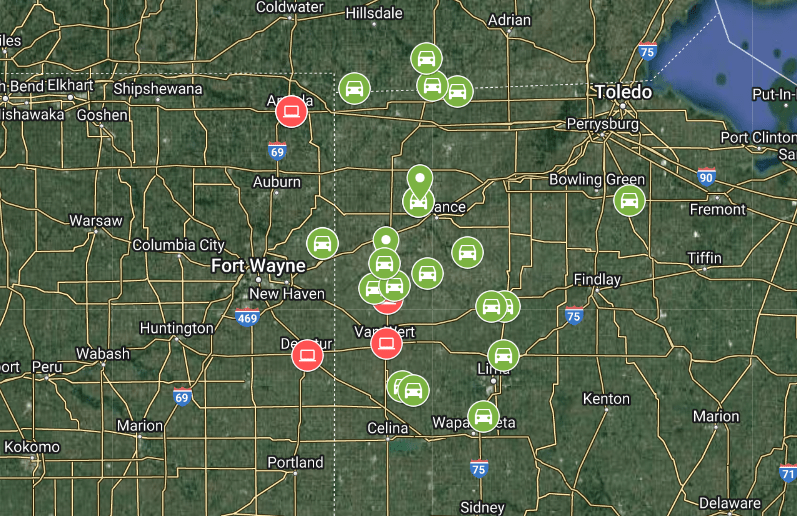
The 18 in-person and 6 virtual tour stops for the 2022 Soil Health Tour have been finalized and are almost ready to be visited by farmers, conservationists, and soil-lovers around Northwest Ohio, Southeast Michigan, and Northeast Indiana. The tour officially opens Monday, September 19th at 8AM and closes Wednesday, September 28th at 5PM. A wrap-up event will be held Thursday, September 29th at the Paulding County Extension Office from 6-8PM to close out the tour. Register for the September 29th event at go.osu.edu/soilhealthtour.

The flyer with tour site information can be accessed here.

The in-person tour stops are as follows: Continue reading Soil Health Tour 2022 Sites Finalized