Posts

Is there a good way to translate poetry (1)

IS THERE A GOOD WAY TO TRANSLATE POETRY?

Is there a way?
Is there a good way?
Is there a good way to translate poetry?
Why not?
Depends on the poetry.
The source poetry,
the target poetry.
The audience
and the massacre.
Maghiel van Crevel’s translation
of Han Dong’s Big Wild Goose Pagoda
is perfect.
Both pagodas are perfect.
Maybe the small one
retains more of the flavor
of Xi’an 20 or 30 years ago.
Haven’t been to the small one in many years.
Nicky Harman’s translation quoted by Xujun Eberlein
in the LA Review of Books
should have no quite in my opinion
only quiet.
Otherwise it is perfect.
Is there a good way to translate poetry?
Into what?
Mashed potatoes?
If I’m not a poet
in target poetry
– how many shots for a dollar?
If the person in charge
doesn’t produce competent targets
why do they buy them?
Is there a good way to poetry?
Depends on the poetry.
The source poetry, the target poetry.
The audience and the massacre.

June 3rd, 2016
P.S.: Pls refer to Shen Haobo’s REPUBLIC. Maybe his best poem. Maybe my best translation.

Thank you,
Martin Winter <dujuan99@gmail.com>
Wang Guofu comic book?

I’m assembling materials on the Mao-era peasant exemplar Wang Guofu 王国福 (1922-69) and have been unable to locate a copy of the comic-book (if that’s the right term) version of his life. It was published in the early 1970s and offers stirring tales of youthful suffering, selfless labour, absolute loyalty, and model leadership. I have been unable to locate a copy through inter-library loan, and wonder if any list-members either own one or know where one might be found. In the case of an individual prepared to loan a copy, I would refund postage and offer as security a companion volume on Wang Guofu’s celebrated contemporary, the Daqing oilman Iron-man Wang Jinxi.

Richard King <rking@uvic.ca>

Hong Ying’s Mimidola

Source: China Daily (6/3/16)
The worthy daughter
By Mei Jia (China Daily Europe)

The worthy daughter

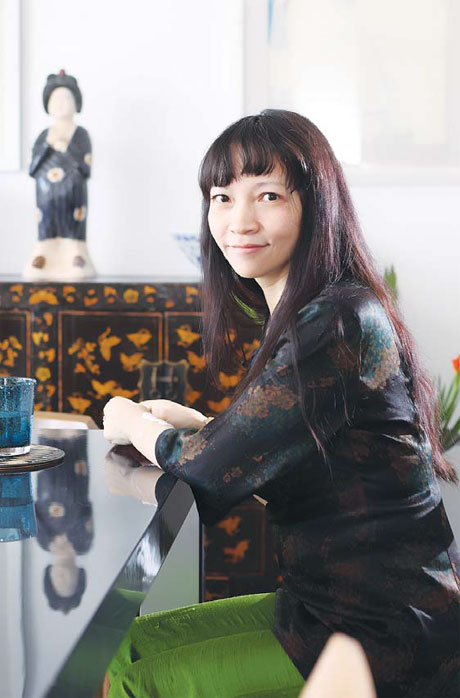
Chinese author Hong Ying has shifted focus to children’s books, and her latest novel is a fantasy about a 10-year-old girl’s adventures. Photos Provided to China Daily

Hong Ying spotlights the mother-daughter relationship in her latest novel, Mimidola: The River Child. Author Hong Ying says she writes only three types of novels – those that seek to understand and explore a house, a city or the world. Yet a lingering theme of many of her signature works is the mother-daughter relationship.

In her latest novel, Mimidola: The River Child, by People’s Literature Publishing House, a beautifully illustrated fantasy story for young readers, the mother is absent from the beginning, leaving a 10-year-old Mimidola to undertake adventures by herself. After an intense journey to the underground and to ancient India in four magical days, she grows up, brave and witty enough to conquer fear, eliminate a flood and reunite with her mother.

“I had a terrible childhood being a daughter born out of wedlock,” Hong Ying, 54, tells China Daily at her Beijing apartment. “Mimidola is my effort to reconcile with those memories.”

The Chongqing-born author’s real name is Chen Hongying. Continue reading Hong Ying’s Mimidola

Literary encounters

Source: China Daily (6/1/16)
When a literary encounter with the French produces a little magic in Beijing
By Mei Jia (China Daily)

When a literary encounter with the French produces a little magic in Beijing

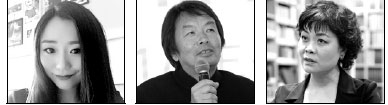
Chinese authors Di An (left), Liu Zhenyun (center) and Tie Ning attend the ChineseFrench writers event in Beijing. Photos Provided To China Daily

When Di An and French writer Vincent Hein sit together to talk about their travels and writing, it’s a magical time. They met at the fourth China-French Writers Conference in Beijing last week.

The writers come from different backgrounds, are of different genders and from different age groups, but their interaction is extremely harmonious.

A representative voice of China’s younger generation, DiAn, 33, spent years in France to obtain a master’s degree in sociology from the School for Advanced Studies in Social Sciences in Paris; Hein, 46, is based in Beijing and studies Chinese “to escape family traditions”. Continue reading Literary encounters

NTU position

The Institute of Taiwan Literature at National Tsing Hua University in Taiwan invites applications for a full-time teaching position beginning February 1, 2017. The deadline for the applications is June 30, 2016. The applicants must hold a Ph. D. degree before applying for the position and must specialize in the field of either contemporary Taiwanese literature or classical Taiwanese literature. Click the link below for further application details.

http://www.tl.nthu.edu.tw/news/news.php?Sn=662

Elliott S.T. Shie <elliot_emerson@msn.com>

Yang Jiang dies at 104 (7)

And more on remembering Yang Jiang from China Daily here: http://europe.chinadaily.com.cn/culture/2016-05/26/content_25478972.htm–Kirk

Source: China Daily (6/1/16)
She followed her heart
By Yang Yang (China Daily)

She followed her heart

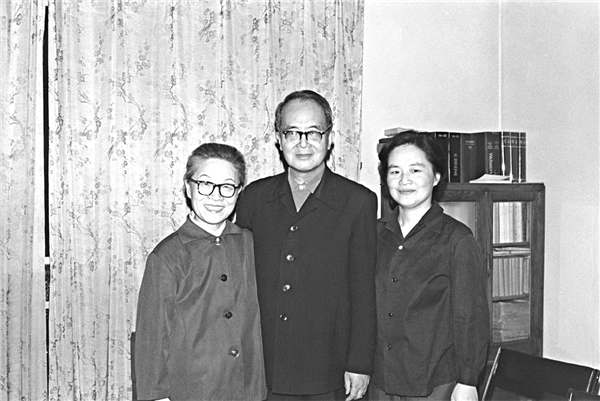
Yang Jiang (left), her husband, Qian Zhongshu, and their daughter, Qian Yuan, in 1981. Photos provided to China Daily

Yang Jiang will long be remembered for her witty writing and popular translations, but her independent outlook may be her greatest legacy, Yang Yang reports.

Among all the apartments in the 19 three-story buildings near Yuyuantan Park in Beijing, only one has maintained its original look, with neither interior decoration nor the balcony being enclosed with glass. Continue reading Yang Jiang dies at 104 (7)

Rare visitor to Taiwan

As an aspiring birder, I can’t stop myself from posting this piece.–Kirk

Source: NYT (6/2/16)
Rare Visitor to Taiwan Is a Bird-Watcher’s Dream
By AUSTIN RAMZY

JINSHAN, Taiwan — The paparazzi gathered by the dozens, braving cold and rain and sticky heat. Sometimes their lanky quarry would lead them on long chases. Other times the celebrity would cooperate, particularly if crab or snail was on offer, drawing huge crowds to this farming hamlet on the northern coast of Taiwan after each sighting.

The subject of such adoration was not a teenage Mandopop star in hiding but a bird — a Siberian crane, one of fewer than 4,000 in the world and the only one ever seen on this Asian island on the edge of the tropics.

Continue reading Rare visitor to Taiwan

June 4 poem by Meng Lang

A June 4 Poem by Meng Lang, published in Mingpao, Hongkong, June 1, 2016.–Magnus Fiskesjö <nf42@cornell.edu>

【今天,六月一日,香港《明報》世紀副刊發表拙作《口訣:六四二十七或三九二十七》。口訣,大人得記一輩子。】

口訣:六四二十七或三九二十七

· 孟 浪 ·

血手與血手印之間
隔著氧氣,褪去了塗抹、擦拭
出發的和抵達的,相撞在一起
記憶押著遺忘,有人視而不見
而我要讓你分明看見這無形
那曾經直接的割取和甩脫
頭顱中的火焰躍過,再一次躍過
罪啊,罪,卻學習著消失
二十七年,一整個國家的羞恥

痕跡,犯罪學,學會了逃跑
紮進政府裡面端坐,佯裝無辜
車隊、人群,一條細線,一根神經
被這雙用罪來滌淨的手抽走
狠狠揉捏十幾億張麵團:憤怒的臉
別過去,別過去,終於扭斷
啊,斷然的犧牲,滋養、哺育喪失
轟隆隆,呼啦啦,湧泉般壯麗
二十七年,一整個民族的酵素——

血手印印在天上,誰又在
誣指,是神的塑膠指紋?
我指出了,這虛無並不可取
大地之上,就這一點最後的綠
一片草尖,把無言的露珠抖落
她,托起整個天空的重量
她的一聲歎息自最深處傳來
記憶的口訣,無可挽回,也無可阻擋
從三九二十七,邁向四七二十八

2016.5.27

New Wai-Lim Yip publications

150a6b72-b55b-4cf9-9b8e-a9f42df04090
s28571816

I would like to bring to your attention two recent publications, one by and one about  UC San Diego emeritus professor of literature, Wai-Lim Yip.  The first is a two-volume anthology of his critical writings, Gemlike Flame: Essays on Modern Poetry from China, Hong Kong and Taiwan (晶石般的火焰:兩岸三地現代詩論; National Taiwan University Press, March, 2016), which  includes more than twenty of Professor Yip’s essays on the modernist poetry of China, Hong Kong and Taiwan since the 1950s. The second, Compilation of Studies on Modern and Contemporary Taiwan Writers: Volume on Wai-Lim Yip (葉維廉:台灣現當代作家研究資料彙編 79; National Museum of Taiwan Literature, December, 2015), draws together studies by twenty-two poets and scholars on Wai-Lim Yip’s own poetry and critical theory. As readers of this list are aware, Professor Yip was a major figure in the Modern Poetry Movement of Taiwan and Hong Kong in the 1950s and 1960, and is well-known as a poet, translator, theorist and critic of modern Chinese poetry.

Kuiyi Shen <kshen@ucsd.edu>

Yang Jiang dies at 104 (6)

Unfortunately, most of the so-called 楊絳《一百歲感言》 (2011) were made up by … well, who knows.  The day Yang died, the excerpts of this article were circulated widely on Sina Weibo and turned out to be a joke.  Renmin literature publishing house had to standout and clear the case.

Liz Ling

Yang Jiang lecture

Yang Jiang Lecture at the Chinese Literature Translation Archive at the University of Oklahoma Library

Last year the University of Oklahoma Chinese Literature Translation Archive (https://libraries.ou.edu/content/cltarchive)  hosted its first visiting scholar lecture on the topic of Howard Goldblatt’s translation of Yang Jiang’s short novel” Six Chapters from My Life Down Under.” The talk by Helen Xu of Nanjing Normal University reveals just a taste of what is possible when scholars have access to the papers of translators. The Archive (which has collected the papers of Howard Goldblatt and Wolfgang Kubin and includes significant portion of Wai-lim Yip’s papers) will soon officially announce its latest major acquisition: the scholarly library of Arthur Waley. Here is a link to Professor Xu’s lecture hosted on Youku with subtitles:

http://v.youku.com/v_show/id_XMTM1NzEwNzc3Ng==.html?from=y1.7-1.2

Jonathan Stalling <stalling@ou.edu>

Yang Jiang dies at 104 (4)

Here’s a short piece Yang Jiang wrote at the time of her 100th birthday. I think it’s very moving and gives us hints of her personality — restful, accepting and at peace with herself and the world.–Gilbert Fong <gilbert.fong@gmail.com>

楊絳《一百歲感言》(2011)

我今年一百歲,已經走到了人生的邊緣,我無法確知自己還能走多遠,壽命是不由自主的,但我很清楚我快「回家」了。

我得洗凈這一百年沾染的污穢回家。 我沒有「登泰山而小天下」之感,只在自己的小天地裏過平靜的生活。細想至此,我心靜如水,我該平和地迎接每一天,準備回家。

在這物欲橫流的人世間,人生一世實在是夠苦。你存心做一個與世無爭的老實人吧,人家就利用你欺侮你。你稍有才德品貌,人家就嫉妒你排擠你。 你大度退讓,人家就侵犯你損害你。你要不與人爭,就得與世無求,同時還要維持實力準備鬥爭。你要和別人和平共處,就先得和他們週旋,還得準備隨時吃虧。

少年貪玩,青年迷戀愛情,壯年汲汲於成名成家,暮年自安於自欺欺人。 人壽幾何,頑鐵能煉成的精金,能有多少?但不同程度的鍛鍊,必有不同程度的成績;不同程度的縱欲放肆,必積下不同程度的頑劣。

上蒼不會讓所有幸福集中到某個人身上,得到愛情未必擁有金錢;擁有金錢未必得到快樂;得到快樂未必擁有健康;擁有健康未必一切都會如願以償。 保持知足常樂的心態才是淬煉心智,凈化心靈的最佳途徑。

一切快樂的享受都屬於精神,這種快樂把忍受變為享受,是精神對於物質的勝利,這便是人生哲學。

一個人經過不同程度的鍛鍊,就獲得不同程度的修養、不同程度的效益。好比香料,搗得愈碎,磨得愈細,香得愈濃烈。

我們曾如此渴望命運的波瀾,到最後才發現:人生最曼妙的風景,竟是內心的淡定與從容……我們曾如此期盼外界的認可,到最後才知道:世界是自己的,與他人毫無關係。

Interview with Can Xue

Source: Sixth Tone (5/25/16)
Q&A with Author Can Xue on the State of Chinese Literature
Internationally renowned writer talks about her views on the West, her work, and the literary world.
Zang Jixian

qa-author-can-xue-state-chinese-literature-000

Deng Xiaohua — the person behind the pseudonym Can Xue — was born in 1953. Her father was persecuted following 1957’s anti-rightist movement, and she could not continue her studies beyond elementary school. Through her love for reading, she taught herself about literature and poetry, and developed an interest in Western classics.

Can Xue began writing in the 1980s. Of her hundreds of published novels, novellas, short stories, and other works, several have been translated into English. Last year her novel “The Last Lover” won the Best Translated Book Award for fiction, an award by the book translation press of the University of Rochester in the U.S. Continue reading Interview with Can Xue

Moser on modern Chinese language

Source: Sinosphere, NYT (5/27/16)
David Moser on the Struggle to Create a Modern Chinese Language
By DIDI KIRSTEN TATLOW

26chinamoser01-master180BEIJING — At a chaotic conference in Beijing in 1913 led by the Chinese linguist and political anarchist Wu Zhihui, the teacups flew, as well as the words, as participants tried to work out: What was the Chinese language?

It was an urgent task. Two years before, the last imperial dynasty had fallen in a republican revolution led by Sun Yat-sen. Reformers like Mr. Wu knew that China had to become a modern nation if it was to survive. But China was home to hundreds of spoken languages and dialects and a “fantastically hard” writing system that only a few highly educated people and officials were familiar with, according to David Moser, the author of “A Billion Voices,” a new book recounting the creation of modern Chinese. Continue reading Moser on modern Chinese language