Replica of Peony Pavilion to appear in Stratford

Source: Global Times (3/14/19)
Replica of Chinese Peony Pavilion to appear in Shakespeare’s hometown
By Xinhua

The Peony Pavilion is a masterpiece by Chinese playwright Tang Xianzu (1550-1616) from the Ming Dynasty (1368-1644). A replica of the pavilion, based on pictures recorded in ancient books of the play, will appear in Shakespeare’s hometown.

Four hundred years ago, when William Shakespeare was writing his sonnets with a quill, Tang Xianzu was recording verses with a brush nearly 6,000 kilometers away.

China and Britain have hosted a series of events to commemorate Shakespeare and Tang. Among the cultural exchange contracts signed, a replica of British playwright William Shakespeare’s family house will be built in Tang’s hometown in Fuzhou, East China’s Jiangxi Province, while Fuzhou will help build the replica of the Peony Pavilion, the historical site where Tang’s story took place, in Shakespeare’s hometown. Continue reading Replica of Peony Pavilion to appear in Stratford
Berkeley-Stanford grad conference 2019

10th Berkeley-Stanford Graduate Student Conference On Modern Chinese Humanities
April 12-13, 2019
Levinthal Hall, Stanford Humanities Center, Stanford University

Friday, April 12

10:00 AM | OPENING REMARKS

10:15 AM- 12:00 PM | Air, Affect, Atmosphere

Presenters:

Hazel Shu Chen, Hong Kong University of Science and Technology
Transmitting Flames in the Air: Li Wo and His “Sky Novel” in the early 1950s Hong Kong

Lu Liu, University of Wisconsin-Madison
Bacterial Imaginations: Seeing through the Microscope in the 1952 Anti-Germ Warfare Campaign

Linda Zhang, University of California, Berkeley
Technological Splendor: The Instability and Materiality of Color in Socialist Chinese Film

Tinghao Zhou, Columbia University
Neonized Hong Kong: Light Pollution and Atmospheric Media Continue reading Berkeley-Stanford grad conference 2019

‘Me and My Motherland’ to celebrate PRC’s 70th anniversary

Source: Global Times (3/21/19)
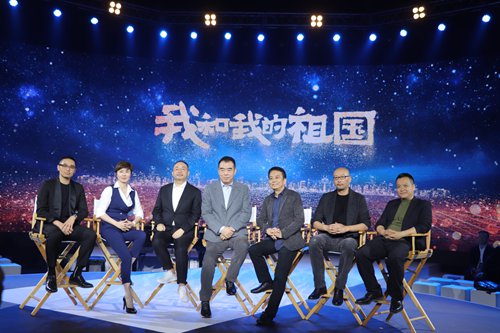
Chen Kaige’s new film project ‘Me and My Motherland’ to celebrate PRC’s 70th anniversary

From left: Chinese filmmakers Wen Muye, Xue Xiaolu, Zhang Yibai, Chen Kaige, Huang Jianxin, Guan Hu and Ning Hao pose for a photo at a media event for Me and My Motherland in Beijing on Wednesday. Photo: Liu Zhongyin/GT

“Back in 2008, my mother called me to ask if I was involved in preparations for the Beijing Olympic Games Opening Ceremony. I wasn’t then, but this time I can confidently say that I will be responsible right from start for producing Me and My Motherland,” Chinese director Zhang Yibai said at a press conference in Beijing on Wednesday announcing his new film project.

Zhang, however, will not be alone. He is one of seven directors that will work on the film, an anthology that will tell different stories about ordinary Chinese during major historical moments since the founding of the People’s Republic of China, which will celebrate its 70th anniversary on October 1. Continue reading ‘Me and My Motherland’ to celebrate PRC’s 70th anniversary

Communication and the Public 4.1

Communication and the Public has just published its first issue of 2019 (vol. 4, no. 1). It contains articles by Christian Fuchs, Lianrui Jia, Chang Sup Park, Moran Yarchi, Falk Hartig, Hanna E. Morris and Raka Sen. Please see the table of contents below.

  1. Revisiting the Althusser/E. P. Thompson-Controversy: Towards a Marxist theory of communication
    By Christian Fuchs
    https://journals.sagepub.com/doi/full/10.1177/2057047319829586
  2. What public and whose opinion? A study of Chinese online public opinion analysis
    By Lianrui Jia
    https://journals.sagepub.com/doi/full/10.1177/2057047319829584 Continue reading Communication and the Public 4.1

120th anniversary of Lao She’s birth

Source: China Daily (3/7/19)
Influential writer’s work lives long in memory
By Chen Nan

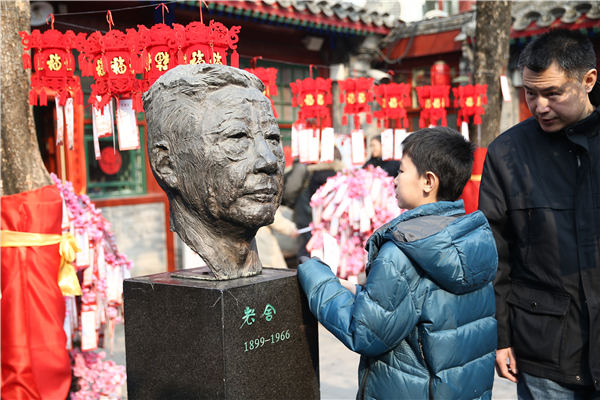
People visit the Lao She Memorial Hall in Beijing. [Photo by Zou Hong/China Daily]

Range of activities mark 120th anniversary of Lao She’s birth.

“I am a nobody in literary and art circles. For decades, I have been conscientiously writing at my table. I am proud of my diligence. … I hope that the day I am buried, someone will put up an engraved monument, saying, ‘The nobody of literary and art circles, who has fulfilled his duty, sleeps here.'”

These words, from the writer Lao She, hang on a gray wall outside the Lao She Memorial Hall, a tranquil courtyard in Beijing. Continue reading 120th anniversary of Lao She’s birth

Fantasy novel about antiques adapted for online series

Source: China Daily (3/14/19)
Fantasy novel about antiques becomes hit online series
By XU FAN

A poster from the online series The Golden Eyes. [Photo provided to China Daily]

When veteran producer Bai Yicong occasionally “clicked” on a fantasy novel online in 2010, he could scarcely have thought that it would one day become one of his biggest-budget productions.

The work of fiction, titled Huangjin Yan, or The Golden Eyes, follows the adventures of a young pawnshop employee, who possesses the power to be able to see the past and future of every object he sees after his eyes are injured by a group of robbers.

Thus the protagonist becomes a legend in the antique world and an easy winner in gambling on stones, the practice of buying a raw rock and then cutting it open, with the hope of it holding some gems.

The story, penned by online writer Tang Yong, better known by his pseudonym Dayan, has accumulated more than 30 million views since its debut on China’s largest internet literature site Qidian in 2010.

“I was deeply attracted by the novel. It has a lot of riveting depictions about underground adventures, enriching my knowledge about antiques,” says Bai, sitting in his office located in eastern Beijing. Continue reading Fantasy novel about antiques adapted for online series

Insects in Chinese Literature

NEW BOOK ANNOUNCEMENT

Cambria Press is pleased to announce the publication of Insects in Chinese Literature: A Study and Anthology by Wilt L. Idema.

This gist of Professor Idema’s newest book is well captured by Professor Judith T. Zeitlin (University of Chicago) who notes, “That prodigiously productive scholar and translator of Chinese literature is at it again. This time Wilt Idema takes us into the teeming world of creepy, crawling things—insects. Entertaining and erudite, and covering a mind-boggling range of genres, serious and parodic, the extraordinary range of Chinese writing on this subject—from culturally venerated insects like silkworms, cicadas, and crickets to universal scourges like fleas, mosquitos, and lice—over millennia is here made available for the first time.” Continue reading Insects in Chinese Literature

Fifth Generation retrospective at HKIFF

Source: SCMP (3/12/19)
How China’s Fifth Generation filmmakers defied censorship and criticism to break new ground
New ways of storytelling and rich political allegories were the innovations that this new breed of maverick directors introduced. Bold in abstraction and symbolism, their films relied on images rather than dialogue for expression
By Richard James Havis

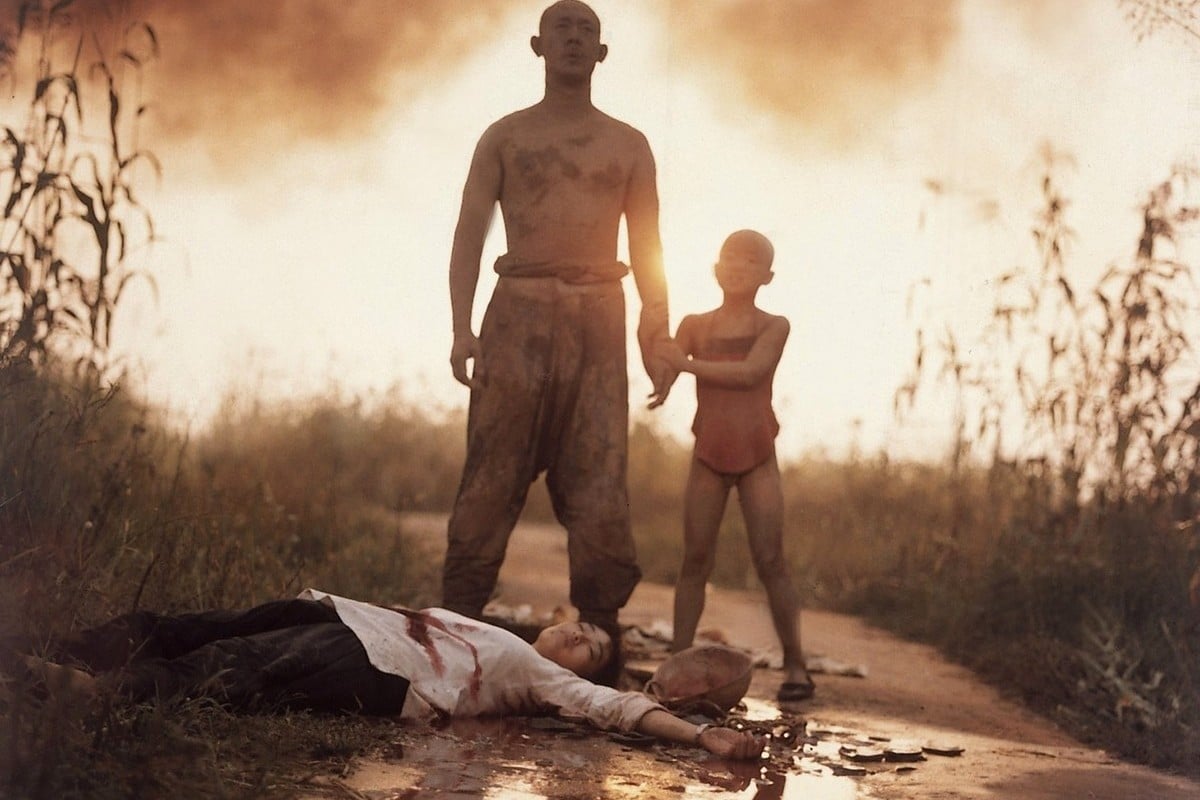
A still from Zhang Yimou’s directorial debut Red Sorghum (1988).

A still from Zhang Yimou’s directorial debut Red Sorghum (1988).

It has been 41 years since China’s Fifth Generation filmmakers started classes at the Beijing Film Academy, and 35 years since The Yellow Earth, directed by Chen Kaige and photographed by Zhang Yimou, changed the face of filmmaking in the country.

The Chinese film industry has modernised so quickly that the innovations this disparate group brought to filmmaking in the country, and the courage they showed in the face of censorship by the state authorities, has been all but forgotten.

A retrospective at this year’s Hong Kong International Film Festival (HKIFF) aims to set the record straight. The five-film retrospective presents classic early works by the Fifth Generation, including The Yellow Earth, Tian Zhuangzhuang’s semi-abstract masterpiece The Horse Thief, and the cheeky satirical comedy The Black Cannon Incident. Continue reading Fifth Generation retrospective at HKIFF

‘Low-level red’ and other concerns

Source: China Media Project (3/11/19)
“Low-level Red” and other concerns
by 

“Low-Level Red” and Other Concerns

On the last day of February, a pair of new political catchphrases made their way not just into the Party’s official People’s Daily newspaper but into a central-level Party document. These were “high-level black,” or gaojihei (高级黑) and “low-level red,” or dijihong (低级红). Before we explore how these two terms emerged on the internet and then made their way into central Party documents (中央文件), let us first take a look at some of the key trends that could be noted in Chinese political discourse in February.

Slogans, Hot and Cold

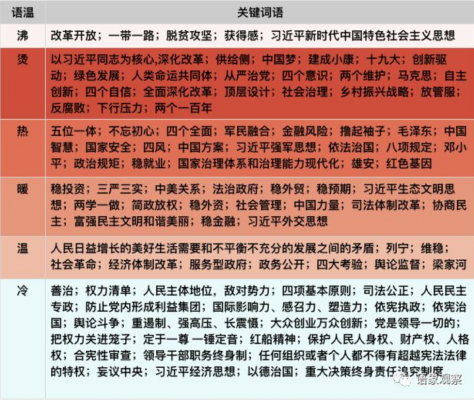
According to the six-level heat index developed by the China Media Project, here is how various important political phrases appeared in the People’s Daily:

One important thing to note as we look at phrase frequencies is that during February the total number of pages in the Party’s flagship newspaper was reduced to eight in light of the Spring Festival holiday, meaning that the total number of articles was likewise reduced, and so word frequencies were about half of what might usually be expected and we don’t see any dramatic changes in the temperature of various keywords. Continue reading ‘Low-level red’ and other concerns

Xinjiang party boss outed as PhD plagiarist (2)

PS on the plagiarized PhD theses of Chinese officials:

Yet one more separate investigation, by the Agence France Presse, concludes Chen Quanguo (the Xinjiang province party chief currently in charge of the new concentration camp system and genocide under way in Xinjiang), plagiarised his PhD — along with other officials who also did so.

It concludes that Chen’s thesis “includes over 60 paragraphs copied without citation from another work.”

Read more here: http://www.digitaljournal.com/news/world/top-chinese-officials-plagiarised-university-theses/article/544823

Or here: https://www.hongkongfp.com/2019/03/08/chinese-officials-plagiarised-university-theses-including-top-xinjiang-official-chen-quanguo/

Have there been any responses from, or any discernible consequences for, those outed as plagiarists?

Magnus Fiskesjö <nf42@cornell.edu>

Li Xueqin dies at 85 (5)

Thanks to Sarah Allen for her comments. I disagree, but let me also repeat that I do think Li Xueqin accomplished many feats of scholarship for which he should be credited and commended.

But not without discussion of questionable sides of his scholarship, which I wrote about, as mentioned. And yes I was there when he told us “I believe the old books,” that is: We should not be skeptical. And I’ll certainly side with those of his colleagues who argued, against Li, that no discovery of excavated texts or the like since the time of the original critical ‘doubts’ of Gu Jiegang and his colleagues, suggest that the time has come for such skepticism to be ‘left behind’ or ‘transcended.’ Continue reading Li Xueqin dies at 85 (5)

Oberlin position

East Asian Studies, Oberlin College, 316 Peters Hall, Oberlin, OH 44074
http://jobs.oberlin.edu/postings/7540
Visiting Assistant Professor of Chinese Language and Culture

The East Asian Studies Program at Oberlin College invites applications for a one-year, full-time non-continuing faculty position in Chinese Language, Culture, and Society. Appointment to this position will begin in the fall semester of the academic year 2019-2020, and will carry the rank of Visiting Assistant Professor.

The incumbent will teach a total of five courses, including at least three in Chinese language. One or two other courses, to be taught in English, will be in Chinese Studies in collaboration with the East Asian Studies Program.

Requirements include demonstrated excellence in teaching Chinese at all levels, commitment to teaching elementary Chinese, and evidence of strong scholarship and background in Chinese Studies in such fields as linguistics, film, literature, gender studies or other humanities and social science disciplines.

Among the qualifications required for appointment is the Ph.D. degree (in hand or expected by the first semester of the academic year 2019-2020). Candidates must demonstrate interest and potential excellence in undergraduate teaching. Successful teaching experience at the college level is required. Native or near-native proficiency in Chinese and in English is also required.

Categories: Chinese; Cultural studies.
Review of applications will begin on April 12, 2019.

Why China silenced a clickbait queen

Source: NYT (3/16/19)
Why China Silenced a Clickbait Queen in Its Battle for Information Control
By Javier C. Hernández

Chinese blogger Ma Ling, right, speaking at an event in Shanghai in 2018.CreditZhou Junxiang/ImagineChina

BEIJING — She was known as China’s clickbait queen, an irreverent blogger who prescribed shopping to combat sadness (“better than sex, orgasms, strawberry cake”) and makeovers to win back cheating husbands (“men are visual animals”).

But late last month, Ma Ling, a blogger who commanded an audience of more than 16 million people, went conspicuously silent.

In the battle for control of the Chinese internet, the authorities had designated Ms. Ma a threat to social stability, pointing to an article she published about a young man with cancer whose talent and virtue were not enough to overcome problems like corruption and inequality. Continue reading Why China silenced a clickbait queen

Love in the New Millennium nominated for Man Booker

Source: Radii (3/13/19)
Can Xue’s “Love in the New Millennium” Nominated for 2019 Man Booker International Prize
The 2019 Man Booker International Prize long list has been announced, with Chinese author Can Xue’s fantastical Love in the New Millennium among the nominees
By RADII CHINA

Chinese avant-garde author Can Xue’s “darkly comic” novel Love in the New Millenium has made the Man Booker International Prize 2019 long list. The story follows “a group of women [that] inhabits a world of constant surveillance” and represents the “most ambitious work of fiction by a writer widely considered the most important novelist working in China today”, according to its English language publisher, Yale University Press.

Deng Xiaohua, the author behind the Can Xue pseudonym, was born in Changsha, in China’s southern province of Hunan. Her father, the one-time editor-in-chief of a prominent newspaper in the province, was labelled an “Ultra-Rightist” in the late 1950s along with other intellectuals of the period, and was sent to the countryside for two years for allegedly leading an anti-Communist group at the paper. Continue reading Love in the New Millennium nominated for Man Booker