Why Test for OPP?

Rachael Gately, DVM, Cummings School of Veterinary Medicine, Tufts University

Ovine Progressive Pneumonia (OPP) is a viral disease of sheep that has been reported to affect over 25% of sheep in North America. Ovine Progressive Pneumonia is closely related to Caprine Arthritis and Encephalitis (CAE) that affects goats. Both diseases manifest similarly in each species. Ovine Progressive Pneumonia can cause a variety of clinical diseases ranging from chronic and progressive weight loss, difficulty breathing, swollen joints and lameness, as well as hard, unproductive udders. The most common presentation of the disease; however, has no clinical signs of illness. Unfortunately, sheep exhibiting any of the presentations listed above can spread the disease through nose-to-nose contact or through infected colostrum and/or milk. Once a sheep becomes infected, they are infected for life. Continue reading Why Test for OPP?

For Sheep Producers, a Trace of Trace Minerals Worth a Pound of Cure

Whit Stewart, Extension Sheep Specialist, University of Wyoming
(Previously published in Barnyards & Backyards, July 2018)

As summer progresses and forage quality declines, we are quick to think of shortfalls in protein and energy in nutritional management yet tend to overlook micronutrients such as trace minerals. Even though these are required in relatively smaller quantities than protein and energy, they are essential for basic physiological functions and should be prioritized.

Essential macro minerals, including calcium, chloride, magnesium, phosphorus, potassium, sodium, and sulfur make up major components of skeletal and nervous systems and are usually expressed as a percentage of the diet. In contrast, micro minerals, or trace minerals, are required Continue reading For Sheep Producers, a Trace of Trace Minerals Worth a Pound of Cure

Rain Damage to Hay

Rory Lewandowski, OSU Extension Educator ANR, Wayne County

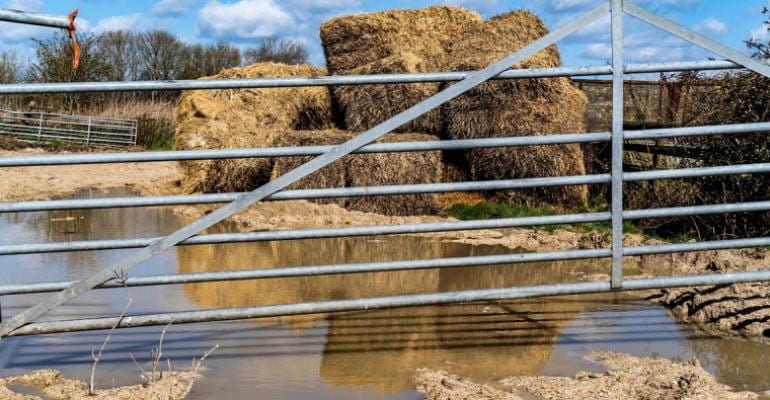
(Image Source: Staheli West)

It’s turned into another challenging and frustrating year to make hay as above normal rainfall continued through the end of June. I recently read an article in Hay and Forage Grower on-line entitled “Cursing the raindrops”, in which author Mike Rankin addressing this year’s weather patterns said, “Those putting up high-moisture forage have an uphill battle. If you’re in the dry hay business, it’s a Mount Everest situation.” The age-old question for anyone trying to make hay with rain in the forecast is mow sooner rather than later and risk rain on the cut forage, or wait for a weather break and lose quality as the forage continues to mature?

Rain on mowed forage causes a reduction in quality and can result in dry matter (quantity) losses as well. According Continue reading Rain Damage to Hay

Supplementation of Pasture-Raised Lambs Increases Animal Performance and Health

Brady Campbell, Program Coordinator, OSU Sheep Team

To capitalize on the niche market of grass-fed lamb products, have you ever considered placing a group of feeder lambs on pasture? The utilization of pastureland and the financial return from grass-fed products makes this type of production system profitable. However, grass-fed lamb production does not come without challenges. According to the USDA, in order for a product to be labeled as grass-fed, the animal must be fed solely forages, with the exclusion of its mother’s milk prior to weaning. From a production standpoint, this can be a difficult as research has shown that lambs finished on pasture take a longer period of time when compared to their counterparts fed grain. Lambs on pasture also face the challenge of parasitic infection. In an effort to decrease the effects of parasites and increase lamb body weight gain on pasture, producers may choose to supplement lambs while on pasture. However, supplementation of grain or grain by-products is not permitted by Continue reading Supplementation of Pasture-Raised Lambs Increases Animal Performance and Health

Planning Ahead: There is Still Time to produce Quality Feed for the Winter

Chris Penrose, OSU Extension Educator ANR, Morgan County

We are starting to get an idea of how much stored feed we will have for the winter and in many circumstances, the quality will be low. Even if our livestock get plenty of hay this winter, the quality may be so low that the hay cannot meet their nutritional needs. There may need to be supplementation. We have a couple options: we can purchase supplements, utilize harvested crop residue, or we still grow some crops for fall and winter supplementation.

One product many producers buy is protein tubs. While the animals really like these products, it does not address their most pressing need: energy. The most commonly used product used to supply energy is corn. Adding some corn or Continue reading Planning Ahead: There is Still Time to produce Quality Feed for the Winter

Do Not Let a Tick Bite Make You Allergic to Dinner

Dr. Tim McDermott, OSU Extension Educator ANR, Franklin County

Livestock producers have had a lot on their plates lately. The weather including constant rain has damaged pasture as well as made timely hay making difficult. While I do not want to add to this list of worries, I want to make sure to educate producers that there is a new-ish tick concern that can dramatically affect the lifestyle of a producer of swine, cattle, and small ruminants. Over the last decade we have seen an increase both in the spread of new tick species into our region as well as new diseases and allergic syndromes that can be vectored to producers from these invasive species. Lyme disease was Continue reading Do Not Let a Tick Bite Make You Allergic to Dinner

Feeding Moldy Hay can Create Problems in Livestock

Feedstuffs staff
(Previously published on Feedstuffs on June 24, 2019)

(Image Source: Feedstuffs – Oklahoma State University)

Adverse weather conditions during or after baling can allow mold growth, but pastures may also pose contamination risk.

With the abundance of rain that has fallen in the Midwest over the last several weeks, farmers and ranchers are likely dealing with moldy hay and spoiled feed. Moldy or spoiled feed can present a health risk for multiple species, Oklahoma State University Cooperative Extension equine specialist Kris Hiney said.

“Hay can be unfit for livestock due to excessive moisture while baling or exposure to the elements, such as excessive rain or flooding. Molds present in the feed may contain mycotoxins, which can cause significant health issues,” Hiney said. “While only some molds produce Continue reading Feeding Moldy Hay can Create Problems in Livestock

Assessing your Pastures – Both Above and Below the Surface

Tony Nye, OSU Extension Educator ANR, Clinton County

Having issues with your pastures? A soil test is always a great place to start!

Now is the time to start assessing the overall conditions of your pastures to decide what management steps must be taken to continue having a productive pasture for the coming year. Looking at the overall pasture composition becomes an important step to determining if any improvement is necessary.

What is the percent of bare ground exposed? Is it due to heavy traffic, over grazing, poor drainage or poor fertility? What is the amount of grass to legumes throughout the pasture? Do you have a lot of weeds? These are some important questions that we need to ask ourselves as we continue to battle challenging pasture and weather challenges this year. Continue reading Assessing your Pastures – Both Above and Below the Surface

Summer Management of Replacement Ewe Lambs

Dr. Scott P. Greiner, Professor and Extension Animal Scientist, Beef/Sheep, Department of Animal & Poultry Sciences, Virginia Tech
(Previously published with Premier1Supplies)

Successful development,breeding, and lambing of ewe lambs is one of most important tasks of the shepherd. Summer is a critical time for the development of replacement ewe lambs as they make the transition from weaning to members of the breeding flock. Proper management of replacement ewe lambs during this time is critical to their future productivity and profitability.

In most breeding systems, replacement ewe lambs will be generated from within the flock. Therefore, attention to maternal traits in the rams siring potential replacements is critical. Additionally, preference should be given to crossbred ewe lambs. Crossbred animals have two major advantages over straightbred animals: 1) Crossbred animals exhibit heterosis (hybrid vigor), and 2) Crossbred animals combine the strengths of the breeds used to form the cross (breed complementarity). Crossbred females are superior to straightbreds for reproductive performance due to advantages received from heterosis. Crossbred ewes exhibit significant advantages Continue reading Summer Management of Replacement Ewe Lambs

Nutritional Flushing of Small Ruminants – Preparing for Fall Breeding

Washington State University Extension, Animal Agriculture
(Previously published on the WSU Extension Animal Agriculture page)

Introduction
Flushing isn’t just an aspect of indoor plumbing—it’s also part of a well-managed flock’s nutrition and reproduction program. This article will address the why’s and how’s of flushing sheep and goats.

Flushing Defined
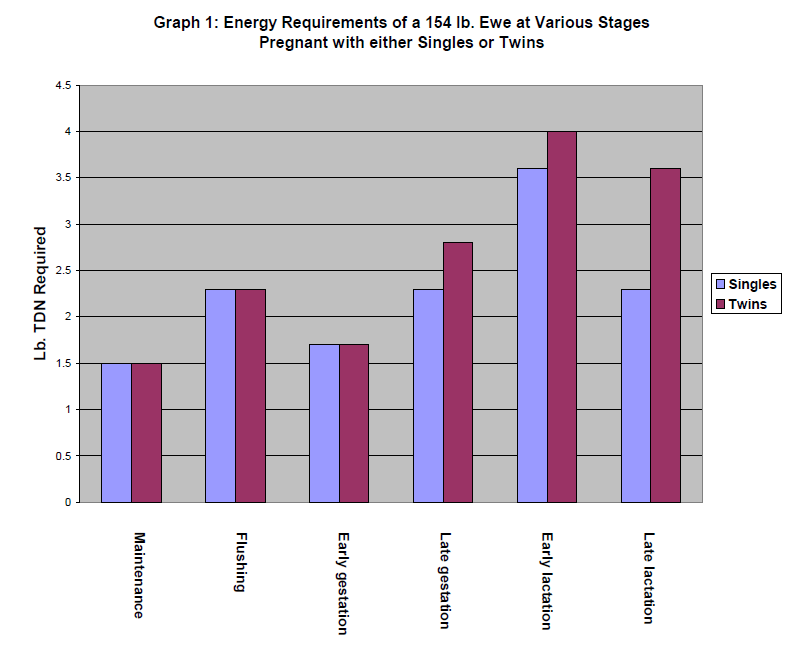
What is flushing, anyway? The term describes a temporary but purposeful elevation in the plane of nutrition around breeding time. Its objective is to boost ovulation, conception, and embryo implantation rates. Flushing may also increase the proportion of females that exhibit estrus. Boosting these rates increases lambing and kidding rates by Continue reading Nutritional Flushing of Small Ruminants – Preparing for Fall Breeding

Improve Summer Pastures with Crabgrass

Michaela King, Hay and Forage Grower summer editorial intern
(Previously published in Hay & Forage Grower: June 18, 2019)

(Image Source: Noble Research Institute)

After being brought to the forefront by studies done at the Noble Research Institute (Ardmore, OK), crabgrass began gaining favor as a high-quality forage alternative. Many farmers are now considering it for improving summer pastures.

In an Arkansas Dairy e-News article, John Jennings, an extension forage specialist with the University of Arkansas (UA), notes crabgrass is a warm-season annual and, depending on rainfall, produces 2-5 tons of dry matter per acre. Crabgrass hay is typically better quality than Continue reading Improve Summer Pastures with Crabgrass

Grazing Management – Reducing the Use of Anthelmintics

Wormboss
(Previously published on Wormboss, Tests and Tools, Sheep)

Problem:
Continually high worm burdens in your grazing animals resulting in the need to drench more frequently.

Solution:
Managing the frequency and intensity with which livestock graze pasture reduces the number of infective larvae ingested from the pasture each day.

Benefit:
Effective grazing management will reduce the exposure of vulnerable sheep to larvae on pasture and the need for chemical (drench) intervention and at the same time provide nutrition to allow sheep to better deal with parasites. Continue reading Grazing Management – Reducing the Use of Anthelmintics