Late Summer Establishment of Perennial Forages

Rory Lewandowski, OSU Extension Educator ANR, Wayne County
Dr. Mark Sulc, OSU Extension Forage Specialist, The Ohio State University

We are quickly approaching the second good opportunity of the year for establishing perennial forage stands, which is in the month of August. Most of us were not able to establish forages this spring, and many existing stands were damaged by the winter followed by the heavy rainfall this year. It is time to make preparations and be ready to plant perennial forage stands in the next few weeks.
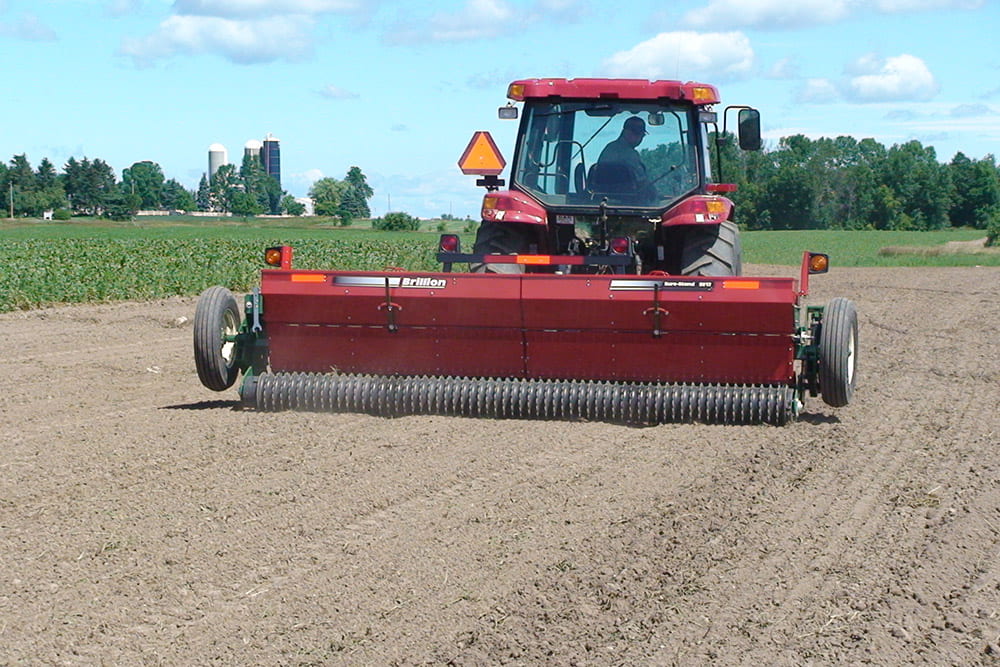
Typically, the main risk with late summer forage seedings is sufficient moisture for seed germination and plant establishment. However, many parts of Ohio have adequate soil moisture from recent rains, and the outlook for the first half of August is for normal precipitation levels. Prepare now and be ready to take advantage of planting ahead of storm fronts as they occur in late July and early August. Continue reading Late Summer Establishment of Perennial Forages

Can Veggies Stand in for Poor Hay this Year?

Chris Penrose, OSU Extension Educator ANR, Morgan County

Many of us have harvested hay way past its prime this year, the protein and energy is low, and the fiber is high. There is a way to balance the needs of our ruminants this fall by planting some veggies.

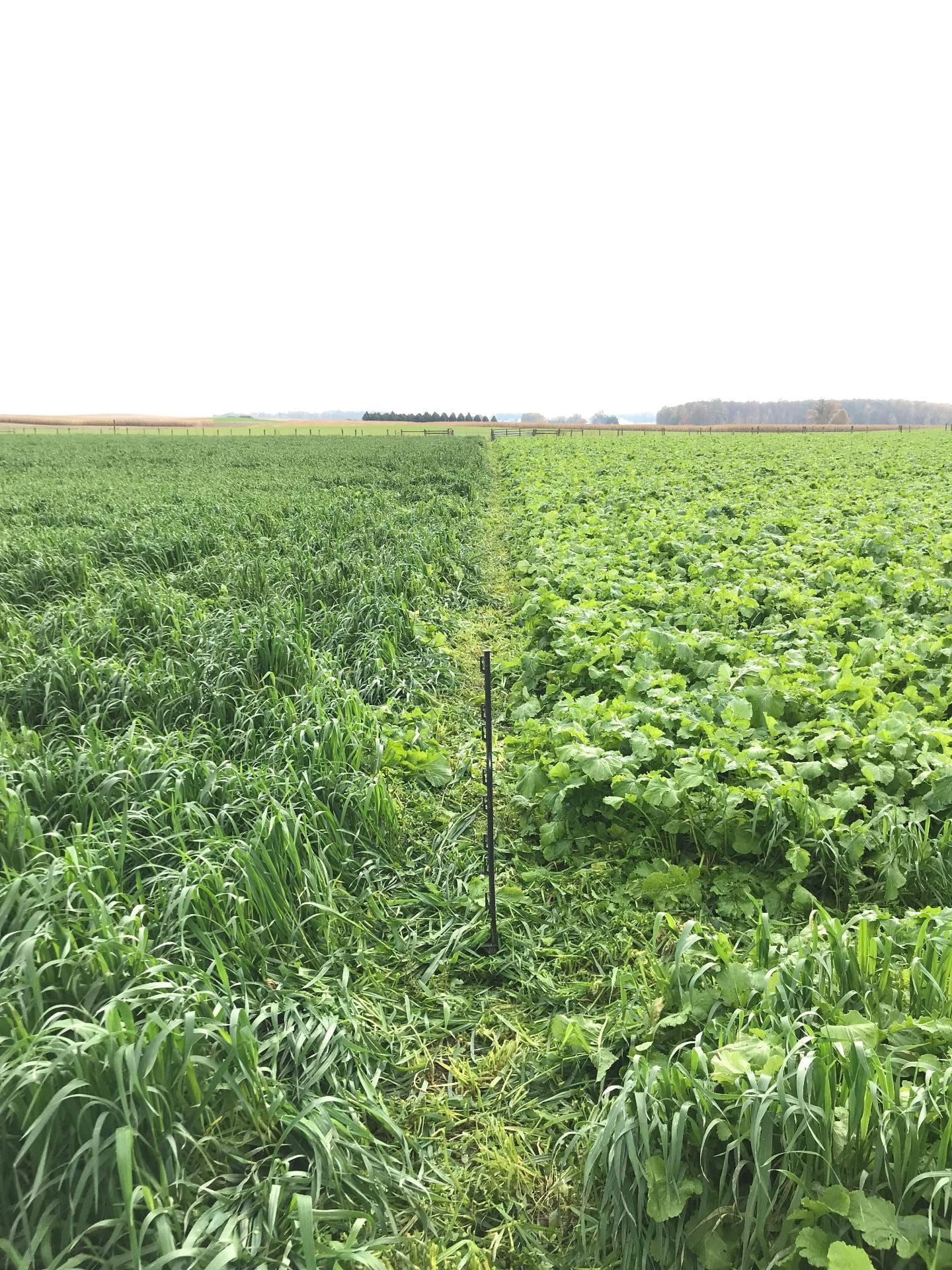
Turnips, rape, kale, rutabagas, and swedes are all examples of some veggies from the brassica family we can plant for livestock for feed this fall with turnips being the most common.

Many studies and producer experiences reinforce that brassicas are a viable option to extend the grazing season, and reduce stored feed costs. They tend to have good protein and energy, and are low in fiber (see how this can make for good feed supplemented with poor quality hay). Continue reading Can Veggies Stand in for Poor Hay this Year?

Rain Damage to Hay

Rory Lewandowski, OSU Extension Educator ANR, Wayne County

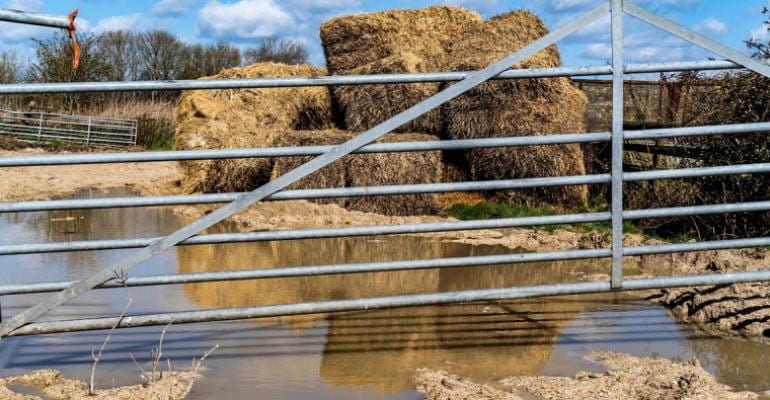
(Image Source: Staheli West)

It’s turned into another challenging and frustrating year to make hay as above normal rainfall continued through the end of June. I recently read an article in Hay and Forage Grower on-line entitled “Cursing the raindrops”, in which author Mike Rankin addressing this year’s weather patterns said, “Those putting up high-moisture forage have an uphill battle. If you’re in the dry hay business, it’s a Mount Everest situation.” The age-old question for anyone trying to make hay with rain in the forecast is mow sooner rather than later and risk rain on the cut forage, or wait for a weather break and lose quality as the forage continues to mature?

Rain on mowed forage causes a reduction in quality and can result in dry matter (quantity) losses as well. According Continue reading Rain Damage to Hay

Supplementation of Pasture-Raised Lambs Increases Animal Performance and Health

Brady Campbell, Program Coordinator, OSU Sheep Team

To capitalize on the niche market of grass-fed lamb products, have you ever considered placing a group of feeder lambs on pasture? The utilization of pastureland and the financial return from grass-fed products makes this type of production system profitable. However, grass-fed lamb production does not come without challenges. According to the USDA, in order for a product to be labeled as grass-fed, the animal must be fed solely forages, with the exclusion of its mother’s milk prior to weaning. From a production standpoint, this can be a difficult as research has shown that lambs finished on pasture take a longer period of time when compared to their counterparts fed grain. Lambs on pasture also face the challenge of parasitic infection. In an effort to decrease the effects of parasites and increase lamb body weight gain on pasture, producers may choose to supplement lambs while on pasture. However, supplementation of grain or grain by-products is not permitted by Continue reading Supplementation of Pasture-Raised Lambs Increases Animal Performance and Health

Planning Ahead: There is Still Time to produce Quality Feed for the Winter

Chris Penrose, OSU Extension Educator ANR, Morgan County

We are starting to get an idea of how much stored feed we will have for the winter and in many circumstances, the quality will be low. Even if our livestock get plenty of hay this winter, the quality may be so low that the hay cannot meet their nutritional needs. There may need to be supplementation. We have a couple options: we can purchase supplements, utilize harvested crop residue, or we still grow some crops for fall and winter supplementation.

One product many producers buy is protein tubs. While the animals really like these products, it does not address their most pressing need: energy. The most commonly used product used to supply energy is corn. Adding some corn or Continue reading Planning Ahead: There is Still Time to produce Quality Feed for the Winter

Feeding Moldy Hay can Create Problems in Livestock

Feedstuffs staff
(Previously published on Feedstuffs on June 24, 2019)

(Image Source: Feedstuffs – Oklahoma State University)

Adverse weather conditions during or after baling can allow mold growth, but pastures may also pose contamination risk.

With the abundance of rain that has fallen in the Midwest over the last several weeks, farmers and ranchers are likely dealing with moldy hay and spoiled feed. Moldy or spoiled feed can present a health risk for multiple species, Oklahoma State University Cooperative Extension equine specialist Kris Hiney said.

“Hay can be unfit for livestock due to excessive moisture while baling or exposure to the elements, such as excessive rain or flooding. Molds present in the feed may contain mycotoxins, which can cause significant health issues,” Hiney said. “While only some molds produce Continue reading Feeding Moldy Hay can Create Problems in Livestock

Improve Summer Pastures with Crabgrass

Michaela King, Hay and Forage Grower summer editorial intern
(Previously published in Hay & Forage Grower: June 18, 2019)

(Image Source: Noble Research Institute)

After being brought to the forefront by studies done at the Noble Research Institute (Ardmore, OK), crabgrass began gaining favor as a high-quality forage alternative. Many farmers are now considering it for improving summer pastures.

In an Arkansas Dairy e-News article, John Jennings, an extension forage specialist with the University of Arkansas (UA), notes crabgrass is a warm-season annual and, depending on rainfall, produces 2-5 tons of dry matter per acre. Crabgrass hay is typically better quality than Continue reading Improve Summer Pastures with Crabgrass

Don’t let 2019 be a Barn Burner

Michaela King, Hay and Forage Grower summer editorial intern
(Previously published in Hay & Forage Grower: June 11, 2019)

This spring has not been a kind one to farmers; it’s wet, and the forecast continues to call for more rain. Fields are being left unplanted, and hay is losing nutritional value with each passing day.

If current weather patterns continue, this sets up a scenario where hay harvest moisture is pushed to the limit or cut hay gets rained on.

Do you bale wet hay with the risk of it heating and producing mold, or do you continue to let the nutritional value of the crop drop? Continue reading Don’t let 2019 be a Barn Burner

Forage Analysis: What Numbers Do I Need

Justin W. Waggoner, Kansas State University
(Previously published in The Stock Exchange News: May 30, 2019)

One the more common questions I receive with regard to analytical testing of forages and other feedstuffs is, “I have the sample, now what do I test for or what analysis package should I select?”

The basic components that nutritionists need to evaluate a feedstuff or develop a ration are dry matter or moisture, crude protein, an estimate of the energy content of the feedstuff — Total Digestible Nutrients (TDN), Net Energy for Maintenance (NEm), Net Energy for gain (NEg), and the macro minerals, Calcium and Phosphorous. These are the most basic numbers that are required, but Continue reading Forage Analysis: What Numbers Do I Need

Emergency Forages for Planting Early to Mid-Summer

Dr. Mark Sulc, OSU Extension Forage Specialist, The Ohio State University
Dr. Bill Weiss, Dairy Nutritionist, The Ohio State University

Many forage stands were damaged this past winter, and the wet spring has further deteriorated stands that appeared they might recover. It is now too risky to try to establish perennial forages, with the warmer summer weather at our doorstep. We should wait until August to establish perennial stands. Meanwhile, what options can we consider for growing forage this year?

We are also well past the time when cool-season species like oats, triticale, Italian ryegrass, spring barley can be planted. As we move into late May and early June, we must switch to planting warm-season species. Continue reading Emergency Forages for Planting Early to Mid-Summer