Sorry We’ve Missed Ya!

Brady Campbell, Program Coordinator, OSU Sheep Team

Email notifications are currently unavailable for all u.osu.edu web pages. As we work with the university to solve this problem, please note that we will continue to post new content on our page each week! It is our hope that this issue will be resolved soon and you will be receiving your weekly subscription per usual. In the meantime, be sure to check out our page directly by visiting us at sheep.osu.edu.

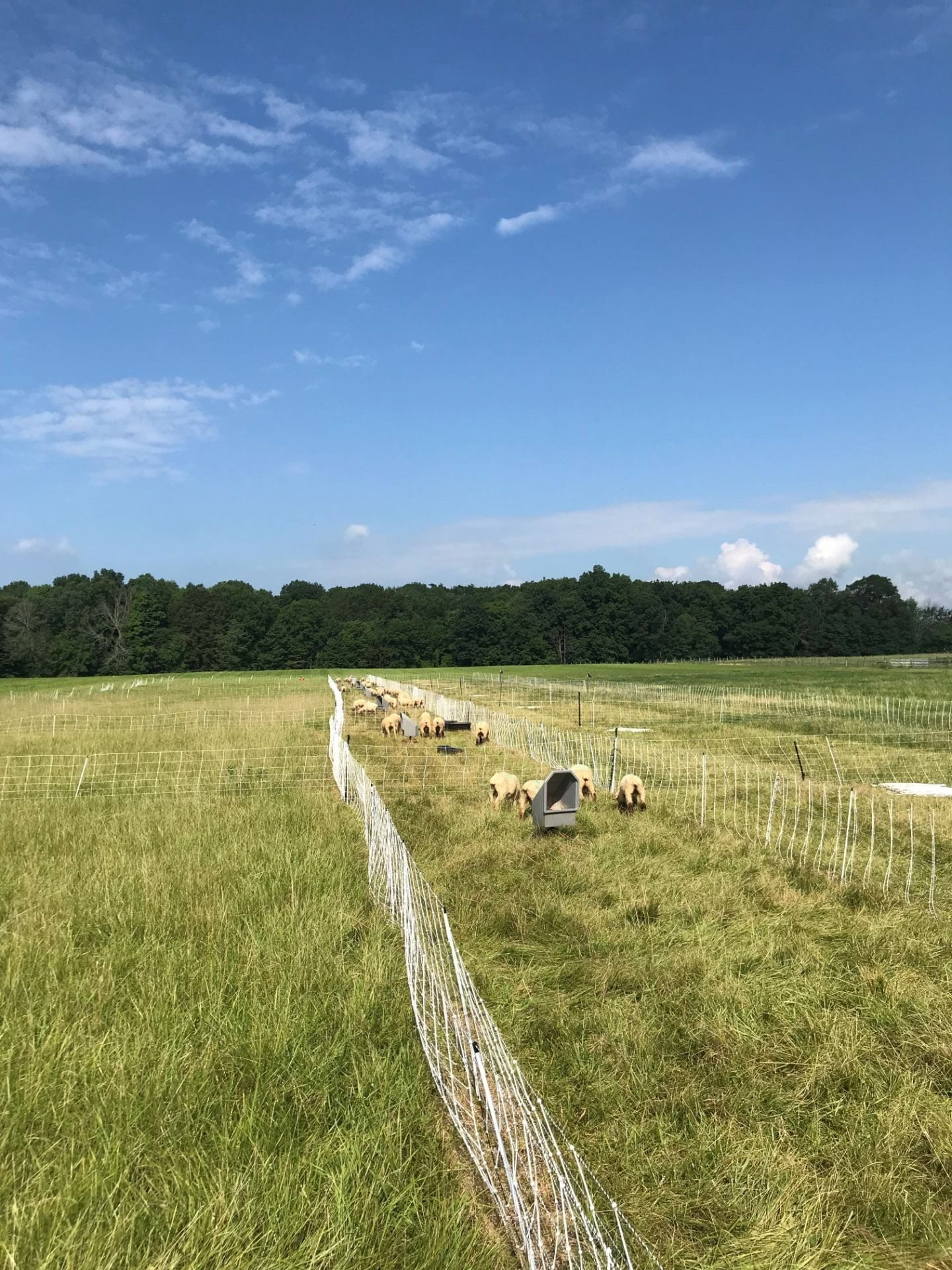
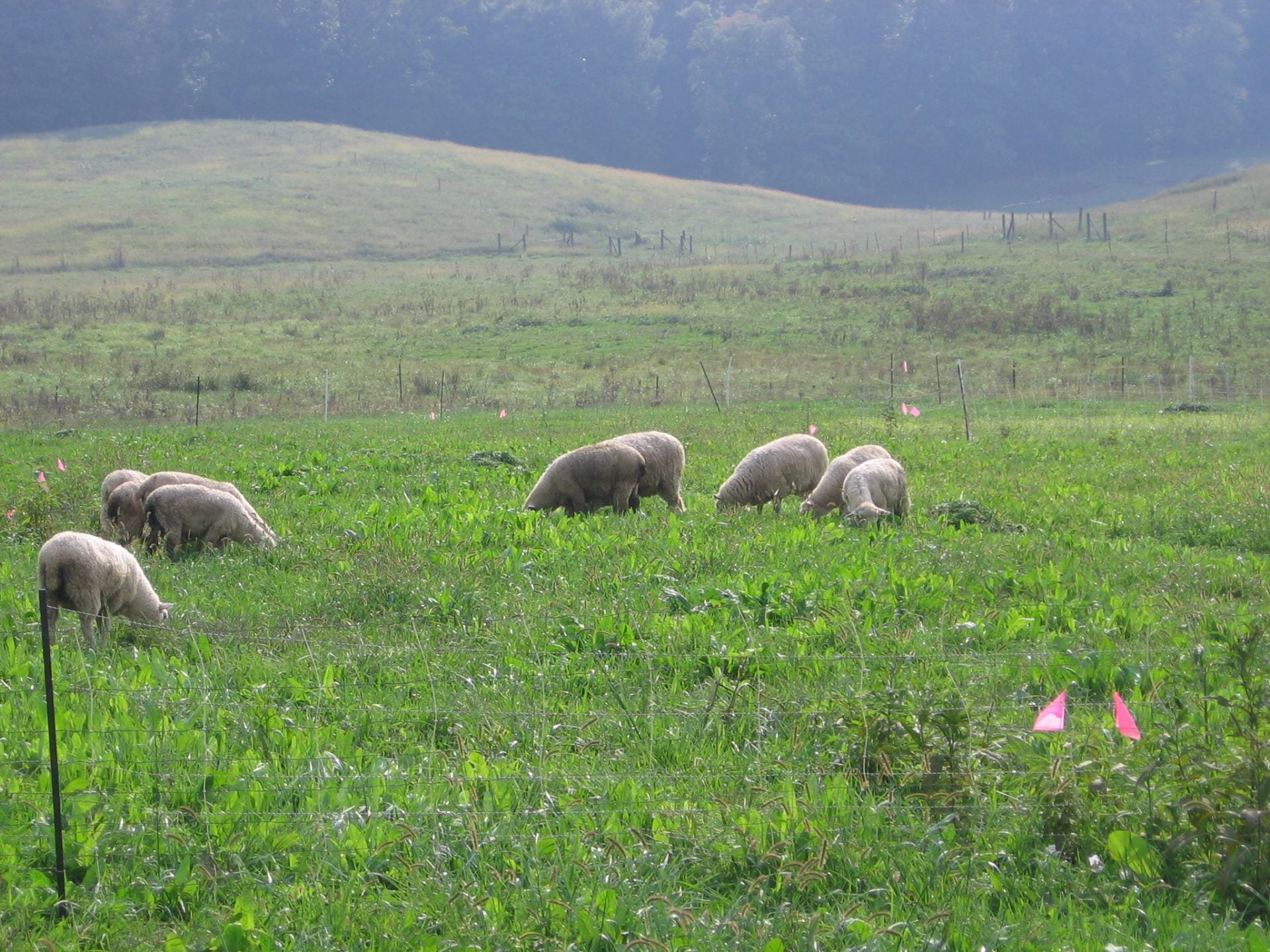
With that, I’ll leave you with one of my favorite pictures from this summers grazing project.

Until we jump back into your inbox, happy shepherding!
Multi-species Grazing can Improve Utilization of Pastures

Jodie Pennington, Small Ruminant Educator, Lincoln University, Newton County Extension Center
(Previously published on Extension – Goats, August 14, 2019)

Multi-species grazing is the practice of using two or more livestock species together or separately on the same pasture-land in a specific growing season. With an understanding of the different grazing behaviors of each species, various combinations of animals can be used to more efficiently utilize the forages in a pasture. Different species of livestock prefer different forages and graze them to different heights. Cattle tend to be intermediate grazers. They graze grasses and legumes and bite with their mouth and tongue. Sheep and horses graze closer to the ground than cattle. Sheep and goats eat forbs (brushy plants with a fleshy stem) and leaves better than cattle or horses. Many weeds in a grass pasture are forbs. Cattle and horses tend to graze grasses better than small ruminants such as sheep and goats. Continue reading Multi-species Grazing can Improve Utilization of Pastures

Animals in our Lives – Featuring Dr. Temple Grandin

Brittany Fischer, Program Coordinator, CHAIRE

Please join us on Monday, September 30th for a most enjoyable evening featuring Dr. Temple Grandin! The evening will include a short introduction to the Center for Human-Animal Interactions Research & Education  (CHAIRE), a plated dinner, a silent auction, animals from the Columbus Zoo & Aquarium, a presentation by Dr. Peter Neville, and a presentation by Dr. Temple Grandin. This is a fundraising event for CHAIRE and seats are limited!

The event will be held at the Dave Thomas Conference Center, 1 Dave Thomas Blvd., Dublin, OH 43017. Doors will open at 5:00 pm, with zoo animal viewing at 5:00 pm – 6:00 pm, with the program beginning at 6:00 pm.

For more information and registration access, please visit our web page. The deadline for event registration is Sunday, September 22nd. We hope to see you there!

2019 Ohio State Fair Carcass Lamb Results

2019 Lamb Carcasses Final
For those directly involved in the livestock business, exhibiting your animals at the county, state, or national level is always an exciting venture. In Ohio, the Ohio State Fair is a great opportunity to allow our youth to showcase their summers hard work by exhibiting their market lamb projects. While winning a purple banners is the goal for most, we must not loose sight of what the ultimate end product will be from our livestock projects. This year, our team was able to capture the carcass results from the Breed Champion Lambs at the Ohio State Fair in real time using this unique video. Remember, regardless of the species, your livestock project goes beyond ring appeal.  For those of you with questions regarding carcass quality and evaluation, feel free to contact us. Enjoy!

Find the Right Cool-season Annual Grass

Michaela King, Hay and Forage Grower summer editorial intern
(Previously published in Hay & Forage Grower: August 20, 2019)

They say that repetition is the key to learning. Over the past several months, Extension educators and researchers have discussed and provided many options for producers to increase the amount of high quality forage that can use to feed their livestock with for the upcoming year. Be sure to take a quick look at this short piece as it quickly outlines some of the important basics of some common forages options and soil health considerations.

When Southern warm-season grasses go dormant and become unproductive, there are a wide variety of cool-season annual grasses that can be used to extend grazing periods into the winter and spring months. Continue reading Find the Right Cool-season Annual Grass

Water Quality Problems that Affect Livestock Production

Sandy Smith, OSU Extension Educator ANR, Carroll County
(Previously published in Farm & Dairy, August 22, 2019)

(Image Source: Farm & Dairy)

We have all been really concerned with the effects that the unpredictable weather has had on forage production this year.

First, we had so much rain and even flooding that delayed forage growth and quality haymaking. Now we are experiencing areas of semi-drought conditions in some areas.

We all have had places in our counties that it rained 3 inches in one area and three miles down the road, or less as the crow flies, they may only have received a half an inch. Continue reading Water Quality Problems that Affect Livestock Production

Forage Focus: August Plantings

August Plantings:
Do note that planting date cut offs mentioned in this clip are not concrete, we never know how long fall will last, how early winter will come, or how much rain we will get as we experienced this spring. Producers are able to plant into September, but as noted above we take a risk with the uncertainty of weather patterns. In addition, it is important to note that the charts shown in this example apply to perennial forages sown and grown in southern Ohio. As you move north in the state, the planting dates will slightly differ.

Shepherds Can Manage for Cache Valley Virus

Micky Burch, livestock producer
(Previously shared on Premier1Supplies Sheep Guide)

(Image Source: Premier1Supplies)

It seems that in our part of the country—west central Iowa, that is—Cache Valley Virus (CVV) has been most prevalent just in the last couple of years. Until the lambing season of 2011, I’d personally never even heard of CVV. But that spring, many producers across the state seemed to have been hit with the disease to some degree. We were lucky; only one lamb born on our place had to be pulled with the assistance of a veterinarian and an epidural, producing a mummified lamb. Some other folks I know weren’t so lucky and lost a large percentage of their lamb crop to the debilitating disease. Continue reading Shepherds Can Manage for Cache Valley Virus

2019 Fall Statewide Sheep Shearing School

Brady Campbell, Program Coordinator, OSU Sheep Team

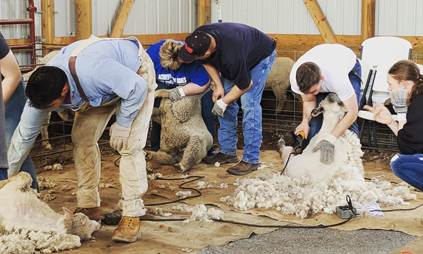
Are you interested in learning a new skill set that will greatly benefit sheep industry? Are you interested in the potential to make some money on the side working with your favorite small ruminant species? If you answered yes to both of these questions, look no further! All thanks to the support of the Ohio Sheep Improvement Association, the next sheep shearing school will be held on Friday and Saturday, September 13th and 14th from 9:00 am – 4:00 pm at the Dave Cable Farm in Hebron, Ohio. Continue reading 2019 Fall Statewide Sheep Shearing School

Best Practices Aim to Increase Productivity for Lamb Producers

American Lamb Board
(Previously published in the American Lamb Board Newsletter, August 8, 2019)

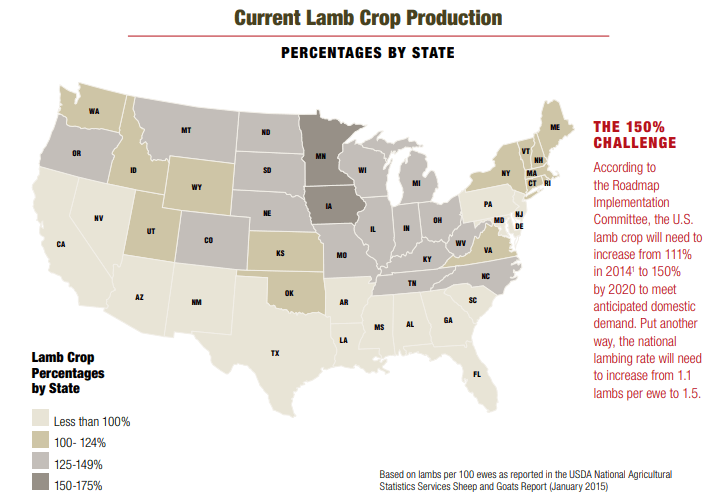
Helping each sheep producer find ways to be more efficient plus take more control of flock productivity, both of which protect against price volatility, is the bottom line reason for the Best Practices to Increase Your Lamb Crop fact sheets. The series is a joint effort of the American Lamb Board (ALB) and the American Sheep Industry Association’s Let’s Grow program. These fact sheets were developed by a group of industry experts and are designed to help producers increase their productivity and profitability. Continue reading Best Practices Aim to Increase Productivity for Lamb Producers

Investments for Animal Feeding: Fence vs. Implements

Christine Gelley, OSU Extension Educator ANR, Noble County

Years like 2019 can test farmers and ranchers to the brink of insanity. People in this profession must be resilient to the unpredictability of weather, markets, and the general chaos of life. All year thus far, we have discussed many ways to adapt our animal feeding programs, pasture systems, and hay production to the far from ideal conditions we are facing.

By now, I hope you have read articles, listened to podcasts, watched videos, talked with your neighbors and your local Ag. Extension educators about what to do next. Crop selection, site management, and soil health have been huge topics addressed regarding cover crops for prevent plant acres, damaged pastures, weeds, poor quality hay, feed shortages, and much more!

But, I’m going to take this article a different direction… Continue reading Investments for Animal Feeding: Fence vs. Implements

Hoof Care—Treatment and Prevention

Susan Schoenian, Sheep & Goat Specialist, University of Maryland Small Ruminant Extension Program
(Previously shared on Premier1Supplies Sheep Guide)

Hoof care is an important aspect of sheep production and management. Hoof diseases can affect the health and welfare of sheep and have a negative effect on productivity. Hooves should be regularly checked for disease and excess growth. Animals which have excessive hoof growth, recurrent hoof problems and/or fail to respond to treatment should be culled.

Hoof trimming
Hoof growth—and thus, the need for hoof trimming—is affected by many factors, including breed and genetics, soil moisture and characteristics, management and nutrition. Sheep grazed on Continue reading Hoof Care—Treatment and Prevention