Management
The Benefits of Shearing Before Lambing
Richard Ehrhardt, Michigan State University Extension Specialist, Small Ruminants
(Previously published on MSU Extension, Sheep & Goat)
Shearing before 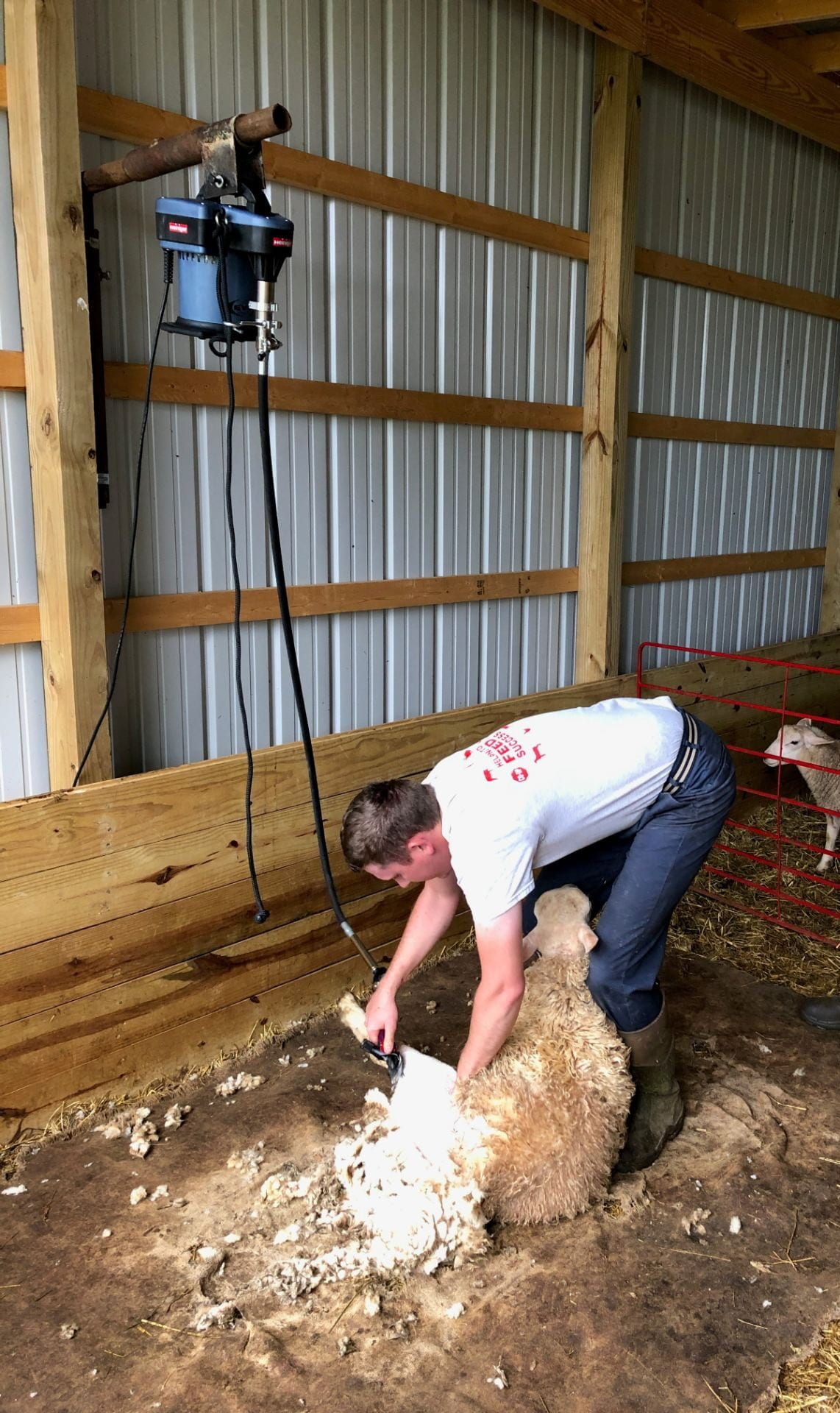 lambing is a practice that benefits the welfare of the sheep as well as making management easier and increasing flock productivity. There are important considerations to keep in mind to perform this practice effectively. These relate primarily to timing relative to birth, stubble length, feeding, and protection post-shearing. If these conditions are considered carefully, the benefits are significant to both sheep and shepherd.
#1. Drier environment: Wool holds considerable moisture, with a full fleece capable of absorbing a lot of water under humid climates, even when sheep are housed indoors. This moisture holding capacity of wool creates a microclimate close to the lamb that is relatively damp, thus creating a prime environment for hosting pathogens and allowing them to proliferate. Both the
Baled Haylage for Sheep
Anita O’Brien, Sheep and Goat Specialist, Ontario Ministry of Agriculture, Food, and Rural Affairs
(Previously published online as an OMAFRA publication: October 31, 2008)
Feeding haylage to sheep is less common than the feeding of dry hay rations. However, a number of producers have been feeding haylage to sheep in Ontario, causing more to consider it as a component of, or an alternative to their current feeding program.
This paper will be limited only to discussions on baled haylage, with limited references to conventionally stored haylage.
Why the Interest?
Baled haylage offers producers a greater flexibility in harvesting their winter feed supply, the potential for improved quality in feed, and less wastage from feeding. Baled haylage requires less drying time than conventional hay (50 to 60% versus 16 to 18% moisture), so that during poor drying conditions, quality feed can still be made. Because of the higher moisture content in baled haylage, there is Continue reading Baled Haylage for Sheep
Multi-Species Grazing as an Alternative to Pasture Spraying
James Doyle, Extension Natural Resource Management Field Specialist, South Dakota State University
(Previously published by South Dakota State University Extension: August 6, 2020)

(Image Source: Rocky Lemus, Progressive Forage)
Broadacre spraying of pastures is intended to reduce undesirable plants and increase grasses for livestock. This practice often results in unintended consequences including damage and reduction of native forbs and reduced profitability. One approach to managing perceived “weedy” plants that can offset those negative outcomes is incorporating different species of livestock into a grazing operation.
All species of livestock have different dietary preferences, and producers can harness this to help manage their plant communities in an ecologically and economically sustainable manner. Small ruminants, in particular sheep and goats, are the most common livestock species that are added alongside a cattle enterprise.
All species of livestock have different preferences when it comes to selecting the species of plants they consume, as demonstrated in the image above.
Continue reading Multi-Species Grazing as an Alternative to Pasture Spraying
Best Practice Sheep Handling
Spider Syndrome in the Sheep Flock
Gerald Q. Fitch, Extension Sheep Specialist, Oklahoma State University
(Previously published with Oklahoma State University Extension: March, 2017)
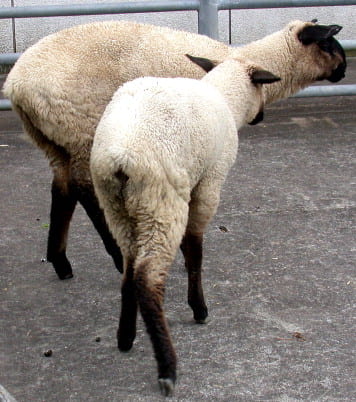
(Image Source: Thompson and Dittmer, 2008)
Spider Syndrome is a genetic problem, common in the Suffolk breed and becoming more common in the Hampshire breed. Spider syndrome has been compared to dwarfism in beef cattle. It has been prevalent since the 1950s. Spider syndrome has also been diagnosed in commercial flocks that keep brockle-faced lambs back as replacement ewes. Those ewes are coming from Suffolk or Hampshire rams that carry the syndrome. Researchers feel certain that spider syndrome is caused by a simple, autosomal, recessive gene. If a producer has a flock of carrier ewes and breeds them to a carrier ram, one-fourth of his or her lamb crop could have spider syndrome!!!
Diagnosis
Spider lambs are affected in one of two ways: 1) lambs are abnormal at birth and will probably never be able to stand, or 2) lambs appear normal at birth, but develop into a spider lamb at two weeks to six weeks of age.
Spider lambs usually Continue reading Spider Syndrome in the Sheep Flock
Nutrition for Lambing
Shelby Filley, Oregon State University, Regional Livestock and Forage
(Previously published on the Oregon State University Extension page: April, 2018)
Do you have your ewes nutritionally prepared for lambing and lactation? If not, that’s okay! There is still plenty of time to get this important task accomplished. Learn to put a nutrition plan in place early in the season so you can decrease problems with your ewes later.
Two phases of the ewe’s biological cycle need special dietary consideration when it comes to lambing:
- The first phase is the last four to six weeks of pregnancy, when 70% of fetal lamb growth occurs. In this late gestation period, ewes require significantly more dietary energy and protein than earlier in pregnancy. A good plane of nutrition here will help ensure that strong, healthy lambs are more easily delivered and have a good start in life. Ewes in poor nutritional condition are more susceptible to pregnancy toxemia, and may have weaker, lighter birth weight lambs to the point that lamb survival rate drops.
- The second phase of the ewe’s biological cycle for nutritional consideration is during lactation, especially during the first six to eight weeks after lambing when milk production is high. This is the time when the ewe has the greatest nutrient requirements for energy and protein.
Tall Fescue Poisoning
Gary D. Osweiler, DVM, MS, PhD, Veterinary Diagnostic and Production Animal Medicine, College of Veterinary Medicine, Iowa State University
(Previously published in Merck Manual: Veterinary Manual: December, 2014)
Fescue Lameness (Fescue foot)
Fescue lameness, 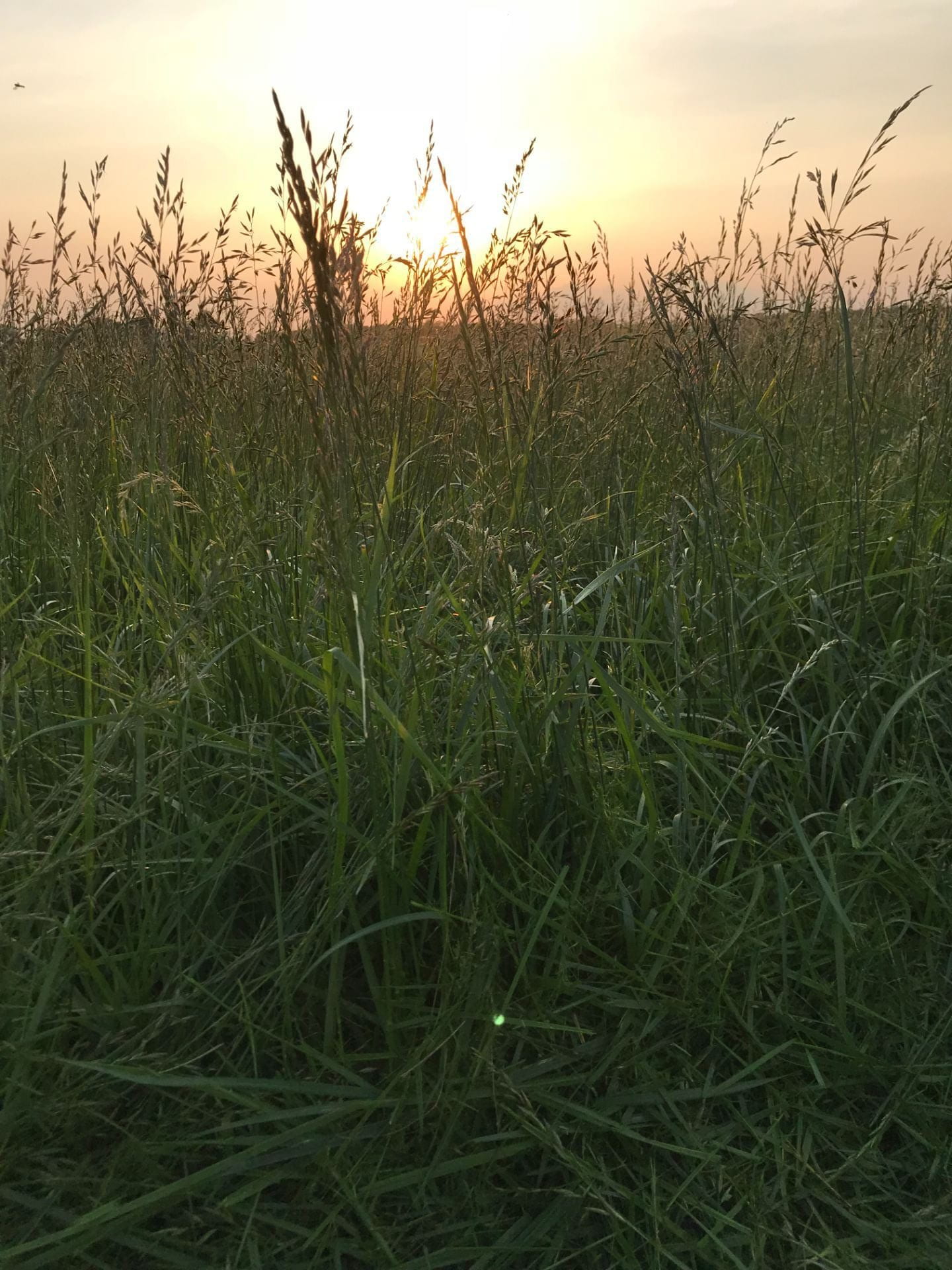 which resembles ergot poisoning, is believed to be caused by ergot alkaloids, especially ergovaline, produced by the endophyte fungus Neotyphodium coenophialum in tall fescue grass (Lolium arundinaceum, formerly Festuca arundinacea). It begins with lameness in one or both hindfeet and may progress to necrosis of the distal part of the affected limb(s). The tail and ears also may be affected independently of the lameness. In addition to gangrene of these extremities, animals may show loss of body mass, an arched back, and a rough coat. Outbreaks have been confirmed in cattle, and similar lesions have been reported in sheep.
Tall fescue is Continue reading Tall Fescue Poisoning
Extending the Grazing Season – 2020 Farm Science Review Agronomy Tent Virtual Poster
Did you miss us at Farm Science Review this year? We sure missed seeing you! Below is a short clip of Brady Campbell and Christine Gelley discussing their poster – Extending the Grazing Season – in the virtual Agronomy Tent for the 2020 Farm Science Review. Interested in viewing the poster? Follow this link to access. Enjoy!
Harvesting and Grazing Forages Following a Frost
Dr. Mark Sulc, OSU Extension Forage Specialist, The Ohio State University
Livestock  owners who feed forages need to keep in mind certain dangers of feeding forages after the recent frost events. Several forage species can be extremely toxic soon after a frost because they contain compounds called cyanogenic glucosides that are converted quickly to prussic acid (i.e. hydrogen cyanide) in freeze-damaged plant tissues. Some legumes species have an increased risk of causing bloat when grazed after a frost. In this article I discuss each of these risks and precautions we can take to avoid them.
Species with prussic acid poisoning potential
Agronomic species that can contain prussic acid are listed below in decreasing order of potential risk of toxicity after a frost event:
- Grain sorghum = high to very high toxic potential
- Indiangrass = high toxic potential
- Sorghum-sudangrass hybrids and forage sorghums = intermediate to high potential
- Sudangrass hybrids = intermediate potential
- Sudangrass varieties = low to intermediate in cyanide poisoning potential
- Piper sudangrass = low prussic acid poisoning potential
- Pearl millet and foxtail millet = rarely cause toxicity
Continue reading Harvesting and Grazing Forages Following a Frost
Forage Focus: Creating Alternative Forage Plans
Lice: What They Are and How to Control Them?
Wes Watson, Professor and Extension Specialist (Livestock & Poultry), Entomology & Plant Pathology, North Carolina State University
JM Luginbuhl, Professor Emeritus, Crop & Soil Sciences, North Carolina State University
(Previously published online: NC State Extension, October 1, 2015)

(Image Source: African blue louse: Rabinder Kumar and Jack Lloyd, University of Wyoming)
Lice are a common group of ectoparasitic insects of goats. Generally goat lice are host specific and only attack goats and their close relatives, such as sheep. There are five species of goat louse that fall into two categories based on feeding habits. The sucking lice feed by piercing the skin with tiny needle like mouthparts to take blood directly from the capillaries. The chewing lice (also known as biting lice) have large robust mouthparts designed to scrape and abrade the skin and hair. Chewing lice consume tiny bits of skin, skin secretions and hair for food. The feeding habits and activity of these insects result in discomfort and irritation to the animal. Infested animals often cause structural damage to farm facilities by rubbing and scratching on fences and posts resulting in hair loss, skin damage, wounds and secondary infections. Parasites cause animals to have an unthrifty appearance, poor feed conversion, and reduced weight gains and milk production. Continue reading Lice: What They Are and How to Control Them?