Military insider warns: never forget

Source: NYT (5/28/19)
30 Years After Tiananmen, a Chinese Military Insider Warns: Never Forget
阅读简体中文版 | 閱讀繁體中文版
A former People’s Liberation Army journalist defied a political taboo to describe the bloody crackdown in Beijing and urge a national reckoning.
by Chris Buckley
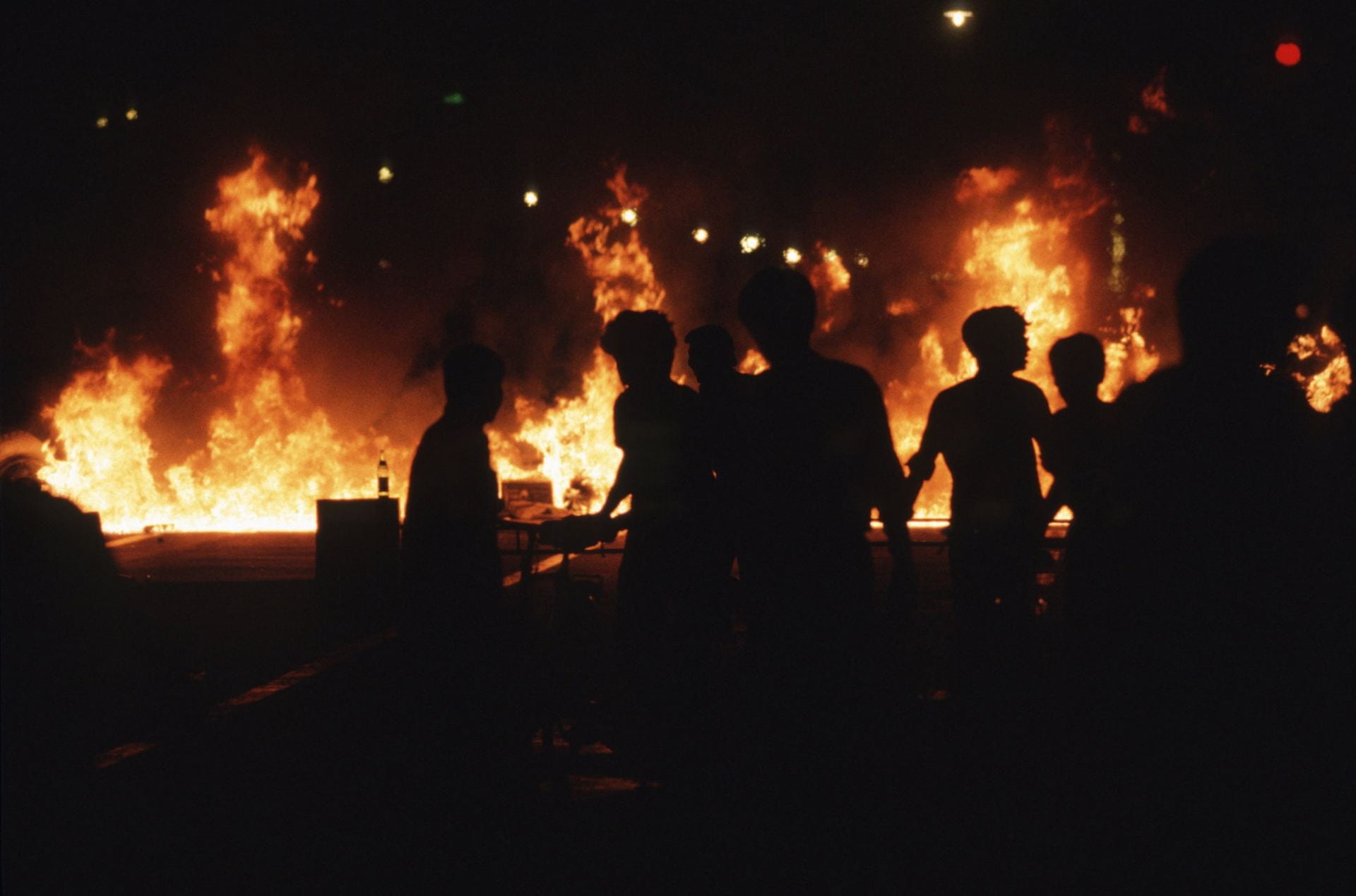
Vehicles on fire on the night of the crackdown in Tiananmen Square in Beijing on June 4, 1989.CreditCreditPeter Charlesworth/LightRocket, via Getty Images

BEIJING — For three decades, Jiang Lin kept quiet about the carnage she had seen on the night when the Chinese Army rolled through Beijing to crush student protests in Tiananmen Square. But the memories tormented her — of soldiers firing into crowds in the dark, bodies slumped in pools of blood and the thud of clubs when troops bludgeoned her to the ground near the square.

Ms. Jiang was a lieutenant in the People’s Liberation Army back then, with a firsthand view of both the massacre and a failed attempt by senior commanders to dissuade China’s leaders from using military force to crush the pro-democracy protests. Afterward, as the authorities sent protesters to prison and wiped out memories of the killing, she said nothing, but her conscience ate at her. Continue reading Military insider warns: never forget

Hawai’i International Conference on Chinese Studies–cfp

Inaugural Hawai‘i International Conference on Chinese Studies: January 5-9, 2020

The Center for Chinese Studies of the University of Hawai‘i will be hosting the inaugural Hawai‘i International Conference on Chinese Studies January 5-9, 2020, on the Mānoa campus. Please see the attached flier for details. We hope you will consider submitting a proposal and attending.

https://u.osu.edu/mclc/files/formidable/7/CFP-English.pdf

Cynthia Ning <cyndy@hawaii.edu>

Empires of Dust review

Source: LARB, China Channel (5/27/19)
Socialist Literature for the Capitalist Era
By Dylan Levi King

Dylan Levi King reviews Empires of Dust by Jiang Zilong

Jiang Zilong’s novel Empires of Dust, newly translated by Olivia Milburn and Christopher Payne, is unlike anything else published in translation from Chinese in the past decade or so. Jiang, a 78-year-old native of Hebei Province, made a name for himself with A Day in the Life of the Chief of the Electrical Equipment Bureau (机电局长的一天), a 1976 novella first criticized for revisionism and then praised as the future of Chinese literature. Decades later, in 2008, came Empires of Dust (农民帝国), a sprawling epic of modern Chinese history that can only be defined as capitalist realism.

Jiang comes from the same literary background that produced established names such as Mo YanYan Lianke and Jia Pingwa. All of those writers got their start with politically-approved hack work, too. But while they went in other directions, Jiang Zilong continued to write in a literary style codified in the 1950s. Although he published most of his major works in the 1980s and 1990s, and Empires of Dust in the mid-2000s, Jiang is something of a living literary fossil. To understand his work, one has to step back to the era of socialist realism and revolutionary romanticism. Continue reading Empires of Dust review

Why we remember June Fourth

Source: China File (5/28/19)
Why We Remember June Fourth
By Perry Link

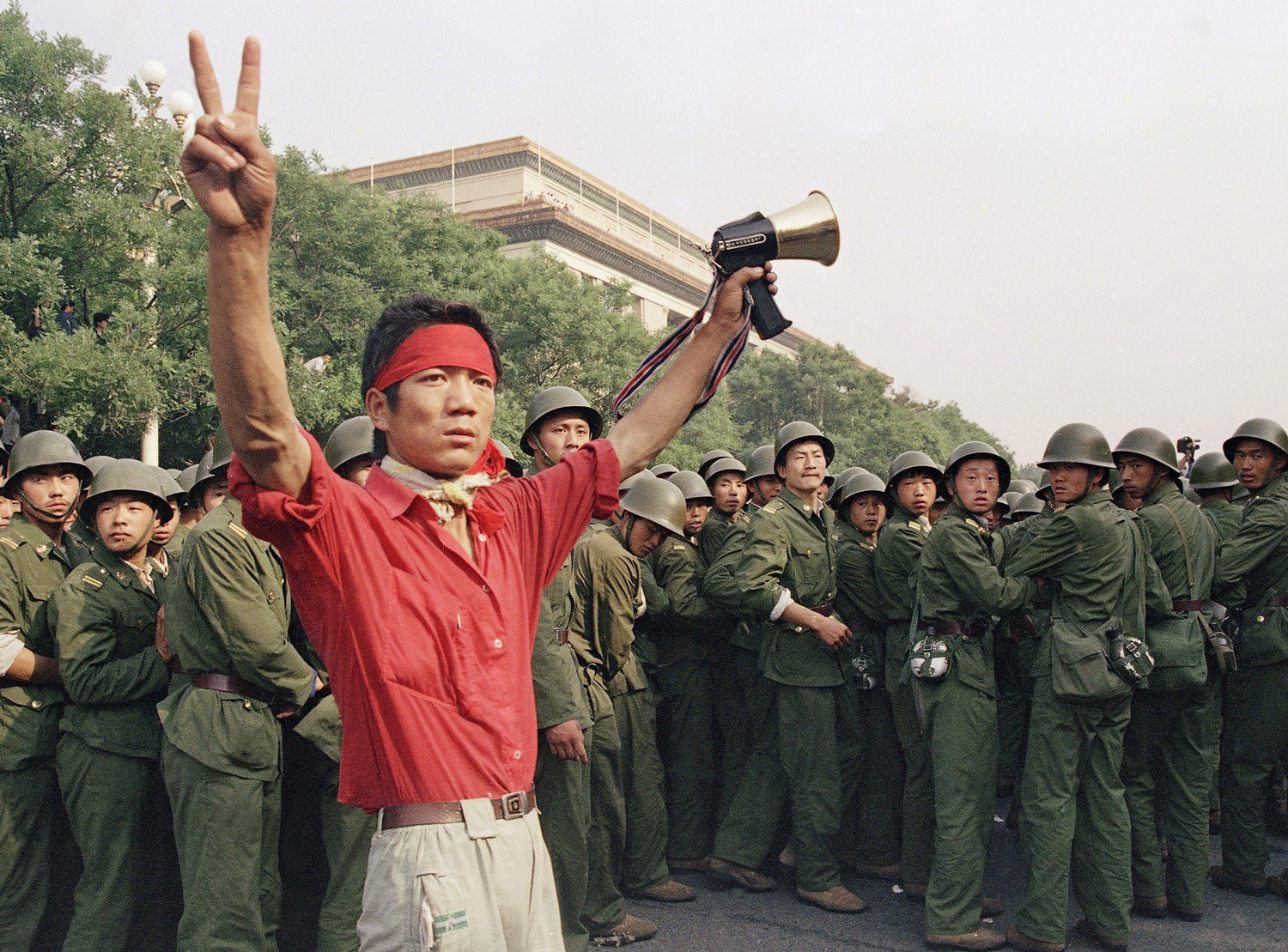
A student pro-democracy protester flashes a victory sign to the crowd as People’s Liberation Army troops withdraw on the west side of the Great Hall of the People near Tiananmen Square in Beijing, June 3, 1989. Mark Avery—AP Photo

Some people recently asked, “Why must you remember June Fourth? Thirty years have gone by. It is history. Get over it. Move on.”

A simple question, but there are many answers. No single answer is adequate, and all of the answers together still leave the question hanging in mid-air, asking for more.

We remember June Fourth because Jiang Jielan was 17 at the time. He is still 17. He will always be 17. People who die do not age.

We remember June Fourth because the lost souls that haunted Liu Xiaobo until he died will haunt us, too, until we do. Continue reading Why we remember June Fourth

I Love XXX and Other Plays review

MCLC and MCLC Resource Center are pleased to announce publication of John B. Weinstein’s review of I Love XXX and Other Plays, by Meng Jinghui, edited by Claire Conceison. The review appears below and at its online home https://u.osu.edu/mclc/book-reviews/john-weinstein/. My thanks to Michael Berry, MCLC book review editor for translations, for ushering the review to publication.

Kirk Denton, editor

I Love XXX and Other Plays

By Meng Jinghui
Edited by Claire Conceison


Reviewed by John B. Weinstein
MCLC Resource Center Publication (Copyright February, 2019)


Meng Jinghui, I Love XXX and Other Plays Ed. Claire Conceison. New York: Seagull Books, 2017. Viii+355 pp.+DVD. $45.00 ISBN 9780857423849

I nearly encountered Meng Jinghui’s 孟京辉 play Longing for Worldly Pleasures (思凡) in 1998, when I arrived in Beijing for a few weeks of research for my dissertation on the development of modern comic drama in China. When I met with a theater official in Beijing, I asked what I should see while there; although I cannot recall what he did ultimately suggest I see, I do recall him showing me a program or poster or some such artifact for a production called Longing for Worldly Pleasures.  That, he noted, was what I should have seen, but its run was already over. Had I only planned the trip better.

What I did not yet know, and maybe no one truly knew, though perhaps this official surmised it, was that Meng Jinghui would become THE big thing in Chinese drama in the coming years, and his work, though by no means strictly comedy—and by no means strictly any one thing—might have formed the ending of my research project. To this date, while I have been fortunate enough to see the English-language adaptation of Head without Tailreferenced in the volume’s introduction, and even more fortunate to spend an evening hanging out with Meng himself in his hotel room in Boston, I have never seen a production of Meng’s work within China itself. Can a volume of English translations of Meng Jinghui’s work compensate? Continue reading I Love XXX and Other Plays review

She thought she’d married a rich farmer

Source: NYT (5/27/19)
She Thought She’d Married a Rich Chinese Farmer. She Hadn’t.
By Salman Masood and Amy Qin

Rabia Kanwal and Zhang Shuchen were married in Islamabad in January. Eight days after they went to his home in China, she left to return to Pakistan.

ISLAMABAD, Pakistan — Rabia Kanwal’s parents were sure her marriage to a wealthy Chinese Muslim she had just met would give her a comfortable future, far from the hardships of their lives in Pakistan. But she had a premonition.

“I was not excited,” said Ms. Kanwal, 22, who lives in a poor neighborhood in the city of Gujranwala, in the eastern province of Punjab. “I felt something bad was going to happen.”

Arranged marriages are common in Pakistan, but this one was unusual. The groom, who said he was a rich poultry farmer, met Ms. Kanwal’s family during a monthslong stay on a tourist visa. He had to use a Chinese-Urdu translation app to communicate with them, but over all, he made a favorable impression. Continue reading She thought she’d married a rich farmer

Bizarre World of Du Qiurui

Source: NeoCha (5/17/19)
Bizarre World
By Tomás Pinheiro

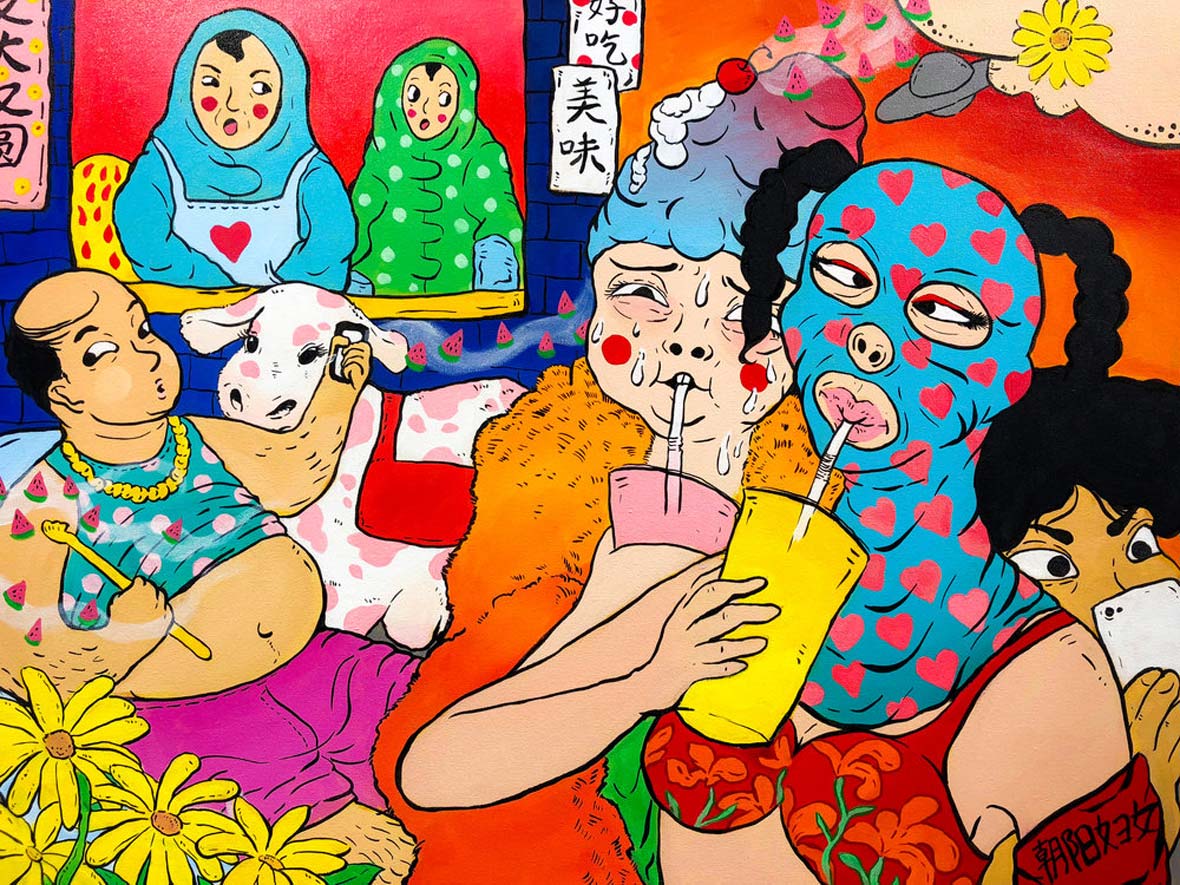
A Bizarre World: Tea Shop Sensation (2018) 30 x 40 in / Acrylic on canvas

Horror, despair—and facekinis. Welcome to the mind of Du Qiurui, a painter and illustrator who has been offering an unusual perspective on the fast-changing landscape of China. Du uses bright colors and thick lines to portray ordinary people in overcrowded scenes, together with disturbing objects and terrifying demons. His paintings represent the underlying tensions of modern Chinese society in a convoluted way, with aspects of dark humor.

Du was born in Beijing in the early 1990s to a single mother, the CEO of a design firm who worked around the clock. She’d occasionally travel abroad for work, bringing him along to see new places. Mostly, though, Du was raised by his grandmother, listening to her extraordinary stories. As an introverted child, he relied on these stories, as well as comic books and movies, to keep him company. “My childhood was a combination of reality and fantasy,” he recalls, “I built an imaginary world for myself.” Continue reading Bizarre World of Du Qiurui

One-way Street Magazine

Source: NeoCha (5/22/19)
Reading the World
By Allen Young

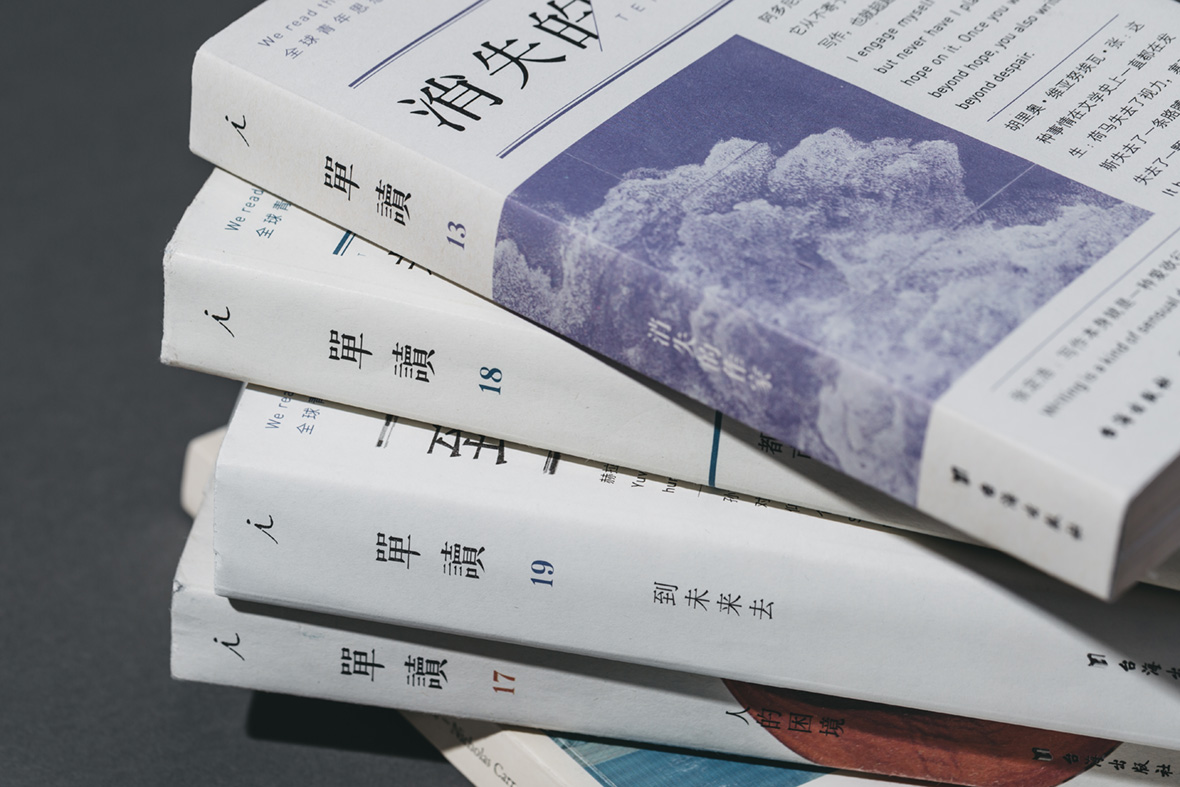
Four times a year, a compact paperback with a simple cover hits Chinese bookstores, its pages filled with essays, notes, interviews, long-form nonfiction, book reviews, poetry and short stories by some of the most spirited voices from China and abroad. One-Way Street Magazine, as the quarterly is known in English—the Chinese name Dandu name might be translated as “independent reading” or “reading alone”—is a journal that thinks books and ideas are worth arguing about, and for the past ten years it’s created a small but vital space for intellectual debate. Highbrow but unpretentious, it’s a platform for opinions, articles of faith, and moments of doubt—in short, a public conversation about cultural life.

Printed on the cover of every issue is the journal’s English motto, “We read the world,” while underneath a line in Chinese adds: “A source for worldwide youth thought.” One-Way Street aims to put writers from around the globe in dialogue with their Chinese counterparts. “We’re a journal that grew out of a bookstore, and reading has always been our primary vehicle for knowledge,” says Wu Qi, the editor-in-chief. “And in a globalized age, we want the object of that knowledge to be the entire world.” Each issue ends with a handful of capsule reviews of new and noteworthy titles that haven’t yet appeared in Chinese. Recently they’ve covered books by Martha Nussbaum, Rachel Cusk, Timothy Snyder, and Teju Cole, among many others, and though there’s a distinct Anglophone bias, this section epitomizes the journal’s mission: to read deep and wide and to respond in a reflective, critical spirit.

Continue reading One-way Street Magazine

How a journal censored my review on Xinjiang (6)

Source: Inside Higher Education (5/20/19)
X-ing Out Xinjiang
By Elizabeth Redden
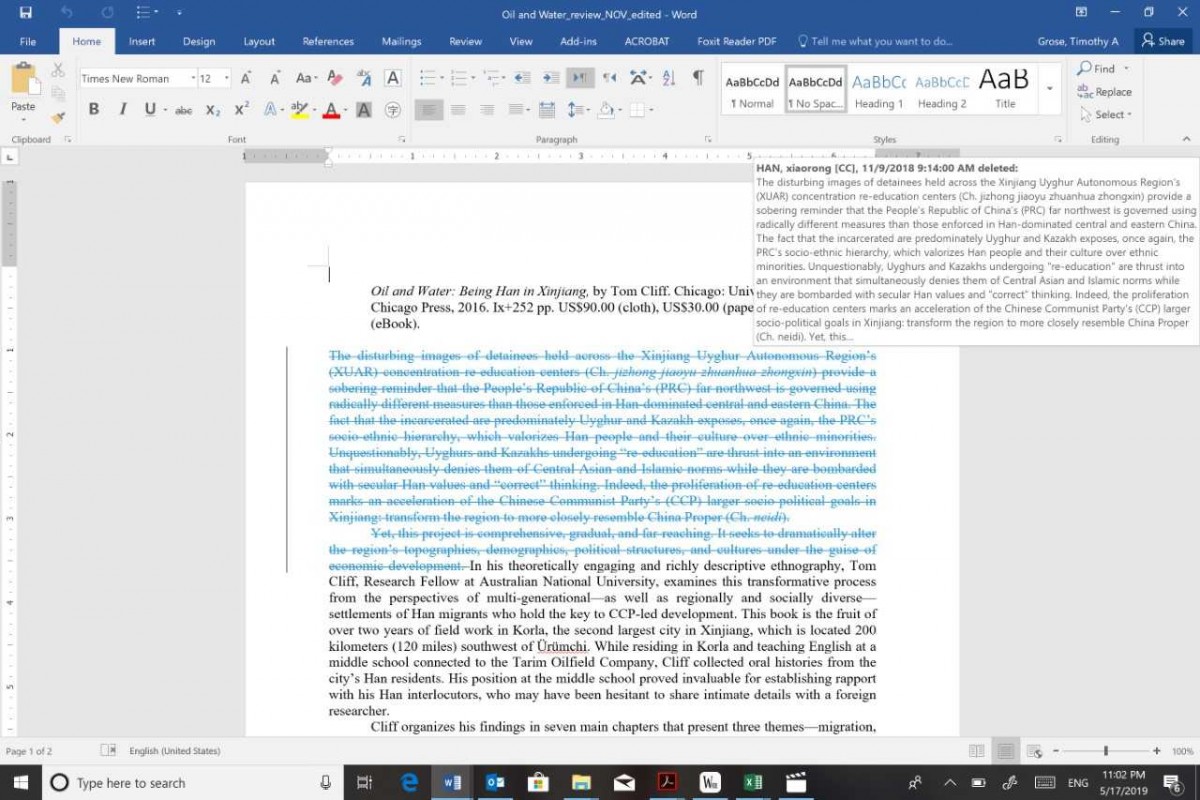
A China studies scholar says a journal editor censored him by striking out a section of a book review critical of the Chinese government’s policies in Xinjiang. The editor denies it was censorship.

Courtesy of Timothy Grose

In yet another case of alleged censorship in the China studies field, a scholar says a journal editor censored his book review by requesting the deletion of an opening paragraph that contextualized the book in light of Chinese Communist Party policy toward members of the Uighur ethnic minority group in the region of Xinjiang. Human rights groups estimate that China has detained as many as one million Uighurs in camps as part of a mass “re-education” drive aimed at forcing the assimilation of Uighurs and other Muslim-majority groups.

The scholar, Timothy Grose, an assistant professor of China studies at Rose-Hulman Institute of Technology, says the requested deletions — and the refusal over multiple months to publish the piece after he did not consent to them — constitute an “open-and-shut” case of censorship, and he has noted that the editor in chief of the journal is on record defending Chinese government policy in Xinjiang. Continue reading How a journal censored my review on Xinjiang (6)

Silk Gauze Audio books

Rickshaw Boy now available as an audiobook

New audiobook imprint, Silk Gauze Audio, has published an audiobook of Rickshaw Boy by Lao She. The Howard Goldblatt translation of Camel Xiangzi (骆驼祥子) is narrated by Jason Wong. An accompanying ebook contains a glossary of all the text’s Chinese names in characters/pinyin and new annotations. More details can be found here:

https://www.silkgauzeaudio.com/audiobook/rickshaw-boy/.

Recordings of two Lao She short stories, translated by Don J Cohn, are also currently available for free on the imprint website: https://www.silkgauzeaudio.com.

Silk Gauze Audio specialises in English translations of modern Chinese fiction. Its website aids discovery and access to titles in print and audio. Designed principally for people less familiar with China, the site and titles are also intended as an entertaining resource for China scholars past and present. The catalogue will build slowly with more titles planned for release over the summer. Focus for the first year is on early modern fiction (1919-1949). In year two, later modern and contemporary titles will be presented. Continue reading Silk Gauze Audio books

Wu Tianming and Chinese Cinema–cfp

CALL FOR PAPERS
For possible publication in Sino-American Journal of American Comparative Literature《中美比较文学》
Wu Tianming and Chinese Cinema
Abstract submissions are due June 7th

In the history of Chinese cinema, Wu Tianming 吴天明 (1939.10.19- 2014.3.4) stands as remarkably distinctive and original. What is particularly notable about his work is the way he works back and forth across the divide between tradition and modernity to pose the questions that continue to shape Chinese cinema today. Although his work has provoked a considerable amount of scholarship, there is no comprehensive treatment of his complete works in a single place.

The Chinese film collection and the Confucius Institute at the University of South Carolina will organize the 10thAnnual International Conference on Chinese Cinema in Orlando, FL on Oct 3rd-6th, 2019, with a focus on “Chinese Cinema and World Cinema”. This will provide a platform for critics to rethink Wu Tianming’s legacy in relation to the development of Chinese cinema and in the context of world cinema. Discussions on Wu Tianming and his films will be organized into panel(s) at the conference, and then selected for publication as a special collection on the bilingual Sino-American Journal of American Comparative Literature journal published by the China Social Sciences Press. Continue reading Wu Tianming and Chinese Cinema–cfp

435 ethnic minority intellectuals in mass detention in Xinjiang

Today the Uyghur Human Rights Project updated its count of confirmed detained & disappeared ethnic-minority intellectuals (artists, authors, academics etc.), a key part of Chinese authorities’ forced-assimilation campaign targeting the ethnic minorities of Xinjiang, western China, including with mass internments in concentration camps, mass surveillance, blanket criminalization of everyday religious practices, forced marriages, and more.

Today’s updated report confirms the detention or disappearance of 435 intellectuals. (This expands the earlier confirmations of 231, in October 2018, 338 in January 2019 and 386 in March 2019). See further:

https://uhrp.org/press-release/update-%E2%80%93-detained-and-disappeared-intellectuals-under-assault-uyghur-homeland.html

The report also underlines: “This group is likely a small fraction of all Uyghur intellectuals suffering serious human rights violations.” Continue reading 435 ethnic minority intellectuals in mass detention in Xinjiang

Locating Livestreaming in Asia–cfp

Call for Contributions: Virtual Workshop ‘ASIA.LIVE: Locating Livestreaming in Asia’

While not solely concerned with China, list members may still find the following comparative workshop of interest. We are inviting audiovisual submissions, with the option for contributors to later also submit accompanying research articles for publication.

Hosts: Leiden University, the Leiden Asia Centre, and Asiascape: Digital Asia
Organisers: Florian Schneider, Dino Ge Zhang, Gabriele de Seta
Date: 13 September 2019
Abstract Deadline: 20 June 2019

The practice of broadcasting live video through the internet has recently seen a resurgence, as livestreaming platforms recuperated the format pioneered by cam sites from around the early 2000s (Senft, 2008). From Periscope and Twitch to YouTube and Facebook Live, livestreaming video is today a popular media format, especially among gaming communities, Esports audiences, and popular media commentators (Taylor, 2018). Continue reading Locating Livestreaming in Asia–cfp

Blood Letters of a Martyr

Source: LARB, China Channel (5/19/19)
Blood Letters of a Martyr
By Ting Guo
Ting Guo talks to Lian Xi about his new biography of Lin Zhao

On May 31, 1965, 33-year-old Lin Zhao was tried in Shanghai and sentenced to 20 years of imprisonment. She was charged as the lead member of a counter-revolutionary clique that had published an underground journal decrying communist misrule and Mao’s Great Leap Forward, a collectivization campaign that caused an unprecedented famine and claimed at least 36 million lives between 1959 and 1961.

“This is a shameful ruling!” Lin Zhao wrote on the back of the verdict the next day, in her own blood. Three years later, she was executed by firing squad under specific instructions from Chairman Mao himself.

Lin Zhao’s father committed suicide a month after Lin’s arrest, and her mother died a while  after her execution. In Shanghai, where I grew up and where Lin was tried, imprisoned and killed, the story (the sort told only in private) goes that Lin’s mother was asked to pay for the bullets that killed her daughter. It is also said (in private) that in the years that followed, at the Bund, the former International Settlement on the Huangpu River, one could see Lin’s mother crying and asking for Lin’s return. Continue reading Blood Letters of a Martyr