Ernie vs ChatGPT

Source: NYT (7/14/23)
What Happens When You Ask a Chinese Chatbot About Taiwan?
We spoke in Chinese to Baidu’s Ernie and the American standard-bearer, ChatGPT. This is what we found.
By Chang Che and Olivia Wang (Chang Che talked to the chatbots from Seoul, and Olivia Wang did so from Hong Kong.)

Credit…Doris Liou

Last month, China’s Baidu unveiled a chatbot that it claimed was better than ChatGPT, the one developed by Silicon Valley’s OpenAI. ChatGPT was released last fall and set off a fund-raising and engineering frenzy in a flourishing field called generative artificial intelligence, a term for technology that can create text or images when prompted by a user.

Baidu, the dominant internet search company in China, became the first major foreign contender in the A.I. race in March, when it introduced the first version of its chatbot, Ernie. Others followed, opening a new front in the technology rivalry between the United States and China.

Compared with OpenAI’s newest model, known as GPT-4, Ernie 3.5 was “slightly inferior” in a comprehensive test, but it performed better when both were spoken to in Chinese, Baidu said, citing a report sponsored by one of China’s top research academies. We wanted to see for ourselves and tested Ernie 3.5 against GPT-4. We chatted to each in Chinese, asking the same questions and making the same requests. The responses below have been shortened for length. Continue reading Ernie vs ChatGPT

Not a Foreigner–cfp

Dear MCLC list members,

We invite submissions of paper abstracts for the panel titled Not a Foreigner: Sinophone Immigrant Literature as a Diasporic Return to be held in-person at the AAS 2024 Annual Conference.

By addressing questions of culture, identities, and home, this seminar aims at filling an epistemological niche concerning the Sinophone world. The primary concern of this seminar is to examine the entangled Chineseness in Sinophone immigrant literature closely. Papers that explore a broad spectrum of genres and disciplines will be welcome. Potential topics and themes include (but are not limited to):

  • The politics of cultural identity
  • Diaspora and exile
  • Literary cartographies
  • Self-writing versus writing the self

Please send proposals no later than 26 July 2023 to Anqi Liu at aliu1@smcm.edu.

Anqi Liu
Visiting Assistant Professor of Chinese
St. Mary’s College of Maryland
aliu1@smcm.edu

Melody Yunzi Li
Assistant Professor in Chinese Studies
University of Houston
mli40@Central.UH.EDU

JCLC 10.1

TOC: Journal of Chinese Literature and Culture, Volume 10, Issue 1 (April 2023)

I am pleased to share “Rethinking Authorship and Agency: Women and Gender in Late Imperial China,” the newest issue of the Journal of Chinese Literature and Culture (10:1), edited by Grace S. Fong and Guojun Wang.

This special issue covers women and gender in the literature, culture, and history of late imperial China, specifically the authorship and agency of both women and men in the Ming and Qing periods. Contributors group the issue’s articles under three thematic titles: the guixiu, the cultivated gentlewomen of the inner chambers and their relation to poetic culture; gendered voices in literary writing and how women authors work within the existing literati writing tradition; and the relationship between authorship and womanly virtues.

Contributors to this issue are Lara C. W. Blanchard, Maram Epstein, Grace S. Fong, Martin W. Huang, Xiaorong Li, Jessica Dvorak Moyer, Janet Theiss, Guojun Wang, Yuefan Wang, Ellen Widmer, Binbin Yang, and Guo Yingde.

Browse the table of contents and read Grace S. Fong’s article, “From Convention to Subversion: Case Studies on the Female Gaze in Premodern China,” available free for three months, here: https://read.dukeupress.edu/jclc/issue/10/1. This issue is available for purchase here: https://dukeupress.edu/rethinking-authorship-and-agency.

Posted by: Yuefan Wang yuefanw2@illinois.edu

Liao Yiwu and Ian Johnson on dissent

Source: Asia Society (nd)
ChinaFile Presents: The Future of Dissent Inside and Outside of China
A discussion with authors Liao Yiwu and Ian Johnson

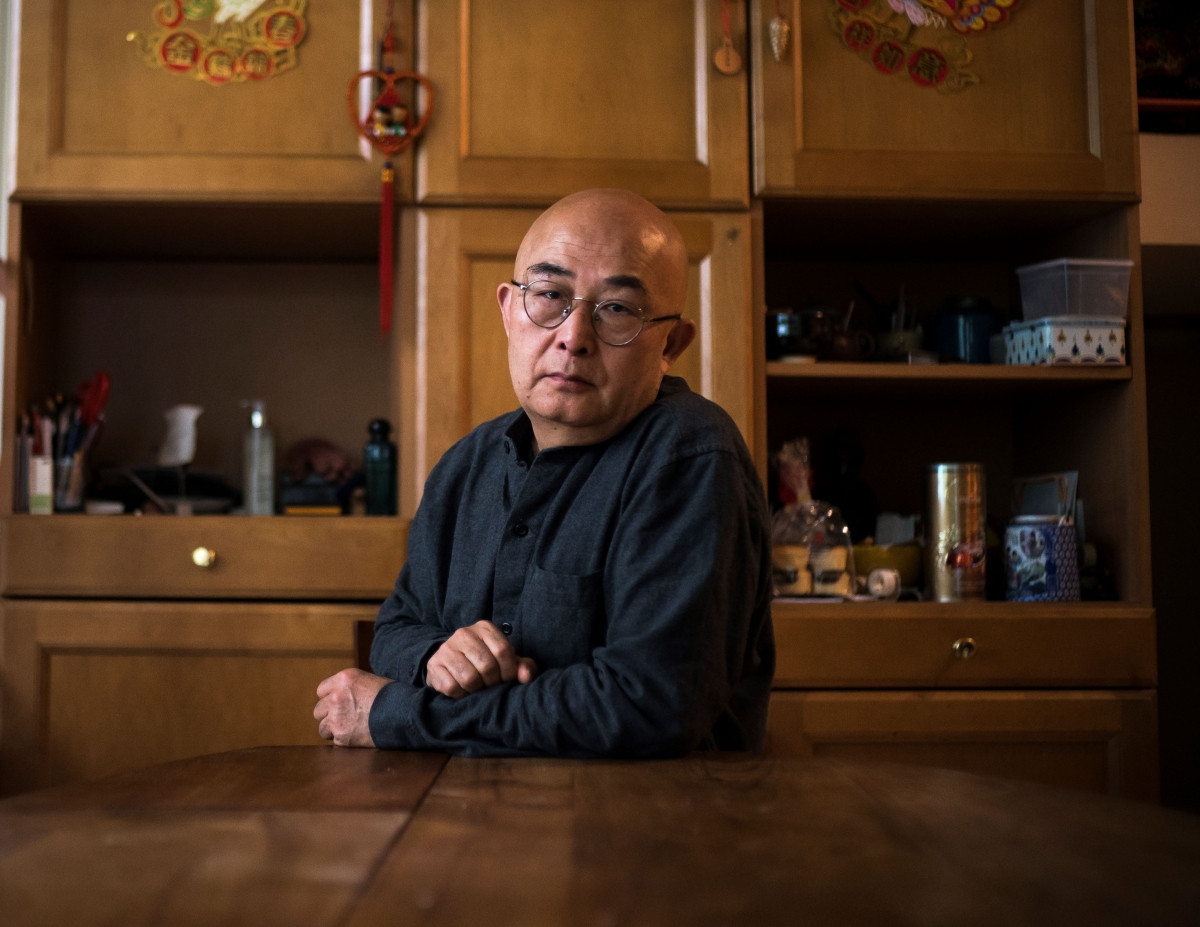
Liao Yiwu, Paris, April 2, 2019

Liao Yiwu poses during a photo session in Paris, April 2, 2019. Lionel Bonaventure/AFP via Getty Images

Event Details
IN-PERSON
Wed 12 Jul 2023; 6:30 – 8 p.m.
Asia Society
725 Park Avenue
New York, NY 10021
Click for directions
BUY TICKETS
$15 Nonmembers; $8 Students and Seniors; Free for Members

Please join us for a discussion with internationally acclaimed Chinese author Liao Yiwu, co-hosted by PEN America. A reporter, novelist, poet, and musician, Liao is best known for The Corpse Walker, his 2008 collection of interviews with laborers, migrants, and other people living at the margins of China’s economic boom, and for For a Song and a Hundred Songs, a memoir of the prison term he served for his writings about the Tiananmen protests. Since 2011, he has lived in exile in Berlin.

In conversation with the Council on Foreign Relations’ Ian Johnson, Liao will discuss the role of political dissent in exile, the use of fiction as a means for grappling with history, as well as his recent novels Wuhan, about the outbreak of COVID-19, and Love in the Times of Mao Zedong, set during the Cultural Revolution, and his documentary film on the construction of a Taiwanese memorial to Nobel Peace Prize-winning dissident Liu Xiaobo.

The conversation will be conducted in Chinese and English with translation, and is co-hosted by ChinaFile and PEN America. Continue reading Liao Yiwu and Ian Johnson on dissent

Sacred Truths: An Interactive Calligraphy Workshop

Sacred Truths: An Interactive Calligraphy Workshop

How does calligraphic imagination find its locus in contemporary art? Featuring artists Qu Leilei and Caroline Deane, this interactive event mobilises the art of Chinese calligraphy to pierce the entire toxic system of misinformation of our time.

Is there anything that we may call ‘truth’ anymore? Does anyone actually mean what they say? This contemporary art event stands as an urgent cry to a world in which we are sleepwalking ourselves into an oblivion of misinformation, one in which major decisions can be based on carefully constructed lies.

The event is free and open to the public. Turning audiences into artists, this workshop will result in a large-scale, collaborative artwork that cries out the need to awaken ourselves.

Register

https://www.eventbrite.co.uk/e/sacred-truths-an-interactive-calligraphy-workshop-tickets-646455474727?fbclid=IwAR0EvzLCMm10aL_Ul9pK0yagCmsh078VDGiD1_03nOsE0q5cGfct_3sXUkk

Date and Time

Wed, 19 Jul 2023 13:00 – 15:00 BST

Event Location

The event will take place at Brunei Gallery Lecture Theatre (BGLT) within the SOAS Brunei Gallery.
Thornhaugh Street, Russell Square, London WC1B 5DQ. The SOAS Brunei Gallery is located between Malet Street and Thornhaugh Street, in the north-west corner of Russell Square. The Gallery is a five minute walk from the British Museum.

Continue reading Sacred Truths: An Interactive Calligraphy Workshop

Why China’s young people are not getting married

Source: NYT (7/10/23)
Why China’s Young People Are Not Getting Married
Marriages in China are at a record low. Recent political and economic turmoil have added another reason to postpone tying the knot.
By Nicole Hong and 

A view from above of a couple in a white gown and black suit standing by a railing in an open urban area with trees.

A couple having wedding photos taken near the Bund in Shanghai on Wednesday. Credit…Qilai Shen for The New York Times

It has been a brutal three years for China’s young adults. Their unemployment rate is soaring amid a wave of corporate layoffs. Draconian coronavirus restrictions are over, but not the sense of uncertainty about the future they created.

For many people, the recent turmoil is another reason to postpone major life decisions — contributing to a record-low marriage rate and complicating the government’s efforts to stave off a demographic crisis.

Grace Zhang, a tech worker who had long been ambivalent about marriage, spent two months barricaded in the government lockdown of Shanghai last year. Robbed of the ability to move freely, she spiraled over the loss of control. As she saw the lockdowns spread to other cities, her sense of optimism faded.

When China reopened in December, Ms. Zhang, 31, left Shanghai to work remotely, traveling from city to city in hopes that a change of scene would restore her positive outlook.

Now, as she sees rising layoffs around her in a troubled economy, she wonders if her job is secure enough to sustain a future family. She has a boyfriend but no immediate plans to marry, despite frequent admonishments from her father that it’s time to settle down. Continue reading Why China’s young people are not getting married

The ‘everything app’ for China’s journalists

Source: China Media Project (7/4/23)
The ‘Everything App’ for China’s Journalists
In the latest effort to centralize and tighten control over the ideological education of journalists, Chinese authorities are introducing a customized training platform with more than 220 separate courses in the Marxist View of Journalism.
By CMP Staff

He Ping (何平), the head of the All-China Journalist’s Association, announces the launch of a new app to train and license Chinese journalists — and maintain ideological control. Image: ACJA.

Are you a Chinese journalist struggling to keep yourself in check? Do you toss and turn at night with the alarming thought that you might forget your obligations and report something factual? Never fear. Your propaganda super-app is here.

Released just before the weekend by the All-China Journalists Association (ACJA), “Journalist’s Home ‘University Hall’” (“记者之家”大学堂) is a comprehensive online training platform that will be used not just to train journalists in CCP press doctrine, but to track their progress and certify their training results, assisting with annual reviews and renewals of journalists’ press cards (记者证).

Image of the “Journalist’s Home ‘University Hall’” training app released recently by the All-China Journalist’s Association.

According to state media reports, the new app includes more than 220 separate courses in the Marxist View of Journalism (马克思主义新闻观), the set of concepts that define the Chinese Communist Party’s leadership and control of the media, and the fundamentally political role of the “news worker” (新闻工作者).

“From this point forward, millions of journalists across the country can carry out training in the Marxist View of Journalism through the internet platform,” said a news release from the ACJA and Xinhua News Agency, “which will play a positive role in educating and guiding journalists to concentrate their souls around Xi Jinping Thought on Socialism with Chinese Characteristics for a New Era.”

The app navigation includes two basic sections, one on “foundational coursework” (基础课), which includes training in the tenets of Party press control and the leadership concepts of Xi Jinping, and another on “practical coursework” (实务课), which includes instructional videos from veteran Party journalists on key political and policy concepts. Continue reading The ‘everything app’ for China’s journalists

Secret cause

Source: NYT (7/5/23)
China Took Her Husband. She Was Left to Uncover His Secret Cause.
阅读简体中文版 | 閱讀繁體中文版 | Leer en español
He was brilliant, quirky and intensely private — and also, she now suspects, an anonymous dissident blogger who had won fame for years of evading the surveillance state.
By

A woman wearing an orange turtleneck and a serious expression next to a large screen with an image of a smiling man on it.

Bei Zhenying beside a screen showing a photo of her husband, Ruan Xiaohuan, at their apartment in Shanghai in April. Credit…The New York Times

It wasn’t as if Bei Zhenying didn’t know that her husband was unusual, or even that he had some secrets.

He was a talented computer programmer, and she fell for his inquisitive intelligence and playfulness when they met at university in Shanghai. But he was also proudly nonconformist — refusing to use social media or buy new clothes — and intensely private, disappearing into his study to do work he wouldn’t discuss.

Ms. Bei, 45, accepted those quirks as the habits of a professional geek, someone engrossed in a world that she, a corporate business manager, didn’t understand. But she never imagined just how little she knew about her husband, Ruan Xiaohuan, until the Shanghai police stormed into the couple’s apartment and took him away.

The authorities accused Mr. Ruan of plotting to overthrow the Chinese government, by writing articles “smearing our country’s political system.” In February, a judge sentenced him to seven years in prison. Ms. Bei was left to try and piece together the life that he had kept from her.

What she learned, over the following months, was more than a personal secret. Ms. Bei now believes that Mr. Ruan was the writer behind one of the most mysterious blogs on the Chinese internet, which for 12 years had ridiculed the ruling Communist Party from within the country — a seemingly unthinkable feat under China’s hard-line leader, Xi Jinping.

The blog, Program Think, had a near-mythical status among its fiercely devoted following. The anonymously written posts mapped the hidden wealth of China’s leaders, one of the government’s most sensitive topics. They shared tips on covering digital tracks, mocking the authorities for failing to unmask the author. And they urged readers to think for themselves, in defiance of the society around them.

Then, the blog went silent in May 2021 — the same month Mr. Ruan, now 46, was arrested. Continue reading Secret cause

UHK clamps down on ‘disreputable’ behaviour

Source: SCMP (6/29/23)
University of Hong Kong plans to clamp down on behaviour that brings it into ‘disrepute’, sparking criticism by staff, students
Staff and student representatives insist proposal, signed off by university chancellor and city leader John Lee, is too vague and would damage academic freedom. University says similar provisions exist in British universities, such as Birmingham and Edinburgh and special disciplinary committee would be formed
By Ezra Cheung

The University of Hong Kong wants to introduce a new statute to penalise those who bring the institution into disrepute. Photo: Nora Tam

The University of Hong Kong wants to introduce a new statute to penalise those who bring the institution into disrepute. Photo: Nora Tam

The University of Hong Kong (HKU) said it wanted to clamp down on behaviour that brings it into “disrepute”, but failed to give a definition of the sort of conduct that could land students in hot water.

But representatives of students, staff and graduates said on Wednesday the proposed statute, to come into force on October 20 if approved by lawmakers, would damage what should be an open and inquiring environment.

Casey Chik Yau-hong, an undergraduate representative, said the amendment was vague and there was no need for it.

He said: “There are different mechanisms to manage similar incidents. I don’t see any circumstances this amendment can be applied to. Students may have concerns over how the school will use the new power. It is not what an open, pluralistic environment should be.” Continue reading UHK clamps down on ‘disreputable’ behaviour

ACLS Special Projects Researcher

I would like to draw list members’ attention to a one-year position for a Special Projects Researcher with the American Council of Learned Societies. This position is related to the Luce/ACLS China Studies program.

https://jobs.chronicle.com/job/37487890/special-projects-researcher-1-year-term-/

Michael Gibbs Hill <mghill@wm.edu>

ACLS Mission and Overview

Formed a century ago, the American Council of Learned Societies (ACLS) is a nonprofit federation of 80 scholarly organizations.  As the leading representative of American scholarship in the humanities and related social sciences, ACLS holds a core belief that knowledge is a public good. As such, ACLS strives to promote the circulation of humanistic knowledge throughout society. In addition to stewarding and representing its member organizations, ACLS employs its endowment and $35 million annual operating budget to support scholarship in the humanities and social sciences and to advocate for the centrality of the humanities in the modern world.

Overview of department

For many decades, ACLS has extended its reach beyond the borders of the United States. ACLS International Programs (IP) currently operates the Luce/ACLS Program in China Studies, the Robert H. N. Ho Family Foundation Program in Buddhist Studies, and the Summer Institute for the Study of East Central and Southeastern Europe. IP advances humanistic studies through fellowships and grants, by building communities of scholars in the world areas and disciplinary fields in which we work, and by partnering with funders, learned societies, and communities to strengthen global academic relations. Continue reading ACLS Special Projects Researcher

U Mich position

The Department of Asian Languages and Cultures at the University of Michigan invites applications for a tenure-track or tenured position in modern Chinese culture to begin in Fall 2024. This is an open-rank search.

Applicants with interdisciplinary teaching and research interests in modern Chinese culture, including in global and comparative contexts from the late nineteenth through the twenty-first century, are encouraged to apply. The successful candidate will teach a range of courses in modern Chinese culture, from introductory undergraduate lecture courses through graduate seminars. They will also supervise doctoral dissertations and participate in the programs of the department as well as in area studies initiatives within the larger university community.

Ph.D. is required prior to appointment. Candidates should provide evidence of excellence in both research and teaching. Please go to http://apply.interfolio.com/127875 to apply. Candidates will be asked to upload a letter of application, CV, statement of current and future research plans, statement of teaching philosophy and experience, and a diversity statement. Junior candidates should submit one representative publication or writing sample and three letters of recommendation. Senior candidates should include the names of suggested reviewers.

Questions about the application or materials may be directed to alc-admin@umich.edu. Applications must be received by October 27, 2023, to be assured of consideration.

Offers for this appointment are contingent on successful completion of a background screening.

The University of Michigan is an Equal Opportunity/Affirmative Action Employer. Women and members of minority groups are especially encouraged to apply. The University is supportive of the needs of dual-career couples. All applications will be acknowledged.

Stanford Asian American Lit position

Asian-American Search #3403

The Department of English at Stanford University is searching for scholars who research and teach in the field of Asian-American Literature. This is an open-rank search; the appointment may be at the rank of Assistant Professor (on the tenure-track), Associate Professor (with tenure), or Full Professor.

Applicants must have demonstrated a commitment to effective teaching and mentoring and the ability to maintain a world-class research program. The successful candidate must have a Ph.D. at the time of appointment and will be expected to teach and advise students at both the graduate and undergraduate levels. The term of appointment is expected to begin on September 1, 2024.

We welcome applications from all candidates in the broad field of Asian-American Literature/Asian Diasporic Literature. We are focused on identifying exceptional scholarship rather than looking for a specific specialization.

Candidates should apply through https://facultypositions.stanford.edu/cw/en-us/job/494569/open-rank-asianamerican-literature-search and submit:

  • a cover letter
  • a curriculum vitae 
  • a writing sample (20-30 pages)
  • contact information for three references. (Pre-tenured applicants should submit recommendation letters at the time of application).

Continue reading Stanford Asian American Lit position

Chinese Film: Realism and Convention review

MCLC Resource Center is pleased to announce publication of Victor Fan’s review of Chinese Film: Realism and Convention from the Silent Era to the Digital Age, by Jason McGrath. The review appears below and at its online home: https://u.osu.edu/mclc/book-reviews/victor-fan/. Given the obvious conflict of interest, I filled in for Jason McGrath, who would normally oversee publication of our media studies reviews. Enjoy.

Best,

Kirk Denton, MCLC

Chinese Film: Realism and Convention
from the Silent Era to the Digital Age

By Jason McGrath


Reviewed by Victor Fan

MCLC Resource Center Publication (Copyright July, 2023)


Jason McGrath, Chinese Film: Realism and Convention from the Silent Era to the Digital Age Minneapolis: University of Minnesota Press, 2022, 404 pages. ISBN 978-1-5179-1403-5 (paper); ISBN 978-1-5179-1402-8 (cloth).

Chinese Film: Realism and Convention from the Silent Era to the Digital Age is one of the most ambitious, thought-provoking, and groundbreaking works on the subject to date. Besides being an inspiring piece of research, the book also provides a solid method of critical analysis that is highly accessible to university students of all levels, without compromising the complexity and nuances of its discussion.

Although titled Chinese Film, the book addresses an intersection between three concerns that go beyond the study of Chinese cinema: (1) What is realism and how is it related to the question of cinematographic reality? (2) Can we rehistoricize Chinese cinema based on how the cinematic works of each historical period negotiate their specific sociopolitical conditions and aesthetic values through modes of realism? (3) With our current knowledge of Chinese film theory and criticism, how do we fully incorporate them into the larger discourses of film studies in order to develop a method of analysis that can address Chinese cinema’s cultural and sociopolitical specificities and its situatedness in global cinemas?

McGrath explicitly addresses the first two concerns. The third concern, however, may not be entirely visible to most readers but is in fact McGrath’s effort to address the current debate on Asia as method: how one relates bodies of knowledge generated in Asia to Euro-American knowledge under the pressures of colonialism and imperialism, and how one uses such knowledge not as a universalizing theory, but as a method that can address the intricate relationship between the universal and the particular.[1] In my opinion, this is the most trailblazing contribution of this book, and I daresay that the method McGrath proposes is the method employed in the book itself. Continue reading Chinese Film: Realism and Convention review

The Longest Transitional Justice

Source: Arcade: The Humantities in the World (6/29/23)
The Longest Transitional Justice: An Immigrant Scholar Defends Affirmative Action
By Haiyan Lee

Untitled by Jack Gould depicts basketball players fighting for the ball.

Untitled by Jack Gould; Graphic by Sheena Lai

Let me begin with a bald statement: Race-conscious affirmative action is not about diversity. Rather, it is about justice. And it is about the kind of justice that the American legal system is ill-equipped to deliver: transitional justice.[1]

You might ask, who am I and what standing do I have in making such an assertation? My response is simple: I’m a naturalized citizen and the experience of writing a book on China’s political-legal culture has made me take a keen interest in the debate on affirmative action and the recent SCOTUS ruling on the unconstitutionality of race-conscious college admissions. Still, you ask, what does the rule of law or the lack thereof in China have to do with America’s fight over affirmative action? A quick answer is: a lot, in the sense that the US and China have chosen radically different paths in redressing historical wrongs. And the reflecting on the difference may help us process the adverse ruling.

When Americans think of transitional justice, they think of countries like South Africa, Cambodia, and Argentina, countries that bid painful farewell to oppressive regimes and birthed new democratic governance through a wrenching process of truth and reconciliation. Yet insofar as transitional justice is about coming to terms with historical injustices in collective, organized, and bracing fashion, it is a far more common experience than legal theorists have generally recognized. In my view, the entire post-Civil War US history can be viewed as one of the longest episodes of transitional justice in world history. Continue reading The Longest Transitional Justice

New Sinophone Documentaries–cfp

Call for Papers
New Sinophone Documentaries: Trajectories and Intertwinements

This special issue of the Journal of Chinese Cinemas proposes to examine the pasts and presents of new documentary movements in the Sinophone sphere. Roughly three decades ago, new documentary movements surfaced in multiple sites across the Sinophone world. In Taiwan, independent documentary filmmaking arose in the context of political opposition and social movements in the 1980s. Since then, diverse new documentaries have flourished alongside the rapid development of Taiwan’s democracy. In mainland China, independent documentaries first emerged as underground films around 1990. As works proliferated and won attention from domestic and international film critics, the Chinese independent documentary movement has been recognized as forming an unofficial archive of China’s social, economic, cultural, and other changes. In Hong Kong, independent documentaries since the 1990s have provided a marginalized but important alternative to commercial narrative cinema and other entertainment media. They have served, moreover, as vital witnesses to Hong Kong’s evolving sociopolitical conditions since the former British colony became a Special Administrative Region of the People’s Republic of China in 1997.

Given these distinct yet sometimes intersecting histories, this special issue invites essays that examine the legacies and/or current states of independent documentary filmmaking in the Sinophone sphere. The primary focus will be on productions from Hong Kong, Taiwan, and mainland China but considerations extending beyond these regions are welcome. Topics include but are not limited to: Continue reading New Sinophone Documentaries–cfp