One Man Talking review

MCLC Resource Center is pleased to announce publication of Charles Laughlin’s review of One Man Talking: Selected Essays of Shao Xunmei, 1929-1939, edited and translated by Paul Bevan and Susan Daruvala. The review appears below and at its online home: https://u.osu.edu/mclc/book-reviews/laughlin/. My thanks to Michael Hill, our translation/translation studies book review editor, for ushering the review to publication.

Kirk Denton, MCLC

One Man Talking: Selected Essays
of Shao Xunmei, 1929-1939

By Shao Xunmei
Edited and Translated Paul Bevan and Susan Daruvala


Reviewed by Charles Laughlin
MCLC Resource Center Publication (Copyright October, 2024)


Shao Xunmei, One Man Talking: Selected Essays of Shao Xunmei, 1929-1939 Edited and translated by Paul Bevan and Susan Daruvala. Hong Kong: City University of Hong Kong Press, 2023. 454 pp. ISBN: 978-9629376604 (paper).

Over the past quarter century, there has been growing scholarly attention to Shao Xunmei 邵洵美 (1906-1968), initially as a poet, but increasingly as a publisher and cultural figure. One chapter of Leo Ou-fan Lee’s 1999 book Shanghai Modern: The Flowering of a New Urban Culture in China, 1930-1945, introduces Shao as a decadent poet alongside the “dandy” Ye Lingfeng 葉靈鳳, but also devotes space to his important role in the publishing industry.[1] In 2001, Jonathan Hutt published an article entitled “La Maison d’Or: The Sumptuous World of Shao Xunmei.” In 2016, Jicheng Sun and Harold Swindall published a collection of Shao’s poetry in English translation, The Verse of Shao Xunmei. More recently, in 2020, is Tian Jin’s critical study of Shao’s poetry, The Condition of Music: Anglophone Influences in the Poetry of Shao Xunmei.

Parallel to this increased attention to Shao’s poetry, Paul Bevan has published extensively on Western impacts on Republican era print culture with a particular emphasis on illustrated magazines, and these works have fleshed out Shao Xunmei’s broader profile as a cultural figure. In 2018, Bevan published a monograph on Shao Xunmei’s Modern Miscellany (時代畫報)and in 2020 he brought out “Intoxicating Shanghai”—An Urban Montage: Art and Literature in Pictorial Magazines in Shanghai’s Jazz Age, a broader study on pictorial magazines based in Shanghai and their contributing artists. Bevan has also published a journal article on Mexican illustrator Miguel Covarrubias’ momentous encounter with 1930s Shanghai and his impact on its visual print culture (2021), and more recently a book chapter on Shao’s bookshop The Golden House and his relationship with translation (2024), both of which overlap with the content of One Man Talking. One Man Talking can thus be seen as a collection of source materials on Shao Xunmei that supplements Bevan’s research on Shao and his milieu, that establishes Shao as a cultural figure using his own (prose) voice. This effort is aided by the editors’ collaboration with Shao’s daughter Shao Xiaohong, who provided valuable materials, including an essay on Shao’s wartime publication efforts, and to whose memory the book is dedicated. The book also features a foreword by Leo Ou-fan Lee, translations and commentary by co-editor Susan Daruvala, Michel Hockx, Helen Wang, and Sun Xinqi. Continue reading One Man Talking review

Laikwan Pang book talk

One and All: The Logic of Chinese Sovereignty — An Online Book Talk with Laikwan Pang

Time: Oct. 24, 2024; 8-9:15pm (EDT)

Speaker:
Laikwan Pang (Chinese University of Hong Kong)

With:
Yurou Zhong (University of Toronto)
Hang Tu (National University of Singapore)

Moderator:
David Der-wei Wang (Harvard University)

Sponsors:
Fairbank Center for Chinese Studies
East Asian Languages and Civilizations, Harvard University
Chiang Ching-kuo Foundation

Zoom registration:
https://harvard.zoom.us/webinar/register/WN_jmaBY41-TSS6wjgs6fWQmQ

HKUST position in digital humanities

The Division of Humanities of the Hong Kong University of Science and Technology (HKUST) invites applications for a tenure-track position in the discipline of Digital Humanities with an expected start date of July 2, 2025. The position is at the rank of Assistant Professor. Exceptional candidates at the Associate or Full Professor level will also be considered.

We are particularly interested in candidates with expertise in AI applications in the humanities, dedicated to pioneering research and teaching in this dynamic area. The candidate is expected to:

  • Engage in cutting-edge research projects in Digital Humanities.
  • Develop and deliver innovative undergraduate and graduate courses in Digital Humanities and AI in the humanities.
  • Collaborate with faculty and departments across disciplines, including the newly established Division of Arts and Machine Creativity, to advance HKUST’s Digital Humanities initiative.

Applicants should have a PhD degree in a humanities discipline.  The successful candidate should demonstrate a strong commitment to excellence in research and teaching and show promise for publications with international impact.  Prior publications, especially in leading journals, will be highly valued. While the geographical area is open, a research focus on East Asia, South Asia, or Southeast Asia is preferred. Continue reading HKUST position in digital humanities

HKUST position in digital media/film

The Division of Humanities of the Hong Kong University of Science and Technology (HKUST) is searching for suitable candidates to fill a tenure-track faculty position in the discipline of Digital Media/Film with an expected start date of July 2, 2025. The position is at the rank of Assistant Professor. Exceptional candidates at the Associate or Full Professor level will also be considered.

The Division is especially interested in scholars whose teaching and research address the intersections of media theory, digital technology, and culture, with a preference for candidates whose work approaches Asia from a transnational or comparative framework. Research agendas may include such topics as digital film and television, digital art and media theories, video game studies, transmedia storytelling, network culture or social media studies.

Applicants should have a PhD degree in Media/Film studies. The successful candidate should demonstrate a strong commitment to excellence in research and teaching and show promise for publications with international impact.  Prior publications, especially in leading journals, will be highly valued.

In addition to a master’s degree program in Chinese Culture and research postgraduate program at both master’s and doctoral levels under the broad arena of Humanities, the Division of Humanities offers general education courses for all undergraduates at HKUST. Together with the Division of Social Science, the Division of Humanities offers a multidisciplinary undergraduate major program of BSc in Global China Studies. Further information about the Division can be found at https://huma.hkust.edu.hk/.  Enquiries about the post should be sent to Professor David Cheng Chang, Chair of the Search and Appointments Committee at changcheng@ust.hk. Continue reading HKUST position in digital media/film

Engendering the Sinophone–cfp

Call for Papers: Engendering the Sinophone: Rethinking Gender, Sexuality, and Asian Settler Colonialism across the Sinophone World

The last two 3S conferences have evoked “multisensory protests,” “ocean and empires” in order to propose alternative geographical and temporal imaginaries to expand the analytical scope of Sinophone studies.

Taking Shu-mei Shih’s call for a multidirectional critique of Sinophone studies as a source of inspiration, the third 3S conference allows us the opportunity to extend the scope of Sinophone Studies in another direction. In order to consider how gender, sexuality, queerness, and trans identity and embodiment engender new directions for Sinophone studies. The choice of theme is particularly timely because of the recent emergence of queer Sinophone studies as a major subfield. The field’s popularity demonstrates how both the Sinophone and queerness work together to call into question the essentialist assumptions of Chineseness, ethnic nationalism, and heterosexuality and how these assumptions overlap. Feminist and queer indigenous writers, filmmakers, and artists expose how even analytical categories of diaspora, exile, and “postcolonialism” ignore the ongoing violence and erasure of settler colonialism. In other words, a queer Sinophone decolonial approach can expose how Chineseness, Taiwaneseness, and Hong Kongness overlap with heteronormativity, queer liberalism, creolization, and coloniality. Continue reading Engendering the Sinophone–cfp

Archipelagic Buddha and Christ–cfp

Call for Papers: Archipelagic Buddha and Christ: Towards Multilingualism as Method
2025 ACLA annual meeting (May 29–June 1, 2025, held virtually)
https://www.acla.org/archipelagic-buddha-and-christ-towards-multilingualism-method
Organized by Wen-chin Ouyang (wo@soas.ac.uk) and Linda Chu (lindawchu@cuhk.edu.hk)
Deadline: Oct 14, 2024

Literary multilingualism has precipitated an energetic reflection on the theory and praxis of Comparative Literature, Translations Studies, and World Literature in the 21st century. However, the critical reception of literary multilingualism has remained relatively monolingual. It continues to observe the sovereignty of language, text, genre and literariness. These are imagined as nation-states with unbreachable borders. Literary multilingualism is spoken of as language(s) crossing nationalized lingual borders within a literary text that is in turn confined to the written forms of the poem and novel. Would it be possible to devise a multilingual method of critical reception by: (1) imagining language as inherently multilingual in that each language comprises other languages and encompasses word, sound, image and performance; (2) defining literature as both spoken and performed (orature) and written (literature); (3) seeing text as intertextual; and (4) considering literariness as language practice not generic division. Starting with ‘Archipelagic Thinking’, that it is possible for language and literature to be distinct and connected at the same time, we invite multilingual reflections on literary theory and praxis around the following three axes: (1) multilingual iconization of historical figures such as but not limited to Buddha and Christ; (2) multilingual and multigeneric sources of the iconization of historical figures; and (3) multilingual histories of literature/orature.

Linda Chu

Comparative Lit and World Lit–cfp

Dear List Members,

Comparative Literature & World Literature (CL&WL) is calling for general submissions (by December 2024) as well as submissions to its “Global Asias” special issue (by June 2025).

Comparative Literature & World Literature (CLWL) is a peer-reviewed, full-text, open-access, quarterly academic journal in the broadly defined field of comparative literary and cultural studies. It publishes articles, book reviews, interviews, and state of the field essays, among other possibilities. CL&WL is sponsored by the School of Chinese Language and Literature of Beijing Normal University and the College of Humanities of the University of Arizona.

To submit, please send your submission as a WORD document by email to llu222@uky.edu. Please include as a separate WORD document a cover letter that includes your name, affiliation, the title of your article, an abstract of two-hundred words, no more than five keywords, and your contact information. Please title your submission CL&WL general or special issue submission.

Please feel free to contact Liang Luo at llu222@uky.edu with any questions on the call for papers for these upcoming issues of CL&WL.

Warmly,

Liang Luo

2025 Berkeley-Stanford Grad Conference–cfp

Call for Proposals for the annual Berkeley-Stanford Graduate Student Conference in Modern Chinese Humanities, 2025

The annual Berkeley-Stanford Graduate Student Conference in Modern Chinese Humanities brings together current graduate students from across the U.S. and around the world to present innovative research on any aspect of modern Chinese cultural production in the humanistic disciplines. The conference provides a window into current research in Chinese studies, and serves as a platform for fostering interaction among budding scholars of geographically disparate institutions, facilitating their exchange of ideas and interests. The conference hopes to encourage interdisciplinary scholarship within and between literary and cultural studies, cultural history, art history, film and media studies, musicology and sound studies, as well as the interpretative social sciences.

Currently enrolled graduate students are invited to submit paper proposals for the Berkeley-Stanford Graduate Student Conference in Modern Chinese Humanities, to be held April 11-12, 2025 at Stanford University. Conference registration is free. Presenters will be provided with shared lodging, Friday dinner, and Saturday lunch. There is limited partial funding assistance for those who cannot find their own funding.

Proposals/bios due: November 15, 2024 (11:59 p.m. Pacific Standard Time)

Application Instructions: To apply please upload your abstract (not exceeding 250 words) and a short bio (not a full CV) as a one-page document. For the abstract, include: Author Name, Main Title, Subtitle (optional), Keywords, and Abstract. The short bio must be no more than one quarter of a page.

Please click this link to apply. Continue reading 2025 Berkeley-Stanford Grad Conference–cfp

Information in Nineteenth Century China–cfp

Please consider submitting proposals for this exciting workshop coming up in June in Beijing!

Involution and Revolution: Information in Nineteenth Century China
June 14-15, 2025
Department of History of Science, Technology, and Medicine, Peking University
Beijing, China

Over the course of the global nineteenth century, technologies of news, record keeping, printing, mathematics, trade, industrial management, scientific research, cartography—in short, systems of information—emerged, came into crisis, and were reinvented. As James Beniger pointed out in his seminal 1986 work The Control Revolution, new industrial systems of production necessitated deep changes in information, energy, and material structures. Substantial and troubled transformations also took place in militaries, political parties, bureaucracies, and non- governmental organizations.

Nineteenth-century Qing China similarly faced growth, crisis, and reinvention. Long-term growth and evolution in commerce, publishing, administration, and military structures must have stressed and warped information systems. Systems once well-suited for imperial administration faced new challenges. The arrival of Western imperialism, capitalist development, and colonial expansion similarly presented crises. In imperial centers and core economic zones, but also frontier zones, information systems collided, overlapped and were reimagined. How did technologies and systems of information in China shift and respond? The nineteenth century has been described as imperial China’s post-divergence era of decline—does it deserve this label, from the perspective of information? These momentous transitions require fresh perspectives, informed by the active transdisciplinary scholarship on information, as well as deep knowledge of Chinese historical contexts and sources. Continue reading Information in Nineteenth Century China–cfp

China’s in-your-face push for more babies

Source: NYT (10/8/24)
So, Are You Pregnant Yet? China’s In-Your-Face Push for More Babies.
The government is again trying to insert itself into women’s childbearing decisions, knocking on doors and making calls with questions some find downright invasive.
By  (Vivian Wang visited maternity hospitals and government family planning offices in Beijing and Nanjing to see how women were being prodded to have children.)

In a park, a family walks past artwork featuring life-size cutout of a man and woman walking with three children, under a slogan urging couples not to wait too long to have children.

Propaganda artwork in Miyun, a district of Beijing, depicting a couple with three children and including slogans promoting childbearing. Credit…Andrea Verdelli for The New York Times

The first time a government worker encouraged Yumi Yang to have a baby, she thought little of it. She and her husband were registering their marriage at a local office in northeastern China, and the worker gave them free prenatal vitamins, which she chalked up to the government trying to be helpful.

When an official later called to ask if she had taken them, and then called again after she did get pregnant to track her progress, Ms. Yang shrugged those questions off as well intentioned, too. But then officials showed up at her door after she had given birth, asking to take a photograph of her with her baby for their files. That was too much.

“When they came to my home, that was really ridiculous,” said Ms. Yang, 28. “I felt a little disgusted.”

Faced with a declining population that threatens economic growth, the Chinese government is responding with a time-tested tactic: inserting itself into this most intimate of choices for women, whether or not to have a child.

Officials are not just going door to door to ask women about their plans. They have partnered with universities to develop courses on having a “positive view of marriage and childbearing.” At high-profile political gatherings, officials are spreading the message wherever they can. Continue reading China’s in-your-face push for more babies

Translation and Chinese/Sinophone/Sinitic Poetry–cfp

Call for Papers: Translation and Chinese/Sinophone/Sinitic Poetry
2025 ACLA annual meeting (May 29–June 1, 2025, held virtually)
https://www.acla.org/translation-and-chinesesinophonesinitic-poetry
Organized by Simona Gallo (simona.gallo@unimi.it), Lucas Klein (Lucas.Klein@asu.edu), and Chris Song (chriszj.song@utoronto.ca)
Deadline: Oct 14, 2024

China is, they say, a “nation of poetry.” Though poetry has been and remains important to the Chinese cultural identity, the statement can also be interrogated: what is “China”? what is a “nation”? what indeed is “poetry”? And what does translation have to do with Chinese cultural identity as defined through poetry? Translation into Chinese was important for the development of Chinese poetry in many eras, as well as in the crisscross of poetry and identity formation in Sinophone regions outside China. Translation of Chinese poetry has also been important for the development of poetry in other languages, even as translation remains a basic practice for philological studies of Chinese poetry. Then there is the issue of translation and poetry written in classical Chinese/literary Sinitic by speakers of Korean, Japanese, and Vietnamese. What happens to poetry, and what happens to Chinese cultural identity, throughout these transformations? What can these facets of translation, into and out of Chinese, within and without China, say to each other?

This seminar, organized by the editors of the forthcoming journal Yì: Poetry and Translation, invites abstracts concerning the nexus of Chinese/poetry/translation—each understood broadly, inclusive of the Sinophone and Sinitic/Sinographic, from ancient to contemporary, in all forms and genres. Potential topics include but are not limited to: Continue reading Translation and Chinese/Sinophone/Sinitic Poetry–cfp

Soundless saturation / quietly nourishing

Source: China Media Project (9/18/24)
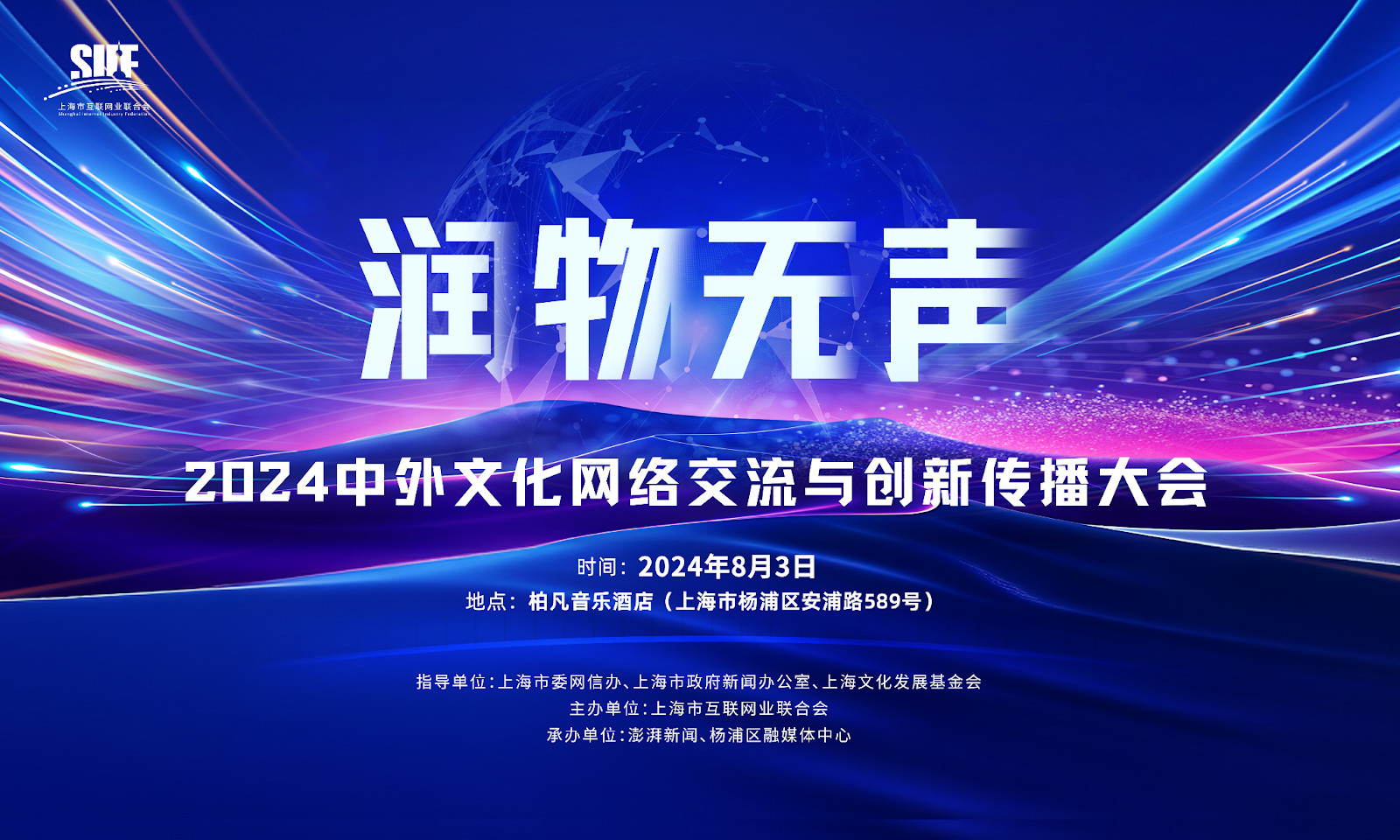
Soundless Saturation / Quietly Nourishing 润物无声
By Alex Colville

An idiom inspired by a classic Tang Dynasty poem is now a modifier commonly used in the official political speech of the CCP to refer to the need to innovate the party’s communication of its political and social agendas — ultimately making them more palatable, and more easily accepted.

As major state-run media, online influencers and propaganda pundits gathered in Shanghai in August 2024 for a conference on how to best innovate international communication, the event’s theme drew on a Chinese idiom, or chengyu (成语), with its origins in classical Chinese poetry. “Soundless Saturation” (润物无声), the four characters splashed across the conference’s promotional poster, a map of the globe faintly visible behind.

This evocative phrase, which could also be translated “quietly nourishing,” references an early spring drizzle falling gently over the world. It is a colorful phrase that now describes the drive by the Chinese Communist Party leadership for more innovative and evocative deployment of state propaganda themes both domestically and internationally. The phrase expresses a trend in CCP thinking about the need for more subtle and effective means to disseminate and inculcate the party’s thoughts and agendas. Continue reading Soundless saturation / quietly nourishing

China from the Margins

Loredana Cesarino and Emily Williams are pleased to announce the publication of their edited volume:

New Publication: China from the Margins – New Narratives of the Past and Present
Edited by Emily Williams and Loredana Cesarino
Routledge, 2024. ISBN 9781032621098

The book explores and brings to light untold stories from the margins of Chinese society. It investigates and reveals grassroots and popular cultural beliefs, amusing anecdotes, items of lore, and accounts of the strange and the unusual. It delves into questions of identity formation, considering gender, sexuality, class, generational divides, subcultures, national minorities and online communities. It examines heritage-making practices and the persistence of marginalized memories. Bringing together views from cultural studies, literature, gender studies, cultural heritage, sociology, history and more, the book argues that neither the margins nor the centre can be understood in isolation, and that by focusing on the margins, a fuller picture of Chinese society overall emerges, including new perspectives on spatial and social marginality, on hierarchies of marginality, and on neglected spaces, voices and identities.

Table of Contents Continue reading China from the Margins

Song Binbin dies at 77

Source: NYT (10/1/24)
Song Binbin, Poster Woman for Mao’s Bloody Upheaval, Dies at 77
She was said to have been involved in the first killing of an educator during the Cultural Revolution, drawing official praise. She later apologized for her actions.

A black and white photo of Mao and a young woman smiling at each other as she places an armband around his sleeve. Behind them a young man films the event with a hand-held camera. Glimpses of a crowd can be seen below.

As a student leader of the militant Red Guards, Song Binbin was selected to pin an armband around the sleeve of Mao Zedong in a ceremony in 1966 in Tiananmen Square in Beijing. Credit…Apic/Getty Images

Song Binbin, a student leader of China’s Red Guards who in 1966 was embroiled in the beating death of her high school principal, one of the most notorious killings of the Cultural Revolution — and who publicly apologized for her actions almost a half-century later — died on Sept. 16. She was 77.

Her death was reported by a brother, Song Kehuang, on the Chinese app WeChat, saying she had died in the United States. He provided no other details.

News of her death set off renewed debate on Chinese social media about the adequacy of Ms. Song’s tearful apology in 2014, as well as the Communist Party’s failure to acknowledge the true toll of the Cultural Revolution, the decade-long rampage that Mao Zedong unleashed in the 1960s, claiming more than one million lives, and that remains a heavily censored topic in China.

A daughter of a prominent general in the People’s Liberation Army, Ms. Song was enrolled at Beijing Normal University Girls High School when she and classmates responded to Mao’s call for young people to turn against intellectuals, educators and others who supposedly held bourgeois values.

On Aug. 5, 1966, students attacked Bian Zhongyun, a 50-year-old mother of four who headed the school. She was kicked and beaten with sticks spiked with nails. After passing out, she was thrown onto a garbage cart and left to die. Continue reading Song Binbin dies at 77

Geiss-Hsu Travel Grant

Thanks to the generous support of the James P. Geiss and Margaret Y. Hsu Foundation, the Executive Committee of the Ming-Qing Forum of the Modern Languages Association is pleased to announce the Geiss-Hsu Travel Grant to support participation in the 2025 MLA annual convention by scholars of the Ming and adjacent periods. Convention participants (panel presenters, discussants, or organizers) may apply for grants of up to a maximum of $2000 to reimburse the costs of conference travel, registration, and lodging. Selection will be based on need, with preference given to graduate students, junior faculty, and faculty at institutions that provide limited funding for research travel. Awards will be announced in early December, with funds provided after the conference. For full consideration, please apply here by October 15, 2024.

For questions, please contact Rania Huntington, huntington@wisc.edu  or Patricia Sieber, sieber.6@osu.edu.