Proper nouns must be proper Chinese

Source: Sixth Tone (5/30/18)
Proper Nouns Must Be Proper Chinese, Say Authorities
Ministry mandates that housing developments with names like ‘California Town’ and ‘Norwegian Wood’ must find Mandarin monikers.
By Liang Chenyu

More than 75,000 place names around China have been changed because they were too exotic, strange, or hyperbolic, the Ministry of Education announced Monday.

Tian Lixin, head of the ministry’s department for standardizing Chinese language usage, told The Paper, Sixth Tone’s sister publication, that it is inappropriate to see names like “Venice” and “Rome” in Chinese cities.

On social platform Weibo, some users approved of the sweep. “There are so many beautiful words in [Chinese classics], why do you have to choose strange transliterated words?” But others disagreed: “Why does this bother you enough to police it?” Continue reading Proper nouns must be proper Chinese

Patriotic writer draws ire

Source: Sup China (5/29/18)
Patriotic Chinese Writer Draws Ire After Trying To Enroll Her Kid At An American School
By CHAUNCEY JUNG

Yuan Xiaoliang, from her Weibo account

Yuan Xiaoliang 袁小靓 made a name for herself by bashing democracy. In 2013, she called India a nation “raped” by democracy, and said Chinese fans of Apple products were American “slaves.” A year later, she wrote, “Despite how good America is, it is someone else’s motherland. No matter how bad a mother China is, it is my home. I don’t need a reason to love her and protect her, yet there are reasons aplenty.”

Her pro-China stances on social media have been widely cited by Chinese state media. In an article published on guancha.cn in 2012, Yuan called herself the “chairwoman” of the 50-Cent Party — a moniker given to those who voice online support for the Chinese Communist Party and China in general. (For what it’s worth, Yuan also claimed to have not made a cent from the Chinese government.) Continue reading Patriotic writer draws ire

Surge in China carbon emissions

Source: Unearthed (5/30/18)
Dramatic surge in China carbon emissions signals climate danger
With China’s CO2 pollution on the rise, is it time to panic?
By Zach Boren and Harri Lammi

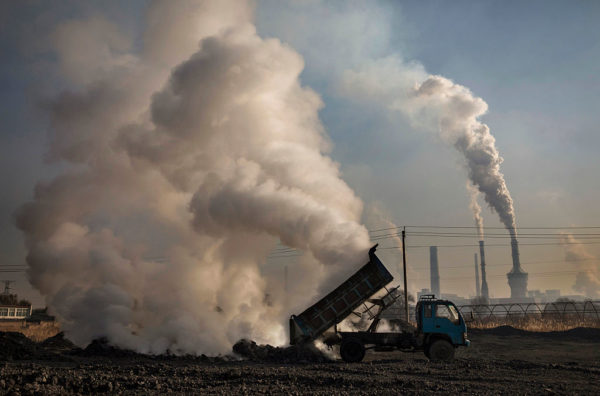
The continued rise of China’s CO2 emissions is unexpected. Photo: Kevin Frayer/Getty Images

China’s carbon emissions growth has accelerated since the beginning of the year, leading to warnings that the country could be headed for its largest annual increase in climate pollution since 2011.

Led by increased demand for coal, oil and gas, China’s CO2 emissions for the first three months of 2018 were 4% higher than they were for the same period in 2017, according to an Unearthed analysis of new government figures.

Analysts have suggested the country’s carbon emissions could rise this year by 5% — the largest annual increase in seven years, back when the airpocalypse was at its peak. Continue reading Surge in China carbon emissions

Divorce quiz

Source: NYT (5/30/18)
Want a Divorce in China? You Might Have to Fail a Quiz First
By Tiffany May

Some local authorities in China have tried to reduce the divorce rate by asking couples to take a quiz. Know too much about your spouse and you might have to stay married, at least for a while.CreditJohannes Eisele/Agence France-Presse — Getty Images

HONG KONG — It’s like the Newlywed Game, but for divorce.

In some parts of China, married couples seeking to split up have been asked to take a quiz issued by the local authorities. The more they knew about each other — including a spouse’s birthday or favorite food — the less likely they were to have the divorce immediately approved.

The quizzes, issued in at least two provinces since last year, follow the format of a typical three-part school exam: fill-in-the-blank, short answer and an essay. Questions include the mundane — “When is your anniversary?” — and the philosophical: “Have you fulfilled your responsibility to your family?” Continue reading Divorce quiz

Lu Yang on growing up and writing in China

Source: The New Yorker (June 4, 2018)
Lu Yang on Growing Up and Writing in China
By Deborah Treisman

Photograph Courtesy Lu Yang

Is Silver Tiger,” your story in this week’s issue, your first publication in English? Can you tell me about your writing and publishing history in China?

That’s right. “Silver Tiger” was one of my earliest short stories and is now the first to be translated into English. In the early nineties, I began publishing fiction in some of China’s most important literary journals, including the stories “The Small Hours of 1993,” in 1993, my “String and Song” series, from 1992 to 1993, and my “Guttering Flame” series, around 1995. During that period, I also published collections of short stories, novellas, and poetry. I wrote a novel, which languished at a Beijing publishing house for nine years before finally being published by a Shanghai house, in 2007. After that, I continued to write poetry, but did not publish. In 2017, I published a Chinese translation of Hemingway’s “The Old Man and the Sea.” Continue reading Lu Yang on growing up and writing in China

SEC-AAS–cfp (repost)

Dear Colleagues:

I am pleased to announce that the 58th annual meeting of the Southeast Conference of the Association for Asian Studies will be held January 18–20, 2019 at Rhodes College in Memphis, Tennessee. More information can be found on our new website, which is www.sec-aas.com.

The program committee welcomes proposals for individual or panel presentations from faculty, graduate students, and independent scholars. Proposals must be submitted no later than October 31, 2018. You must complete the submission form online. Submit panel submissions here and individual paper submissions here. Please direct any questions about proposal submission to our program chair, Professor Han Li, and questions about conference logistics to our local arrangements chair Professor Chia-rong Wu. Continue reading SEC-AAS–cfp (repost)

China tries to erase Taiwan

Source: NYT (5/25/18)
China Tries to Erase Taiwan, One Ally (and Website) at a Time
By Steven Lee Myers and Chris Horton

The changing of the guard at Chiang Kai-shek Memorial Hall in Taipei, Taiwan’s capital. China’s recent efforts to isolate Taiwan, diplomatically and otherwise, have been its most intense in decades, people on the self-governing island say.CreditIsaac Lawrence for The New York Times

TAIPEI, Taiwan — Can China use its enormous economic and diplomatic leverage to simply erase Taiwan’s international identity?

China seems to be trying. But its increasingly aggressive posture toward Taiwan is creating a backlash here that is undermining Beijing’s ultimate goal: bringing the island’s 23 million residents under its authority.

China continues to peel away the dwindling number of allies that recognize Taiwan as an independent country — most recently, on Thursday, Burkina Faso. This week, it blocked Taiwan’s representatives — even its journalists — from participating, with observer status, in the World Health Organization’s annual assembly in Geneva. Continue reading China tries to erase Taiwan

U of Amsterdam postdoc: Imagining the Rural

Three-year postdoctoral fellowship at the University of Amsterdam: “Imagining the Rural in Contemporary Chinese Culture”.

Application deadline 17 June 2018.
Full information:
http://www.uva.nl/shared-content/uva/en/vacancies/2018/05/18-288-postdoctoral-researcher-imagining-the-rural-in-contemporary-chinese-culture.html

Key passage from the job description:

Using a distinctive humanities approach, the RURAL IMAGINATIONS research project examines prominent cultural imaginations of the rural in film, television and literature in the UK, US, Netherlands, China and South Africa, asking: Continue reading U of Amsterdam postdoc: Imagining the Rural

SEC-AAS–cfp

Dear Colleagues:

I am pleased to announce that the 58th annual meeting of the Southeast Conference of the Association for Asian Studies will be held January 18–20, 2019 at Rhodes College in Memphis, Tennessee. More information can be found on our new website, which is www.sec-aas.com.

The program committee welcomes proposals for individual or panel presentations from faculty, graduate students, and independent scholars. Proposals must be submitted no later than October 31, 2018. You must complete the submission form online. Submit panel submissions here and individual paper submissions here. Please direct any questions about proposal submission to our program chair, Professor Han Li, and questions about conference logistics to our local arrangements chair Professor Chia-rong Wu.

Conference participants must be dues-paying members. SEC/AAS dues are $20 ($10 for students). The membership application form is available on the SEC/AAS website. Please submit this form with the correct dues to Professor Li-ling Hsiao, Department of Asian Studies, New West 113, CB#3267, UNC-Chapel Hill, Chapel Hill, NC 27599.

Program Chair
Han Li <hanl@rhodes.edu>
Modern Languages and Literatures

Seminars in modern Chinese fiction

Two Seminars in Modern Chinese Fiction at the Lau China Centre, Kings College London
Thursday 7th and Thursday 14th June, 10-12, at Bush House, KCL

The first seminar will consider ‘I Love Dollars’ by Zhu Wen, originally published in Chinese in the late 1990s, and the second ‘The Story of Ah Q ‘ by Lu Xun, first published in Chinese in 1921.

The seminars are presented by journalist and writer Poppy Sebag-Montefiore, will be discussions on short stories from bestselling classics from either end of the 20th century.

Through close reading, the sessions will explore the ways the texts deal with sexuality, patriarchy, filial piety, women, masculinity, the individual, romantic love, society and the state. They will also consider the tone of the writing, the use of humour, parody and the absurd, and consider the ways in which they experiment with the story form. Continue reading Seminars in modern Chinese fiction

Literary Fantasy and Its Discontents–cfp reminder

Dear all,

I write with a quick reminder that the early-consideration deadline for abstracts for Literary Fantasy and Its Discontents (Taipei, November 23–24) is next Monday, June 4. All papers related to the theme are welcome, and the conference may be particularly interesting to scholars who work on Chinese or Taiwanese nationalisms, politicized reception histories of fantasy in Asia, rediscovered or repurposed fantastic texts, and/or explorations of the reception history of Western fantasies in the East and Eastern fantasies in the West.

Keynote speakers are Ackbar Abbas (Hong Kong: Culture and the Politics of Disappearance) and Marysa Demoor, who has published widely on Victorian and modernist culture and is the co-editor of the Dictionary of Nineteenth-Century Journalism.

We’re also pleased to announce that we’ll be publishing selected revised, peer-reviewed essays from the conference in National Taiwan University’s journal, Ex-position (formerly NTU Studies in Language and Literature), which is indexed in MLA.

Please see the CFP and information on the companion cultural events, the keynote speakers, and our conference publication at https://literaryfantasytaipei2018.wordpress.com/. While the early-consideration abstract deadline (usually best for international scholars) is next week, we also will accept abstracts until our regular deadline of August 31. We will respond within two weeks of either deadline.

All best,

Sharin Schroeder <sharinschroeder@mail.ntut.edu.tw>
Taipei Tech

Growing interest in Jia Pingwa’s works

Source: China Daily (5/25/18)
Growing interest in Jia’s works
By Mei Jia

Carlos Rojas, translator of Jia Pingwa’s The Lantern Bearer. [Photo provided to China Daily]

There has been a surge in the number of English translations of Jia Pingwa’s works in recent years, says Carlos Rojas, a professor of Chinese cultural studies at Duke University and the translator of Jia’s The Lantern Bearer.

“Jia was the least-translated (into English) contemporary literary master. For years, there was only Turbulence: A Novel, translated by Howard Goldblatt and released in 2003,” says Rojas.

He says he is glad to see that more of Jia’s works have been translated or are in the process of being translated. Continue reading Growing interest in Jia Pingwa’s works

Historic Shanghai theater makes a comeback

Source: China Daily (5/26/18)
Historical theater makes a comeback
By Zhang Kun in Shanghai

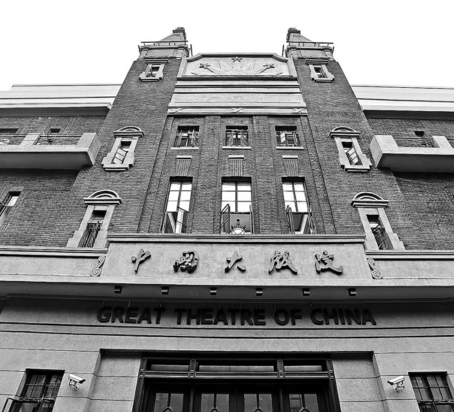
The facade of the Great Theater of China in Shanghai. Provided to China Daily

The 88-year-old Great Theater of China in Shanghai was reopened on May 16 after two years of renovations.

Located near People’s Square at 704 Niuzhuang Road in downtown Shanghai, the facility was built in 1930 as a prime venue for Peking Opera performance. Famous artists such as Mei Lanfang, Ma Lianliang and Meng Xiaodong used to sing in the theater, which was known as one of the “Top Four Stages” of Peking Opera.

The building was listed as a protected historical structure by the municipality in 2005. Huangpu district authorities later made the decision to renovate the building in 2012. The Ever Shining Cultural Group, the operator of the theater, invited RHWL Architects from Britain to work alongside a Chinese team for the renovation. Continue reading Historic Shanghai theater makes a comeback

Dance adaptation of Lin Yutang war novel

Source: China Daily (5/26/18)
War novel takes new life as dance production
By Chen Nan

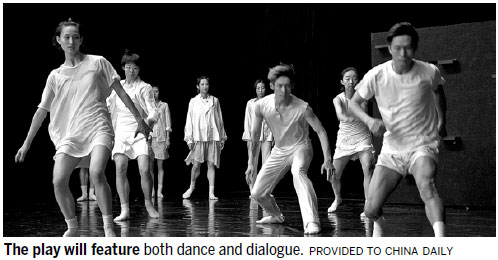
The dance production A Leaf in the Storm will be presented by the Beijing Dance Theater at Beijing’s Tianqiao Performing Arts Center from June 6 to 10.

Based on a war novel of the same title by Lin Yutang, the production marks the first time the story is retold in dance. The novel, which was published by New York publishing firm John Day Book Company in 1941, is about the lives of several characters in Beijing during the Japanese invasion. Continue reading Dance adaptation of Lin Yutang war novel

China shutters Utopia

Source: China Media Project (5/23/18)
China Shutters Top Leftist Website
By David Bandurski

China Shutters Top Leftist Website

One key characteristic of Xi Jinping’s “New Era” has been the progressive elimination of all forms of ideological variance within the Party. Growing centralization of Party power has come with a pronounced narrowing of the discourse spectrum. Everyone must converge at the center — or remain silent.

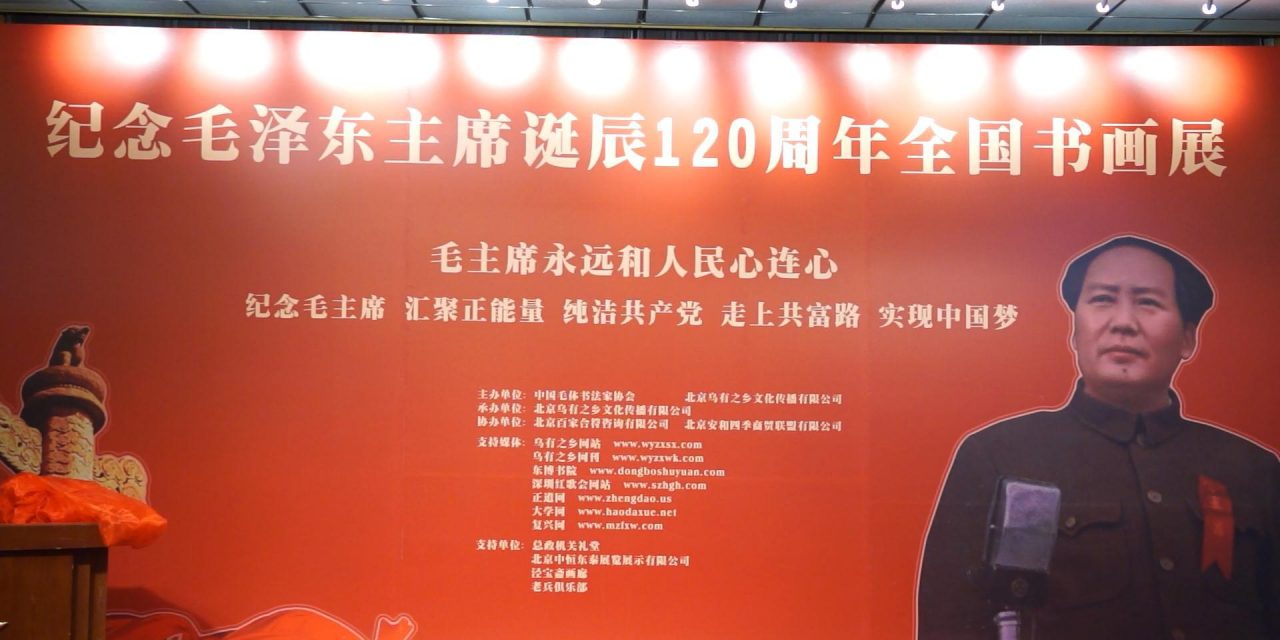
Now comes the news, not altogether surprising, that Utopia, the leftist website espousing that “our only firm belief is in Mao Zedong Thought,” could be shuttered indefinitely. Continue reading China shutters Utopia