China’s Trojan Horse (1)

China subverting higher ed in the US? Hasn’t the U.S. already done that to itself with the unstinting privatisation of higher ed., hence now having to rely on foreign/Chinese monies, which is the problem being highlighted? Sounds much like Trump blaming China for US de-industrialisation.

The reasoning demonstrated in the piece is problematic but the xenophobic undertones and fear-mongering are even more regrettable.

Best, Tung-yi Kho <kho.tungyi@yahoo.com>

China’s Trojan Horse

The article below is by the principal author of the report previously quoted here (https://www.nas.org/projects/confucius_institutes/the_report), which investigates Confucius Institutes at 12 universities/colleges in NY and NJ, and gives more in-depth information on the conditions at Binghamton University, the University at Albany; University at Buffalo, Alfred University; Pace University; and Stony Brook University.–Magnus Fiskesjö <nf42@cornell.edu>

Source: Foreign Policy (5/9/17)
American Universities Are Welcoming China’s Trojan Horse
A growing number of Confucius Institutes are importing Chinese censorship into U.S. campuses.
By RACHELLE PETERSON

American Universities Are Welcoming China’s Trojan Horse

Photo Credit: LEE HOON-KOO/AFP/Getty Images

China is spending an enormous amount of money trying to build goodwill overseas by building schools. By itself, that’s not unusual. Many nations send teachers abroad as a form of cultural and linguistic diplomacy: the Alliance Française for French, the Goethe-Institut for German, the Instituto Cervantes for Spanish, and the British Council for English. Continue reading China’s Trojan Horse

Monument to Jesus in Changsha

Source: NYT (5/7/17)
A Monument to Jesus in the City of Mao
By DIDI KIRSTEN TATLOW

CHANGSHA, China — Sweeping heavenward like an enormous glass-and-metal ski jump, a new Protestant church dominates the crumbled earth, freshly planted trees and unfinished water features of a suburban park under construction in Changsha.

About 260 feet tall and topped by a cross, the Xingsha Church is bigger even than the biggest statue of Mao Zedong in China, less than 10 miles west of here. Continue reading Monument to Jesus in Changsha

How censorship works

Source: NYT (5/6/17)
Ai Weiwei: How Censorship Works
By Ai Weiwei

CreditJon Han

BEIJING — In the space of a month in 2014, at separate art exhibitions in Beijing and Shanghai that included my work, my name was blotted out — in one case by government officials and by exhibitors themselves in the other case. Some people might take such treatment in stride, as nothing to get huffy about. But as an artist, I view the labels on my work as a measure of the value I have produced — like water-level markers at a riverbank. Other people might just shrug, but I can’t. I have no illusions, though, that my unwillingness to shrug affects anyone else’s willingness to do so. Continue reading How censorship works

campuses afar under Beijing’s watchful view

Source: NYT (5/4/17)
On Campuses Far From China, Still Under Beijing’s Watchful Eye
点击查看本文中文版
By STEPHANIE SAUL

SAN DIEGO — In the competition for marquee commencement speakers, the University of California, San Diego thought it had scored a coup this year — a Nobel Peace Prize winner, best-selling author and spiritual North Star to millions of people.

“We are honored to host His Holiness the 14th Dalai Lama,” gushed Pradeep Khosla, the university’s chancellor, “and thankful that he will share messages of global compassion.”

Within hours of Mr. Khosla’s announcement, though, the university was blindsided by nasty remarks on Facebook and other social media sites: “Imagine how Americans would feel if someone invited Bin Laden,” said one.

Continue reading campuses afar under Beijing’s watchful view

Confucius Institutes

See below for a nice summary of the state of play as regards the Confucius Institutes, in the light of both the recent report from the National Association of Scholars, “Outsourced to China: Confucius Institutes and Soft Power in American Higher Education” (published April 26, 2017, download at: https://www.nas.org/projects/confucius_institutes), and of the efforts in China to curb Western “infiltration”. –Magnus Fiskesjö <nf42@cornell.edu>

Source: NY Review of Books (4/28/17)
Should the Chinese Government Be in American Classrooms?
By Richard Bernstein

Imaginechina via AP Images: Students from a Confucius Institute in the US visiting the Confucius Temple in Qufu, China, April 17, 2013.

Since their beginning in 2005, Confucius Institutes have been set up to teach Chinese language classes in more than one hundred American colleges and universities, including large and substantial institutions like Rutgers University, the State Universities of New York at Binghamton and Albany, Purdue, Emory, Texas A & M, Stanford, and others. In addition, there are now about five hundred sister programs, known as “Confucius Classrooms,” teaching Chinese in primary and secondary schools from Texas to Massachusetts. Continue reading Confucius Institutes

HK police arrest nine more activists

Source: Straits Times (4/27/17)
Hong Kong police arrest nine more democracy activists

Hong Kong independence activists Baggio Leung (left) and Yau Wai-ching.PHOTO: AFP

HONG KONG (AFP) – Nine democracy activists were arrested in Hong Kong on Thursday (April 27) over an anti-Beijing protest, according to campaign groups, in the latest swoop by police as protesters say they are being persecuted.

Concerns are growing that the semi-autonomous city’s freedom is under threat from Beijing, fuelling calls from some activists for greater autonomy or even a complete split from China. Continue reading HK police arrest nine more activists

A millennial shift in Chinese journalism

Source: Medium (4/24/17)
For Journalism in China, a Millennial Shift
By David Bandurski

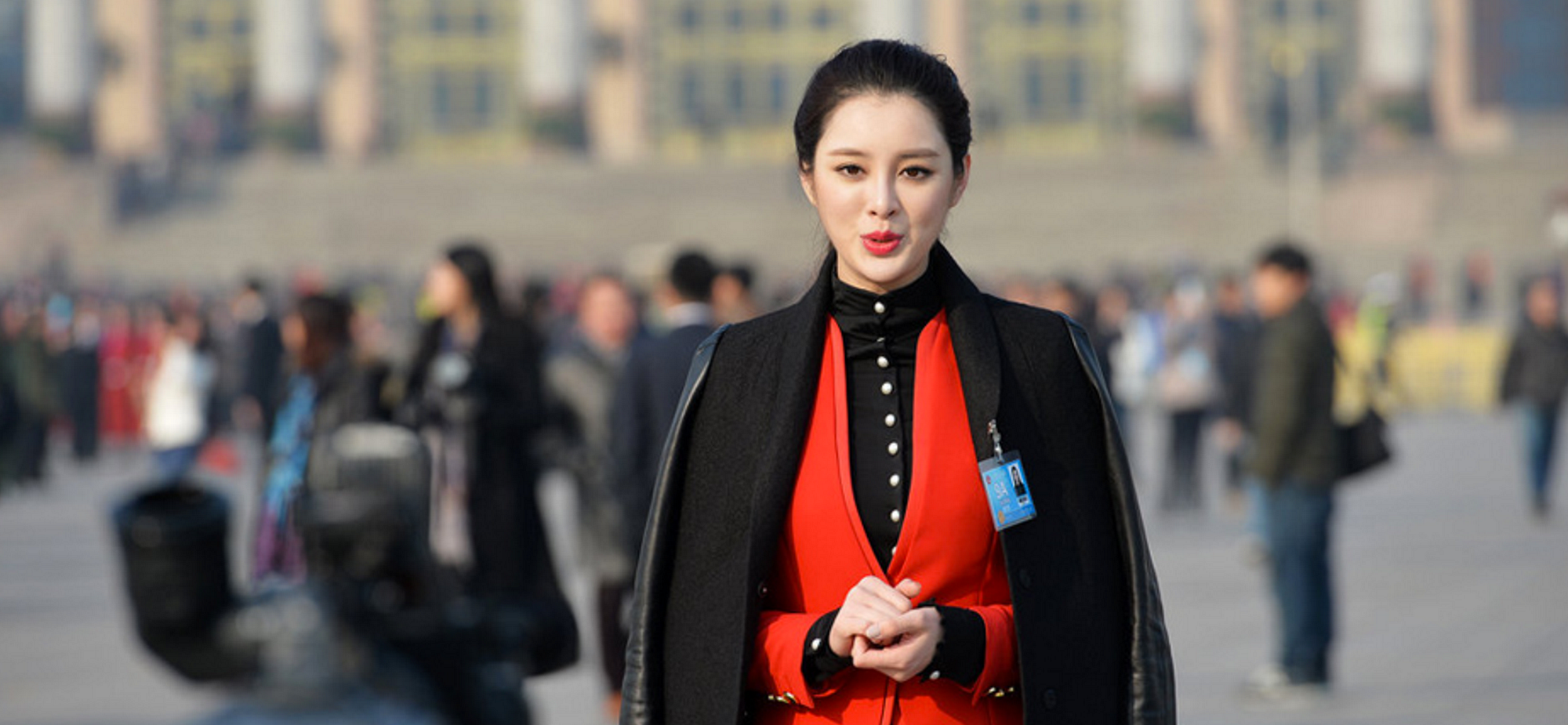
A reporter for Jilin Education TV is profiled in “beautiful female journalists,” a special slideshow appearing in 2015 coverage of the National People’s Congress on China.org.cn, an official government website. Faces in Chinese journalism are increasingly young, and increasingly female.

The period from the mid-1990s to roughly the mid-2000s was a golden era for Chinese journalists. Now, however, many of the (still young) old guard have deserted, leaving inexperience in their wake.

Two years ago in Hong Kong, I sat around a conference table with some of the finest journalists to have worked in the Chinese media in the past two decades. Left and right of me were reporters who had broken major stories of corruption, malfeasance and cruelty, and who had, in the process, shaped the contemporary history of Chinese journalism — a history in which, from time to time, a broader notion of the public interest won out against the narrow interests of the Party-state. Continue reading A millennial shift in Chinese journalism

Cartoonist Rebel Pepper

Source: Index on Censorship (3/21/17)
#IndexAwards 2017: Chinese cartoonist Rebel Pepper refuses to put down his pen
Despite the persecution he faces for his work, Rebel Pepper continues to satirise the Chinese state from a life in exile in Japan
BY RYAN MCCHRYSTAL

Wang Liming, better known under the pseudonym Rebel Pepper, is one of China’s most famous political cartoonists. He is best-known for his work satirising China’s president Xi Jinping, for which he has faced repeated persecution.

“Most of my political cartoon works expose the CCP’s crimes against the law, and the social problems and environmental crises that they have created,” Wang says. ”Comics are a simple and direct visual language, often more than the performance of an article, so the Communist authorities naturally hate my works very much.” Continue reading Cartoonist Rebel Pepper

Gui Minhai to receive Jeri Laber Award

The award to Hong Kong publisher and Swedish citizen Gui Minhai will be presented at the PEN Literary Gala in New York city, on April 25, to Gui Minhai’s daughter Angela Gui, who has been campaigning for his release. Her father has now been detained for 536 days, since his abduction from Thailand in October 2015.–Magnus Fiskesjö <nf42@cornell.edu>

Source: Association of American Publishers (3/30/17)
Detained Hong Kong Publisher and Bookseller Gui Minhai to Receive 2017 Jeri Laber Award

Washington, DC; March 30, 2017 –Gui Minhai, a Hong Kong based publisher and bookseller currently detained in mainland China, will receive the 2017 Jeri Laber award. The award, given annually by the Association of American Publishers International Freedom to Publish Committee (IFTPC), recognizes a book publisher outside of the US who has demonstrated courage and fortitude in the face of restrictions on freedom of expression. Presented at the PEN Literary Gala in New York on April 25, the award will be accepted by Gui Minhai’s daughter, Angela Gui, who has been actively campaigning for her father’s release. Continue reading Gui Minhai to receive Jeri Laber Award

Zhang Yihe on CCP atonement

Source: SCMP (4/4/17)
Why one writer is fighting to call China’s Communist Party to account for its wrongdoings
Zhang Yihe says the party needs to apologise for wrongdoing during the Mao era and to cease curbing freedom of thought among the nation’s thinkers and intellectuals
By Stuart Lau

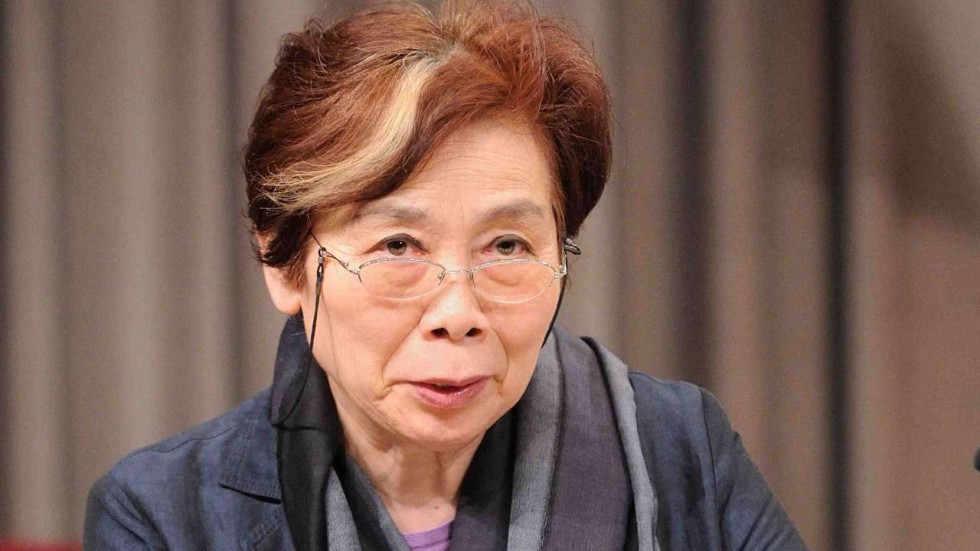
The writer and historian Zhang Yihe pictured in Hong Kong. Photo: Handout

Chronicling China’s history as it really happened rather than as the government tells it is a race against time for 75-year-old acclaimed writer Zhang Yihe, whose family ties to the upper echelons of the communist regime during its early years continue to be a source of her dissent and the focus of her writing.

Maoists for Trump

Source: NYT (4/3/17)
Maoists for Trump? In China, Fans Admire His Nationalist Views
By CHRIS BUCKLEY

BEIJING — They protest, picket and sing to defend Mao’s memory, yearning for the East to be red again. But lately some of China’s Maoists are finding inspiration in an unlikely insurgent in the West: Donald J. Trump.

Mr. Trump “has torn up the old rules of the ruling elites, not just of the capitalist West,” said Zhang Hongliang, a polemicist who is the loudest proponent of what could be loosely called “Maoists for Trump.” In a recent essay, Mr. Zhang lauded the American president as being alone among national leaders daring “to openly promote the political ideas of Chairman Mao.” Continue reading Maoists for Trump

Raise the Umbrellas preview

For those in the vicinity of New Haven, on Monday, there is a preview of Evan Chan’s new film Raise the Umbrellas–Magnus Fiskesjö <nf42@cornell.edu>

Photo courtesy of PH Yang Photography (phyang.org)

While the disturbing aftermath of the Umbrella Movement is still unfolding in Hong Kong two years later, there’ll be a special preview of Raise the Umbrellas (Hong Kong version) at Yale University :

http://ceas.yale.edu/events/raise-umbrellas-special-preview-director-evans-chan

Raise the Umbrellas: Special Preview with Director Evans Chan

Monday, April 3, 2017 – 4:00pm to 6:00pm
Auditorium, Henry R. Luce Hall
34 Hillhouse Avenue, New Haven, CT 06511 Continue reading Raise the Umbrellas preview

Open letter on Feng Chongyi’s situation

Dear colleagues,

In response to the situation currently faced by our Sydney colleague Feng Chongyi (http://www.smh.com.au/national/uts-professor-chongyi-fengs-daughter-yunsi-feng-calls-for-his-return-to-australia-20170330-gva8n6.html), concerned scholars have worked together to draft and collect initial signatures on an open letter in support of Feng. 

If you would like to sign this open letter, please email scholars.for.feng@gmail.com with your name and affiliation. Please also feel welcome to share the content of this message with anyone else who may be interested in signing.

I appreciate your taking the time to consider this.

Thanks,

Kevin Carrico <scholars.for.feng@gmail.com>

An open letter to President Xi Jinping and Prime Minister Li Keqiang 

Dear President Xi and Prime Minister Li, 

We the undersigned are members of the global China Studies community.  We are deeply concerned by the travel restrictions recently placed upon Professor Feng Chongyi of the University of Technology Sydney, which have prevented him from departing the People’s Republic of China and returning to his workplace and family in Sydney since last week. Continue reading Open letter on Feng Chongyi’s situation