Spaces of Encounter (JCC) special issue–cfp

Call for Paper: Spaces of Encounter
Journal of Chinese Cinemas, Special Issue 2021

This special issue seeks innovative research that explores the many spaces in which cinema (broadly defined) is exhibited and encountered in China and the Sinophone world from the late nineteenth century to the present.

Where do we encounter cinema? As digital technologies transform the ways in which moving images are produced and consumed, they also call attention to the extent to which cinema has previously been defined and theorized through a specific exhibition space, namely, the movie theater. American film historian William Paul, for example, asks “if movies are no longer inescapably an art of the theater, have we lost an understanding of the art form that seemed self-evident to past audiences?” But in China and the Sinophone world, cinema was never bound up with the movie theater. From its first appearance in luxurious hotels and tea gardens, cinema has been exhibited in many venues alongside the commercial movie theater, such as classrooms, village squares, workers’ clubs, video halls (luxiang ting), museums, long-distance buses, and the living room. In addition, theme parks and tourist sites offer entry into filmed worlds through characters and landscapes. Large urban screens and personal mobile devices turn sidewalks, malls, and public transit into potential screening spaces (or what Francesco Casetti calls hypertopias). New digital spaces of exhibition afford users novel ways of interaction and performance, such as danmaku/danmu commentaries and the ability to easily create gifs from the video browser. Continue reading Spaces of Encounter (JCC) special issue–cfp

Disappearance of Perhat Tursun

Meanwhile, the massive racist atrocities in Xinjiang continue unabated — Fwd by Magnus Fiskesjö <nf42@cornell.edu>

Source: Art of Life in Chinese Central Asia (3/13/20)
Scenes from the Disappearance of Perhat Tursun, a Preeminent Modernist Uyghur Author
Written by Darren Byler

Perhat Tursun smoking his trademark Xuelian cigarettes in his home in Ürümchi in 2015. Image by Bethany Allen-Ebrahimian.

Perhat was disappeared at the height of his powers by the Chinese state, a victim of the government’s re-education campaign in Xinjiang.

Perhat Tursun is a slight man with a receding hairline. To look at him, you wouldn’t know that he is one of the most influential contemporary Uyghur authors in the world. When I met him for the first time at a reception for a Uyghur-language publishing house in February 2015, his importance was clear from the way other Uyghurs looked at him as he moved through the crowd. He cut a wide swath. After we chatted for a bit at the reception, he said he was really bored. He hated formal gatherings and performing for strangers. He left immediately after the ceremony was finished, glad-handing and mumbling under his breath as he shuffled through the banquet hall. Many people stopped to shake his hand as we walked together to his house.

His house was on the 26th floor of a new apartment building owned by the Uyghur grocery franchise Arman. Many Uyghur celebrities lived in the building. While we were waiting for the elevator, we nodded at Qeyum Muhemmet, the TV actor who was later sent to a reeducation camp along with more than 400 other public figures in 2017. Perhat’s house smelled more of  cigarette smoke than most Uyghur homes. He had some abstract paintings in yellow painted by the celebrated Uyghur artist Dilmurad Abdukadir, which seemed to reflect the complexity of Uyghur traditional urban architecture. Otherwise, his living room was filled with carpets and a coffee table covered with dried fruit. Continue reading Disappearance of Perhat Tursun

Holding Beijing accountable is not racist

This Johns Hopkins colleague nailed it! — fwd by Magnus Fiskesjö <magnus.fiskesjo@cornell.edu>

Source: The Journal of Political Risk 8, no. 3 (May 2020)
Holding Beijing Accountable For The Coronavirus Is Not Racist
By Ho-fung Hung, Johns Hopkins University

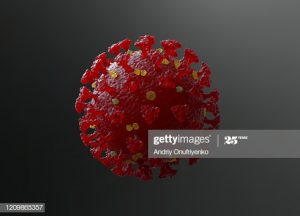
Digital generated image of macro view of the COVID-19 coronavirus. Getty Images/Andriy Onufriyenko

As the coronavirus global pandemic is unfolding and deteriorating, an age-old racial stereotype that associates contagious diseases with Asian/Chinese people reemerged. Reports about Asians being beaten up and accused of bringing the disease to the community are disheartening. The use of the phrase “sick man of Asia” in connection to the outbreak and calling the disease “Wuhan pneumonia” or “Chinese virus” invoked accusations of racism. We in higher education kept hearing episodes of Asian students harassed by comments from fellow students or faculty that associate them with the virus.

This racial association of contagious diseases often surfaces with epidemics in history. During the SARS epidemics of 2003, Western media was full of articles, images, and cartoons that explicitly characterized the diseases as an Asian one, as my research documented. In medieval Europe, the spread of epidemics like bubonic plagues often triggered harassment or even massacre of ethnic minorities such as Jewish people. Perennial as it is, this racial association is not only harmful but is also counterproductive to the effective containment of the disease. Epidemics know no ethnic boundary. They always spread beyond ethnic lines very quickly. The racial association of disease makes us overlook carriers who happen to be not among the stereotyped groups. We have to combat xenophobic racism at the time of an epidemic as hard as we can. Continue reading Holding Beijing accountable is not racist

Propaganda machine fires up

Source: Sup China (3/16/20)
Propaganda Machine Fires Up As COVID-19 ‘Passes Peak’ In China
By THE EDITORS

prop

SupChina illustration by Derek Zheng

Per the Economist (porous paywall), Xí Jìnpíng 习近平 “may find it hard to choose his moment to declare complete success. As people gradually get back to work, there is a risk that the virus may begin to spread more widely again in China.”

Nonetheless, the peak of the outbreak in China is “over,” according to China’s National Health Commission, Xinhua noted last Thursday (here in Chinese). Over the weekend, coronavirus infections and deaths outside of China began to outnumber those in China, according to official data, the Guardian reports.

The conspiracy theory that the virus did not originate in China — already encouraged by Chinese government officials, including top Chinese epidemiologist Zhōng Nánshān 钟南山, for more than a week now — is still being pushed. Continue reading Propaganda machine fires up

Harry Simon (1923-2019)

Posted by: Wah Guan Lim <wglim@unsw.edu.au>
Source: Sydney Herald News (3/10/20)
Torchbearer for Chinese studies at the University of Melbourne
By Andrew Endrey, Christopher Nailer and Carol Simon

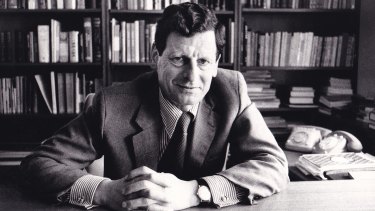
Harry Simon.

Harry Simon.

Harry Felix Simon: September 13, 1923-July 7, 2019

Professor Harry Felix Simon, who led Chinese studies at the University of Melbourne for a remarkable 27 years, was born in Berlin on September 13, 1923.

His father, Professor Walter Simon, was lecturing in Chinese at the University of Berlin. Unable to retain his position following the Nazis’ rise to power, Walter departed with his family for England in March 1936, where he became professor of Chinese in the School of Oriental and African Studies (SOAS) at the University of London.

Harry, aged 12, adjusted swiftly to England at the Thames Valley Grammar School. Following in his father’s footsteps, he studied Chinese at SOAS during the early years of World War II and was commissioned as a lieutenant in the Oxfordshire and Buckinghamshire Light Infantry Regiment. By 1944, he was a service instructor in Chinese at London University; in 1947, he took up an appointment there as lecturer in Chinese. Continue reading Harry Simon (1923-2019)

Journalists fight back

Source: NYT (3/14/20)
As China Cracks Down on Coronavirus Coverage, Journalists Fight Back
阅读简体中文版 | 閱讀繁體中文版
The Communist Party is trying to fill the airwaves with positive stories about its battle against the virus. Chinese reporters, buoyed by widespread calls for free speech, are resisting.
By Javier Hernndez

A screen at a shopping mall in Beijing showing China Central Television’s coverage of President Xi Jinping’s visit to Wuhan on Tuesday. Credit…Andy Wong/Associated Press

When Jacob Wang saw reports circulating online recently suggesting that life was getting better in Wuhan, the center of the coronavirus outbreak, he was irate.

Mr. Wang, a journalist for a state-run newspaper in China, knew that Wuhan was still in crisis — he had traveled there to chronicle the failures of the government firsthand. He took to social media to set the record straight, writing a damning post last month about sick patients struggling to get medical care amid a dysfunctional bureaucracy.

“People were left to die, and I am very angry about that,” Mr. Wang said in an interview. “I’m a journalist, but I’m also an ordinary human being.”

The Chinese government, eager to claim victory in what China’s leader, Xi Jinping, has described as a “people’s war” against the virus, is leading a sweeping campaign to purge the public sphere of dissent, censoring news reports, harassing citizen journalists and shutting down news sites.

[China Is Censoring Coronavirus Stories. These Citizens Are Fighting Back.]

Information about the coronavirus outbreak is not immune from Chinese censors. But more and more citizens are dodging censorship by creating a digital archive of deleted posts. They told us how. Continue reading Journalists fight back

Diao Yinan’s The Wild Goose Lake

Hi all,

Want to share my NYR Daily piece on Diao Yinan’s The Wild Goose Lake with you: https://www.nybooks.com/daily/2020/03/14/into-the-uncharted-zone-diao-yinans-the-wild-goose-lake/. You can find out if it is still shown in theaters near you: https://www.filmmovement.com/the-wild-goose-lake.

Source: New York Review Daily (3/14/20)
Into the Uncharted Zone: Diao Yinan’s ‘The Wild Goose Lake’
By Jiwei Xiao

Film Movement. Hu Ge as Zenong Zhou, back left, in Diao Yinan’s The Wild Goose Lake, 2019

The story of Diao Yinan’s new film, The Wild Goose Lake, is simple, almost allegorical: a man of the underworld is thrust onto a perilous journey to death to redeem himself. Zhou Zenong (Hu Ge) leads a gang that specializes in stealing motorbikes in the streets of Wuhan. After mistakenly killing a cop on the road, Zhou knows he is doomed. So he hatches a scheme to turn the hefty bounty on his head into a final gift for his family. After a botched attempt to get his wife (Wan Qian) to report him to the police, another woman Liu Ai’ai (Gwei Lun-mei), a “bathing beauty,” steps into the accomplice role and helps him finally accomplish the mission against tremendous odds. The film ends with Ai’ai and Zhou’s wife walking together side by side, carrying a bag of cash.

Zhou Zenong is resigned to his imminent death not because the crime squad is particularly capable. In one scene in which Captain Liu (Liao Fan) gathers his team to set up the operation, the officers are so unconfident about using firearms that they ask for retraining. What really makes Zhou sure about his sealed fate is his realization that he has committed an unforgivable crime and that he cannot escape an all-out man hunt in a surveillance society. Continue reading Diao Yinan’s The Wild Goose Lake

Rearticulating Gender and Class in Postsocialist China

Dear friends,

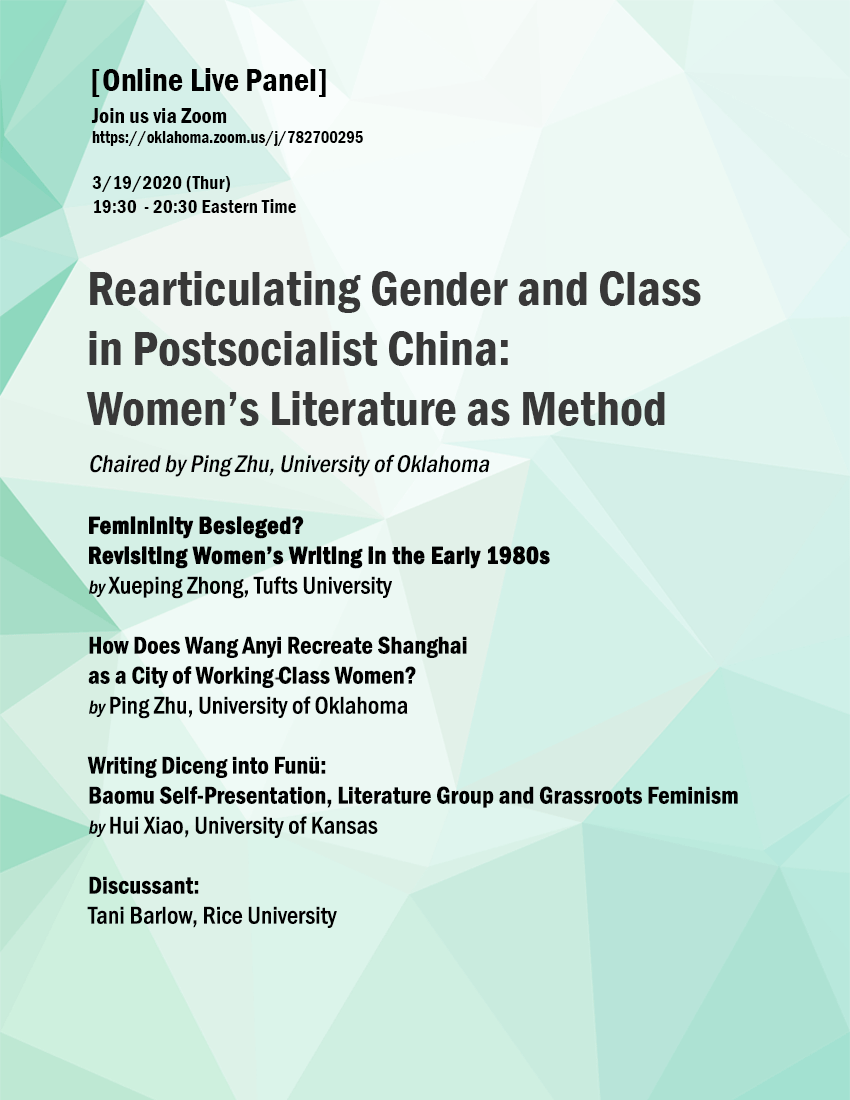
AAS has been canceled. However, since my panelists and I do not want to miss this rare opportunity of intellectual exchanges we have decided to move our panel “Rearticulating Gender and Class in Postsocialist China: Women’s Literature as Method” online. We invite you to join us via Zoom on Mar 19 (Thursday) at 07:30 PM Eastern Time.

Presenters: Xueping Zhong, Ping Zhu, and Hui Xiao
Discussant: Tani Barlow

[Zoom link: https://oklahoma.zoom.us/j/782700295]
Please see the attached flyer for more information.

best,

Ping Zhu

Taiwanese poet Yang Mu dies at 79

Source: Focus Taiwan (3/13/20)
Noted Taiwanese poet Yang Mu dies at 79
By Chen Cheng-wen, Chao Ching-yu and Elizabeth Hsu

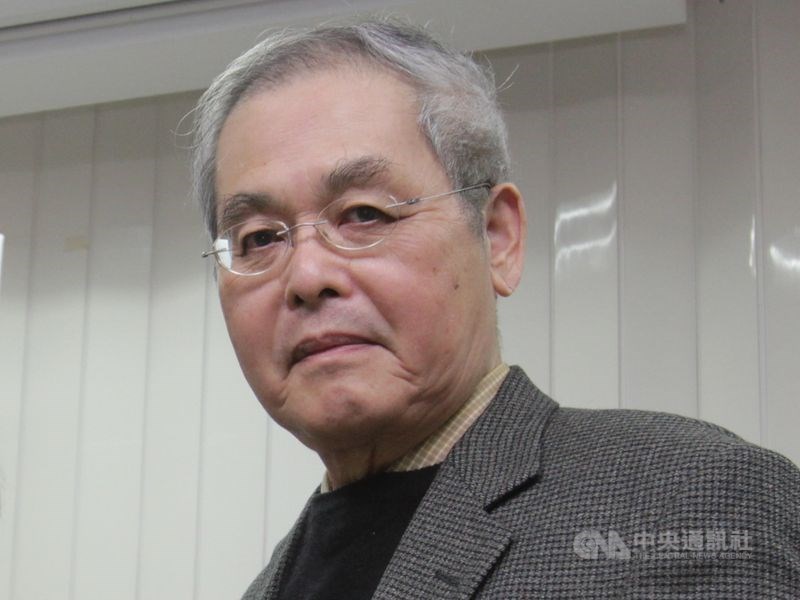
Taiwanese poet Yang Mu (楊牧)

Taiwanese poet Yang Mu (楊牧)

Taipei, March 13 (CNA) Renowned Taiwanese poet, essayist and critic Yang Mu (楊牧) passed away at a hospital in Taipei Friday at the age of 79, according to his friend.

Yang had been suffering from respiratory and heart ailments in recent years, and was admitted to the intensive care unit of Cathay General Hospital last week after his health deteriorated further, Shiu Wen-wei (須文蔚), a professor at the Department of Sinophone Literature of National Dong Hwa University in Hualien County, told CNA. Continue reading Taiwanese poet Yang Mu dies at 79

Eleanor Goodman wins Hanan Prize

Source: Notes on the Mosquito (3/13/20)

The Hanan Prize for Translation (China and Inner Asia) was established in 2015 and is given biennially to an outstanding English translation of a significant work in any genre originally written in Chinese or an Inner Asian Language, from any time period.

This year’s winner is Eleanor Goodman, for The Roots of Wisdom by Zang Di 臧棣 (Zephyr Press).

The Awards Ceremony was going to be at the upcoming AAS annual conference in Boston, MA on Friday, March 20, but the conference has been canceled.

Click here for all this year’s AAS awardees.

What the US can learn from Taiwan’s response

Source: US News and World Report (3/10/20)
What the U.S. Can Learn From Taiwan’s Response to Coronavirus
The island employs an aggressive, well-planned answer that employs analytics to minimize the spread of disease.
By Steve Sternberg

A mask-clad worker disinfects an area to prevent the spread of the COVID-19 coronavirus in Xindian district in New Taipei City on March 9, 2020. - World health officials have warned that countries are not taking the coronavirus crisis seriously enough, as outbreaks surged across Europe and in the United States where medical workers sounded warnings over a "disturbing" lack of hospital preparedness. (Photo by Sam Yeh / AFP) (Photo by SAM YEH/AFP via Getty Images)

A mask-clad worker disinfects an area to prevent the spread of the COVID-19 coronavirus in the Xindian district in New Taipei City on March 9, 2020. (SAM YEH/AFP VIA GETTY IMAGES)

WITH CONFLICTING AND AT times contradictory messages coming out of the White House, the Dow Jones Industrial Average seesawing and even the most basic supplies such as hand-sanitizer in short supply, the United States – a country with a history of helping other nations conquer pandemics – got off to an agonizingly slow start in trying to contain coronavirus.

Wondering what an aggressive pandemic response looks like? Look to Taiwan, says Dr. C. Jason Wang, director of Stanford University’s Center for Policy, Outcomes and Prevention. Following the 2003 SARS epidemic, Taiwan dramatically built up its public health infrastructure to launch an immediate response to the next crisis. Continue reading What the US can learn from Taiwan’s response

Youth Economy, Crisis and Reinvention

Dear colleagues,

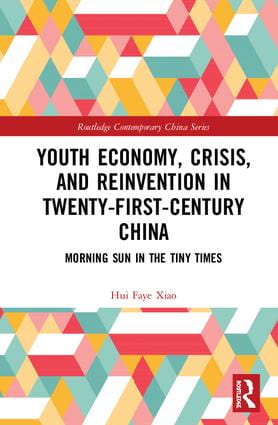
I am excited to announce the publication of my new book, Youth Economy, Crisis, and Reinvention in Twenty-First Century China: Morning Sun in the Tiny Times.

Book Details

Hui Faye Xiao. Youth Economy, Crisis, and Reinvention in Twenty-First Century China: Morning Sun in the Tiny Times. London and New York: Routledge, 2020. (Series: Routledge Contemporary China Series). 1st edition, 222 pages | 23 B/W Illus. Hardback: 9780367345518; eBook: 9780429326905

Description

A century after the May Fourth Movement (1919) that has been invoked repeatedly as the first youth-led mass movement in Chinese history, what are today’s Chinese youths up to? This book seeks to answer the compelling question. Identifying three central themes: youth economy (青春经济), crisis (青年危机), and reinvention (再造青年), this book investigates the explosive youth culture in twenty-first century China, which is not merely a result of the national and global turn to a post-Fordist neoliberal creative economy but also an active and powerful force catalyzing cultural innovations, social changes, and collective efforts in reinventing a pluralistic and multivalent subject of youth (青年) as an icon of alternative futurity and hope in an age of vertiginous change, division, risk and uncertainty. Continue reading Youth Economy, Crisis and Reinvention

China’s internet just got worse

Source: SupChina (3/9/20)
China’s Internet Censorship Just Got Worse
THE EDITORS

censorship

SupChina illustration by Derek Zheng

Last week, China adopted a new set of rules to govern content on the internet. Released (in Chinese) by the country’s most powerful internet regulator, the Cyberspace Administration of China (CAC), the set of regulations addresses problems that other countries also face, such as misinformation and online fraud.

However, the main purpose of the new rules seems to be to give the authorities legal justifications to widely censor online content and punish those who create it, or rather to simplify and consolidate various laws that already served that purpose. China Law Translate has an English rendering of the new rules, and a summary of the content the rules proscribe and encourage. These include: Continue reading China’s internet just got worse

Three Brothers

The review neglects to mention that Carlos Rojas is the translator.–Kirk

Source: SCMP (3/8/20)
Yan Lianke’s Three Brothers honours his family and the struggle to survive in mid-20th century China
The book is a memoir of the author’s father and uncles, with a portrait of the young Yan woven in between. Poverty, love and the luxury of happiness are all explored in a poignant story as affecting as any of Yan’s fictions.
By James Kidd

Chinese author Yan Lianke, whose new book, Three Brothers, remembers his father and two uncles. Photo: AFP

Chinese author Yan Lianke, whose new book, Three Brothers, remembers his father and two uncles. Photo: AFP

Yan Lianke is no stranger to writing about himself. He appeared, in subtly altered form, in his 2018 novel, The Day the Sun Died. His new book, Three Brothers, is a memoir, although on more than one occasion readers might find themselves wondering what separates Yan’s fiction from his non-fiction.

The germ of the idea, as he reveals in a preface, was a sudden realisation in 2007 “that four men in my father’s generation – which included three brothers and a cousin – had now departed this world, seeking peace and tran­quillity in another realm”. The specific occasion was the death of his “Fourth Uncle”. It was while the family were paying their respects that Yan’s sister said, “Our father’s generation have now all passed away. Why don’t you write about the three brothers? […] You can also write about yourself – about your youth.” Continue reading Three Brothers

Li Suo poem

Hi, Happy Women’s Day!

Here is a poem by Li Suo 里所. She lives in Beijing and works with books, in connection with Shen Haobo. She was born in Kashgar, left after primary school. Last year she was at Vermont Studio Center, together with Lucas Klein, who translated her poems.

This poem is part of the huge response by Chinese poets to the virus crisis. I found it in a compilation circulated on WeChat that was soon deleted. Many, many links, websites and so on have been deleted in the last few weeks. Don’t know if Cuijian.com is still down. Can’t have Chinese rock’n’roll quoting The Internationale to all eternity, can we. Anyway, poetry matters. There was a heated discussion about Tang poetry on boxes from Japan with relief goods form Wuhan. An article in the 长江日报 on February 12 argued against quoting poetry in this context, because Adorno had said writing poetry after Auschwitz was barbaric. That guy received a lot of flak in the following days, some in poems. The poem by Li Suo was probably inspired by a hospital boss in Wuhan who said they didn’t need to care if the women working there had their periods. Don’t remember exactly when. Anyway, huge response. Great poems. Some of it can be found on Poemlife, compiled by 左右: https://www.poemlife.com/index.php?mod=showart&id=81584&str=1985&from=timeline&isappinstalled=0 Continue reading Li Suo poem