Today was my travel day back to the United States. It was also the day that the final draft of the Paris Agreement was to be released — and the day thousands of climate activists had vowed to flood the streets of Paris in defiance of a ban on demonstrations by the French government — both happening around noon. With my flight from Paris to New York leaving at 10:30 a.m., I was in the air for nine hours, plus an additional six hours due to changes in time zone – putting me out of communication for a crucial 15 hours.
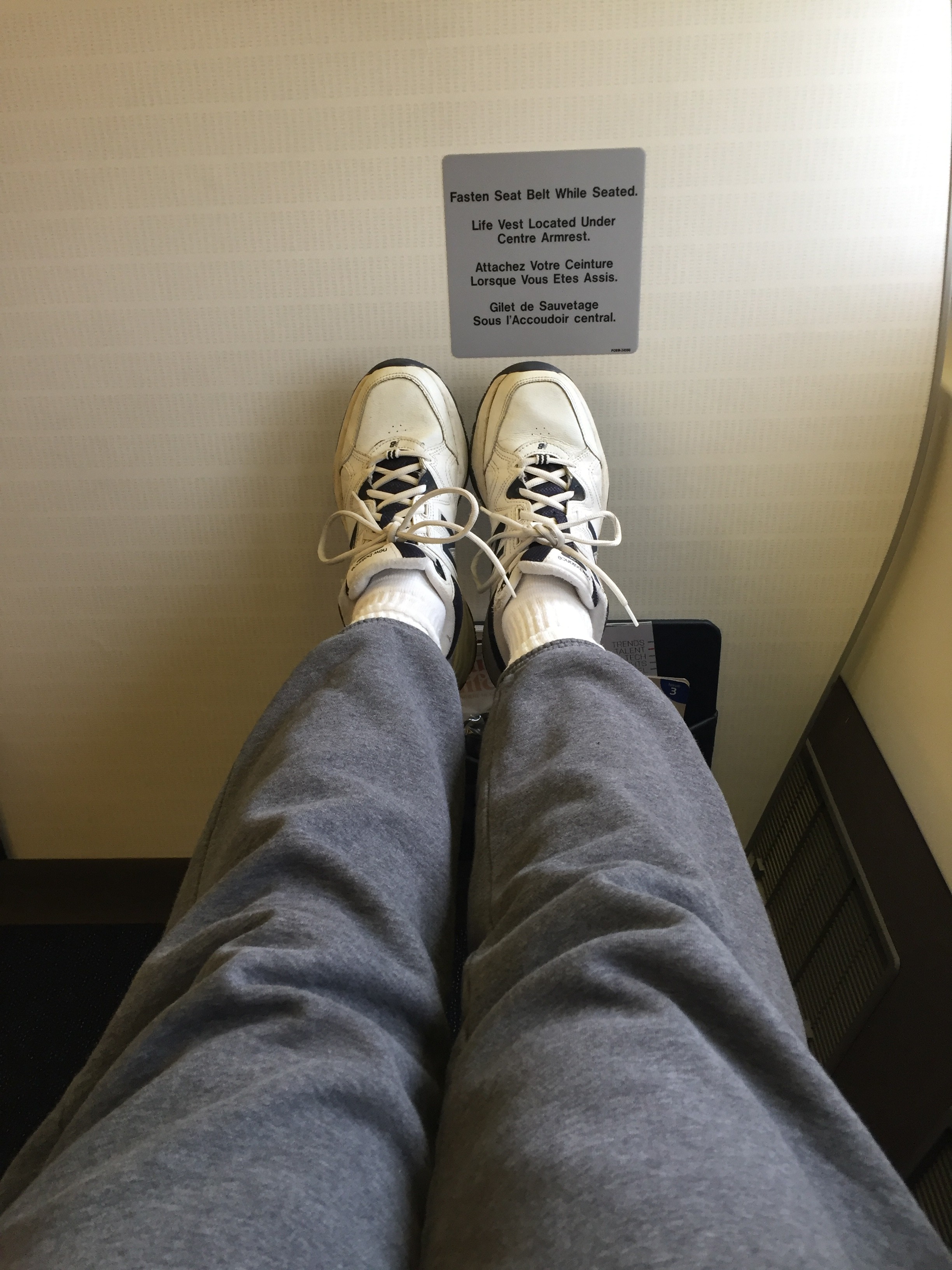
Lots of legroom in business class
Fortunately I was able to upgrade to business class for the long flight, which meant I could actually sleep a few hours after staying up very late packing, But by the time I landed in New York at 8 p.m. Paris time, 2 p.m. local time, I was desperate for information. My friends on social media were only too happy to supply it. The negotiators at COP21 had reached an agreement — by most accounts a good one. The French government at the last minute had issued a permit to climate activists. My feed was flooded with stories and analysis about the historic Paris Agreement, my email was overflowing with reactions from NGO groups, and my friends were posting photos and videos from the day’s events.
The photos and videos from the demonstrations organized by 350.org and others are amazing, and remind me of the 2014 People’s Climate March in New York City. I am so glad that the French government finally came to its senses and allowed people to express themselves. Perhaps they had no choice, as literally tens of thousands of activists were in the streets, and there would be no way to arrest even a small percentage. Perhaps this chain of events shows people like Naomi Klein know more about activism than I do. When she urged people to take to the streets in mass numbers, they did, and they won. I was now sorry that I couldn’t get an extra day at Place to B, but then I’m also glad to be home.
My Paris flight landed 45 minutes late in New York, giving me only half an hour to go through customs, collect my luggage and recheck it, get to the other side of the airport, go back through security, and find my gate. I got there two minutes before the plane was to take off, but it was already gone. It took me awhile to rouse up someone at an American Airlines counter to rebook me, and when I did they were incredibly rude. Air travel has become extremely stressful and unpleasant. On the other hand, the three-hour wait for the next flight gave me time to get a good dinner and catch up on all the COP 21 news and reactions. Here is some of what I found.
As promised on Wednesday, new draft text for the agreement did come out yesterday, but not until 9 p.m. Thus, when Naomi Klein ended her event at Climate Action Zone last night by telling everyone to flood the streets on Saturday in defiance of French government plans to crack down on demonstrators, she was operating off the weak draft of the agreement released Wednesday. Yesterday’s version was a lot better — though climate activists are not cancelling their plans to flood the streets.
A series of equations related to the general circulation model of climate lines the train stop to Le Bourget at Gare du Nord in Paris.
Ratcheting: This is the provision under which countries will agree to have their emissions targets reviewed and increased every five years. This has been something the United States and many environmental groups have insisted upon, while India and others have insisted that doing so must be voluntary for developing nations and come with the commitment of money. The current text includes some key elements the United States hopes to see, including potentially strong language ensuring that all countries move toward economywide emissions cuts. At the same time, it recognizes that “peaking will take longer for developing country parties.”
Transparency: This is another issue dear to the heart of the U.S. negotiating team. State Department Special Envoy for Climate Change Todd Stern has called it “vital” that developing countries be asked to report their progress toward their emissions targets with as much rigor and frequency as rich countries. Today’s text leaves that still very much up in the air. Deutz said the biggest resistance there comes from India and China, which, like many other developing countries, are wary of intervention from abroad. “It’s a historic issue for China and also some countries with a colonial past. They jealously guard their sovereignty and domestic politics,” he said — though he also noted, “developed countries don’t really like other nations poking around in their business, either,” but have become comfortable with the U.N. system for reviewing emissions cuts.
Temperature target: In a big win for island nations, the new text now calls for holding the global average temperature increase to “well below 2 degrees Celsius above pre-industrial levels and to pursue efforts to limit the temperature increase to 1.5C.” Scientists say it will be tremendously difficult to meet that goal, but the most vulnerable nations said the deal must at minimum recognize it as an aspiration. “With this, I would be able to go home and tell my people that our chance for survival is not lost,” Marshall Islands Foreign Minister Tony de Brum said.
Legally binding: In a surprising move, the final text makes no mention of either internationally binding emissions pledges or a demand to implement policies to see those targets through. That’s another win for the United States, which is trying to avoid the need for Senate approval. Rather than requiring that countries make good on their pledges, it states only that intended nationally determined contributions “shall be recorded in a public registry maintained by the secretariat.” European and American activists described the language as a major concession on the part of the European Union, which had sought binding commitments as a means of guaranteeing that promised reductions would happen.
Again negotiators stayed up most of the night to get to this draft of the agreement, and they are promising to release final text tomorrow (Saturday), which means they met at 5:30 a.m. today to start the final round of negotiations. To think the fate of the world rests on the shoulders of people who have had practically no sleep for three days …
Today was my last full day in Paris. Tomorrow I have to catch the shuttle at 7:15 a.m. to head to the airport for a 10:30 a.m. flight. I was debating whether to use the day to go back to the Climate Action Zone or to Climate Generations, but the decision was made for me when the Sierra Club sent out a message that its final gathering would take place at 4 p.m. at Climate Generations. I enjoyed a leisurely lunch while catching up on COP news and then headed over.
Final meeting of the Sierra Club delegation at Climate Generations.
At the Sierra Club gathering, we heard from Fred Heutte and John Coequyt of the Federal and International Climate Campaign, who have been inside the negotiations the entire time. They stressed that the Sierra Club really likes most of the agreement. Points they like include five-year cycles for national commitments starting in 2020, goal of greenhouse gas neutrality in the second half of the century, a target of 1.5 degrees C referenced in Article 2, global stocktaking for mitigation and finance every five years starting in 2023, and a floor of $100 billion in climate financing per year with cycles of review. Parts of the agreement they do not like are the just transition only in the preamble, not the body of the agreement, and transparency and verification still in flux.
Sierra Club members signed its COP21 sign.
Coequyt said the Sierra Club would be using positive messaging to talk about the agreement, even though other groups may use a negative frame. The reason for this, he said, is that these groups have different audiences. The Sierra Club’s audience is mainly Americans who we need to support this agreement. Many aspects, especially the incorporation of the 1.5 C target, are above and beyond what anyone expected, though he noted that scientific integrity calls for us to clarify that humans will most likely overshoot 1.5 C (1.4 C is already locked in) and then have to bring it back down. Other groups, especially those representing climate vulnerable populations, Coequyt said, would frame it negatively because they want to pressure countries of the world to do more. This explanation really helped me understand why there are such wildly varying frames of the same agreement.
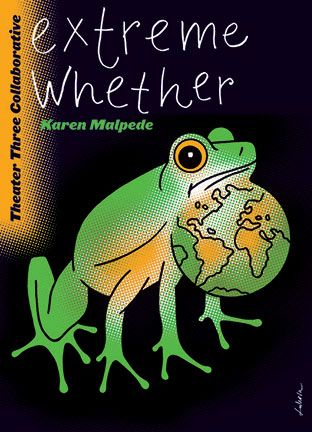
After the meeting, I headed with Glen Besa and Tyla Matteson to the Fondacion des Etats-Unis to see a theatrical reading of a play called “Extreme Whether” by Karen Malpede, based in part on the work of climate scientists James Hansen and Jennifer Francis (though they are not in a relationship in real life). Here’s the summary:
Extreme Whether poses a bitter debate over the future of the planet but becomes a meditation on the sublime in nature. Written in a mix of prose and poetry, with invective, humor and a full musical score, Extreme Whether sets the battle over global warming within a single family as a challenge to the American family at this moment of ecological crisis.
A major climate scientist, his colleague and lover, an Arctic scientist, wage fierce battle with his twin sister, a publicist for the energy industry, and her husband, a lobbyist, over scientific truth and an inherited wilderness estate. His wise-child daughter and her side-kick Uncle work to protect the natural world and sabotage its abusers.
Theatrical reading of Extreme Whether. My Place to B roommate is second from right.
As it happened, one of my roommates at Place to B was in this play. I had heard about it while scouting out events to attend before my trip, and she told me that she was acting in a play here when she first checked in this week, but I didn’t put it together that this was the play she was in until today. The reading was excellent even without the normal props and costumes in a full production. If you ever have a chance to see this, go. Here’s a good review.
After the play, I headed over to Piscine Pontoise for a swim. My flight to Paris had been miserable in part because I hadn’t gotten in a workout before going, and I wanted the flight back to be easier. Swimming meant that I had to skip a special appearance by Amy Goodman at Place to B. I was hoping it would be recorded, and fortunately it was. You can join me in watching it here:
Today started with an email from the U.S. State Department warning me that the French government is likely to crack down on climate demonstrations planned for Saturday. As it happened, my plane flight home was scheduled for 10:30 a.m. Saturday, so I can’t take part in this anyway. Knowing that UN climate negotiations have a history of going over by a day, I asked Place to B before my trip if I could stay until Sunday. But they said they had another event starting Saturday and would not have room, and I didn’t want to try to find a place to stay in Paris for just one night.
So I scheduled my flight to return home Saturday, and now I am just as glad. I nearly got swept up at Place de la Republique my first day here, and do not want to try my luck again. It sounds as if there will be mass arrests not only at Place de la Republique but also Le Bourget. Although I respect each person’s decision about practicing civil disobedience, and under the right circumstances I might decide to do so myself, I am not interested in getting arrested in France.
I spent the day in a low-key way trying to catch up on news from the Blue Zone and touch base with my friends back home though social media. The truth is, I have been here 12 days and am ready to go home — but negotiations over the agreement are entering a crucial phase, and I want to see this through. Yesterday at 3 p.m. the UNFCCC released its latest version of the draft text — to the pleasure of no one. Many important areas of disagreement still have not been hammered out — for example, there are still three options regarding temperature target, and some of them still have brackets. Activists staged a huge sit-in near the replica of the Eiffel Tower in the Blue Zone while negotiators stayed up most of the night working on the text, with another draft due today. I’m thankful that Amy Goodman with Democracy Now is inside reporting on events.
However, Greenpeace had a surprise going into this hearing. Earlier it conducted an investigation in which its agents posed as representatives of a Middle Eastern oil company and offered one of the witnesses, William Happer, professor emeritus of physics at Princeton, $250 an hour in exchange for a research paper touting the benefits of carbon dioxide. The parties even discussed how to route the money through a nonprofit called Donors Trust, known for its support of climate denial, so that Happer could state he was not paid for the research. Happer bragged that he had been paid $8,000 by Peabody Coal in exchange for testimony at regulatory hearings in Minnesota, and that he had donated the funds to CO2 Coalition, run by a man with ties to the George C. Marshall Institute, Competitive Enterprise Institute, and American Petroleum Institute.
Just before the hearing, Greenpeace confronted Happer personally, and it was this footage I saw today. While I wish such investigations were not necessary, unfortunately right now they are. Scholars such as Robert Brulle and Riley Dunlap have documented the vast network of dark money front groups that fund climate change denial — groups that are completely legal under our current system because they don’t have to disclose their donors, but which are used to mislead the public based on a model pioneered by the tobacco industry. The subject has gotten comprehensive treatment in Merchants of Doubt by Naomi Oreskes and Erik Conway, now available as a documentary.
Oreskes and Conway argue that climate denial is not about science but about politics, and is rooted in free-market fundamentalism that has transferred the old Cold War mentality of fighting Communism to fighting environmentalism. Despite the emphasis on money, Oreskes and Conway think that the few scientists involved with climate denial front groups are motivated not by money but by ideology. This makes sense in Happer’s case, as he was donating any money he got to a climate denial front group.
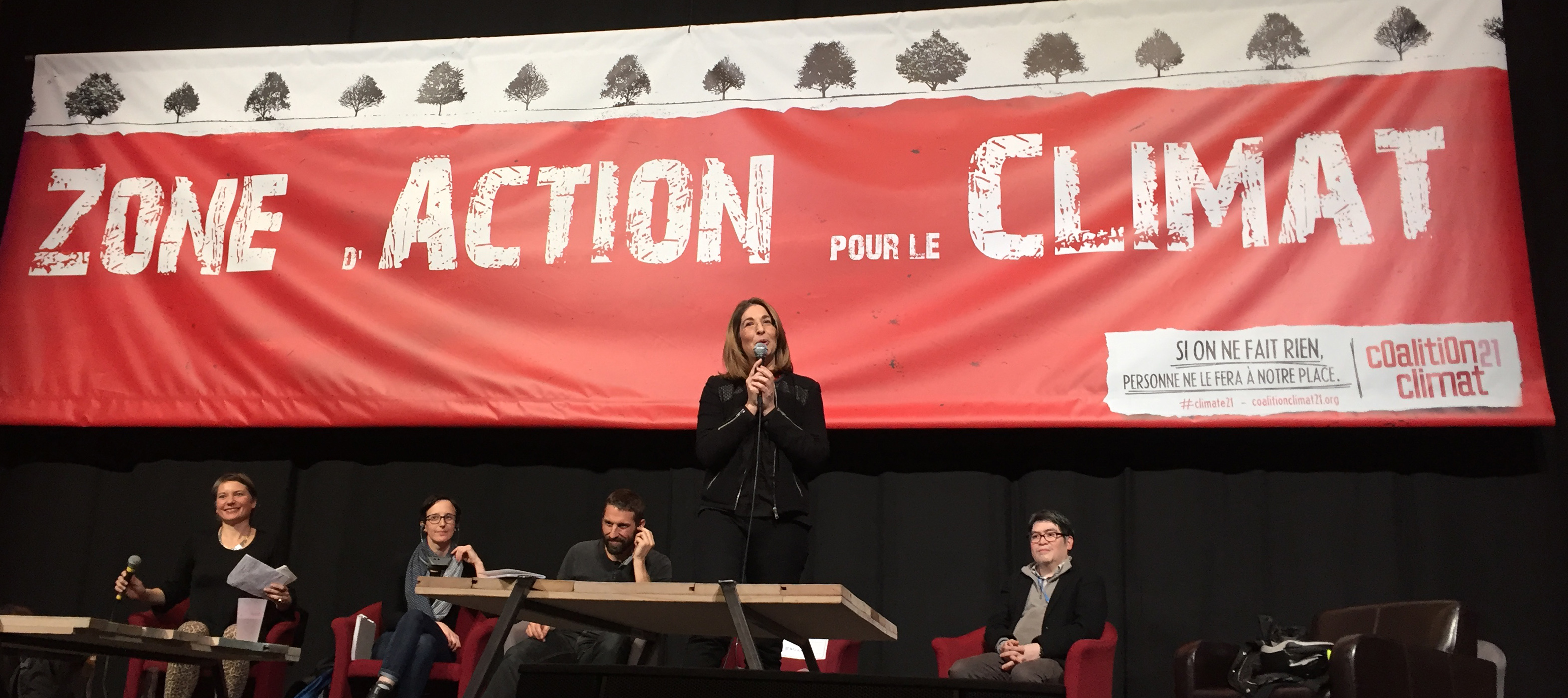
3,000 people ready to hear Naomi Klein.
Today in Paris I decided to visit the Climate Action Zone, or ZAC, held in the Centquartre, an arts complex located near the basin where the indigenous flotilla took place. It is yet another multi-day conference held in conjunction with the negotiations at COP21. ZAC started on Monday, but today is the first day I was able to get there. Each day ends with a general assembly, and tonight’s assembly featuring Naomi Klein was on “Capitalism Against Climate: How Free Trade Agreements Undermine Climate Actions.” This time I heard about the event in advance because the Sierra Club is a co-sponsor through its campaign on trade and climate, and we were asked to tweet from the event.
Naomi Klein speaks at the Climate Action Zone.
The Centquartre, or “104” turned out to be an enormous open building — which was good because 3,000 people were already there to see Klein when I arrived 15 minutes early. I had wanted to get there earlier, but had a hard time finding a place to eat in the area. There were few restaurants, and the one I found through Yelp turned out to be closed – but fortunately another one was open across the street where I got a delicious potato-cheese casserole with a side salad for about 12 euros. Up and down each side of the main auditorium were large climate banners and posters, and I managed to find a place to stand on some steps in the back where I could see proceedings.
Naomi Klein kicked off the event with a 20-minute talk on trade and climate. Calling the rise of awareness about climate change coupled with the rise in multinational trade agreements an “epic case of bad timing,” Klein gave examples of cases in which trade agreements allowed corporations to sue governments to stop projects that would be good for climate – a solar plant in Quebec and community ownership of power plants in Germany. She argued that the Kyoto accord contained express provisions stating that trade agreements trump climate agreements, and that while the United States was insisting the Paris agreement not be legally binding, fossil fuel corporations were heavily involved in insisting that trade agreements such as the TPP be as binding as possible. My Citizens Voice colleague Jeremy Lent was there and recorded her talk.
Also speaking was German climate activist Tadzio Mueller; Ilana Solomon of the Sierra Club Responsible Trade program, and Joseph Purugganan, a climate activist from the Philippines. Mueller discussed how the trade and climate movements don’t talk to each other but should. Here is video of his talk from Jeremy Lent of Citizens Voice:
Panelists for “Capitalism Against Climate: How Free Trade Agreements Undermine Climate Actions.”
The event made me think a lot more about the crossover between trade agreements and climate. I disagree with Klein’s implication that the Paris Agreement needed to be binding, because that would require it go before the U.S. Senate, which as we know would never approve it. The world cannot afford for the United States to pull out of this agreement as it did from Kyoto. On the other hand, I did not know about the rules allowing trade to trump climate, and believe we will need to take action to ensure trade does not multiply greenhouse-gas emissions or that corporations can sue to dismantle climate programs and regulations to guard their own interests.
After the trade and climate event, I walked to Generator Hostel to catch the discussion after their showing of Groundswell Rising. I got there as a doctor with Physicians for Social Responsibility was discussing the health aspects of fracking. This is what ultimately got Gov. Cuomo to ban fracking in New York, and has not been seriously considered by states like Ohio where fracking is rampant. Several British fracking activists were present, including Maria from Scotland, and they made plans to have a tour of the movie there. I also met a former fracking worker named Ray from Dimmock, Penn., the epicenter of fracking problems in the United States. He was featured in Josh Fox’s Gasland and knows every anti-fracking celebrity in the book. Discussion went so long that there was not a second showing of the film, so I hope to catch it another time.
Now that the conference is starting to wind down, I am trying to get the most out of every day I have left. Today I decided to spend the day back at the Climate Generations space to see a few panels that looked especially interesting. After a nice breakfast at a little cafe near Place to B (I’ve given up on the hostel breakfast), I got on the train to Le Bourget at about 10 a.m., hoping to arrive by 11 a.m. for an 11:15 panel with Christiana Figueres, executive secretary of the UNFCCC, and Laurent Fabius, French foreign minister who was functioning as president of COP 21. Since this was the first panel of the day, security lines were out the door, and I almost didn’t make it there in time.
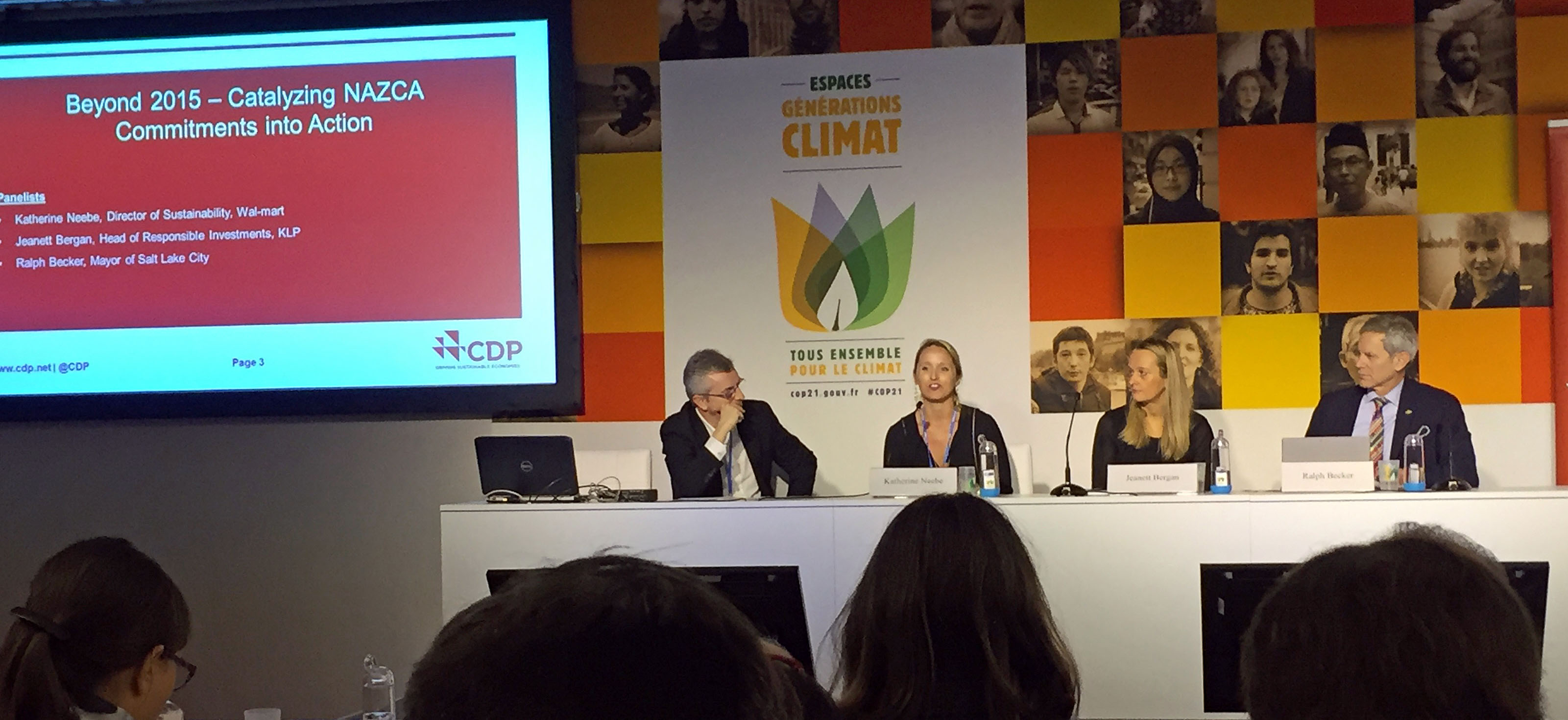
Panelists for “Beyond 2015: Transforming NAZCA Commitments into Action”
The subject of the panel was “Beyond 2015: Transforming NAZCA Commitments into Action” – NAZCA being Non-State Actor Zone for Climate Action – in other words, city and state governments, corporations, and the like. This was the only time I had seen when Figueres and Fabius might be out of the Blue Zone. Unfortunately neither of them made it out. I’m not sure what was going on with negotiations, but apparently they were busy. Instead we heard briefly from Ségolène Royal, French minister for ecology, sustainable development and energy, and two officials from the United Nations. Then was the main part of the panel: Katherine Neebe, director of sustainability at Walmart’ Jeanett Bergan, of the Noway investment fund KLP; and Ralph Becker, mayor of Salt Lake City.
The mayor was the best of the three, declaring openly that we need a new Congress before the Senate will do what needs to be done regarding climate change. He also discussed everything Salt Lake City is doing regarding climate. Neebe said Walmart has set goals for zero emissions and zero waste, which is great – but when asked during Q and A she dodged questions on whether Walmart would commit to supporting the COP21 agreement with conservative senators and whether Walmart would commit to phasing out plastic bags. The KPL representative was equally disappointing. She said the fund has divested from coal but decided not to divest from other fossil fuels due to financial concerns. I don’t know what those could be: Research shows that 80 percent of known fossil fuel reserves must stay in the ground, which will result in a lot of stranded assets.
Art in Section C of the Green Zone.
Once the panel got out, I needed to get lunch. Lines at the restaurants were not as long as the first day, but still long. I got into the line for crepes and waited. By the time I got my food, all tables were occupied. I ended up sitting next to a woman from a nonprofit called Population Media Center, which works on the issue of overpopulation – but has a very creative way to getting their message out. They work with the producers of TV shows, specifically soap operas and shows aimed at teenagers, to get messages about birth control and not having children into the script. Apparently this effort to lower birth rates has been done since the 1970s — and there’s lots of evidence that it works.
By the time I finished lunch, the next panel I wanted to see had already started. It was on “Keeping fossil fuels in the ground: the international movement to ban fracking,” featuring Bill McKibben of 350.org. I headed over after hearing from my CCL colleague Michael Holm on Facebook that McKibben was speaking, and managed to catch the last 10 minutes of his talk. I haven’t followed the anti-fracking movement closely, so I didn’t know most of the other panelists, but they were all good: Kassie Siegel, Center for Biological Diversity; John Fenton, farmer from Wyoming; Sandra Steingraber, New York biologist who writes about fracking; Wenonah Hauter, Food and Water Watch; Liesbeth von Tongeren, Greenpeace Netherlands; and Joaquin Turco, fracking activist from Argentina.
Panel on “Keeping fossil fuels in the ground: the international movement to ban fracking”
After the panel was a 3 p.m. protest against fracking near the columns outside the main venue for COP 21. Rally organizers had managed to get a 30-minute permit for the event from the French government, and the rally took place under the watchful eye of the police. Speakers included several people from the indigenous community, including Kandi Mossett of Indigenous Environmental Network, and Casey Camp Horinek of Global Alliance for the Rights of Nature. There were also speakers from the Netherlands, Scotland, and Argentina, and for the first time I realized that the movement against fracking is truly global. The rally ended with a beautiful women’s warrior song led by Horinek.
Once the rally dispersed, I found the Sierra Club table in Climate Generations and traded stories of the panels I had been to with people there. Steven Sondheim had gone to a panel that touted nuclear power as the solution to climate change. This is a matter of hot debate among climate activists. James Hansen and three colleagues say nuclear power is essential to transitioning off fossil fuels because it provides a lot of energy with no carbon emissions. Others point out that nuclear plants take a long time to site and build, partly because no one wants to live near them; that while accidents are unlikely, they can be catastrophic; and that no one wants to accept the radioactive waste which must be stored forever. The Sierra Club and most environmental organizations have long been anti-nuclear. Citizens Climate Lobby does not take a position.
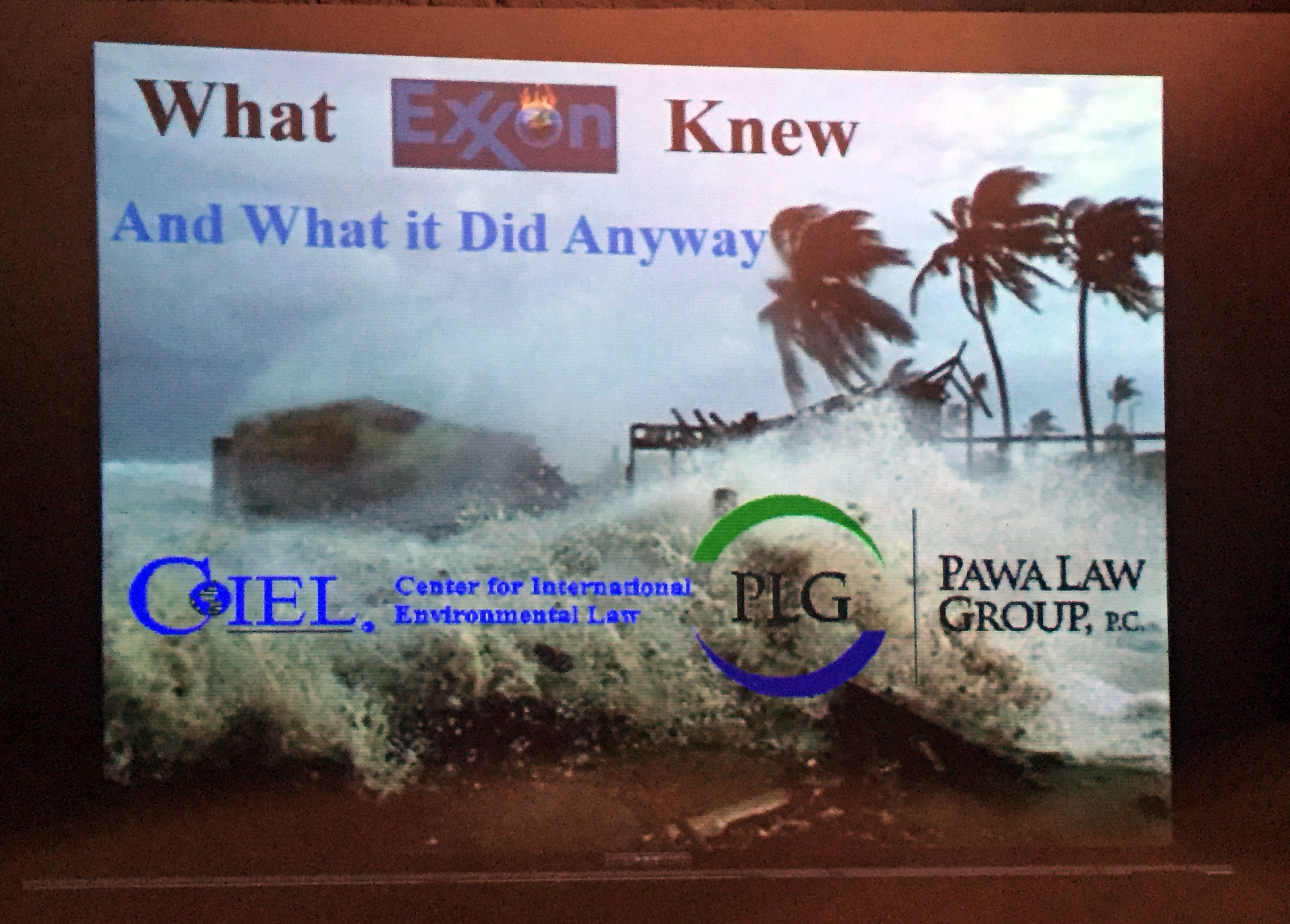
Title slide for “What Exxon Knew and What It Did Anyway”
At the Sierra Club booth I also met another national board member, Michael Dorsey, who teaches environmental policy at Dartmouth. Michael told me has been “going to COPs since before they were COPs,” and has made climate justice a central part of his research. Michael, Larry Fahn, and I were all headed to the same evening event, so we took the train together to Gare du Nord, then caught a cab to the event: a legal panel on “What Exxon Knew and What It Did Anyway,” discussing the prospects of a RICO case against Exxon and other fossil fuel corporations similar to the case brought by the Department of Justice against the tobacco industry.
Matt Pawa (right) presented a RICO case against Exxon.
I was not allowed to videotape the event, probably because the attorneys who presented understandably do not want details to get out to the opposition. But I can post some basic information. The event was introduced by Antonio Oposa, an environmental lawyer from the Philippines who has won several landmark cases to protect topical forests and clean up Manila Bay. Then U.S. environmental attorney Matthew Pawa presented a case against Exxon for violations of the RICO statutes based on documents that have recently been made public through blockbuster reporting by Inside Climate News and Los Angeles Times. Pawa has already won cases against Exxon over groundwater pollution in New Hampshire, and against AEP over greenhouse gas pollution. Finally a panel of experts responded to the case and took questions from the audience. These included Naomi Ages of Greenpeace; Richard Harvey, British human rights attorney; Ken Kimmel of Union of Concerned Scientists; Michael Gerrard, director of the Sabin Center for Climate Change Law at the Earth Institute, Columbia University; and Carroll Muffett, president of the Center for International Environmental Law, which organized the event.
Michael Gerrard (standing) and other panelists at the Exxon Knew event.
Having missed a similar event with Naomi Klein and Bill McKibben on Saturday — Bill McKibben was in the audience for this — I was especially glad to catch this event, which featured some of the very people who will likely be involved in an actual case against Exxon if it ever goes to trial. But by the time the event got out, I was past ready for dinner. I walked back to Place to B with the idea of dropping off my heavy backpack, then finding a nearby restaurant. However, upon arrival, I was beckoned into the bar area and offered a free vegan dinner. I don’t know which group was responsible, but there was a huge spread of vegan food, and it was all free.
A much-needed vegan dinner
I gratefully accepted, filled a plate, and headed to the back room for a seat. As soon as I opened the door, I ran into Steven Sondheim, the Sierra Club volunteer from Tennessee, who invited me to join his table. I felt as if I had run into an old friend and was happy to find a place. One of Steven’s tablemates was an anti-fracking activist from Scotland named Maria Montinaro, and we talked for a long time. She told me that she had previously held a low-level job at the Bank of Scotland but had been fired for her fracking activism. Although there is an official moratorium on fracking in Scotland, the government is allowing test drilling ro be conducted near major cities, which has led to a series of protests and resistance actions among citizens. The government is supposed to decide in 2017 whether to lift the moratorium or make it a full ban.
As the evening wound down, we all agreed to meet up again Thursday night for a showing of Groundswell Rising at Generator Hostel. Naomi Klein would be speaking at the same time, but the plan was to show the movie once, then hold a discussion, then show it again for those at the Klein event. With that I wished everyone good night and headed to bed.
Today was a down day. I had planned to go to an afternoon meeting on trade and climate, but had a hard time getting out the door. First I slept later than planned. Then it took over an hour to get breakfast at the hostel. I have not been happy with the food at the hostel which is basically bar food. A cold breakfast is free, but it is only bread and sugary cereals, and practically impossible to get to with the throngs of people. That normally runs until 10, but for this conference it stops at 9.
Trade and climate meeting that I was late to
To get a hot breakfast, you have to wait until after 9 when the kitchen opens. Then you have to track down a bartender, which is easier said than done. They fly around stacking a lot of glasses, but to get someone to take your order, you have to almost physically detain them – and even then you are often told to wait. Before my trip I bought upgrades for a hot breakfast every day, not knowing the circumstances. I have come to regret that. Not only is the breakfast late, but there is only one option – a huge plate that includes eggs over easy, a hamburger bun, beans, and extremely fatty bacon and sausage. And today was an hour wait. I have tried twice to get the hot breakfasts refunded, but to no avail. The manager of the restaurant claims I should have known the conditions — I have no idea how — and the desk staff says it is “not refundable.”
Lesson learned: Do not buy extras on anything in a foreign country because you can’t tell the conditions from home, and there may be other options when you get there. There are certainly better options in Paris – at least a dozen restaurants between the hostel and the train station serve a very good breakfast at a good price. This may be the last day I do breakfast at the hostel. I’m just not sure I can eat those beans again.
Handouts at trade and climate event
So as I finally got food, then got showered and dressed, and started out the door, I got a Facebook message from my sister that my 84-year-old mother is in the hospital. It sounds like a serious infection that may not respond to antibiotics, complicated by the site of radiation and scar tissue for cancer treatment decades ago. I went back and forth on that for awhile, and finally arranged with my other sister for a time to call her using What’s App since I have no international voice minutes. I’ve been using What’s App to make calls with my husband over the Internet, and it works very well.
I finally set out for the trade meeting, only to find it was raining, the first day since I’ve been here that it rained. I didn’t want to spend money on an umbrella that I have no room to take back, so did the best I could with my coat hood. But coming out of the metro stop for the meeting, I got lost. I couldn’t keep my phone out as usual because of the rain, and in any case, the phone maps sometimes get really confused in the jumble of streets in Paris. That happened today. I walked for several blocks first one way, then another, always being told to do a U-turn and go the other direction, getting rained on the entire time. By then it was to after 2 p.m., and I had not had lunch. One thing these wanderings did was put me near a little sandwich shop, so I stopped for a quick bite and then tried again.
Trade and climate meeting
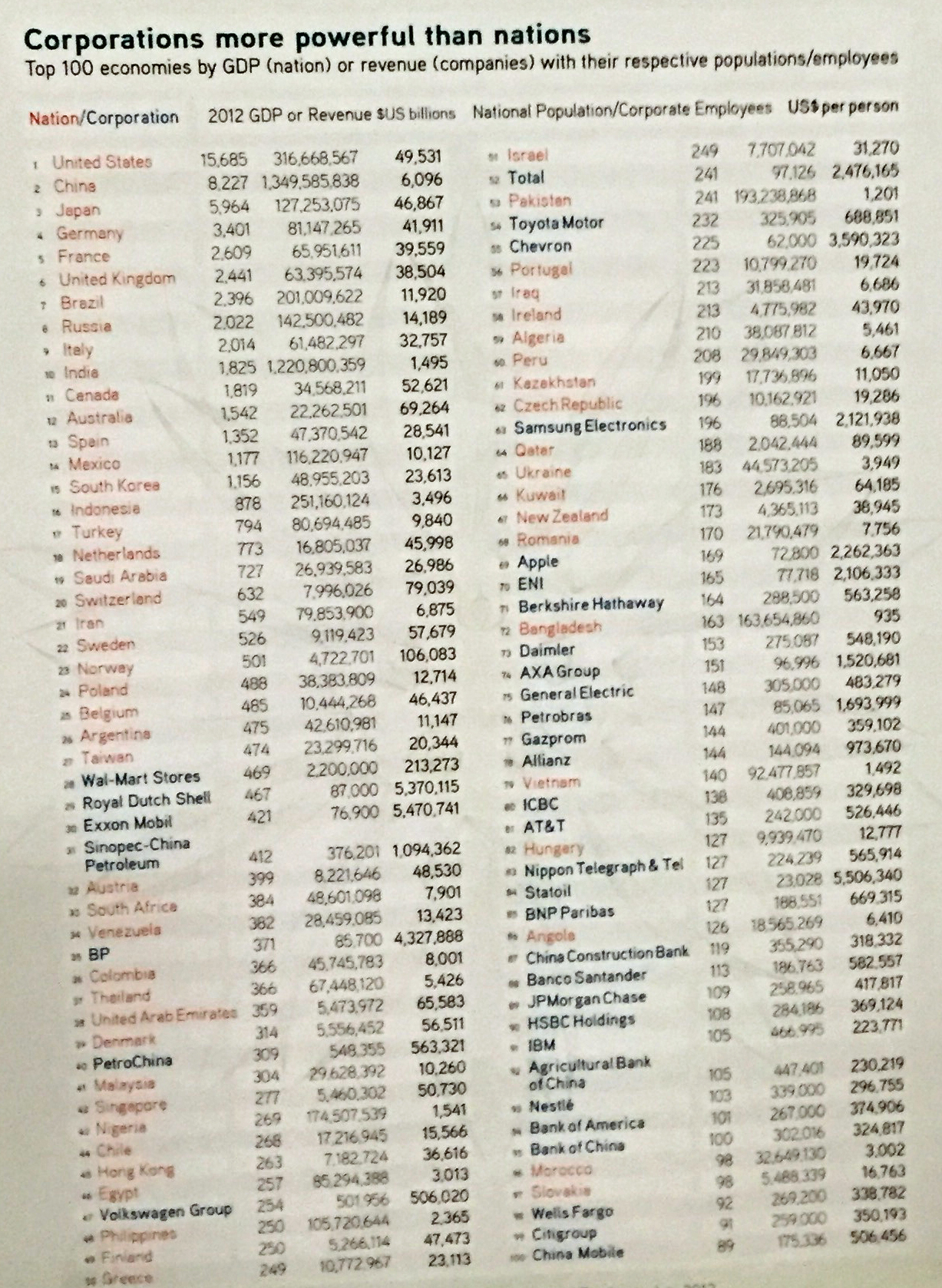
I finally found the trade meeting a little after 3 p.m., so it had already been going for over an hour. It was in what looked like a small meeting hub on a side street, and it was packed. I had to go through a line of smokers to get in — everyone seems to smoke in France, yet no one is overweight. The room was full of people discussing the ways multinational corporations have taken over many aspects of our lives. When I came in they were talking about corporate agriculture, but judging from the notes on a large display pad, it looked like they had covered other areas too. They had also talked about how that widens inequality and affects less powerful people across the world.
Translators in the back of the room spoke into small microphones
I stood in the back of the room for awhile, but it was stuffy and I was wet, so I ended up waiting in the hallway until they had a break. Then I found a chair and laid out my coat to dry and waited for the second half of the meeting. That part consisted of breaking up into small groups and talking about specific solutions to the problems discussed in the first half. I was in a group but didn’t speak since I had missed the first half. But I did observe, and it was very interesting. First they assigned roles to a moderator and note taker. My group had good people in both roles. Second, there were people from all over the world speaking different languages, but that did not stop communication. Several people in the group were bilingual, so for most people who spoke, someone else translated his or her words into one language or another – English, French or Spanish.
People with headsets on could get the translations
Most of the suggestions revolved around major dates of action planned in various parts of the world. By knowing about major marches or boycotts in Latin America, for example, organizers could make plans to coordinate worldwide. Once the large group reassembled, these events were reported back in English and put onto a master calendar. I noticed that as the notetakers were reporting back, there were translators in the back of the room speaking into small microphones, and that several people in the room were wearing headsets with earphones. The event was operating like a mini-UN which was very cool, and impressive considering they had nothing like the resources of governments or corporations.
After the trade meeting, I went to a Sierra Club gathering at the CAN hub, then a quick dinner and another swim, since I hadn’t made it the night before and knew I could not go on Wednesday or Thursday. Over dinner I managed to talk to my mother for a few minutes on my sister’s phone. I was so concentrated on that that I didn’t even see that CCL had posted on Slack that they were having an 8 p.m. dinner that night. But as on Friday, I would have had to choose between getting my swim and meeting with CCL. I am simply not one of those people who can go for weeks without any real form of exercise, so the swim it was. Even so I spent too much time trying to take advantage of the CAN hub wifi to upload the Kerry video onto YouTube or my Facebook page. It had failed several times previously, but tonight it was somehow successful. But the time it took made me late to my swim, and I initially went the wrong way on the subway, also costing precious time. But I did manage to get in 30 laps in just over an hour.
The highlight of today was the Earth to Paris conference. Joe Robertson of Citizens Climate Lobby had told CCL volunteers about it a few weeks ago and asked that we attend if possible. At the time, all registration was full, so I applied to attend as a member of the media, citing CCL’s Citizens Voice as my media outlet. Last week I got a message that media spots were taken but I could register as a regular attendee, which I did immediately. Later I got the registration link from Place to B, which was good for about a day before registration closed again. So I was happy to get in.
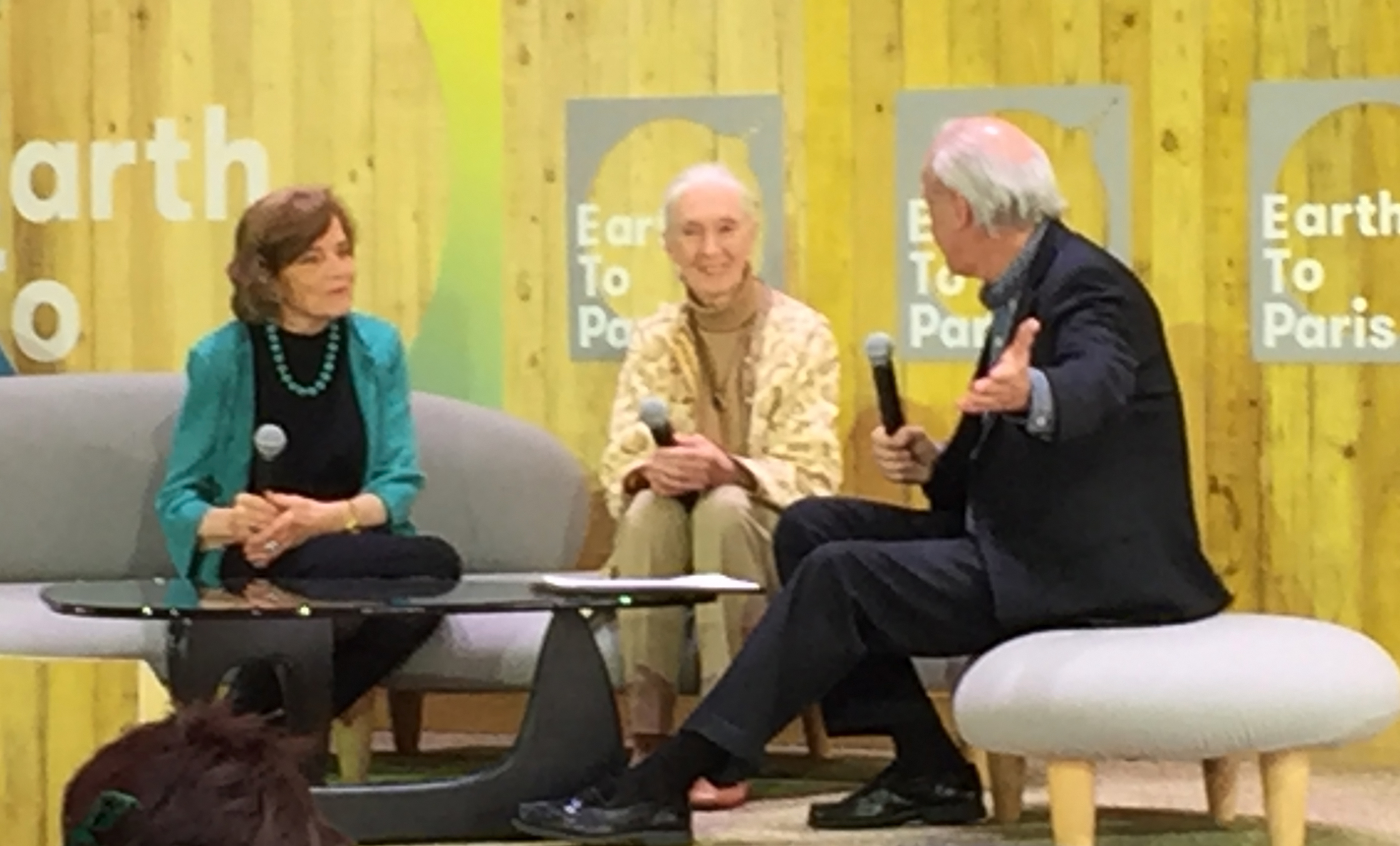
Sylvia Earle and Jane Goodall interviewed by Jeff Horowitz.
I had picked up my badge the day before, which helped with getting in. Still had to go through the security line though, which took awhile. Finally I was in. The conference had already started but was still on the welcoming speakers.
Jane Goodall, UN messenger of peace, and Sylvia Earle, National Geographic explorer in residence, talking about forest and ocean degradation and conservation
Jerry Brown, governor of California, and Tom Steyer, founder of NextGen Climate, on political strides in California
Bill McKibben, founder of 350.org, and Emma Ruby Sachs of Avaaz, on the climate and environment movement
Joel Sartore, National Geographic photographer and founder of Photo Ark, giving a 10-minute version of the talk he gave at Ohio State last year
Those were just the ones listed on the program. Late additions I didn’t know about before that day included UN Secretary General Ban Ki Moon and a 20-minute one-on-one interview with Secretary of State John Kerry, who was in Paris all week for the climate conference. I got photos and video and live-tweeted most of the event.
I didn’t know all of the speakers going in. One who I didn’t know about was Dr. Laura Stachel, a doctor who started We Care Solar to bring solar suitcase lighting kits to hospitals in underdeveloped countries that had no electricity. Simply having light during births, especially at night, cut maternal mortality by 70 percent.
The conference wasn’t over until 7 p.m., at which point I went back to the same restaurant as the night before, Le Bis Repetita. It was just as good the second day as the first. I had thought about getting in a swim that evening, but was too tired after the long day to do anything but go back to the hostel and fall into bed.
Today started with a Sierra Club meeting at 10 a.m., with special guest Elizabeth May, leader of the Green Party in Canada, and sent by the new Canadian Prime Minister Justin Trudeau as part of the Canadian delegation to the COP 21 climate talks. May was president of the Sierra Club Canada for 17 years before going into politics to oppose the previous Harper administration.
Elizabeth May briefs the Sierra Club
Most of May’s briefing to the Sierra Club delegation was confidential, and in any case was so high level and inside Canadian politics that I did not follow some of it. But there are a few things I can pass along that are public knowledge. First, she talked a lot about the difference between 1.5 degrees C in warming and 2 degrees C. It is a big difference. Basically it means the difference between whether some entire nations, especially low-lying island nations and coastal regions, continue to exist. The chant at the conference “1.5 to stay alive” is not just rhetoric. It’s a very real issue for millions if not billions of people across the world (not to mention so many other species).
Another thing May said is that the Green Party of Canada supports a carbon fee and dividend proposal much like the Citizens Climate Lobby proposal – in fact, I think CCL may have based its proposal on the Canadian Green Party. This is the party’s official position. May is not a fan of cap and trade – she said it has a lot of overhead costs and is subject to manipulation, loopholes, and corruption. However, if I understood her correctly, she would prefer to see some form of carbon pricing over none, including cap and trade, which is important because Ontario and Quebec just joined with the California cap and trade market. California says it has learned lessons from the problems with cap and trade in the EU, and that its market will work better. The proof there is in the pudding, and we will see how this turns out.
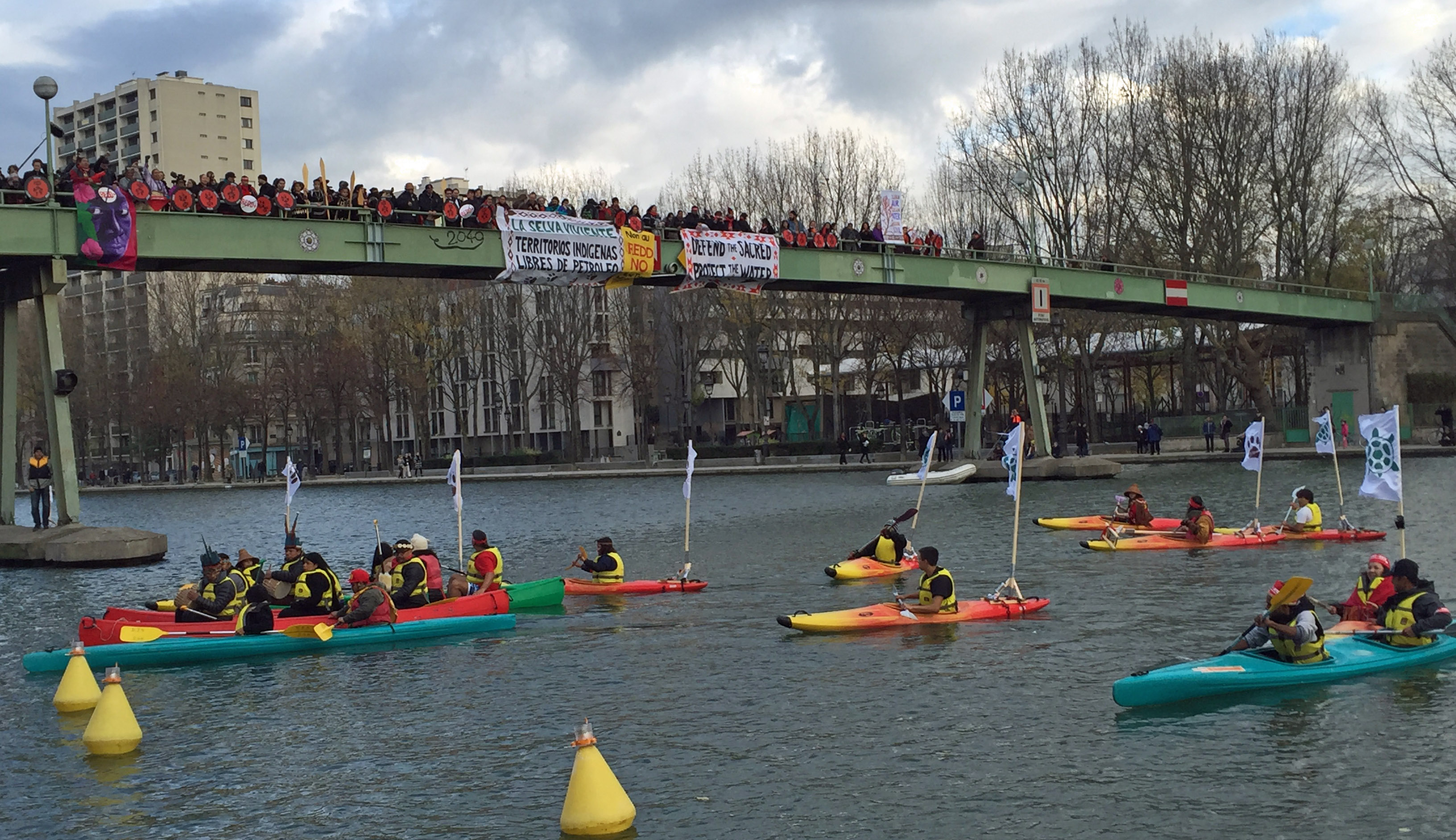
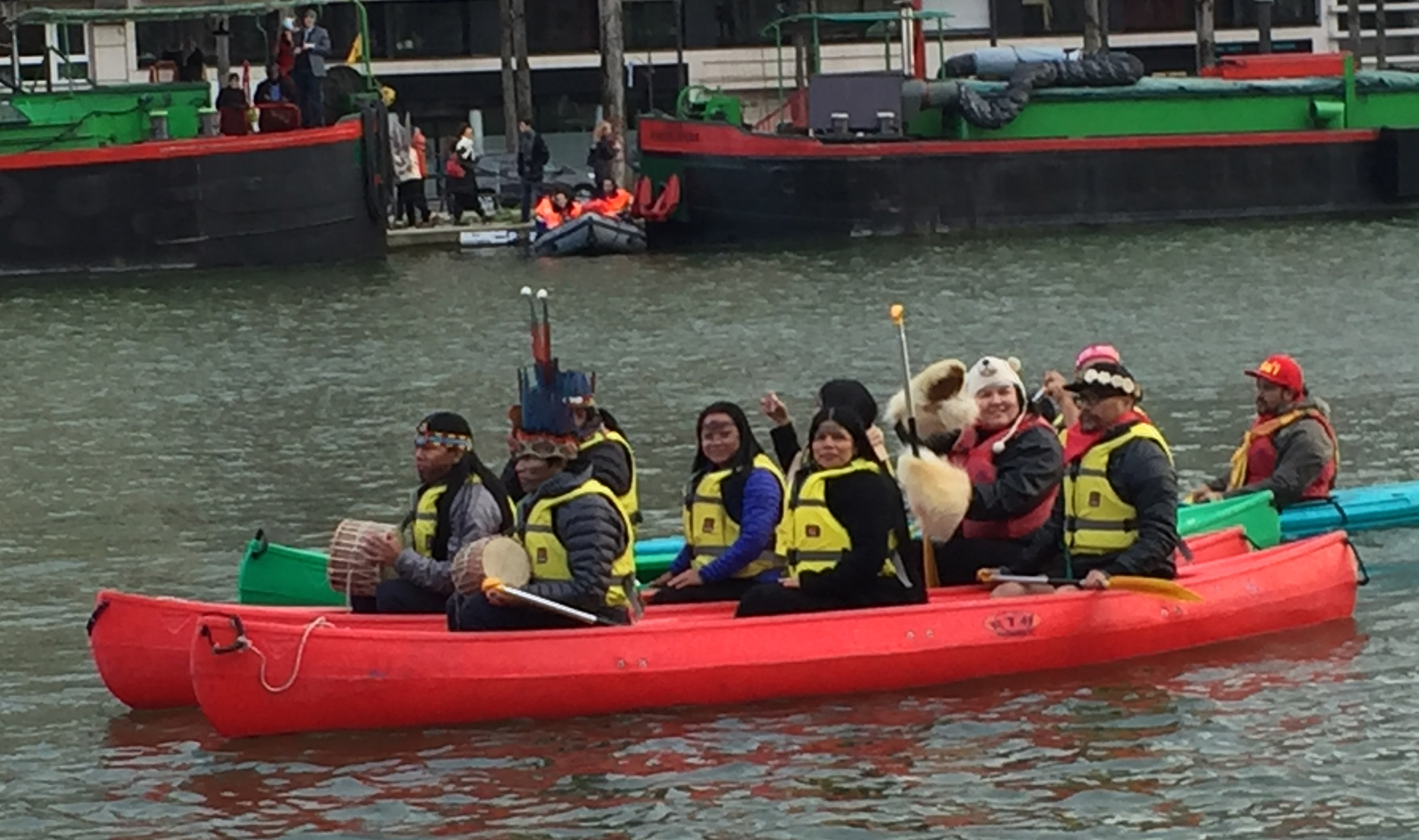
Indigenous flotilla in Paris
After the Sierra Club briefing, I had to choose between two actions. One was at the Eiffel Tower, the other an indigenous people’s flotilla. I wasn’t clear on the Eiffel Tower action (though it turned out to be beautiful), so I went with the flotilla. It did not disappoint. A line of indigenous people spanned the bridge above the Bassin de la Villette canal where the flotilla was to take place, singing and beating drums. Then the canoes and kayaks came in, including the Sarayaku people’s “Canoe of Life” which had traveled 6000 miles to Paris from the Amazon.
Afterward was a press conference. I got in with my Citizens Voice badge and heard several speakers including:
Felix Santi (Kichwa): President of the Kichwa community of Sarayaku in the Ecuadorian Amazon, speaking about the Canoe of Life and the Living Forest concept;
Faith Gemmill (Gwich’in & Pit River/Wintu): Executive Director of Resisting Environmental Destruction on Indigenous Lands, speaking on the Declaration to Keep Fossil Fuels in the Ground;
Casey Camp-Horinek (Ponca): Native rights activist, environmentalist and actress, speaking on the Indigenous Women’s Treaty; and
Ena Santi (Kichwa): Sarayaku Council Member in charge of Women’s Issues, speaking on the Indigenous Women’s Treaty
Indigenous flotilla in Paris
They spoke about how indigenous people know better than anyone how to manage resources such as forests sustainably and with respect for nature, about the need to keep oil and gas companies from destroying resources to get to fossil fuels which must remain in the ground, and about a proposal they were presenting to the COP21 conference. See more coverage here.
After the flotilla I went to the Westin Vendome downtown to pick up my badge for the Earth to Paris conference taking place Monday. The organizers highly recommended that we get our badges in advance as that way we could skip the line for admission and go straight to security. I was glad I did as the security line was long enough.
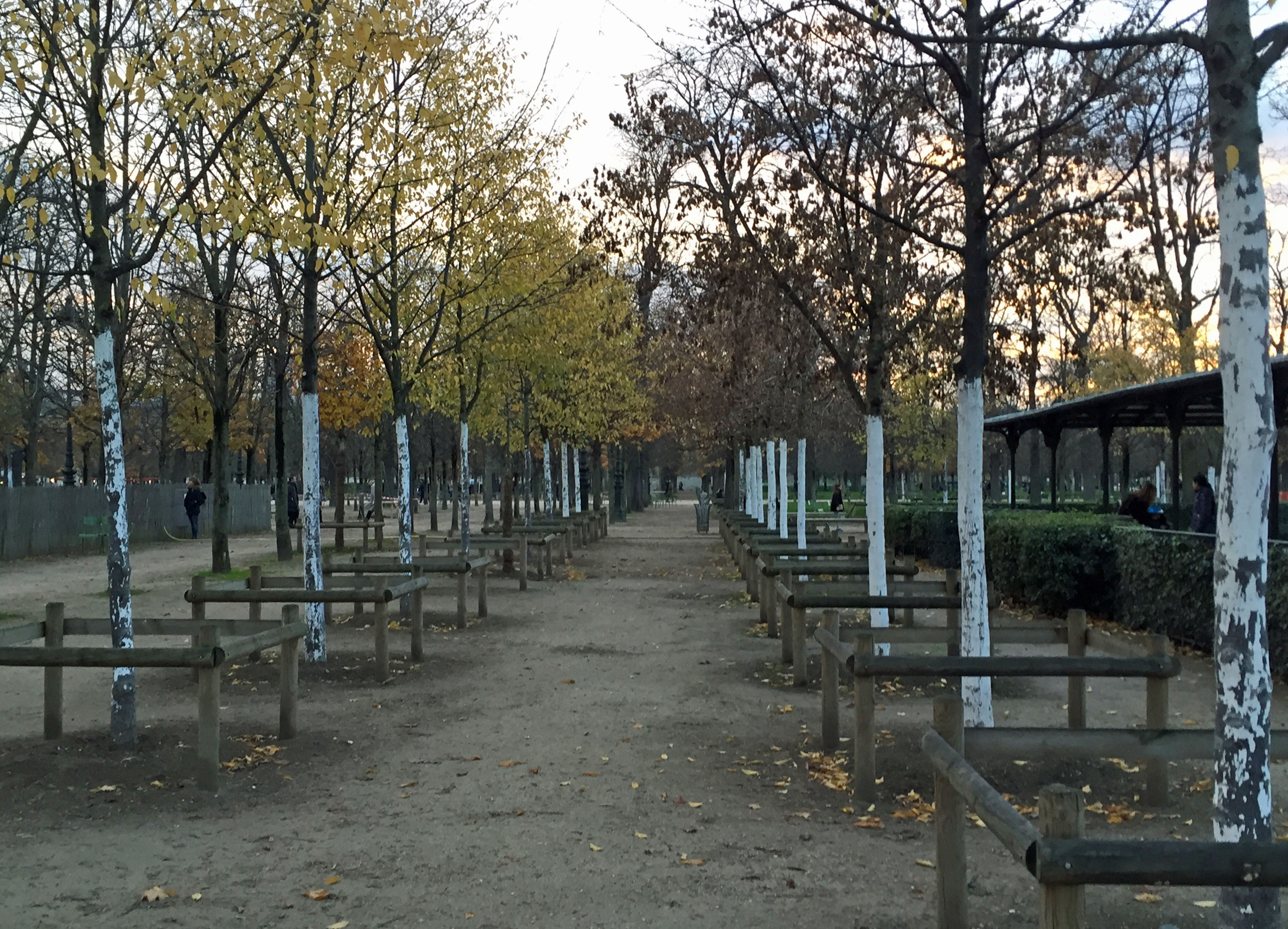
Jardin des Tuileries
That put me downtown, which I had not as yet been to, so I took the opportunity to play tourist. First I walked the entire length of the Jardin des Tuileries, which is like the Central Park of Paris full of different kinds of trees. Lots of kids and families were about, and a guy even asked me for directions in French, so I must have looked like I knew what I was doing. At the far end of the Tuileries is the Louvre. I didn’t go in, but I did take some pics on the famous Louvre plaza which includes the modern pyramid. I’d like to find out how that pyramid got built there – it looks very out of place in the 16th century setting. But everyone including me wanted to get photos.
The Louvre pyramid
After that I got dinner at the best restaurant I’ve been to in Paris called Les Bis Repetita, which I found with the help of Yelp. One thing I like about French restaurants is that tax and tip are included in the price — so no guessing as to what to tip. Then I walked back toward Champs Elysees and saw the Ferris wheel lit up at night, which is a lot bigger up close than it looks from far away.
Champs Elysees
Along the boulevard itself up and down both sides was a huge Christmas fair. It was a couple of steps above your local or state fair in cheesiness, but fun nevertheless. There were carnival rides and games, lots of food stands, and stands selling Christmas decorations, jewelry, and the like. It also included several themed areas, such as one farm and zoo area filled entirely with animatronic animals. I wasn’t sure what to think, but it attracted tons of kids, and I was glad the animals were not real. I got the chance to use Fuze with my husband — I showed him the displays over video, while he showed me video of him playing with our very real cats.
Paris ferris wheel
Finally Sunday night I was on the editorial board for ECO, the daily publication posted by Climate Action Network. Throughout the day, members of Climate Action Network submit articles for inclusion the next day. Those articles go for editing suggestions to the entire mailing list first. Then the editorial board gets them. The drill was to arrive at the CAN hub at 9:30 p.m. and edit stories until they are done. There are up to five people on the board, and it usually takes until about midnight to get through the stories. Most everyone sees every story, so the result is suggestion after suggestion on the text. Then the lead editor, Kyle Gracey this week, combines and reconciles all edits.
One trick is that the stories must be suitable for an international audience, so you can’t use any idioms or special words or phrases that non-English speakers would not understand. The text must also follow all CAN official positions on the issues. I ended up totally rewriting one story because the text was so awkward. Others were very good. It was a fun experience that reminded me of my newspaper copy editing days.
Here are some more pics from the day:
So many badges, but I wish I had one more – to the Blue Zone.
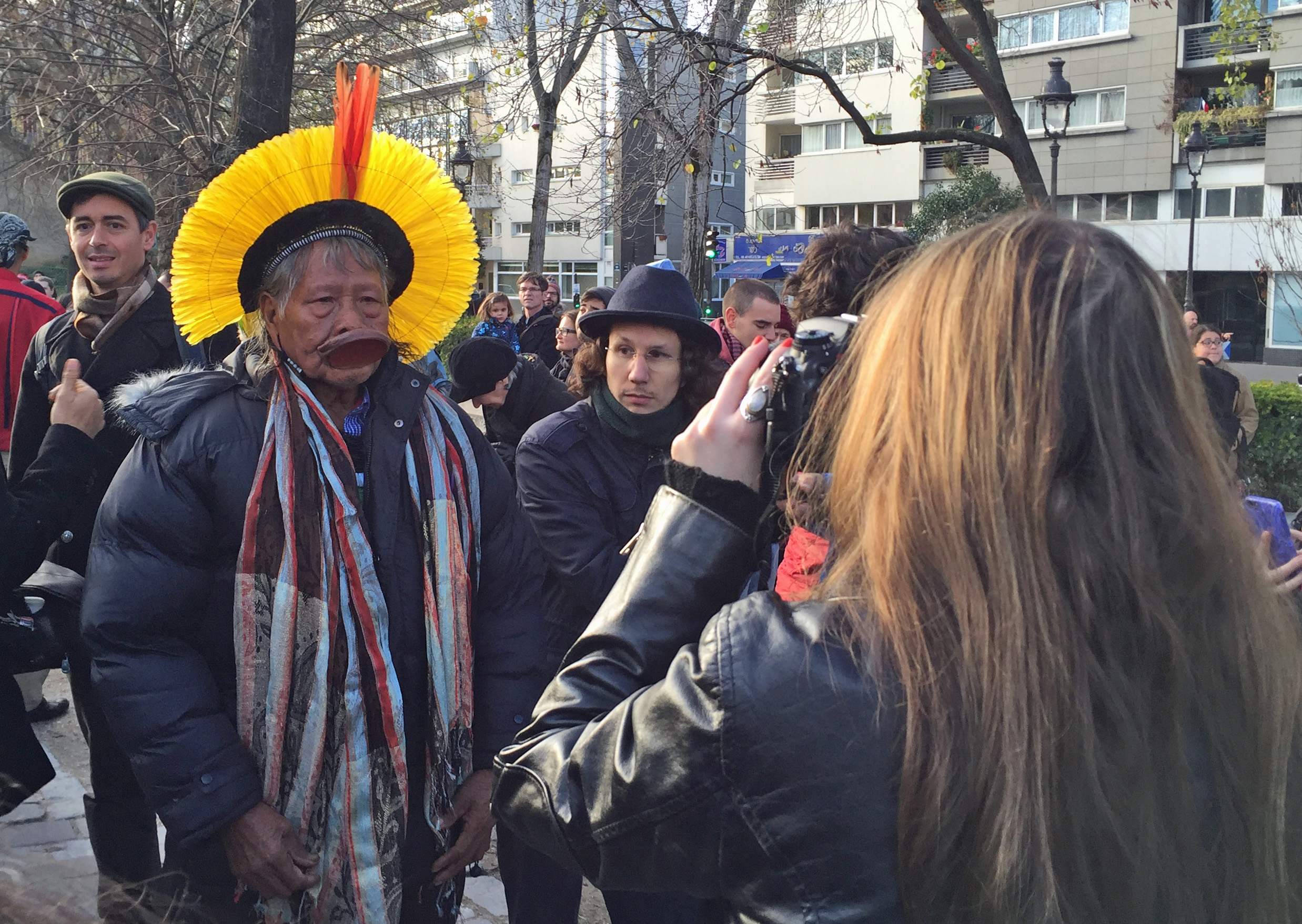
Xingu Chief Raoni of Brazil at the indigenous flotilla. Read about him at https://en.wikipedia.org/wiki/Raoni_Metuktire
Jardin des Tuileries
Paris ferris wheel from the Tuileries
Christmas festival on Champs Elysees
One of the more popular rides at the Christmas festival on Champs Elysees
This morning was yet another headache, but gradually they were getting better, so hopefully they will go away completely soon. Part of the problem is that I never got over the long and difficult plane ride here, especially the overnight flight when I couldn’t easily get up to walk around due to a large sleeping person in the aisle seat. If I were traveling in the United States, I would look for a YMCA to swim at — I’m a member in Columbus, and you can swim at Ys all over the country. But I tried googling it in Paris, and the only two facilities seemed to be shelters for homeless men, not workout facilities. So I tried asking the hostel staff at the front desk. They recommended a pool that had lap swimming hours all the way until midnight. That was a new one on me – I’ve never heard of a pool staying open past 10 p.m. But I got the information and figured I’d give it a try.
Tweet from the United Nations about the Climate Summit for Local Leaders
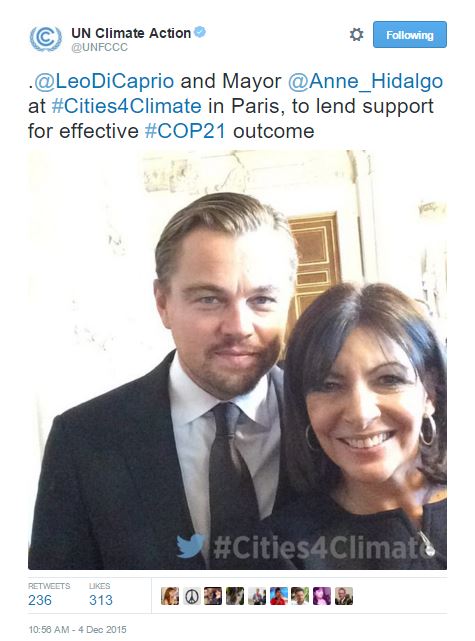
Today saw two major events and some good news. One, the Climate Summit for Local Leaders, was only open to mayors, city leaders, and their staff, so I could not go. But this meeting would bring some excellent news: After a rousing speech by Leonardo DiCaprio in he told them “Do not wait another day” to move to renewable energy, 1000 mayors from around the world signed a pledge to take their cities to 100 percent renewable by 2050. This is hugely important because cities are responsible for an estimated 75 percent of global carbon emissions, with transport and buildings being among the largest contributors. Climate action truly starts on the local level.
Another piece of good news also broke: Germany and France became the first developed nations to join the new Climate Vulnerable Forum, a group of mostly island and African nations highly vulnerable to climate change, in calling on COP 21 to lower the target for warming from 2 degrees C to 1.5 degrees C. (Canada, the United States, China, and the European Union would later join them.) Half a degree does not sound like much, but on a global scale it is a lot. It is the difference between whether the Greenland and Antarctic ice sheets completely melt, and whether island nations such as the Marshall Islands continue to exist.
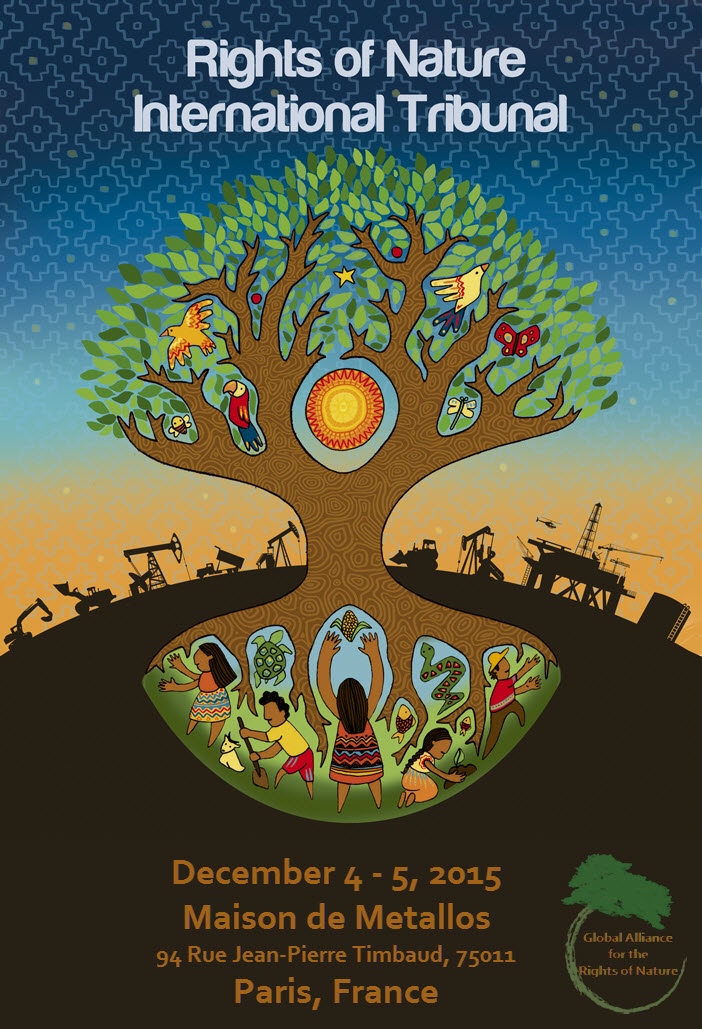
The other major event today was the International Rights of Nature Tribunal, a two-day simulated court hearing that explored the rights of nature as a legal concept and how they might be defended in a series of cases in which various violators of those rights were prosecuted. The first day was today, but the event was one in a series of events in the history of the movement for the rights of nature. The movement was first galvanized in 1972 with the publication of Should Trees Have Standing? by Christopher Stone, which I learned about this semester in my environmental law class.
For a long time the concept was discussed only in academic circles, but in 2008 Ecuador adopted a new constitution that granted rights to nature. According to Article 71, “Nature or Pachamama, where life is reproduced and exists, has the right to exist, persist, maintain and regenerate its vital cycles, structure, functions and evolutionary processes.” Then, in the wake of the failed Copenhagen climate conference of 2009, President Evo Morales of Bolivia hosted the People’s Conference on Climate Change and the Rights of Mother Earth, which crafted and endorsed the Universal Declaration of the Rights of Mother Earth. Designed to complement the Universal Declaration of Human Rights, this declaration was meant to drive home the point that without a habitable environment including clean air, water, and land, human rights cannot exist.
The two-day proceeding this year featured several themes, explained by Cormac Cullinan, author of Wild Law: A Manifesto for Earth Justice and Osprey Orielle Lake, founder of Women’s Earth and Climate Action Network. First, in current legal frameworks across the world, everything other than humans and corporations is considered property, including all rivers, trees, mountains, and animals, Cullinan said. When something is property, it has no voice, and cannot defend itself; it will necessarily be exploited. Current law is based not on the concept that humans are part of nature, but that we can dominate and exploit nature with no consideration for other members of the earth community. However, with climate change and a host of other environmental disasters looming, it has become clear that in operating under this paradigm, we are destroying our own habitat. To address this, Cullinan argues, we must shift away from an anthropocentric point of view to seeing our role not as dominators but caretakers of the earth.
To do this, Lake argued, Western cultures should look to how indigenous peoples live in harmony with nature. Currently 80 percent of biodiversity on earth is in the care of indigenous peoples, and we should understand how they maintain it. We must stop the financialization and commodification of nature and reconnect with the earth as a solution to the current climate and environmental crisis. Lake also condemned market mechanisms such as cap and trade for carbon emissions and the United Nation’s Reducing Emissions from Deforestation and Forest Degradation (REDD) program as simply giving out permits to pollute, which causes the problem in the first place.
Climate crimes against nature, including fossil fuels, deforestation, water and climate, market mechanisms, climate smart agriculture, land use, carbon capture and storage, free trade agreements, geoengineering and nuclear energy.
Financialization of nature, including compensation mechanisms linked to biodiversity conservation, EU biodiversity offsets, REDD+, and economic valuation of nature in general.
Agro-food industry and GMOs
Defenders of Mother Earth, referring to the criminalization of environmental activism and the sharp increase in murders of environmental activists, especially in the Global South.
Shale fracking operations, which speakers argued was akin to rape of the earth, resulting in earthquakes and entailing man camps that raised crime and violence.
Megadams in Brazil, which destroy ecosystems and displace tens of thousands of indigenous people.
Recognizing ecocide as a crime at the International Criminal Court through two cases: oil exploration and removal in Ecuador’s Yasuni National Park, and oil spills and toxic and hazardous waste left behind by Texaco/Chevron.
That evening at Place to B, many of the presenters, witnesses, and judges from the tribunal appeared at the two-hour Place to Brief. In the video above, most of the French and Spanish speakers were not translated, but you can hear speakers in English including Natalia Greene, who was instrumental in getting the new constitution passed in Ecuador; Cormac Cullinan, who gave an overview of the tribunal; Shannon Biggs, founder of Movement Rights who led the panel on norms; Osprey Orielle Lake, who talked about the rights of nature; and Roger Cox, lead attorney for a citizens group that won a landmark ruling ordering the Dutch government to lower carbon emissions 25 percent in five years to protect its citizens. Vandana Shiva gave closing remarks in a separate video. I did not attend this, so I am very happy that Place to B posted the recording.
I spent the late afternoon and early evening visiting memorials for the victims of the Paris terrorist attacks three weeks ago. The memorials are still quite fresh. I got more detailed photos at Place de la Republique, then went to the Bataclan club where the worst occurred and took a number of photos there. The club is still closed, but the entire sidewalk in front and to the side is filled with flowers, messages, candles, and the like. Across the street up and down for several blocks are more memorials. I took a ton of photos in an attempt to capture the scale of the items left, as well as what some items, especially those paying tribute to specific victims, looked like. My Paris Memorials album is posted on Flickr. Page through at whatever pace you like, but you might want to have some some tissues handy.
After that I found some dinner with the idea of getting in a a late swim at Piscine Pontoise, the pool the staff at the hostel had told me about. Dinner in France is never a hurried affair, and it was after 9 p.m. before I got done and after 10 p.m. before I made it to the pool. The journey was worth it. The pool was about half-again as long as the standard 25-meter pool used for lap swimming in the United States, so even with three people in the lane I could still get in a good workout. But best was the ambience. The whole place was flooded with low blue lights and jazzy music. You had to take your shoes off to get to the dressing rooms, but you got your own room that was kept locked by the attendant. I managed to get in a mile, which was sorely needed and helped change my outlook for the upcoming week.
Today I woke up with another headache, but this one not as debilitating as yesterday’s. Still it was off to another slow start. Fortunately I did not have to be anywhere immediately, as my first event was at 1 p.m. at Place to B – a press conference about Monsanto with environmental and agricultural activist Vandana Shiva. I am falling into a routine of catching up on news and social media posts in the morning before actually going out to do things in the afternoon. That’s okay until I have to be somewhere early.
Vandana Shiva speaks to the media at Place to B.
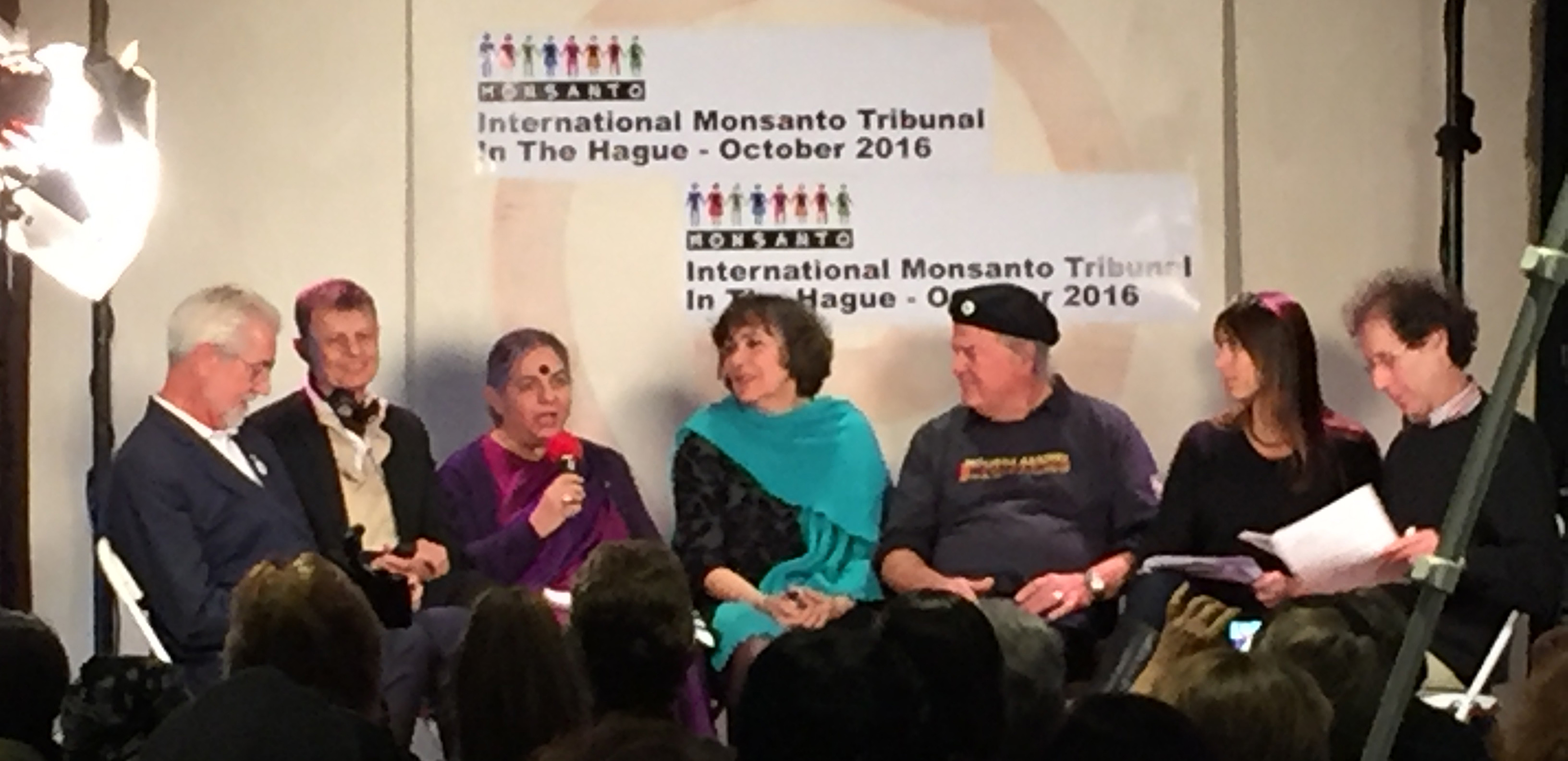
Before the event Vandana Shiva held her own press conference, and at 1 p.m. she took part in a press conference with several others on an International Tribunal Against Monsanto for Crimes Against Humanity, an activist event planned at the Hague in October 2016. Both events were packed, and I could barely get a spot. While GMOs are a fact of life in the United States – almost all of our corn and soy are genetically modified — they are effectively banned in France. The audience at Place to B was very receptive to the message of this press conference, and many Europeans seem genuinely concerned about the safety of their food and biodiversity in their farming.
Monsanto tribunal press conference at Place to B.
Taking part in the press conference were:
Marie-Monique Robin, film director and writer, author of the movie and book Le monde selon Monsanto (The World According to Monsanto), sponsor of the tribunal (introduction)
André Leu (Australia), president of IFOAM – International Foundation for Organic Agriculture – (about the consequences of Monsanto on health and biodiversity)
Dr. Vandana Shiva (India), general director of the Research Foundation for Science, Technology and Ecology (the consequences of Monsanto on farmers and food sovereignty)
Dr. Hans Rudolf Herren (United States), president of the Millenium Institute of Washington (the consequences of Monsanto on climate change)
Ronnie Cummins (United States), international director of Organic Consumers (about the impact on the political and regulatory institutions)
Dr. Olivier de Schutter (Belgium), former Rapporteur on UN Right to Food, professor of international law at Université catholique de Louvain (legal tools of the Tribunal)
Valérie Cabanes (France), spokeswoman of End Ecocide on Earth (towards the recognition of ecocide as a felony).
About half the speakers spoke in French, half in English. This was a gathering that you would not likely see in the United States. Although the event they are planning for the Hague will not be an official trial, the speakers said it is more than symbolic, as their goal is to establish ecocide as a crime and show that Monsanto is guilty. Among other things, they argued that Monsanto promotes an industrial model of agriculture responsible for 1/3 of greenhouse gas emissions and the depletion of soil and water resources, and that its highly toxic pesticides have damaged the environment, harmed species, and sickened or killed millions of people. Shiva pointed to the rash of suicides among Indian farmers who went into debt buying seeds and pesticides for GMO cotton. Cummins discussed Monsanto’s influence on regulations in the United States and abroad.
After the Monsanto press conference let out, I headed to Le Bourget for more time in the Climate Generations space. Again it took almost an hour to get there from Place to B, so I didn’t arrive until after 3 p.m. I spent some time hanging out at the Sierra Club booth, then doing a more thorough walk-through of the booths in the C section. I had wanted to get to the A and B sections too, but didn’t make it there, as I had promised to record a presentation on “Plastification of the ocean” starting at 5 p.m.
Unfortunately it turned out that every speaker on the plastics panel spoke in French. Those in the room could wear headphones to get the translation, but there would be no translation for my video, so I did not keep it. However, I did learn some interesting things. Most of the speakers were people who had led or taken part in various ocean voyages to study and document the amount and types of plastics in the ocean. There is now so much that they have a word for it: the plastosphere. Most people now know about the Great Pacific Garbage Patch, which is a whirlpool of plastic pollution twice the size of Texas in the Pacific. However, there are five such whirlpools across the planet, and there is plastic everywhere. One mission was simply to study it in the Mediterranean. Most of it is not large pieces but microplastics broken down into tiny bits.
Anne-Cécile Turner (second from right), director of Race for Water Foundation, speaks on a panel about plastics in the ocean at COP 21.
One thing the speakers emphasized was preventing plastic from getting to the ocean in the first place through laws like plastic bag bans. But they did not seem all that enthusiastic about projects to clean what is there up, such as this invention by a teenager from Holland. That surprised and disappointed me. Perhaps they don’t think the amount of plastic now in the ocean can be cleaned up. Or maybe they think if people believe it can be cleaned up easily, they will keep on discarding it. Either way, I don’t see how we can not try to clean up the amount of plastics we currently have in the ocean. It is causing untold suffering to billions of sea creatures, and it’s not ethical to allow this. Of course we need to pass laws to prevent it from happening in the first place, but in my opinion we also need to figure out how to clean up what we have put there.
The presentation was in the last time slot of the day, and when it let out everyone in Climate Generations made a beeline for the shuttles to head back to Gare du Nord. My next stop was a meeting of the Sierra Club delegation. There besides going through events of the day and getting an update on negotiations from Fred Heutte, we heard from Sena Alouka, director of Youth Volunteers for the Environment, in Togo, and his colleague, Mavis Mensah. Their organization provides education about climate and environment to schoolchildren.
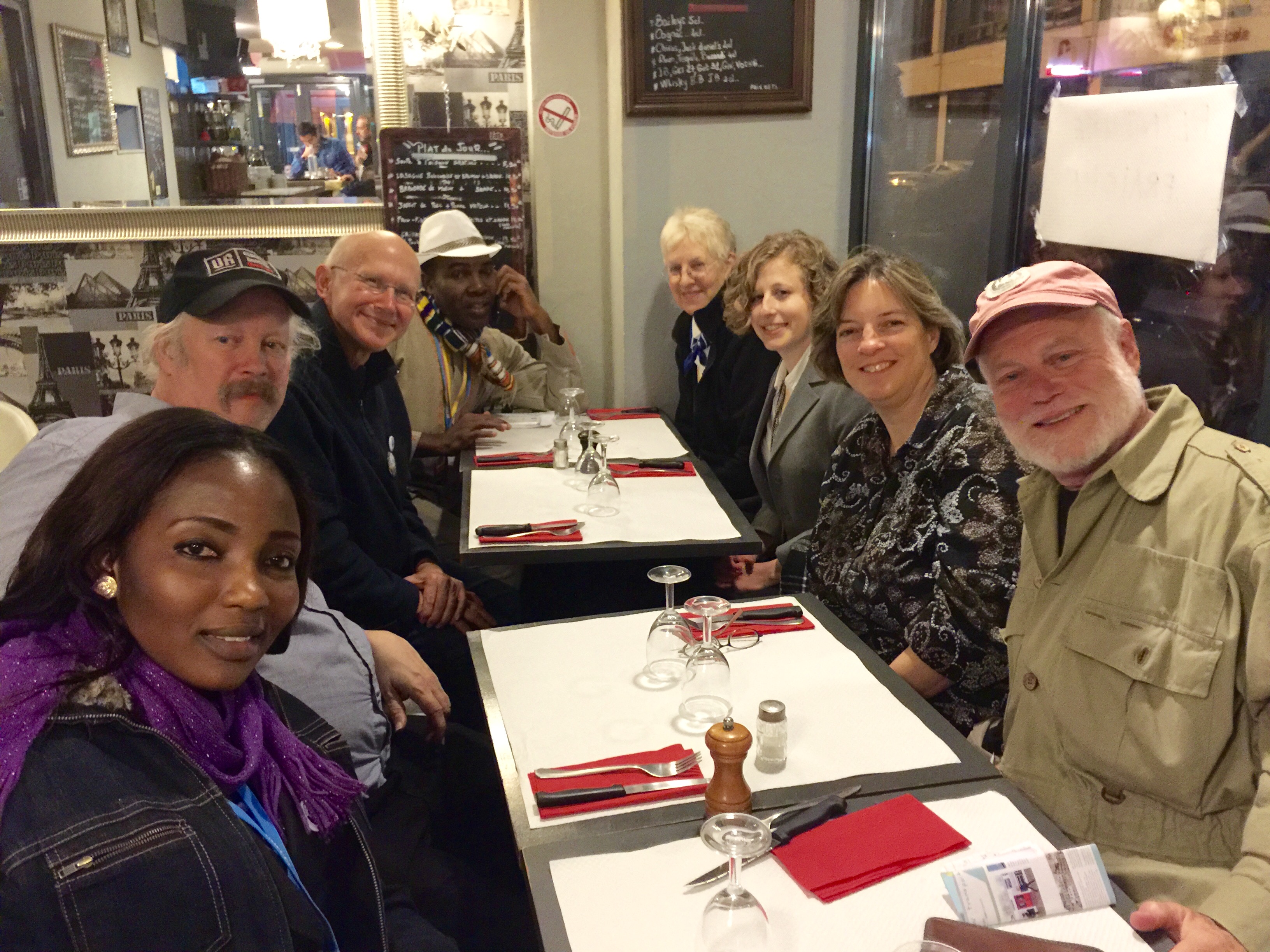
A group from the Sierra Club catches dinner at a pizzeria in Paris. Clockwise from the lower left are Mavis Mensah, Youth Volunteers for the Environment, Togo; Fred Heutte, Federal and International Climate Campaign; Glen Besa, Virginia Chapter; Sena Alouka, Youth Volunteers for the Environment, Togo; Tyla Matteson, Virginia Chapter; Nicole Ghio, International Campaign; Cathy Cowan Becker, Ohio Chapter; and Steven Sondheim,Tennessee chapter. Photo by Katherine Muller.
Afterward several of us walked to a pizzeria that Fred knew, where I got a great dinner and enjoyed even better company. Besides the two guests from Togo, we had Glen Besa and Tyla Matteson of the Virginia chapter, Fred Heutte of the Federal & International Climate Campaign, Nicole Ghio of the International Campaign, Steven Sondheim of the Tennessee chapter, and a new person, Katherine Muller from South Carolina. Steven told me she knew how to work a room, and he was right. She talked to every single person there, got their stories, and told us hers. I ended up there late looking at all the photos on her phone and finding out what she did that day. Turns out she had visited the sites of the terrorist attacks, and the photos were so amazing that I decided I to go myself the next day. By the end of the night I felt as if I had encountered a long lost friend.
I woke up this morning feeling pretty awful. I’ve had migraines all week, and today’s was bad. I had hoped to make it to a 10 a.m. presentation by the Healthy Climate Project, a workstream within the Citizens Climate Engagement Network, itself a project of Citizens Climate Lobby and Citizens Climate Education which seeks to engage citizen input into the intergovernmental climate negotiating process. Healthy Climate Project would be discussing what a healthy climate should look like and how we can get there — but I wasn’t able to get there due to a crippling migraine that only got better with a long breakfast, medication, and shower. Thank goodness my doctor had gotten the insurance company to pay for extra prescription Imitrex, which is the only thing that helps these headaches. At the rate I am going through it since coming to Paris, I may run out.
Sarabeth Brockley, global strategy advisor for Citizens Climate Engagement Network, speaks at its launch.
For the afternoon I had two choices: I could go to Naomi Klein’s Leap Manifesto, which was pulling in hundreds of people but somehow still had seats, or to the launch of Citizens Climate Engagement Network. I chose the latter for three reasons: one, because the Leap Manifesto was centered mainly on Canada; two, because it started earlier than CCEN and I was still dragging; and three, because Joe Robertson, the global strategies director for Citizens Climate Lobby, really wanted everyone to come to the launch of CCEN. Since I am co-leader of the CCL chapter in Columbus, I felt that if there was one CCL event I needed to attend, it was this. But for those interested in the Leap Manifesto, you can find more information at Democracy Now, Huffington Post, and Guardian, and you can read the 15 Demands and sign the manifesto here.
I did make it to the CCEN launch. The event ran from 1 until 3:30 p.m. and gave me a chance to connect with more of the CCL people in Paris. Here is what it included:
Climate poetry, ethics discussion, and sharing of goals for 2016.
Several of the speakers stood out:
Joe Robertson, CCL’s director of global strategy, explained what Citizens Climate Engagement Network is and what it does.
Sarabeth Brockley, CCEN’s global strategy advisor who also works at the United Nations as a policy analyst for the sustainable development goals, gave us an outline of negotiations.
Peter Joseph of the CCL Marin County chapter, explained how pricing carbon can turn the economy from incentivizing all the wrong things to incentivizing the right ones.
Jerome Chladek, a marine biologist from Germany, explained the little-known role of oceans in regulating the climate and how our oceans are in trouble.
Peter Fiekowsky explained the Healthy Climate Project, so even though I didn’t make it to the event in the morning, I still got some information.
Claire Richer talked about Citizens Voice, a video news site for COP 21 to which many of the people in the room were contributing.
Several of the CCEN interns spoke including Isatis Citron, Morgan Wood, and Stephen Stoddard spoke.
And finally the event wrapped up with readings by three amazing poets talking about climate justice and the unequal effects of climate change on their families. Their recitation at first felt like a slap in the face, but as they spoke, I came to realize the true human injustices that climate change entails.
Mindy Ahler and Paul Thompson of the Citizens Voice team streamed the entire CCEN launch live, and you can see their video here. The volume is a little low at times. You can also see just the three poets here. You can also see my video of the event, which is of higher quality but unfortunately does not include the poets – my video camera battery died just before they came on. You can also read a CCL blog post by Sarabeth Brockley with more information about the event and the poets.
After the CCEN launch, I made plans with several team members to cover panels at the Climate Generations space tomorrow, which is Oceans Day. Then I went out walking in the neighborhood, which was the beautiful Bastille section of Paris. There were lots of shops and restaurants, but what I needed at the moment was a place to buy some supplies that I had forgotten to pack. I looked for a grocery store for about 45 minutes before thinking to check it on google. It turned out there were several within a few blocks — they were just not well marked, perhaps to maintain the historic flavor of the neighborhood. Once in the store I found what I needed, then looked for something to eat. I found a small restaurant serving a fixed price meal with an entree (which in France is the appetizer — the entree to the meal), a main dish called a plat, and a dessert.
The meal gave me a chance to catch up on all the email from the CAN listservs and all the news coming out of the climate conference. It also gave me a chance to simply rest. I still was not feeling well, and as a consequence had not been able to contribute to Citizens Voice with much other than some social media posts and tweets.
After a leisurely dinner, I decided that if nothing else in Paris, I wanted to see the Eiffel Tower, and I had read that it would host a special light show during COP 21. So I mapped out how to get there and studied the metro routes. It looked like I would have to take three separate trains to get there from where I was, including one regional train, which as I had found out yesterday going to the COP 21 conference costs more than the internal city metro ride. I was up for it. At each stop I had to figure out where to go to catch the right train and get on it going the right way. But I did it, and never did I feel unsafe traveling by myself even though it was closing in on 9 p.m.
The Eiffel Tower and its light show did not disappoint. The tower is breathtaking — and huge. There were no crowds by that time of night, although there was the ever-present police patrol. I walked all around the area and underneath the tower. I can see why it was considered an engineering marvel when it was built for the World’s Fair in 1889, and still is today. The detail in the lattice work is incredible. The four legs it rests on are huge, and underneath its belly hangs a large ball. It has two sets of elevators, one to take you to restaurants and shops on the equivalent of the 17th floor, and one to take you to the top, which is the equivalent of about 81 stories. You can also take the stairs.
I did not go up the tower, but I did take two videos of the light show, one from right below and one from across the Seine. I also walked along the bridge across the Seine where there were two long rows of plaques discussing climate change, and watched the riverboats full of tourists cruising up and down. I got a snack at a food stand across from the tower, then reversed the metro trip to head back to Place to B hostel. All in all, especially given how I had been feeling, it was a worthwhile day.