China’s new media strategy on Liu Xiaobo

Source: The Diplomat (7/28/17)
China’s New Media Strategy: The Case of Liu Xiaobo
Instead of hushing up issues it find embarrassing, China is now aggressively manipulating the public discourse.

Pro-democracy activists mourn the death of Nobel Laureate Liu Xiaobo, outside China’s Liaison Office in Hong Kong, China (July 13, 2017). Image Credit: REUTERS/Bobby Yip

As Chinese Nobel Peace Laureate Liu Xiaobo lay on his deathbed in a hospital late June, a mysterious video surfaced on YouTube, showing him undergoing medical treatment while in custody and telling medical staff he “greatly appreciated” the care he was given.

While news of his terminal liver cancer was met with shock and disbelief around the globe, China’s state propaganda machine swiftly moved into high gear to make sure its version of the story was dominating public discourse.

When Liu died two and a half weeks later, another video appeared on a Shenyang provincial government website, with a narrator saying Liu had been treated by top medical experts and foreign doctors in a “humanitarian spirit.”  Just hours after his passing, doctors explained to a press conference that Liu couldn’t have traveled abroad to seek treatment as he wished due to the severity of his illness. Continue reading China’s new media strategy on Liu Xiaobo

Wanda retreats from Hollywood

Source: LA Times (7/27/17)
Wanda sell-off of massive Chinese movie studio is latest retreat from Hollywood
By Ryan Faughnder and Davide Pierson

Wanda Film Production Center Ground Breaking Ceremony & Red Carpet Show

Nicole Kidman arrives on the red carpet during the opening night of the Qingdao Oriental Movie Metropolis in 2013. (VCG via Getty Images)

In 2013, Chinese billionaire Wang Jianlin unveiled plans for a moviemaking metropolis in the coastal city of Qingdao, with state-of-the-art film and TV soundstages and a massive water tank to draw big Hollywood productions.

Celebrities such as Leonardo DiCaprio and Nicole Kidman flew out to witness the unveiling of what was supposed to be the centerpiece of Wang’s efforts to make China a film business destination.

Less than four years later, Wang, the chairman of real estate conglomerate-turned-media-giant Dalian Wanda Groupis in retreat.

The brash business tycoon is reportedly unloading the studio business, part of his planned $7.3-billion Qingdao Movie Metropolis complex, in one of the most striking setbacks to date in his quest to become a global media mogul. Continue reading Wanda retreats from Hollywood

Dirlik lecture on the rise of China

Source: Boundary 2 Online Community (7/30/17)
Arif Dirlik: The Rise of China and the End of the World As We Know It
By boundary2

On February 27, 2016, longstanding boundary 2 board member Arif Dirlik gave his final lecture at the University of British Columbia. The talk, The Rise of China and the End of the World As We Know Itis available in full on the UBC Library’s website.

Why anyone can be Chinese (1)

It is interesting that Daniel Bell has brought up this topic. I think he is aware of the reality that Chineseness is defined by the ethnicity more so than the nationality/citizenship, and he just refuses to accept such reality. The meaning of being Chinese, in a non-immigrant country, is vastly different from being Canadian. One can say s/he is Canadian and Irish/Scottish/Chinese at the same time, while the two refers to different aspects of one’s identity. From my understanding, the definition of nationality in any countries except immigrant countries such as US, Canada and Australia is closely tied to heritage and ethnicity. It might not be the reality the author is willing to accept, but I doubt this is likely to change any time soon.

Peng Z

AAP 2017 program

Association for Asian Performance CONFERENCE PROGRAM 2017
August 2-3, 2017
Planet Hollywood Resort & Casino, Las Vegas, NV

Krishna

REGISTER

2017 Conference Program Download

Wednesday August 2, 2017

8am                 Registration and Coffee

8:15am            Welcome, Emily Wilcox, AAP President

8:30-9:45am   Concurrent Session #1

1A. Intercultural Adaptation
Chair: Margaret Coldiron, Deputy Head of BA World Performance, E15 Acting School/University of Essex

“The Bridge from Bombay to Broadway: merging musical forms in Monsoon Wedding
Amanda Culp, PhD candidate, Columbia University

“Cultural Transfer between London and Takarazuka: the Imitation and Adaptation of Musical revue in 1920s Japan”
Tomoko Akai, Associate Professor, Kobe Yakka University

“When Cultures Collide on the Jingju Stage: An Analysis of Fushide (Faust) and Woyicaike (Woyzeck)
Yining Lin, PhD candidate, University of Hawaiʻi at Mānoa

“Modernity, Chinese Culture and Dialectics: Bertolt Brecht’s Turandot and Wei Minglun’s Chuanju Play Chinese Princess Turandot
Wei Zhang, PhD candidate, University of Hawaiʻi at Mānoa Continue reading AAP 2017 program

Online literature franchises

Source: Global Times (7/13/17)
Top 10 online literature writers in China have created franchises worth a staggering 1 billion yuan ($150 million) each
Hurun’s list of most valuable literature IPs reflects growing power of online works
By Huang Tingting

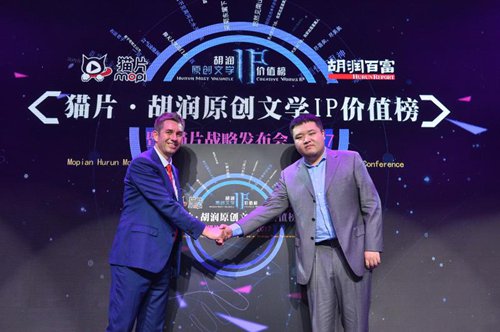
Rupert Hoogewerf (left) and Wang Yuren pose for a picture at a press conference for the Mopian Hurun Most Valuable Creative Works IP 2017 list in Beijing on Wednesday. Photo: Courtesy of the Hurun Report

The top 10 online literature writers in China have created franchises worth a staggering 1 billion yuan ($150 million) each, Rupert Hoogewerf – better known in China as Hu Run, the British founder and chief researcher of the Hurun Report – announced at a press conference in Beijing on Wednesday.

On Wednesday, the Hurun Research Institute and domestic IP management agency Mopian released the Mopian Hurun Most Valuable Creative Works IP 2017 list, which lists the top 100 most valuable literature IPs in China after 1998. Continue reading Online literature franchises

Book on first students to study in US after CR

Source: Global Times (7/11/17)
First group of Chinese mainland students to study in US after Cultural Revolution talk about their experiences in recent book
By Li Jingjing

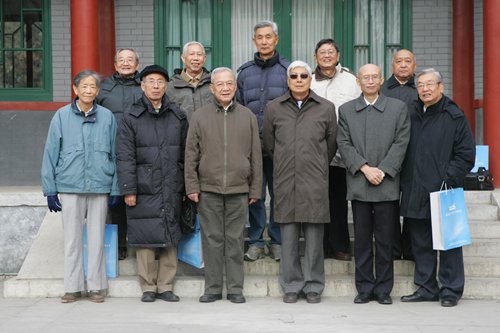
Eleven members of the first group of 52 students sent to the US in 1978 pose for a picture in 2009. Photo: Courtesy of Qian Jiang

While it may be a common sight to run into a student from the Chinese mainland at universities around the world today – more than half a million students from China went abroad for educational purposes in 2016 – a little more than 40 years ago you would be hard-pressed to find a single one. That all changed in 1978, when top Chinese leader Deng Xiaoping made the decision after the end of Cultural Revolution (1967-77) to send out a large number of students to study abroad. Deng felt that this move would be a vital part of China’s reform and opening-up. Continue reading Book on first students to study in US after CR

HK in Transition programme

Hong Kong in Transition: Asian City-to-City Collaboration and Performing Arts Exchange, 1997-2017
9-10 September 2017, SOAS University of London

This two-day programme co-presented by the SOAS China Institute and Zuni Icosahedron marks the 20th anniversary of Hong Kong’s handover from the UK to China with a series of events focusing on intercultural exchange and city-to-city collaboration in the performing arts. Participants will reflect on Hong Kong’s cultural exchanges with London and several Asian cities over the past twenty years, as well as discuss proposals, opportunities, strategies, and challenges for the next two decades.

Academic Symposium – Hong Kong Theatre in Transnational Perspective: New Directions and Discourses since 1997

Saturday 9 September, Senate House Lecture Theatre (SALT), 9am – 5pm.

  • This symposium will explore aspects of theatre production in Hong Kong in the post-1997 period from a transnational perspective, including intercultural and cross-genre collaborations with other Sinophone and Asian performance cultures from Singapore, Taiwan, China, and Japan, Cantonese opera in the diaspora, experimental and political performance, and intersections between indigenous and foreign theatrical forms.

Continue reading HK in Transition programme

Eastern Lightning cult back in the news (1)

Apropos of this topic, List members who translate should be warned that EL church in the US, which goes by several names but is usually based in New York, frequently solicits translation services from our community. They offer very high fees, but the material is anti-science, anti-intellectual, and very much a product of the ideology the group is known for. Cooperating with them would, in my opinion, endanger one’s ethical integrity as well as one’s relationship with China.

Canaan Morse <canaan.morse@gmail.com>

Fake lives in Beijing (1)

Source: Sup China (7/28/17)
Author of hit ‘faking a life in Beijing’ article apologizes, sorta
By Jiayun Feng

As we noted yesterday, the caustic essay “In Beijing, 20 million people are faking a life,” which became a controversial and viral sensation in China in the last few days, also provoked an unusual reprimand from several state media organizations, including the People’s Daily and Xinhua. Now the essay’s author, Zhang Wumao 张五毛, has apologized for not being discreet enough when writing the essay, and begged media “not to magnify my mistake into a matter of principle” in an interview (in Chinese) with The Economic Observer.

“This is an article with many problems. In fact, I didn’t intend to express anything. I was just being contrarian and trying to amuse readers,” Zhang said. “I didn’t realize that I was wrongly contrarian and trying to amuse wrongly. I don’t want to cause more troubles and make anyone upset about it.” Continue reading Fake lives in Beijing (1)

Translator needed in Beijing

Dear list members,

I’m a PhD student doing research on Lanzhou’s economic development as a visiting student at Tsinghua University. I need the help of a local student assistant residing in Beijing who has a familiarity with concepts of economics and is preferably a senior undergraduate or master student. S/he will help me in understanding some points in a statistical yearbook written in Chinese. I will ask some questions about the things in the yearbook which are not clear to me (basically translation of some concepts ). My budget allows me to pay 250 RMB for a half day (around 4 hours). The working period is loosely from August 3 to August 10 and can be flexibly arranged according to both parties’ schedule. Please share with the people who might be interested in. I can be contacted via email (vtekdal@gmail.com) or wechat (my id is veysit74).

Best Regards,

Veysel Tekdal <vtekdal@gmail.com>

Fake lives in Beijing

Source: Sup China (7/28/17)
Xinhua: No fake lives in Beijing
By Jiayun Feng

On July 23, Chinese blogger and novelist Zhang Wumao 张五毛 published an essay titled “In Beijing, 20 million people are faking a life” on WeChat (see a translation including the original Chinese). The article went viral, generating more than 5 million views and nearly 20,000 comments overnight. Although the essay has been scrubbed from the Chinese internet, it has triggered a heated debate and sparked a series of countering articles, including some by state media such as the People’s Daily and Xinhua.

Zhang’s essay is caustically funny. He writes about the alienation of people living in a Beijing that is too big, too polluted and congested, and too expensive. At least for migrants: Zhang writes about rich old Beijingers who have “five apartments under their butts,” while the people from the provinces who do most of the work in the city struggle to afford even a tiny house in the outer suburbs. He also writes about the ongoing teardown of small shops and restaurants — mostly owned by non-locals — and how the years of destruction mean that even old Beijingers don’t really have a home to go back to. The essay ends: Continue reading Fake lives in Beijing

Eastern Lightning cult back in news

Source: Sup China (7/28/17)
Eastern Lightning cult back in the news
By Jeremy Goldkorn

On May 28, 2014, five people attacked and killed a woman in a McDonald’s restaurant in a small city in Shandong Province. A bystander filmed the murder on a mobile phone and the footage spread rapidly on the internet.

  • The killers turned out to be members of the Church of Almighty God (全能神 quánnéng shén), also known as Eastern Lightning (东方闪电 dōngfāng shǎndiàn). The organisation is a doomsday cult founded in 1990 by a physics teacher named Zhao Weishan 赵维山 who claimed to have found the female Christ in the form of young woman from northwestern Shaanxi province.
  • The Chinese government banned the church as a cult in 1995; Zhao and his female Chinese Jesus are apparently in exile in the U.S.
  • During the trial of the five McDonald’s murderers, one of the accused said that his group had wanted to convert the victim but they killed her after she refused to tell them her phone number.

Eastern Lightning are in the news again: Chinanews.com reports (in Chinese) on the detention of 18 members of the group in eastern Zhejiang Province, the shutdown of two of their “lairs” (窝点 wōdiǎn), and confiscation of computers and propaganda pamphlets. Sixth Tone has a good summary of the news in English. The cult’s own website is here.

The First Half of My Life

Source: China Daily (7/19/17)
Popular TV drama explores modern women’s issues
By Zhang Xingjian | chinadaily.com.cn

Popular TV drama explores modern women’s issues

Poster of TV drama The First Half of My Life [Photo/Mtime]

Adapted from popular Hong Kong writer Isabel Nee Yeh-su’s novel The First Half of My Life, the 42-episode TV drama of the same title stands as a dark horse amid fierce TV competition during the summer holiday.

Gathering a cast full of veteran and renowned actors including Chen Daoming, Mei Ting, Ma Yili and Yuan Quan, the drama mainly tells the inspirational story of a housewife-turned-career woman.

In the drama, lead actress Ma Yili stars as Luo Zijun, a simple-minded and dubious housewife.

However, her carefree life encounters misfortune after an unexpected divorce. Continue reading The First Half of My Life

Remember Little, Forget More

Source: China Daily (7/27/17)
Woman writer from Xinjiang features her life in new book
By Li Hongrui

Woman writer from Xinjiang features her life in new book

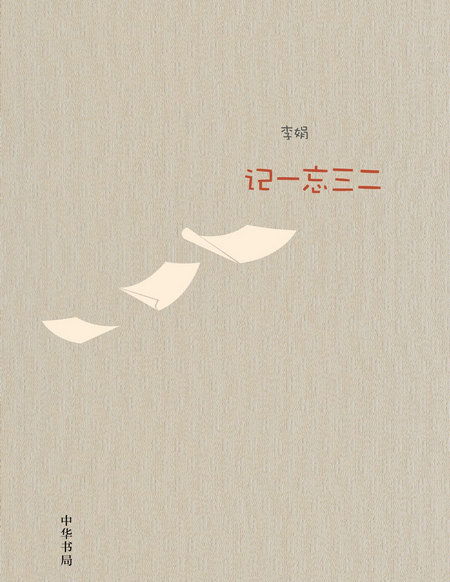
Remember Little, Forget More. [Photo/amazon.cn]

Li Juan, a Xinjiang-based writer born in the 1970s, has won wide acclaim for her prose featuring Xinjiang Uygur autonomous region since she wrote for a newspaper.

Having published eight books, she saw her latest work published recently after five years of break.

The new book, Remember Little, Forget More (Ji Yi Wang San Er), is a collection of prose about her life, especially her childhood in Xinjiang.

Although born in a small town in Xinjiang, Li is the child of immigrants from Sichuan province. She also once stayed in Sichuan for some time when she was young. Continue reading Remember Little, Forget More