Maple Bootcamp: Ohio

Maple Bootcamp: Ohio is for woodland owners looking for an annual income from their woodland or current producers looking to sharpen their skills.  This multi-day workshop will cover everything from tree identification and tree health through tapping and marketing an end product (syrup, candy etc).  There will be tours of a sugarbush that has been in operation for more than 50 years and one that takes advantage of today’s technology.  We will also tour the sugarbush that was installed on the Ohio State University Mansfield campus in 2019 and is a hub for maple research

Registration is $150 and can be accessed here along with the agenda for the 3 days.

Why Should You Calibrate Your Sprayer Even If it has a Rate Controller?

by: Erdal Ozkan, OSU

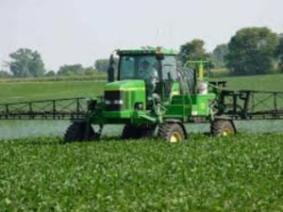
Whenever I give a presentation about the need to calibrate a sprayer and how to do it, there is always someone asking me this same question: “I have a rate controller in the cab that regulates the flow rate of the sprayer regardless of the changes in sprayer ground speed. I just enter the gallons per acre application rate, and the controller does the rest, just like a cruise control in a car. So, should I still calibrate the sprayer? The answer is, Yes, a calibration should be done. Although the rate controllers do an excellent job with regulating the flow rate of nozzles to keep the application rate constant regardless of the changes in travel speed, a manual calibration at least once a year is needed for two reasons: 1) to ensure the rate controller is functioning properly, 2) the rate controller is not forced to operate outside the pressure operating range for the nozzles on the sprayer boom. Let me elaborate on both points I made and share with you the reasons why a manual calibration of a sprayer is a good idea. Continue reading Why Should You Calibrate Your Sprayer Even If it has a Rate Controller?

Wheat Growth Stages

OK, Mother Nature is not cooperating which means we can’t talk about corn and bean planting so let’s talk about the crop we do have growing – Wheat

Source: K-State University

Knowing what growth stage your wheat crop is at is essential for nitrogen, herbicide and possibly fungicide applications.  Most of the wheat I have seen in the county so far is between Feekes 5 and Feekes 6.

Feekes 5 is the time to be making your last nitrogen applications and applying herbicides as needed for weed control.  However at Feekes 6 you should cutoff for nitrogen applications to avoid leaf injury.  Additionally some growth regulator herbicides, like 2, 4-D and dicamba should not be applied.

How Will the Invasion of Ukraine Affect U.S. Agriculture?

by: Ian Sheldon, Professor and Andersons Chair of Agricultural Marketing, Trade, and Policy, Agricultural, Environmental, and Development Economics, Ohio State University and Chris Zoller, Associate Professor and Extension Educator, Agriculture & Natural Resources, Ohio State University Extension – Tuscarawas County


Russia’s Invasion of Ukraine: The Global Impact

The shock to global commodity markets following Russia’s invasion of Ukraine is expected to be the largest in the post-war period, and certainly since the oil crisis of the 1970s.  Over the past 30 year, the two countries have become major agricultural exporters, accounting for a quarter of global grains trade in the 2021-22 season (International Grains Council, March 9, 2022).  Across key commodities, they account for a 34, 18, 27 and 75 percent share of volume traded of world wheat, corn, barley, and sunflower oil respectively (International Food Policy Research Institute, February 24, 2022).  With Russia blockading ports on the Black Sea, 16 million tons of grain are currently stranded in Ukraine, USDA forecasting Ukrainian-Russian wheat exports to fall by 7 million tons in 2021-22, Australian and Indian exports only partially filling the gap (USDA/WASDE Report, March 9, 2022)   Also, despite reports of some spring crops being planted in Ukraine, outgoing Agriculture Minister Roman Leshchenko expects total area sown to be reduced by 19 million acres (Reuters, March 22, 2022).

Not surprisingly a market shock of this magnitude has affected both the volatility and level of prices, wheat futures at one point moving above $14/bushel, and eventually falling back to just over $10/bushel, reflecting uncertainty among traders about the invasion.  In turn, the increase in grain prices, are having a significant effect on global food prices and hence food security.  Even before the invasion, several factors were already driving up food prices, including poor harvests in South America, strong global demand, supply chain issues, reduced global stocks of grains and oilseeds, and an input cost squeeze mostly due to rising fertilizer prices.  Adding in the effect of the invasion, global food prices are now reaching levels not seen since the so-called “Arab Spring” of the early 2010s (UN/FAO, March 2022). Continue reading How Will the Invasion of Ukraine Affect U.S. Agriculture?

Alternative spring burndown/postemergence strategies when herbicides are in short supply

by: Dr Mark Loux, OSU

There is a lot of speculation about herbicide shortages for the 2022 growing season, and some products are apparently getting more expensive and/or scarce now. This will affect herbicide buying and weed management decisions for the 2022 season. The two main active ingredients that we’re hearing about right now are glyphosate (Roundup, others) and glufosinate (Liberty, others), for which prices have increased substantially. There will likely be limited supplies of other pesticide active ingredients as well, but in the short term, a shortage of these two active ingredients poses some major challenges for corn and soybean production. The purpose of this article is to discuss ways to minimize the impact of herbicide shortages, primarily glyphosate, on corn and soybean production. As you search for alternatives to these two herbicides and others, the weed control guides and technical guides produced by University Extension and industry are an important tool for planning weed management programs and herbicide purchases.

Some guiding principles based on our experience that may help with decisions, especially where glyphosate will not be in all applications:

  1. Spring tillage is an option to replace herbicide burndown. Can cause long-term compaction problems if tilled when too wet. Waiting until weeds are large makes tillage less effective. Weeds that survive tillage will be difficult to control with POST herbicides. In other words, till when soil conditions are fit and before weeds are huge.
  1. Where it’s only possible to use glyphosate once, it may be needed most in the burndown. Saflufenacil can be added for enhanced control of rye and ryegrass, and marestail. ACCase herbicides (e.g. clethodim, quizalifop) can then be used for POST grass control in soybeans. Glufosinate, Enlist Duo, or XtendiMax/Engenia can be used for many broadleaf weeds, especially the glyphosate-resistant ones. Where residual herbicides are omitted, or do not provide enough control, we would expect POST treatments to struggle more in the absence of glyphosate with weeds such as lambsquarters. So use residuals. Glyphosate is still more than just a grass herbicide.

Continue reading Alternative spring burndown/postemergence strategies when herbicides are in short supply