New anti-corruption novels

Source: Global Times (7/2/15)
Digging deeper
By Global Times
Anti-corruption novels reflect the real social issues China is facing

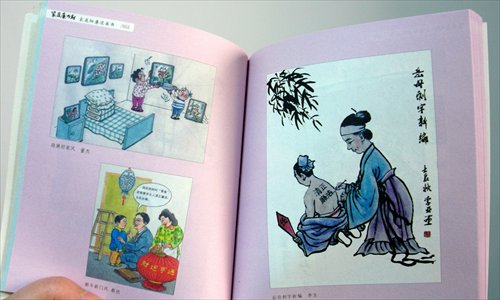
Illustrations for an anti-corruption handbook issued to government official families Photo: IC

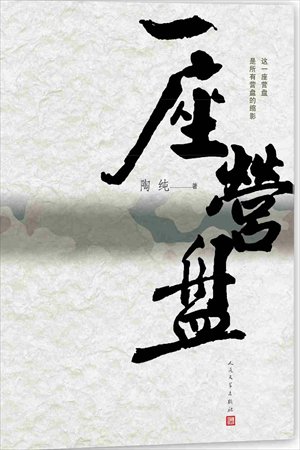
Cover for A Camp by Tao Chun Photo: IC

Fans of political or realistic writing may have noticed that anti-corruption novels used to be hugely popular during the 1990s. The Republic of Wine by Mo Yan was hailed for its imaginative satire of government corruption in the country. Traceless Snow by Lu Tianming, a writer famous for his prolific anti-corruption writing, was later adapted into a popular TV series that impressed many audiences with its subtle depiction of human beings corrupted by the swelling selfish desire that often comes with power.

However, as time went on this type of novel disappeared from the public consciousness, that is until recently, as two new anti-corruption novels have reignited people’s passion for the genre. A Camp by Tao Chun and The Song is Over, but Audiences Are Still There by Zhou Daxin both target corruptions within the military, a topic that few works have approached before.

A Camp wouldn’t be published if not for the current environment,” Tao told the Beijing Daily. Recognized as a minefield prior to the 18th CPC National Congress, writing about military corruption was next to impossible according to Tao. What helped him decide to write such a novel was the national campaign against corruption that began with the meeting in November of 2012.

Real life motivation

“There has never been such a large-scale and resolute anti-corruption campaign in the Party’s history,” said Tao, admitting that his new book was a direct result of the fall of those “big-tigers” who used to be very powerful within the central government or the military. Continue reading New anti-corruption novels

The Chinese Communists are not Confucianists

Source: China Change (7/1/15)
The Chinese Communists Are Not Confucianists
By Yu Ying-shih

The following is an unauthorized translation of an excerpt from an interview with Prof. Yu Ying-shih [via Skype] during a symposium in November 2014 marking the 65th anniversary of the founding of Hong Kongs New Asia College (新亞書院).  Statements in parenthesis have been added, and endnotes provided, by the translator for clarity. The Editor

Professor Yu Ying-shih

Question: Senior Chinese Communist leaders have visited the Confucian Temple in Qufu [In November 2013]. Also, recently-held national meetings in China have praised the Confucian values of traditional culture, urged a return to these values, and stressed the significance of developing these values in the future. In our recent conversation, I have admired your continuation of the “New Asia spirit” of Prof. Qian Mu (錢穆, 1895-1990)[1], and your attitude of reclaiming Chinese culture for the world. Looking at Hong Kong’s development, the influence of China on Hong Kong is after all quite strong, so how do you see China’s senior leaders presently promoting a return to China’s traditional culture affecting what you have referred to as “cultural ecology?” What do you think we can expect from this generation of China’s leaders for the ten or so years that they will be in power? How will Chinese leadership developments affect Hong Kong and in what way? I’d like to hear your opinions on these matters.

Yu Ying-shih: Let me first discuss the issue of Confucianism. I’ve already talked about this on previous occasions but this is the first opportunity I’ve had to discuss the matter in Hong Kong in front of a large audience and I’d like to talk a bit about this issue. Continue reading The Chinese Communists are not Confucianists

Mainlander bids bittersweet farewell to HK

Source: Tea Leaf Nation, Foreign Policy (6/26/15)
Viral in China: A Bittersweet Farewell to Hong Kong
By ANONYMOUS, TRANSLATED BY DAVID WERTIME

Viral in China: A Bittersweet Farewell to Hong Kong

Hong Kong’s declining influence is water-cooler conversation in mainland China once more. On June 20, an article from Chinese online investment publication Gelong Hui titled “Hong Kong, Please Forget Me” appeared on the popular chat platform WeChat — it promptly received over 100,000 views, and was widely shared and discussed elsewhere.* The post, by an anonymous mainland citizen who spent years working in the Chinese territory of Hong Kong and now works in finance in the nearby Chinese megacity of Shenzhen, reads as a melancholy goodbye to the former, although it also takes some digs at Hong Kongers, particularly those in the middle and lower classes.

By focusing on Hong Kong’s economic decline and increasing hostility to mainlanders, the article, since widely shared and discussed in Chinese cyberspace, hit a nerve that’s been raw for some time. In August 2014, a report by a Chinese consulting firm about Hong Kong’s slide toward “second-tier” status went viral on the mainland. Such talk only intensified after protesters took to the streets in Fall 2014, a movement sometimes called Occupy Central — ultimately, protesters gained few tangible concessions, and the rift between Hong Kong and the mainland grew wider. 

Foreign Policy translates and publishes with permission.

***

The night before leaving Hong Kong, I once again climbed to the summit of Victoria Peak, gazing one last time at the reflection of row upon row of neon lights reflected in Victoria Harbour, I suddenly felt a thick sense of disappointment: for me, for Hong Kong. This place held the dreams of my youth, once lofty, now silent.

Last week I was busy moving, then went to my new employer in Shenzhen to report. I had to change my ID from a Hong Kong resident to a Shenzhen resident. This year was my seventh in Hong Kong, and according to immigration regulations there, I could have applied to be a permanent resident. I don’t know what it means to have given up on this future. But while it was painful to walk away, I do know that today’s Hong Kong is not the home for me. Continue reading Mainlander bids bittersweet farewell to HK

China issues US human rights report

Source: China Real Time, WSJ (6/26/15)
China Issues Report on ‘Terrible’ U.S. Human Rights Record
By Chun Han Wong

Chinese Vice Premier Wang Yang and U.S. Secretary of State John Kerry attend a joint press conference in Washington. Agence France-Presse/Getty Images

U.S. and Chinese officials may have struck conciliatory tones at high-level talks this week amid festering mutual mistrust, but their annual bickering over human rights has resumed unabated.

A day after the U.S. State Department issued global human-rights scorecards that included criticism of China, Beijing offered a scathing rejoinder that accused Washington of “showing not a bit of regret for or intention to improve its own terrible human rights record.” Continue reading China issues US human rights report

Leaked chats on vote strategy in HK

Source: China Real Time, WSJ (6/26/15)
Leaked Chats on Vote Strategy Leave Hong Kong Lawmakers Reeling
By Isabella Steger

Jasper Tsang, president of Hong Kong’s Legislative Council, listens to Chief Executive Leung Chun-Ying’s annual policy address in January. Reuters

Beijing is striving to present a united front with its supporters in Hong Kong’s legislature, even as the pro-establishment camp is rocked by a series of leaked online conversations related to last week’s failed vote on a 2017 election overhaul.

On Thursday, Hong Kong’s Oriental Daily newspaper published a series of conversations among a group of pro-Beijing lawmakers on the popular mobile messaging service Whatsapp, showing the internal debate before the vote took place and the politicians’ reactions afterwards. Continue reading Leaked chats on vote strategy in HK

Beijing govt to move out of city core

Source: NYT (6/25/15)

China Aims to Move Beijing Government Out of City’s Crowded Core
By IAN JOHNSON

For more than 65 years, Chinese government officials worked and lived near the Forbidden City, creating traffic problems and widespread destruction in Beijing’s old city. CreditXiao Lu Chu/Getty Images

BEIJING — For more than 65 years, government officials here have tried to emulate China’s imperial rulers, working and living in the city center near the emperor’s old palace, the Forbidden City.

Now, in a telling reversal, officials are finalizing plans to move Beijing’s municipal government, including tens of thousands of civil servants, to a satellite town, Tongzhou. The move is a recognition, urban planners and historians say, that the existing strategy has created ever-worsening traffic problems and widespread destruction of Beijing’s old city.

It is also a sign of the determination of China’s leader, President Xi Jinping, to forge a new urban blueprint for China. Over the past year and a half, officials have been slowly unveiling an ambitious plan to create a new urban cluster of 130 million people that would be the size of Kansas or Belarus. Continue reading Beijing govt to move out of city core

Censorship and salesmanship at US book fair (15)

I don’t agree with Lucas Klein on Eric Abrahamsen’s NY Times article. Everyone who cares to read new Chinese literature knows there is stupendous and great stuff produced in many places in China. Eric and many others involved in Pathlight have done a lot to make more of today’s stories and poems from China available in English. The distribution of the printed magazine is still a problem, it seems. But on the whole, Eric has conducted a great boon for us translators and for everyone interested. So Pathlight is great, but that article isn’t. Not at all. Nick Admussen has enumerated many weak spots, I completely agree with him. Especially the point at the end. Eric’s quoted comments, his first post here and the NYT article all create an impression that it is not the state doing does most of the stifling. The state of everything that sometimes pokes through, if you will. The premise behind the current state. It’s not pretty at all, as Kevin Carrico has said. And everyone in China is working with it, everyone involved, including myself.

If you get flippant about one dissident’s poems, or other belles-lettres, you create false impressions in general. Eric has corrected that with very clear words in his latest post. Woeser’s 唯色 poems are suppressed because she is a dissident. Not because of the poems at all.

For many years, there have been too many flippant remarks in our field in this regard, by W. Kubin and others.

My own reaction was emotional. Eric’s politics-poke-through-framework is untenable as a general argument. Lucas and everyone else in the discussion seem to agree on this. And if the critique of the Writer’s Association and the social climate it makes for is the main point of the article, then you have to know that Eric and everyone working for Pathlight, including all of us translators etc, are paid by the Writer’s Association. No matter what kind of reader you are.

Lucas does have an interesting point when he finds Nick Admussen’s and Eric Abrahamsen’s points about social roles not necessarily exclusive. I think Nick is right, and Eric isn’t. Is Yi Sha 伊沙 anti-social, because he cultivates his anti-authoritarian stance? Obviously not. Except in his poems, sometimes. He has to work with censorship, but he does not have to belong to the Writer’s Association to be successful. Yes, he is an exception.

Eric does make very good points in his reaction to all the criticism he has received. These points, at least one or two of them, should have been in the article. On the whole, China is more authoritarian, draconian etc. than you get to think when you see what is possible in the arts and in other achievements. I think Eric does say something like that in his latest post. Not in the article, unfortunately. And so I don’t think that NY times article is good for us translators at all. Or for the general reader. Except for the attention created. Attention is crucial, and in this way all the hullabaloo about censorship and human rights etc. at any book fair is probably very good for everyone involved. Maybe even book fair chairman Rüdiger Wischenbart privately agrees on this, although he has to say something to the opposite in public. Mr. Wischenbart used to produce great radio programs in Austria. In recent years, he has made himself an expert on book trade.

Pathlight and all the book fair scandals of recent years have certainly increased attention paid to Chinese literature. It’s very understandable that Eric is feeling tired from all the generalized and sometimes ill-informed criticism he has seen and felt over the years. But I think all the critique is a good thing, on the whole. It should be addressed like in Eric’s latest post.

Martin Winter <dujuan99@gmail.com>

Censorship and salesmanship at US book fair (14)

On the relationship between cliquish social pressures and state sanctions, Mr. Abrahamsen is trying to have it both ways.  “Yes, the government is ultimately behind much of it. But not all of it.”  Then, four sentences later, “The government is not the problem, it is an extreme symptom of the problem.”  It is curious to hear a symptom of a problem described as lying behind much of the problem.  When Mr. Abrahamsen writes that “if the Chinese government were removed tomorrow this [literary] establishment would still be in place, still choking China’s literary production” he raises an interesting question.  It is not necessary, of course, to hypothesize the removal of the government, only the relaxation of its sanctions in restraint of speech.  I wonder if one could turn up some suggestive data by comparing the tone of literary society shortly before and after 1989.  I find Dr. Admussen’s argument persuasive.  The state provides the motive force behind social pressures within the guild to avoid sensitive topics.  To minimize the state’s role in this process is a fallacy, like that of a visitor to a water-powered mill who concludes that since the millstone is seldom wet, the flow of the river must play little part in the grinding of the grain.

On the relationship between politics and art, in his most recent post Mr. Abrahamsen strikes a reasonable tone:  “All I said was that political art should also be good art.” But that is not all he has said.  He said that no one has been imprisoned — or even “molested” or subjected to “a slap on the wrist” — on account of his art.  Since a number of writers have been molested, some quite harshly, he recognized that an explanation was in order.  The first explanation was that they were punished for their “political activities.”  The second was that whatever they wrote has not been, in Mr. Abrahamsen’s judgment, art.  As a guideline for understanding this judgment, he offered the “politics poking through” test.  This metaphor calls for careful interpretation.  I suggested that Mr. Abrahamsen was asking us to consider shallow and merely vehicular works of art, in which politics is the message; but that there are also great works of art with strong and inescapable political themes; and that in principle an authoritarian government which has developed an elaborate machinery of suppression will abhor either kind of work — or a work anywhere along the spectrum of artistic merit —  if it threatens to inspire significant resistance or dissent.  This raises the question whether any of the works whose authors have been sanctioned do in fact have artistic merit.  I understand Mr. Abrahamsen to be answering in the negative.  Let me call attention once again to the coincidence that Mr. Abrahamsen finds no artistic merit in those who have suffered the wrath of the state, but much in some who have not.  Seeking an explanation that would not be injurious to Mr. Abrahamsen, I wondered if some of the stylistic values which are esteemed among Western critics might also render a work relatively innocuous in the eyes of the regime.  This would help explain the coincidence — but it is only speculation.

Mr. Abrahamsen is right to regret the predominance of criticism in the responses, for his article made good points about the role of social pressure and the ambiguities with which authors must deal.  But he invited that criticism by minimizing the role of the state and dismissing as artless the critical work of independent writers.

Call me overheated.  我是流氓我怕谁.

A. E. Clark <aec@raggedbanner.com>

Censorship and salesmanship at US book fair (13)

Lucas/Eric:

I think you can chalk this sturm und drang up to silly season (i.e. summertime). I for one perfectly understood what Eric was trying to say, and of course don’t believe that all literature should serve the principles of free speech. I just wanted to correct what I think is one misperception: Having known Bei Dao for close to four decades, I can tell you that his founding of 今天雜誌 during the Democracy Wall Movement, his participation in the 星星畫派/Stars’ art protest, and his early work: 幸福大街十三號, 歸來的陌生人, 在廢墟上, 歸來的陌生人, 旋律, 稿紙上的月亮, 交叉點, was extremely politically influential (if not “overtly political,” whatever that means in the PRC context). Not to mention that he initiated the February 1989 artists/writers petition calling for political amnesty for Wei Jingsheng that was one of the opening salvoes of the spring 1989 protests. He’s tried to avoid politics in the decades since, for obvious reasons, but he’s a great illustration of the words that go back to Pericles: “Just because you don’t take an interest in politics doesn’t mean politics won’t take an interest in you.” But I know Lucas knows this, I just think it’s so easy to get this important history wrong if you weren’t there/from the vantage point of this strange new millennium.

Scott Savitt <scottsavitt@gmail.com>

Censorship and salesmanship at US book fair (12)

Scott Savitt mentions Bei Dao’s line about wanting to be a man in an age of heroes; I also thought of this line in relation to this discussion, when I read Eric Abrahamsen write that “The Chinese poet-hero does not exist.” The irony being, obviously, that eventually Bei Dao was exiled, and turned into a hero-poet, for writing poems that are not that overtly political. Now, however, he is free to travel in the PRC, for medical purposes but with a guarantee from the Writers’ Association that he will not participate in large gatherings either political or poetic in nature. So some things change, and some stay the same.

My friend Eric has taken a lot of heat for his comments about censorship and literature in China—some of it rightly so. While at times I’ve also felt that, as he says, “Art falls apart for me the instant that the message (be that political, moral, religious, etc) pokes through the artistic fabric of the piece itself” (though I don’t think I’ve ever put it so elegantly), I don’t in the end find such a separation philosophically tenable.

But I think we can understand what Eric is saying without suggesting that he’s morally compromised as editor of a journal funded by People’s Literature (for what it’s worth, my experience knowing a few of the editors there is that they’re exactly the ones who are clearest on how censorship works and how nefarious it is; and as someone who’s given them a number of translations, I have both been censored, and had the English-language editorial team save my work from censorship). That is, I think we can look at whom he’s talking to, rather than or alongside where he’s talking from.

In short, I understand Eric’s NYTimes editorial and his standpoint overall to be directed at readers of literature in English, not specialists on China and its current cultural productions already used to the idea that China is a complex and often contradictory cultural field. We’re an audience that can take Eric’s point that “When you are a Chinese author, being anti-authoritarian means being anti-social” and respond, as Nick Admussen does, that “Cliquishness, manneredness, and extreme care not to offend are … the role of the state!” (I myself find both these points, Eric’s and Nick’s, quite compelling, and not at odds). But as I see it, the audience for Eric’s comments are the people for whom it’s newsworthy to report that China is “Not as Authoritarian as We Thought” (to refer to another recent article we received). The audience, that is, who would be willing to believe that because censorship and political repression exist in China, China must not be able to produce anything of high literary value. I certainly don’t think that’s true, and while I disagree with some of the points Eric makes en route to demonstrating the possibility of literary merit in China, I’m very glad that he’s made such an important argument so visibly.

So should literature always serve the principles of free speech? Should literature serve the people? Should it only serve its own purposeless purposiveness? I find these propositions to rely on or reflect each other, in at times depressing ways. The more interesting questions come, I think, not in whether they should, but in how they do serve freedom, equality, purposelessness, and so on—to what degree and in what combination. And when it comes down to any individual writer, we’ll all probably disagree. But if we do agree, at least, that there is good literature—however we care to define it—being written in China today, then we should probably appreciate Eric’s argument as a push beyond the simplifications that so often saturate the media. If nothing else, I think a lot of our work depends on it.

Lucas Klein <lklein@hku.hk>

Censorship and salesmanship at US book fair (11)

Oof, I guess I asked for this.

So, there are *way* too many issues getting confused here. First of all, and most importantly, I need to admit that the rhetorical device in the first paragraph of the NYT piece was cavalier, and crucially did not note the fact that members of China’s ethnic minorities are essentially still operating in a Cultural-Revolution-era political environment, in which plain speech (be it poem or blog post) can very much carry physical consequences. This was sloppy argument, verging on callousness, and I apologize.

As for the art vs political speech discussion… I don’t know why we’re suddenly talking about Guernica and Les Miserables. Let me back up.

I was originally objecting to a romanticized view of Chinese dissident artists on the part of observers outside of the country, and a concomitant suspicion of any artists *not* targeted by the state, as though they were automatically patsies. I have seen much of this over the years. The article was an attempt to describe the conditions under which most Chinese writers do operate, in which heroism rarely figures, but the spirit of political opposition does exist in certain muted ways.

Whatever I had to say about the quality of the poetry of Liu Xiaobo et al was simply an addendum to this, an attempt to get people away from the seductive but frankly inaccurate concept of the poet-hero. It was a flippant (seven-word) aside in the quote, and not really the point of anything.

I was asked to elaborate on the idea of how art and politics mix, and I did so, outlining what was to me the aesthetic basis for my own judgment of what makes for good political art. How this resulted in A. E. Clarke’s frankly overheated response I do not know. Why would I think that politics doesn’t belong in art? Or that it should only be introduced in a polite or veiled fashion? Why would I be condoning any of the government’s actions or arguments? I am not in a position to condone anything. All I said was that political art should also be good art (for instance, say, Guernica or Les Miserables), and if it can’t be good art, I’d prefer it if the speaker just came out with a pamphlet.

“Good art”?! “You’d prefer”?! Arrogance!

Yes. Again, I was asked my opinion (an opinion which was only barely expressed in any public forum), and I gave it.

To return to the point of the article itself (if I may), it seems that only Nick Admussen actually addressed it. Apparently there was some miscommunication, though, as most of the objections in the latter part of his message work, from my point of view, in support of my argument. I was in no way saying that the government does not exert a chilling effect on artistic production, but that the effect is mixed with many other corrosive influences, and delivered to authors via the medium of their peers. I will allow plenty of exceptions to the general trend, but everything I have seen and heard supports this. I began my conversation with Yan Lianke assuming he had been involved in many direct political clashes. He corrected me: the hardest struggles have been personal ones, within the literary establishment. Yes, the government is ultimately behind much of it. But not all of it. I wrote in the article that if theChinese government were removed tomorrow this establishment would still be in place, still choking China’s literary production. I believe thatcompletely. Yes, it would gradually get better, in some regards, but not in others. The government is not the problem, it is an extreme symptom of the problem. Authoritarianism is a sickness that goes all the way down to the ground. It finds its most naked expression in the political violence that serves the vestiges (and new offshoots) of China’simperial nature (most directly its ethnic minorities), but it is expressed constantly, at all levels of society. The article was an attempt to illustrate that effect from the point of view of Chinese writers.

Lastly (I promise), Nick’s question about Pathlight is a good one. I started off the conversation with the NYT editors with this element included, and the piece wavered between the personal and the impersonal, eventually arriving in its present form mostly out of exhaustion on all sides.

I do get paid for producing Pathlight, in conjunction with People’s Literature Magazine, the funding coming from the Writers Association. It would have been good to note that in the article, but I don’t know how I would have done that without making it the focus of the article. Someday I’ll write about the experience, but not yet. There’s plenty more to say here, but this has already gone on too long, and I’m tired.

Lastly (oops), let me thank the list for the civil tone of discussion. It was one of the gentlest dogpiles I’ve ever had the pleasure of being at the bottom of.

Yours,

Eric Abrahamsen <eric@ericabrahamsen.net>
US students in China

Source: China File (6/17/15)

American Students in China: It’s Not as Authoritarian as We Thought
By Bethany Allen-Ebrahimian

A general view inside a national library in Beijing on May 30, 2013. Wang Zhao—AFP/Getty Images

For some American students about to embark on a study abroad trip to China, the U.S. media reports of Chinese Internet censorship, jailing of dissidents, and draconian population control laws may dominate their perception of the country. But after more than 30 years of reform and opening, the nominally communist country now combines economic liberalization, lumbering social and legal reforms, and spurts of ideological entrenchment to create a dynamic mix of restriction and freedom that’s hard to parse.

It’s little wonder first-timers don’t have it all figure out when they’re still fresh off the plane. In a recent survey, Foreign Policy asked American students and alumni who had spent time in China to share revealing anecdotes from their experiences in the country. The 385 responses often portray American students struggling to understand a country where behavior that is legal on paper is, in practice, prohibited; or conversely, where ostensibly illegal behavior or speech is often tolerated. From freedom of expression to LGBT activism to real estate deals, young Americans found that their time in the world’s largest authoritarian country helped them sketch an outline of what is—and is not—acceptable there. Continue reading US students in China

Traditional culture textbooks for officials

Source: Caixin (6/21/15)

China Prepares ‘Traditional Culture’ Textbooks for Its Officials

Books on country’s history and the international comparative advantage of its culture appear at top governance academy, By staff reporter Zhou Dongxu

null

(Beijing) – A series of textbooks focusing on traditional Chinese culture and history recently appeared at the country’s top academy for civil servants, paving the way for what state media reported is the government’s first attempt to systematically train officials and Communist Party cadres in the subjects.

The series of books arrived at the Chinese Academy of Governance on June 15, the official The Beijing News reported the next day.

The 11 volumes include one on the “international comparative advantage” of Chinese culture, and seven on the proper methods and useful tactics of governance gleaned from the country’s history. The other three textbooks discuss how to become a clean official and a person of integrity, and how to find inner peace by interacting with nature.

Continue reading Traditional culture textbooks for officials

HK Legislature rejects Beijing-backed plan

Source: NYT (6/18/16)

Hong Kong Legislature Rejects Beijing-Backed Election Plan
By MICHAEL FORSYTHE and ALAN WONG

HONG KONG — In quiet negotiations as well as public protests, they have pleaded and demanded for nearly two decades that Beijing allow Hong Kong’s leader to be elected by the general public. But in a dramatic vote on Thursday, pro-democracy lawmakers here rejected a bill that could have been their last best chance to achieve that goal.

In doing so, they redrew the battle lines in the struggle over Hong Kong’s future and may have ushered in a more volatile era in the city’s politics.

The measure that failed would have allowed the public to elect Hong Kong’s next chief executive in 2017 from a slate of two or three candidates nominated by a committee controlled by China’s ruling Communist Party.

But in a twist that speaks to the awkward politics of a freewheeling former British colony ruled since 1997 by an authoritarian government in Beijing — as well as a last-minute parliamentary blunder by allies of the Chinese leadership — the bill won only eight votes in the city’s 70-member Legislative Council.

Continue reading HK Legislature rejects Beijing-backed plan