How Taiwanese identity has evolved

Source: NPR (1/8/24)
How Taiwanese identity has evolved on the island in recent generations
By , , , , Hugo Peng

What it means to be “Taiwanese” varies from one generation to the next, influenced by the island’s complicated history with China. NPR talks with members of one family across generations.

AILSA CHANG, HOST:

And I’m Ailsa Chang in Taipei, Taiwan, where I often visited as a kid because this is where my family is from, going back centuries. But, you know, all through my life, I never really thought of myself as Taiwanese, even though I grew up speaking Taiwanese. My parents always just said, you are Chinese, just like, well, someone such as Emily Feng is.

EMILY FENG, BYLINE: Hi, Ailsa.

CHANG: NPR’s Emily Feng covers China and Taiwan from her base here in Taipei.

FENG: But to be clear, my parents emigrated to the U.S. from China.

CHANG: That’s right. And yet, Emily, a lot of people would clump you and me together as Chinese.

FENG: Yes. And identity is a hugely sensitive issue for this island of 23 million people. Because even though more than 90% of people living in Taiwan can trace their roots to mainland China, the majority of them now identify in polls as Taiwanese only. And that’s a huge shift from just 30 years ago.

CHANG: Exactly. And part of the reason that we’re here is because there’s a really consequential presidential election this week. And for many voters, at the heart of this election is the question, what does it mean to be Taiwanese? Continue reading How Taiwanese identity has evolved

Hou Family Fellowships in Taiwan Studies 2024-25

The Fairbank Center for Chinese Studies at Harvard University is pleased to announce the 2024-25 competition for the Hou Family Fellowships in Taiwan Studies.

The Hou Family Fellowships in Taiwan Studies sponsors one Postdoctoral Fellow and one Pre-doctoral Fellow to join the Fairbank Center to pursue Taiwan-focused research in humanities and social sciences for six to twelve months between August 1, 2024, and July 31, 2025. Affiliation for the full academic year is encouraged. Fellows

Hou Family Fellows are expected to reside in the Greater Boston area for the duration of the fellowship. Fellows will have the opportunity to engage with the Fairbank Center’s interdisciplinary community of scholars and will have access to Harvard’s world-class libraries and other resources.

In addition to maintaining their own research agenda, the Hou Family Fellows will contribute to the Fairbank Center community in ways that could include the following:

  • Presenting research to the Center’s Taiwan Studies Workshop series, or to other Fairbank Center events and audiences,
  • Participating in professional development workshops and serving as a mentor for current graduate students,
  • Attending seminars and academic events and participating in community building activities.

For more information see  https://fairbank.fas.harvard.edu/programs/hou-family-fellows-in-taiwan-studies/ Continue reading Hou Family Fellowships in Taiwan Studies 2024-25

Balloons float over Taiwan before an election

Source: NYT (1/4/24)
Balloons Float Over Taiwan Before an Election. Experts See a Sign from China
Some analysts see the objects as a calculatedly ambiguous reminder to voters that Beijing is watching.
By Chris Buckley and Amy Chang Chien, Reporting from Tainan, Taiwan

Two soldiers in white uniforms fold up a Taiwanese flag in a plaza.

Folding a flag of Taiwan in the island’s capital, Taipei. The balloons from China do not appear to pose an immediate military menace. Credit…Chiang Ying-Ying/Associated Press

A surge in sightings of balloons from China flying over Taiwan has drawn the attention of the island’s military and struck some experts as a calculatedly ambiguous warning to voters weeks before its presidential election.

Taiwan’s Ministry of National Defense has reported occasional sightings of balloons floating from China since last month, and a surge in recent days, according to the ministry’s daily tally of Chinese military activities near the island. Official Taiwanese accounts about balloons were previously very sporadic.

The recent balloons have mostly stayed off Taiwan’s coast. On Monday, however, one flew across the island, according to the ministry’s descriptions of their paths. Of four spotted on Tuesday, three flew over Taiwan, and two passed through to the island’s east side, facing the Pacific Ocean. Another flew over the island on Wednesday.

The Taiwanese reports also noted some of the balloons’ proximity to the island’s military bases. Of the four reported on Tuesday, three were first detected 120 to 184 miles from the Ching Chuan Kang Air Base in the city of Taichung. Taiwan’s defense ministry declined to specify how close to the base they may have flown. Continue reading Balloons float over Taiwan before an election

Taiwan opposition cracks apart

Source: NYT (11/24)
Taiwan Opposition Cracks Apart, and Invites the Cameras In
The split over a proposed joint ticket bolsters the governing party candidate’s chances in the coming presidential election. That won’t please Beijing.
By Chris Buckley and Amy Chang Chien. Reporting from Taipei, Taiwan

Three men in suits sit behind a desk, one passing a microphone, one with his hands around his mouth, one smiling.

From left to right: Terry Gou, a presidential candidate; former President Ma Ying-jeou of Taiwan; and Hou Yu-ih, a presidential candidate of the opposition party Kuomintang, at a meeting open to journalists in Taiwan on Thursday. Credit…Carlos Garcia Rawlins/Reuters

For weeks, Taiwan’s two main opposition parties were edging toward a coalition, in a bid to unseat the island democracy’s governing party in the coming presidential election, an outcome that Beijing would welcome. The election, one elder statesman from Taiwan’s opposition said, was a choice between war and peace.

This week, though, the two parties — which both argue that they are better able to ensure peace with China — chose in spectacular fashion to go to war against each other. An incipient deal for a joint presidential ticket between the long-established Nationalist Party and the upstart Taiwan People’s Party unraveled with the speed, melodrama and lingering vitriol of a celebrity wedding gone wrong.

A meeting that was opened to journalists on Thursday seemed to have been meant as a show of good will within the opposition. But it featured sniping between rival spokesmen, a long-winded tribute to the spirit of Thanksgiving by Terry Gou — a magnate turned politician trying to cajole the opposition toward unity — and mutual accusations of bad faith between the two presidential candidates who had been trying to strike a deal: Hou Yu-ih of the Nationalist Party and Ko Wen-je, the founder of the Taiwan People’s Party.

Mr. Gou tried to break the icy tensions at one point by saying that he needed a bathroom break.

“I don’t want a silent ending on this Thanksgiving Day,” he later told journalists after Mr. Hou and his two allies had left the stage. “But unfortunately it looks like it will be a silent ending.”

Friday was the deadline for registering for Taiwan’s election, which will be held on Jan. 13, and by noon both Mr. Hou and Mr. Ko had officially registered as presidential candidates, confirming that there would be no unity ticket. Mr. Gou, who had also thrown his hat in the ring, withdrew from the race.

Taiwan’s young, vigorous democratic politics has often included some raucous drama. Yet even experienced observers of the Taiwanese scene have been agog by this week, and baffled as to why the opposition parties would stage such a public rupture over who would be the presidential candidate on a unity ticket, and who would accept the vice presidential nomination.

“It really defies theories of coalition building,” Lev Nachman, a political scientist at National Chengchi University in Taipei, said of the week’s bickering. “How do you tell undecided voters ‘still vote for me’ after having a very publicly messy, willfully uninformed debate about who ought to be first and who ought to be second?”

The collapse of the proposed opposition pact could have consequences rippling beyond Taiwan, affecting the tense balance between Beijing — which claims the self-governing island as its own — and Washington over the future status of the island.

The situation also makes it more likely that Taiwan’s vice president, Lai Ching-te, the presidential candidate for the governing Democratic Progressive Party, or D.P.P., will win the election — a result sure to displease Chinese Communist Party leaders.

Mr. Lai’s party asserts Taiwan’s distinctive identity and claims to nationhood, and has become closer to the United States. China’s leaders could respond to a victory for him by escalating menacing military activities around Taiwan, which sits roughly 100 miles off the Chinese coast.

A victory for the Nationalists could reopen communication with China that mostly froze shortly after Tsai Ing-wen from the Democratic Progressive Party was elected president in 2016. And a third successive loss for the Nationalists, who favor closer ties and negotiations with Beijing, could undercut Chinese confidence that they remain a viable force.

Lai Ching-te, the vice president of Taiwan, waving as he stands behind microphones.

Lai Ching-te, Taiwan’s vice president, and a candidate from the Democratic Progressive Party. A split between Mr. Hou and Ko Wen-je of Taiwan People’s Party may benefit his campaign. Credit…I-Hwa Cheng/Agence France-Presse — Getty Images

Taiwan’s first-past-the-post system for electing its president awards victory to the candidate with the highest raw percentage of votes. Mr. Lai has led in polls for months, but his projected share of the vote has sat below 40 percent in many surveys, meaning that the opposition could claw past his lead if it coalesced behind a single candidate. Mr. Hou and Mr. Ko for months sat around the mid- to high 20s in polls, suggesting that it could be hard for either to overtake Mr. Lai unless the other candidate stepped aside.

“This may scare off moderate voters who might have been into voting for a joint ticket for the sake of blocking the D.P.P.,” Mr. Nachman said of the falling out between the opposition parties. “Now those moderate voters will look at this team in a different light.”

For now, many Taiwanese people seem absorbed — sometimes gleeful, sometimes anguished — by the spectacle of recent days. “Wave Makers,” a recent Netflix drama series, showed Taiwanese electoral politics as a noble, if sometimes cutthroat, affair. This week was more like the political satire “Veep.”

Last weekend, the Nationalist Party and Taiwan People’s Party appeared poised to settle on a unity ticket, with each agreeing to decide on their choice of joint presidential nominee — Mr. Hou or Mr. Ko — by examining electoral polls to determine who had the strongest shot at winning.

But teams of statistical experts put forward by each party could not agree on what polls to use and what to make of the results, and the parties became locked in days of bickering over the numbers and their implications. At news conferences, rival spokespeople brandished printouts of opinion poll results and struggled to explain complex statistical concepts.

The real issue was which leader would claim the presidential nominee spot, and the quarrel exposed deep wariness between the Nationalists — a party with a history of over a century that is also known as the Kuomintang, or K.M.T. — and the Taiwan People’s Party, which Mr. Ko, a surgeon and former mayor of Taipei, founded in 2019.

“The K.M.T., as the grand old party, could never make way for an upstart party, so structurally, it was very difficult for them to work out how to work together,” said Brian Hioe, a founding editor of New Bloom, a Taiwanese magazine that takes a critical view of mainstream politics. On the other hand, Mr. Hioe added, “Ko Wen-je’s party has the need to differentiate itself from the K.M.T. — to show that it’s independent and different — and so working with the K.M.T. would be seen by many of his party membership as a betrayal.”

A group of people near a large flag of Taiwan.

A supporter of the Kuomintang, or the long-established Nationalist Party, holding a flag outside the Central Election Commission in Taipei on Friday. Credit…Annabelle Chih/Getty Images

Ma Ying-jeou, the Nationalist president of Taiwan from 2008 to 2016, stepped in to try to broker an agreement between his party and Mr. Ko. Hopes rose on Thursday when Mr. Hou announced that he would be waiting at Mr. Ma’s office to hold negotiations with Mr. Ko.

But it quickly became clear that Mr. Ko and Mr. Hou remained divided. Mr. Ko refused to go to Mr. Ma’s office, and insisted on talks at another location. Mr. Hou stayed put in Mr. Ma’s office for hours, waiting for Mr. Ko to give way. Eventually, Mr. Hou agreed to meet at the Grand Hyatt hotel in Taipei, and party functionaries announced with solemn specificity that the talks would happen in Room 2538.

Dozens of journalists converged on the hotel, waiting for a possible announcement. Expectations rose when Mr. Hou entered a conference room where the journalists and live-feed cameras waited. But he sat with a fixed smile for about 20 minutes before Mr. Ko arrived, glowering. Mr. Gou, the magnate, opened proceedings with his tribute to Thanksgiving and calls for unity, recalling his wedding ceremony in the same hotel. But it soon became clear that Mr. Hou and Mr. Ko were no closer.

On Friday, Taiwanese people had shared images online and quips ridiculing the opposition’s public feuding. Photographs of Room 2538, a suite at the Grand Hyatt, circulated on the internet. Some likened the spectacle to “The Break-up Ring,” a popular Taiwanese television show that featured quarreling couples and their in-laws airing their grievances on camera.

Some drew a more somber conclusion: that dysfunction on the opposition side left Taiwan’s democracy weaker.

“In a healthy democracy, No. 2 and No. 3 will collaborate to challenge No. 1,” said Wu Tzu-chia, the chairman of My Formosa, an online magazine. “This should be a very rigorous process, but in Taiwan, it’s become very crude, like buying meat and vegetables in the marketplace.”

Chris Buckley, the chief China correspondent for The Times, reports on China and Taiwan from Taipei, focused on politics, social change and security and military issues. More about Chris Buckley

Amy Chang Chien covers news in mainland China and Taiwan. She is based in Taipei. More about Amy Chang Chien

Book of Wreckage wins Taiwan Literature Award

Source: Taipei Times (11/4/23)
‘Book of Wreckage’ wins top prize
PAINFUL MEMORIES: This year’s TLA winner was chosen for its depiction of the White Terror era. It was also the first time New Bud recipients won Golden Book Awards
By Staff Writer, with CNA

The National Museum of Taiwan Literature on Monday announced the winners of the Taiwan Literature Awards (TLA) for Books, with the top prize going to The Book of Wreckage (殘骸書) by Chen Lieh (陳列).

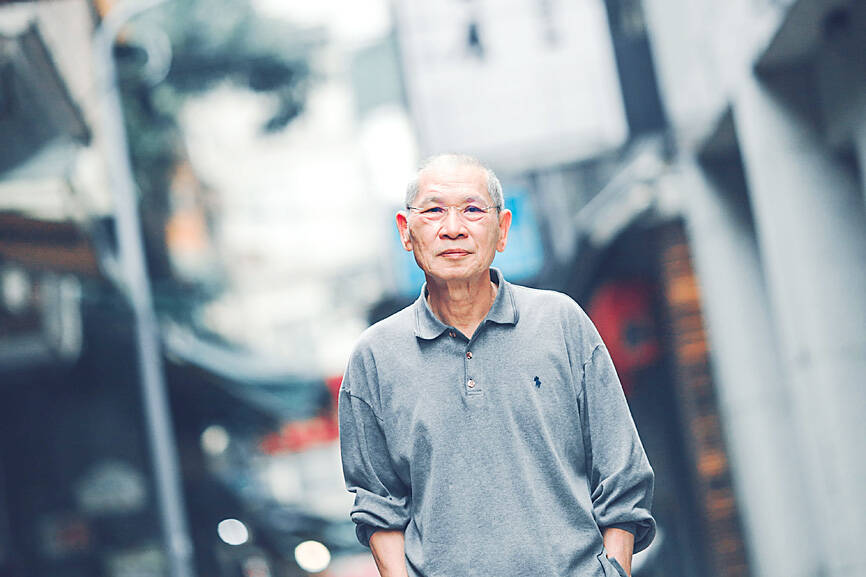
Taiwan Literature Awards for Books prize winner Chen Lieh, author of The Book of Wreckage, is pictured in an undated photograph. Photo courtesy of Ink Publishing

Chen’s work of prose won the 2023 TLA Annual Golden Grand Laurel Award along with NT$1 million (US$30,957) in prize money after it sailed past 190 other submissions, the annual award’s organizing museum said in a statement.

Chen subtly and deftly depicted the suffering and humiliation that has stayed mostly buried while invoking memories and reflection of the White Terror era, using “plain and complex language to revisit history and his personal experiences,” the statement said.

Chen was sentenced to prison in 1972 for political crimes and spent four years and eight months behind bars.

The book won support from the majority of the judges, who touted Chen’s work as “not only bearing witness to an era, but also set to stun readers from future generations.”

Seven other works were awarded the TLA Golden Book Award, including Bullets are the Remaining Life (子彈是餘生) by Tsao Sheng-hao (曹盛濠, or his pen name, “寺偉哲也”), The Lost River (沒口之河) by Huang Han-yau (黃瀚嶢), and Late Night Patrol of the Abandoned God (夜觀巡場 Ia-kuan Sun-tiunn) by Tiunn Ka-siong (張嘉祥).

The other winners of the Golden Book Award were Brother (弟弟) by Chan Wai-yee (陳偉儀, or her pen name, “陳慧”), Here’s to Us, Bottoms Up (我隨意,你盡量) by Ong Chiau-hoa (王昭華), Mooyi (魔以) by Chen Shu-yao (陳淑瑤) and Eyelids of Morning (鱷眼晨曦) by Zhang Guixing (張貴興). Continue reading Book of Wreckage wins Taiwan Literature Award

Indigenous healing

Source: Washington Post (10/22/23)
In Taiwan, finding solace — and identity — in traditional healing
By Brendan Ross

Tribal community members encircle Kulas Umo, a prominent sikawasay, or spiritual healer, in ritual dance and song as he spits rice wine to cleanse the ceremony and commune with ancestral spirits in the village of Fata’an in Taiwan’s Hualien County. (Nathaniel Brown for The Washington Post)

FATA’AN, Taiwan — Kulas Umo lights a cigarette against the fire, takes a short drag, then places it on the low wooden altar inside a hut in the forest. He repeats this routine six more times with six more cigarettes. Then he pours a splash of rice wine into seven small plastic cups set beside the smoldering offerings of tobacco.

Moving to the edge of the hut, Kulas, who goes by his given name as is his tribal convention, brings his hands to his mouth and calls out into the dense green expanse. He is trying to welcome back the ancestral spirits of a man seated at the fire.

The 38-year-old is a spiritual healer marshaling an ancient practice, but he also represents a very recent phenomenon: He is part of a revival of Amis traditional medicine in the Indigenous tribal village of Fata’an.

This is partly about addressing inequalities: Taiwan’s Indigenous communities still lack equal access to modern health care and suffer worse overall health outcomes than their Han Chinese counterparts, who make up about 97 percent of Taiwan’s population. The remainder are from Indigenous groups, of which the Amis are the largest, with about 200,000 people.

But it is also occurring at a pivotal political moment as Taiwan’s government under President Tsai Ing-wen, pushing back against Chinese claims to the island democracy, has increased efforts to support Indigenous politics and culture. Supporting the island’s Indigenous tribes helps prove Taiwan’s historical and cultural distinction from China and adds weight to the government’s ongoing sovereignty claims. Continue reading Indigenous healing

Reel Taiwan

Reel Taiwan: A Celebration of the 30th Anniversary of Women Make Waves International Film Festival (WMWIFF)

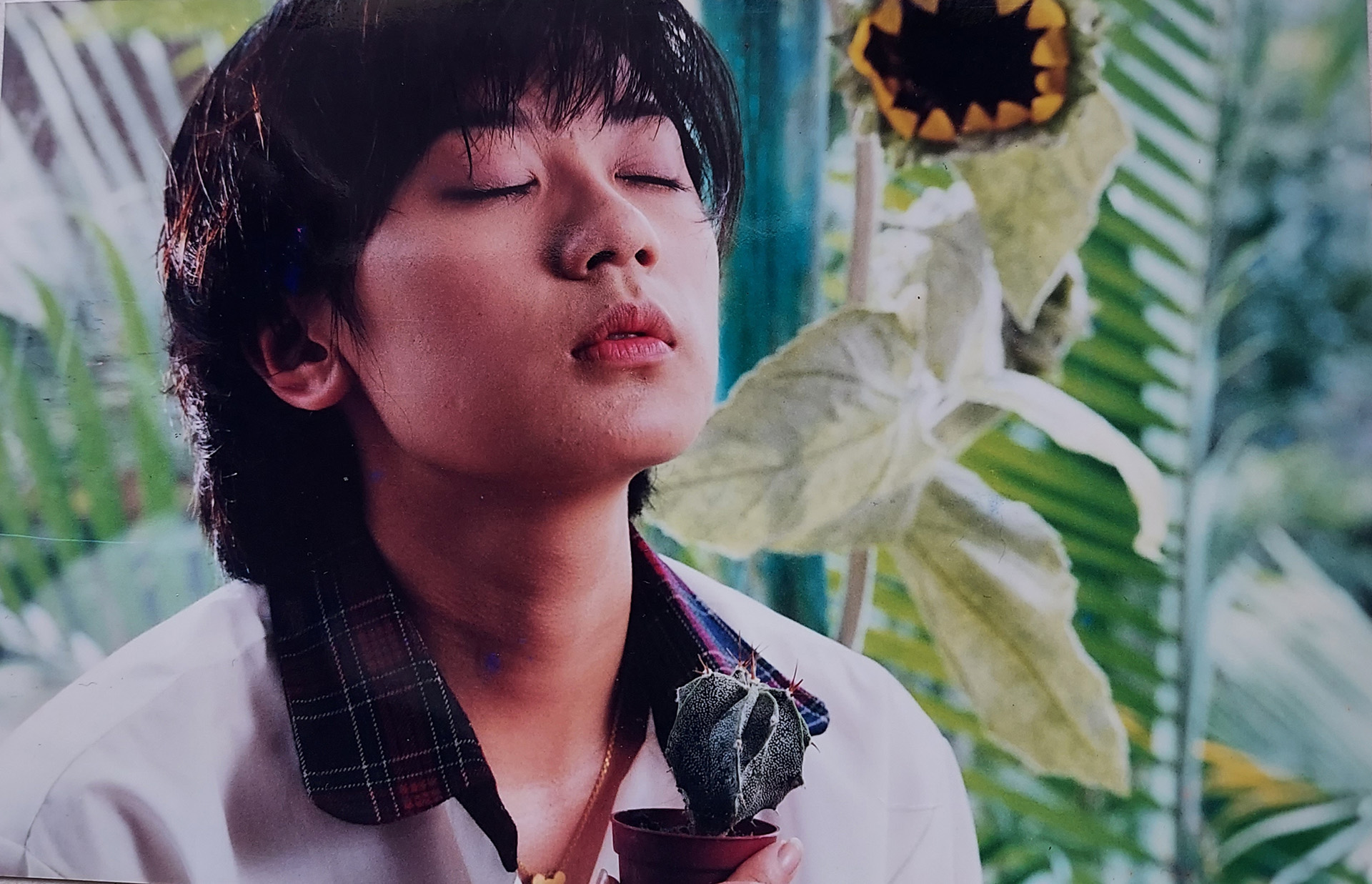
Credit: SPRING CACTUS

NOV. 17 – 19 Download .ics
Co-sponsored by the Center for Religion and Media; Center for Media, Culture and History, NYU
FRIDAY, NOV. 17, 2023, 5:15 PM — 9:00 PM, MICHELSON THEATER, 721 BROADWAY
SATURDAY, NOV. 18, 2023, 3:00 PM — 8:30 PM, MICHELSON THEATER, 721 BROADWAY
SUNDAY, NOV. 19, 2023, 4:00 PM — 7:00 PM, MICHELSON THEATER, 721 BROADWAY

This year marks the 30th anniversary of the Women Make Waves International Film Festival (WMWIFF, Taipei). For three decades, WMWIFF, the largest of its kind in Asia, has promoted and nourished countless women filmmakers from around the world including the Sinophone sphere. This special program (consisting of five fictional, experimental and documentary films) joins the celebrations taking place in Taipei, Paris and elsewhere this fall. The event also provides the happy occasion for a “homecoming” reunion of several filmmakers who studied at Tisch School of the Arts before they launched their fruitful careers as filmmakers, curators, critics, and educators.

The event is co-organized by Zhen Zhang (Director of Asian Film & Media Initiative), Cristina Cajulis (Events Coordinator, Cinema Studies), Yu-shan Huang, and Jane Yu. Special thanks to Women Make Waves International Film Festival and Tingwu Cho. Thanks to Greg Helmstetter and student projectionists for technical support.

This event is free and open to the public. RSVP required. Non-NYU persons will need to show government-issued photo ID for building access.

Wang Wen-hsing dies at 84

Source: Focus Taiwan (10/3/23)
Taiwanese novelist Wang Wen-hsing dies at 84
By Chiu Tzu-yin and Matthew Mazzetta

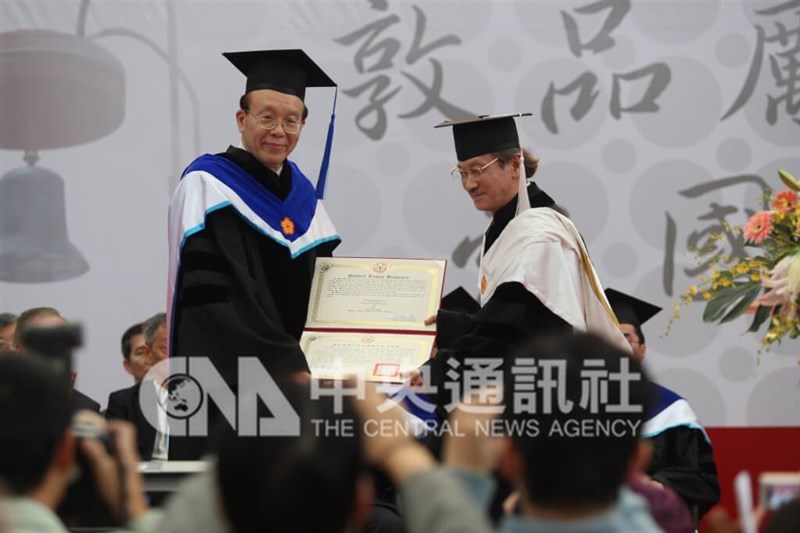
Former National Taiwan University president Lee Si-chen (李嗣涔, left) awarded Taiwanese writer Wang Wen-hsing a certificate of honorary doctorate during a ceremony at the university in 2007. CNA file photo

Former National Taiwan University president Lee Si-chen (李嗣涔, left) awarded Taiwanese writer Wang Wen-hsing a certificate of honorary doctorate during a ceremony at the university in 2007. CNA file photo

Taipei, Oct. 3 (CNA) Taiwanese writer Wang Wen-hsing (王文興), best known for his 1973 novel “Family Catastrophe,” has died at the age of 84.

Wang’s death, from natural causes on Sept. 27, was announced by National Taiwan University’s (NTU) Department of Foreign Languages on Oct. 2, and confirmed to CNA by his wife, Chen Chu-yun (陳竺筠).

According to the Ministry of Culture, Wang was born in Fuzhou City in China’s Fujian Province in 1939, and came to Taiwan with his family in 1946, settling first in Donggang in Pingtung County and then in Taipei two years later.

He studied at NTU in its Department of Foreign Languages, where he was part of a group of talented young writers including Pai Hsien-yung (白先勇), Ouyang Tzu (歐陽子) and Chen Ruo-xi (陳若曦) who founded the magazine “Modern Literature” (現代文學). Continue reading Wang Wen-hsing dies at 84

Love Is a Gun review

Source: The China Project (9/8/23)
‘Love is a Gun’: A spellbinding vision of yearning for freedom
Taiwanese actor Lee Hong-Chi pulls off a remarkable artistic feat in his directorial debut, which premiered at the Venice Film Festival.
By Amarsanaa Battulga

Lulu, in a scene from Love is a Gun

The past comes flooding into the present in Lee Hong-Chi’s (李鸿其 Lǐ Hóngqí) visually arresting mood piece Love Is a Gun.

The Hong Kong-Taiwan co-production premiered earlier this week at Venice Critics’ Week, an independent parallel section of the prestigious Venice Film Festival, running until September 9. It shares titles with a 1994 cryptic erotic thriller starring Academy Award nominee Eric Roberts as a troubled crime-scene photographer, but there the similarity ends.

The characters in Lee’s story, co-written by himself, has some parallels with two other recent Chinese-language films, namely Gaey Wa’r (2021) and Absence (2023), which premiered at Cannes and Berlinale, respectively. Played by Lee himself, Sweet Potato has recently finished a prison stretch for shooting someone while working for a “Big Boss” that he’s never met or talked to. Now making meager earnings by renting umbrellas at the beach, he attempts to break free from the vicious cycle of his past criminal life, only to discover that it isn’t so simple.

Continue reading Love Is a Gun review

What cuisine means to Taiwan identity

Source: NYT (8/8/23)
What Cuisine Means to Taiwan’s Identity and Its Clash With China
Chefs and restaurant owners are using a multiplicity of ingredients and tastes to reflect Taiwan’s roots, shaping a distinct culinary culture.
By Li Yuan (Reporting from Taipei, Taiwan)

A man in a black chef jacket sitting at a table in front of a steaming pot.

Ian Lee at his restaurant in Taipei called HoSu, which means “good island” in the Taiwanese dialect. Credit…Lam Yik Fei for The New York Times

Taiwan is a self-ruling island of 24 million people that is officially known as the Republic of China. Only about a dozen countries recognize it as a nation because China claims it as one of its provinces. Taiwan is called “Chinese Taipei” by international organizations and at the Olympic Games.

The ambiguity of Taiwan’s nationhood contrasts with a growing Taiwanese claim of identity. More than 60 percent of the people living on the island identify as Taiwanese, and roughly 30 percent identify as both Chinese and Taiwanese, according to the latest results of an annual survey conducted by National Chengchi University in Taipei. Only 2.5 percent consider themselves Chinese exclusively.

But what makes them Taiwanese, not Chinese? How will they create a cohesive narrative about their identity? And how do they reconcile with their Chinese heritage?

For many people, it’s through food, one of the things the island is known for, aside from its semiconductor industry. In the past decade or so, restaurateurs, writers and scholars have started to promote the concept of Taiwanese cuisine, reviving traditional fine dining and incorporating local, especially Indigenous, produce and ingredients into cooking. Continue reading What cuisine means to Taiwan identity

Taiwanese Literature as World Literature review

MCLC Resource Center is pleased to announce publication of Lingchei Letty Chen’s review of Taiwanese Literature as World Literature, edited by Pei-yin Lin and Wen-chi Li. The review appears below and at its online home: https://u.osu.edu/mclc/book-reviews/letty-chen/. Normally, our literary studies book review editor, Nicholas Kaldis, would oversee publication of this review, but since he has a chapter in the book, I filled in for him. Enjoy.

Kirk Denton, MCLC

Taiwanese Literature as World Literature

Edited by Pei-yin Lin and Wen-chi Li


Reviewed by Lingchei Letty Chen

MCLC Resource Center Publication (Copyright July, 2023)


Pei-yin Lin and Wen-chi Li, eds. Taiwanese Literature as World Literature London: Bloomsbury Academic, 2022. 232pp. ISBN 9781501381355 (cloth).

The consequences of WWII and the subsequent Cold War exacerbated Taiwan’s long-held peripheral position in the international community. Taiwanese literature, as a result, has stood on the margin of Chinese literature. But that was last century. Now in the twenty-first century, Taiwan has moved into a more prominent position in global geopolitical and economic conflicts, particularly between the US and China, and Taiwanese literature has gained higher visibility through international circulation. In the past few years, we have seen more and more conferences, symposiums, and workshops featuring Taiwan and Taiwanese literature. Thanks also to the controversial notion of Sinophone, which has generated a great number of productive discussions and debates in the last decade or so, Taiwanese literature has attracted unprecedented attention from scholars around the world. With publications such as The Making of Chinese-Sinophone Literatures as World Literature (Hong Kong UP, 2022) and Taiwanese Literature as World Literature, which is under review here, it is not difficult to foresee how “Sinophone,” “world literature,” and “Taiwanese literature” will continue to be entwined in more scholarly work to come.

The edited volume, Taiwanese Literature as World Literature, is published by Bloomsbury Academic under the series Literatures as World Literature. It is not often that we see an Asian/East Asian scholarly work published by Bloomsbury Academic, a niche academic publisher known primarily for its imprints in British and European studies; The Arden Shakespeare and Methuen Drama, for example, are two of its prestigious imprints. A quick browse of its website and we find it has an “Asia Studies” umbrella category. Searching more closely its sub-categories, under East Asia Studies one finds only six titles; but fifty-one results under China studies; and twelve results under Asian Literature. The Literatures as World Literature series has twenty-eight titles, among which Taiwanese Literature as World Literature and Pacific Literatures as World Literature are Asia/East Asia related. Apparently for a niche academic publisher such as Bloomsbury Academic to expand beyond its traditional coverage, tapping into Asian studies and world literature studies is a smart route to go. For Taiwanese literature to have its distinct title in this series is certainly a laudable effort by the two editors, Pei-yin Lin and Wen-chi Li. Continue reading Taiwanese Literature as World Literature review

Taiwan’s MeToo wave

Source: BBC News (6/15/23)
Taiwan sees MeToo wave of allegations after Netflix show
By Frances Mao and Benny Lu, in Singapore and Hong Kong

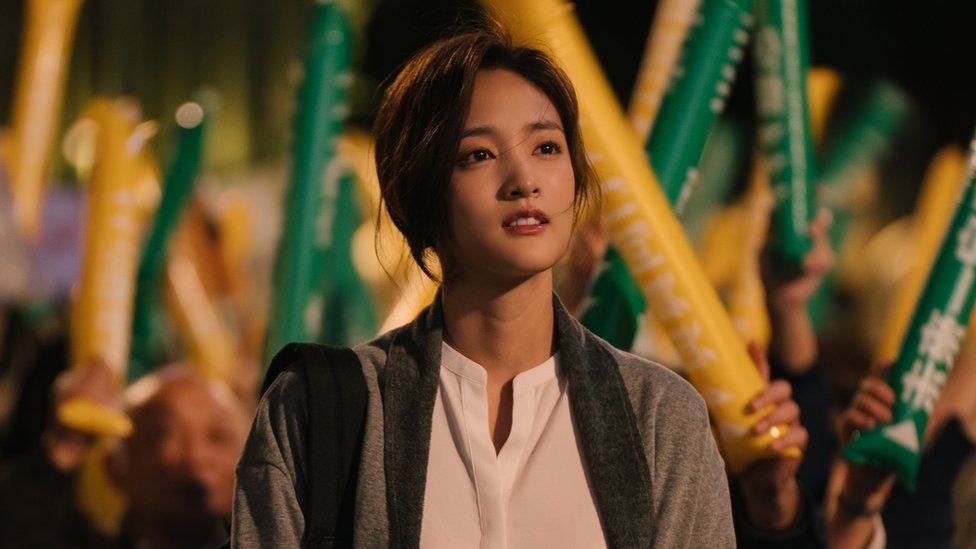
A scene from the TV show Wave Makers starring Gingle Wang (pictured)

A political staffer’s request for help in the Taiwanese show Wave Makers (pictured) has inspired women in real life to speak out

Taiwan is being rocked by a wave of sexual harassment and assault allegations – sparked by a Netflix show which many say has ignited a local MeToo movement. More than 90 people have spoken out in the past fortnight, accusing people across the island.

The allegations at first centred on politics and the ruling Democratic Progressive Party (DPP) – where several senior officials have resigned. But they have spread across Taiwanese society, with allegations being made against doctors, professors, sporting umpires and YouTubers.

On Saturday, a Polish diplomat was accused of sexual assault by a think tank researcher.

For many women, the moment is long overdue in a Taiwanese society otherwise praised globally for its progressive politics and commitment to gender equality.

President Tsai Ing-wen, the island’s first female leader, has apologised and vowed reform.

“Previously we had single cases around sexual harassment, but never in such magnitude,” social commentator Dr Liu Wen from Taiwan’s Sinica Academia told the BBC. “It’s the first time a lot of the underlying issues in different industries are being revealed all at the same time.” Continue reading Taiwan’s MeToo wave

32 New Takes on Taiwan Cinema review

MCLC Resource Center is pleased to announce publication of Ming-Yeh T. Rawnsley’s review of 32 New Takes on Taiwan Cinema, edited by Emilie Yueh-yu Yeh, Darrell William Davis, and Wenchi Lin. The review appears below and at its online home: https://u.osu.edu/mclc/book-reviews/rawnsley/. My thanks to Nicholas Kaldis for overseeing publication of the review.

Kirk Denton, MCLC

32 New Takes on Taiwan Cinema

Edited by Emilie Yueh-yu Yeh, Darrell William Davis, and Wenchi Lin


Reviewed by Ming-Yeh T. Rawnsley 

MCLC Resource Center Publication (Copyright June, 2023)


Emilie Yueh-yu Yeh, Darrell William Davis, and Wenchi Lin, eds. 32 New Takes on Taiwan Cinema Ann Arbor, MI: University of Michigan Press, 2022, xii + 563 pp. + 40 illus. ISBN: 978-0-472-07546-1 (cloth) / ISBN: 978-0-472-05546-3 (paper) / ISBN: 978-0-472-22039-7 (e-book)

It has always been a rewarding experience to read works by Emilie Yueh-yu Yeh and Darrell William Davis. In their Taiwan Film Directors: A Treasure Island (2007), Yeh and Davis took an auteur approach and provided readers with a careful study of several Taiwan-based filmmakers, including Hou Hsiao-Hsien, Edward Yang, Ang Lee, and Tsai Ming-liang. That volume explored Taiwan film directors’ particular styles of image composition and editing patterns, as well as how, from a larger perspective, their artistic trajectories and career developments were related to Taiwan’s social, political, and cultural history. One year later in East Asian Screen Industries (2008), Davis and Yeh adopted an industry-focused approach and articulated new benchmarks set by Japanese, South Korean, and the three Chinese-language cinemas—Taiwan, Hong Kong, and the People’s Republic of China. Their examination of structural features and strategies employed by these five film industries between the 1990s and the 2000s illuminated an emerging trend of “increasing decentralisation, deregulation and regional cooperation” (p. 3). This framework has contributed enormously to our understanding of East Asian screen cultures and talents within the global flow of communications.[1]

In their new volume, 32 New Takes on Taiwan Cinema, published in December 2022, Yeh and Davis team up with co-editor Wenchi Lin and take a conventional approach from the discipline of film studies—that is, a meticulous examination of individual films. As the editors state, their aim is to reveal a wide spectrum of Taiwanese cinematic output in addition to updating the existing literature. Their stated criteria of selection include (1) films that represent different historical settings, genres, auteurs, and formats in the post-war era; (2) films that are less studied in the English language literature; (3) prioritizing films produced in the twenty-first century; (4) films that are readily available for viewing with bilingual subtitles and suitable audio-visual quality; and (5) films that the contributors themselves prefer (p. 2). Based on the above considerations, Yeh, Davis, and Lin offer readers thirty-two original interpretations of films released between 1963 and 2017, arranged chronologically, which together demonstrate a fresh and expansive perspective on Taiwan cinema. Continue reading 32 New Takes on Taiwan Cinema review

Some indigenous people in Taiwan want to drop their Chinese names

F y i — btw, since the genocide, I’ve also dropped my Chinese name i used to have, … in my case, just can’t stand it thinking of those masses of people force-fed Chinese language and force-renamed with Chinese names, in the Uyghur concentration camps …. so I can understand the Taiwan aborigine people who do this. Magnus Fiskesjö <nf42@cornell.edu>.

Source: LA Times (5/2/23)
Some Indigenous people in Taiwan want to drop their Chinese names: ‘That history has nothing to do with mine’
BY STEPHANIE YANG, DAVID SHEN

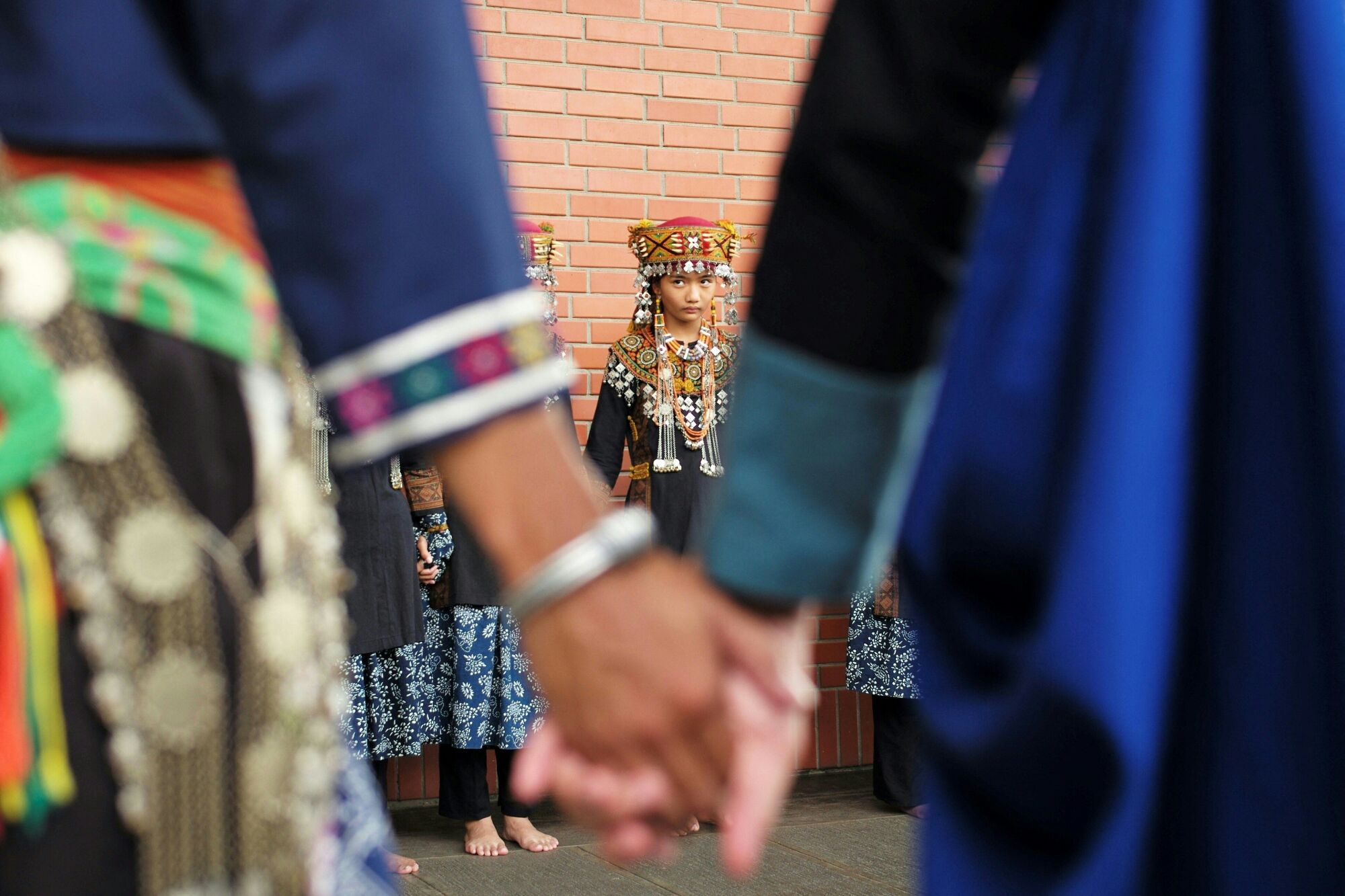
Indigenous performers pose for photos during a traditional annual performance

Indigenous performers in Taipei, Taiwan, pose for photos during an annual traditional performance at the Dr. Sun Yat-sen Memorial Hall on Aug. 20, 2022. (Sam Yeh / AFP via Getty Images)

TAIPEI, Taiwan — The name on his government ID when he was growing up — and how his classmates, teachers and baseball teammates knew him — was Chu Li-jen.

At home, however, he was always Giljegiljaw Kungkuan, or “Giyaw” for short, the Indigenous name bestowed on him by his grandmother.

By the time he was a teenager, he wanted to go by his Indigenous name all the time, as a matter of pride. But his parents worried that abandoning his Chinese name would only cause him trouble in a Chinese-dominated society.

In 2019, he finally made it his legal name with the Taiwanese government after Cleveland‘s MLB franchise — grappling with its own name issues — invited him to spring training. He wanted to ensure that come the next season, the letters emblazoned on his jersey would read: “GILJEGILJAW.” Continue reading Some indigenous people in Taiwan want to drop their Chinese names

China to prosecute Taiwan activist for ‘secession’

Source: BBC News (4/25/23)
China to prosecute Taiwan activist for ‘secession’
China has detained a number of Taiwan-linked individuals in recent weeks
By Kelly Ng, BBC News, Singapore

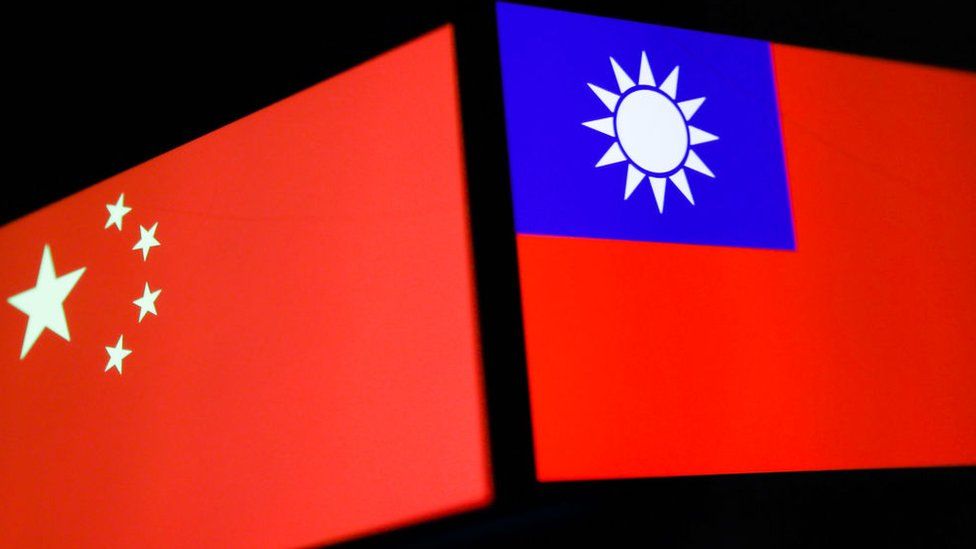
Flags of China and Taiwan on phone screens

IMAGE SOURCE: GETTY IMAGES

China says it will prosecute a Taiwanese man for alleged secession, in the latest move against Taiwan-linked individuals on mainland Chinese soil. Yang Chih-yuan, the founder of a pro-independence Taiwanese political party, was detained in China last year.

In recent weeks China has also detained a book publisher and reporters working for a Taiwan broadcaster.

Taiwan has criticised China’s “arbitrary arrests”, saying they were “severely damaging” to human rights.

The latest case centres on Mr Yang, who was based in Taiwan and had founded the Taiwanese National Party.

The 32-year-old had travelled to China last year for unknown reasons. In August, he was arrested in the eastern Chinese city of Wenzhou on suspicion of “separatism”.

At the time his detention was linked to a Chinese crackdown on “separatists” amid tensions over former US House Speaker Nancy Pelosi’s trip to Taiwan. Continue reading China to prosecute Taiwan activist for ‘secession’