The politics of passing on in China

Source: Medium.com (6/2/17)
The Politics of Passing On: In China, the death of a esteemed comrade is never strictly a private matter.
By David Bandursky
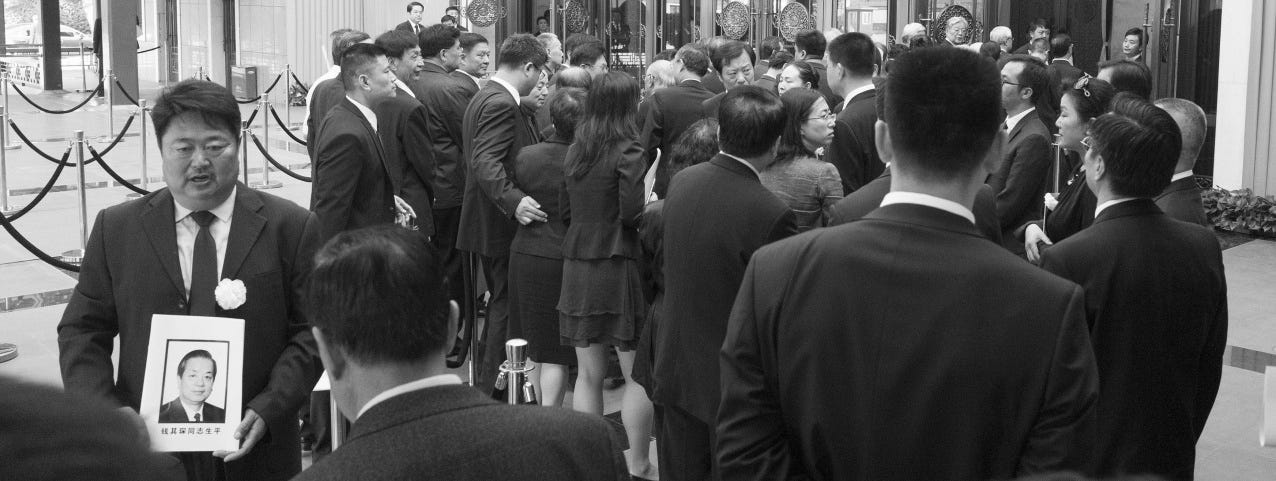
Mourners gather in Beijing on May 18 for the memorial service of former foreign minister Qian Qichen.

When Lux Nayaran, the co-founder of content analytics company Unmetric Inc, fed 2,000 New York Times obituaries into a natural language processing program, he found that most all the people featured, famous or not, had used their talents for good. They had, he said, “made a positive dent in the fabric of life.” Had Nayaran instead run 2,000 obituaries from Chinese Communist Party leaders through his program, he might have found something astonishing — that they had all made more or less identical dents in the stiff fabric of Chinese politics. Continue reading The politics of passing on in China

Billionaire gadfly stares down Beijing

Source: NYT (5/30/17)
The Billionaire Gadfly in Exile Who Stared Down Beijing
点击查看本文中文版
By MICHAEL FORSYTHE and ALEXANDRA STEVENSON

Guo Wengui on the terrace of his Manhattan apartment this month. In January, he began accusing top Chinese officials of graft. CreditJames Estrin/The New York Times

The biggest political story in China this year isn’t in Beijing. It isn’t even in China. It’s centered at a $68 million apartment overlooking Central Park in Manhattan.

That’s where Guo Wengui, a billionaire in self-imposed exile, has hurled political grenades at the Chinese Communist Party for months, accusing senior leaders of graft using Twitter as his loudspeaker. He escalated his attack by claiming that members of the family of China’s second most powerful official, who oversees the country’s anticorruption effort, secretly own a large stake in a major Chinese conglomerate.

The Chinese government responded by unleashing the state-controlled media to enumerate Mr. Guo’s alleged frauds, and asking Interpol to put out a global warrant for his arrest.

But then something unexpected happened. China stood down. The state media campaign against him tapered off. In mid-May, Mr. Guo announced on Twitter that his wife and daughter — previously barred from leaving China — had been allowed to visit him in New York. Continue reading Billionaire gadfly stares down Beijing

Beijing urges Chinese to be responsible with public statements

Source: SCMP (5/24/17)
Beijing urges all Chinese to be responsible with public statements after outcry over overseas student’s speech
By Liu Zhen

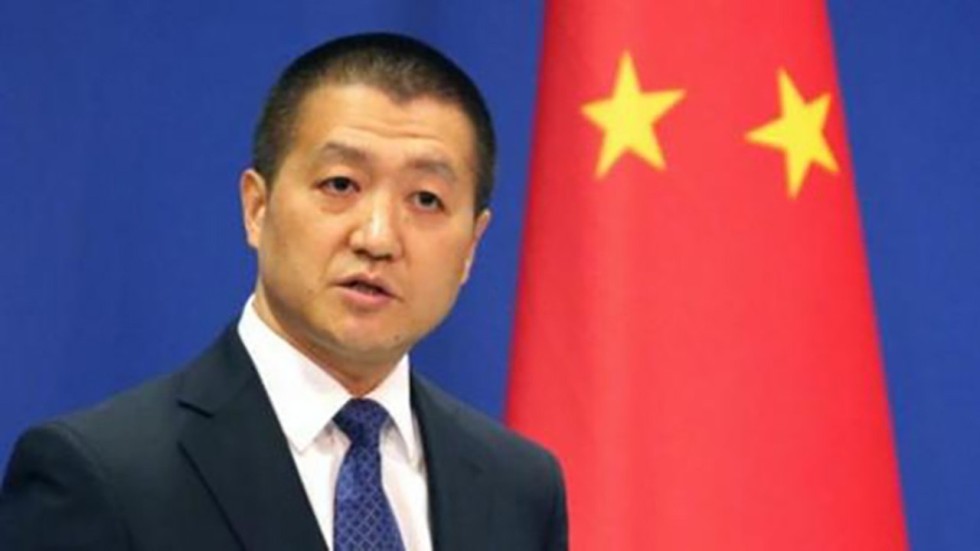
A file photo of Chinese foreign ministry spokesman Lu Kang. Photo: Handout

Beijing has waded into the controversy over a Chinese student who praised America’s fresh air and freedom in a speech at an American university, with the foreign ministry saying all Chinese should be responsible in their public statements.

But ministry spokesman Lu Kang said he had no knowledge of whether the Chinese embassy in the US or the Chinese government had issued any “guiding opinion” over the saga concerning Yunnan-born Yang Shuping. Continue reading Beijing urges Chinese to be responsible with public statements

Can free speech withstand Chinese nationalism

Source: China File (5/25/17)
Can Free Speech on American Campuses Withstand Chinese Nationalism?

The ChinaFile Conversation is a weekly, real-time discussion of China news, from a group of the world’s leading China experts.

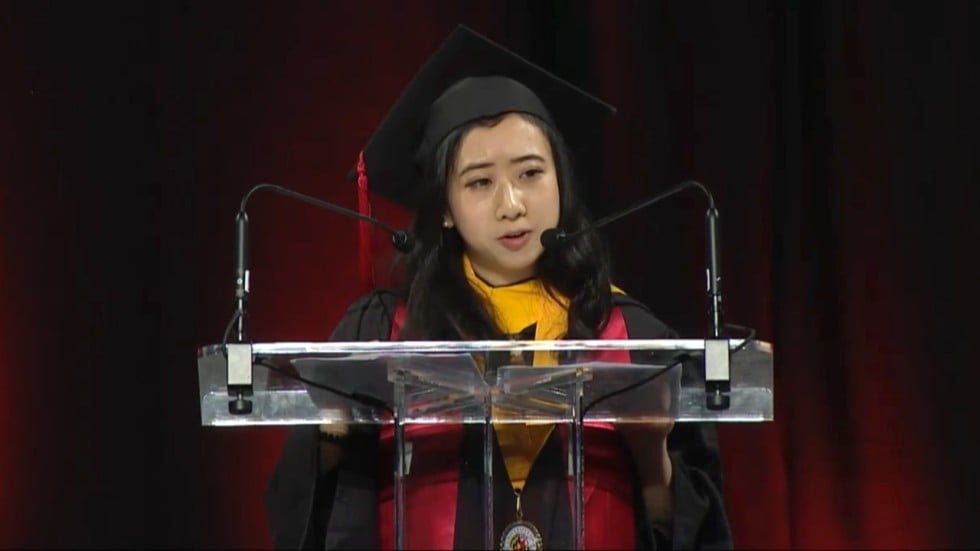
Earlier this week, Kunming native Yang Shuping, a student at the University of Maryland, gave a commencement speech extolling the “fresh air” and “free speech” she experienced while studying in the United States. Video of her speech spread on the Internet, and Yang and her family found themselves under attack by fellow Chinese students in the U.S. and a chorus of critics on Chinese social media, who argued—at times viciously—that she had betrayed her country. Yang then apologized for the speech and asked for “forgiveness from the public.” Why was she attacked? What do her speech and the reaction it engendered reveal (or obscure) about the experiences of Chinese students on American campuses, and what do they portend for the future of academic freedom in the U.S.? To what extent is Chinese nationalism reshaping university life in America? —The Editors

Comments

Yifu Dong

I’m not surprised that Yang Shuping had to apologize in the face of severe nationalistic backlash against her speech. The following is part of the speech I would have given at my graduation, if Yale was not so obviously anti-Chinese to let me freely express myself on the podium during its two-hour Class Day ceremony. I regret missing an opportunity to garner respect from like-minded Chinese netizens and set an example for all future Chinese students who are tasked with the sacred duty of nationalistic speech-giving in paper tiger imperialist regimes. Continue reading Can free speech withstand Chinese nationalism

Curious rise of the “white left” as an insult (2)

I’ve just read the latest part of this “white left” thread today, five days after it appeared on the MCLC list. Didn’t want to look at it first. The post next to it said STOP FEEDING ULTRA-NATIONALISTS or something like that. How do you do that? Makes me think of famine again. Once there was an Orientalism expert, desperately proclaiming there was no great Great Leap famine. [yes, that was intentional. great great great great not so great …like in Dr. Suess] How do you stop feeding them? Seriously. So I wrote two poems. Yes, I write like Yi Sha 伊沙. In a way.

Thank you all very much for your indulgence!

Martin Winter <dujuan99@gmail.com>

GLOBAL TIMES

what are global times?
we are living in global times
who are we
where did we come from
where are we going Continue reading Curious rise of the “white left” as an insult (2)

Taiwan ruling widens political divide with China

Source: Bloomberg News (5/25/17)
Taiwan Gay Marriage Ruling Widens Political Divide With China
By Ting Shi and Chinmei Sung

  • Landmark change faces higher hurdles under one-party rule
  • ‘It’s the system. This is a problem stemming from the system’

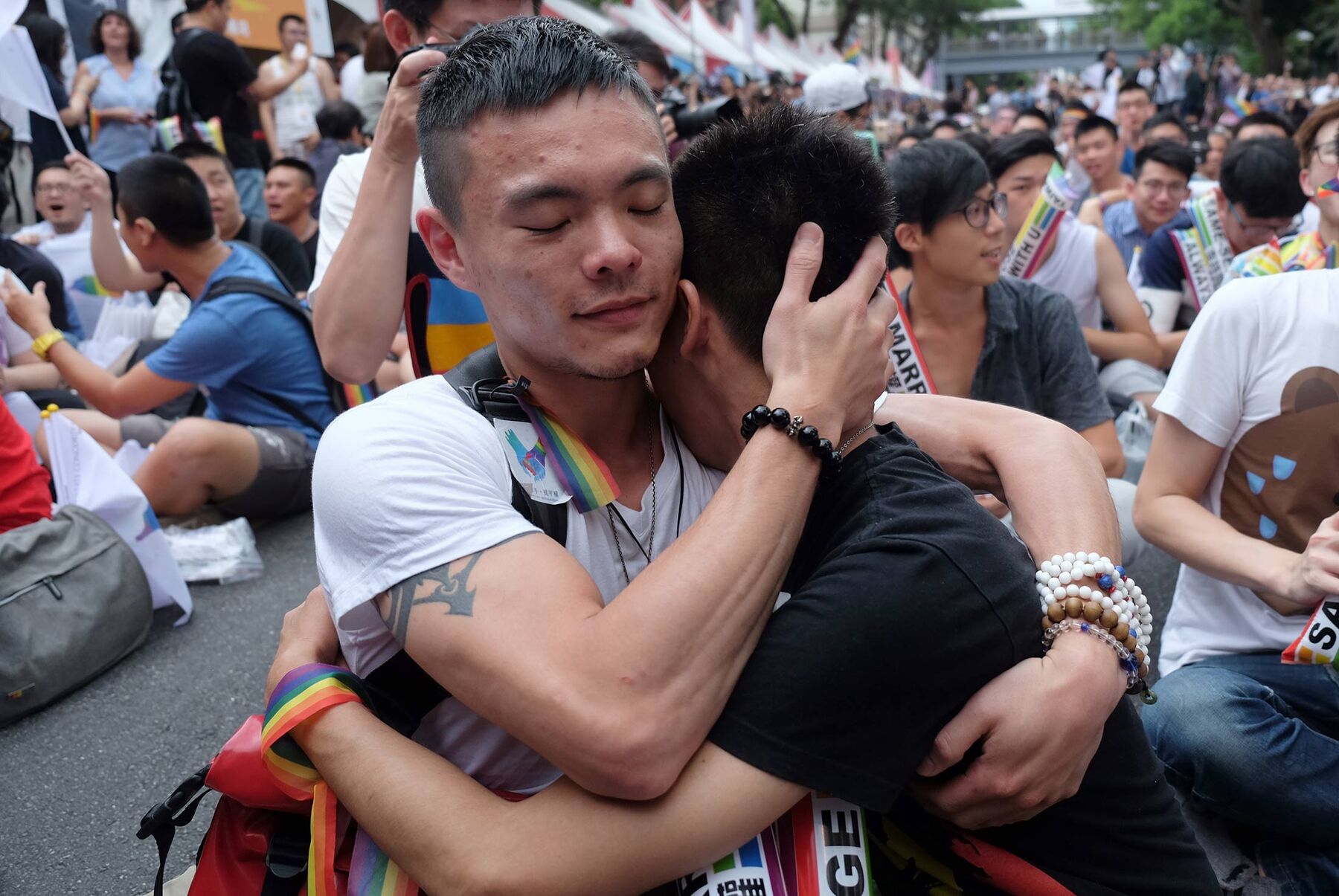
Same-sex activists hug outside the parliament in Taipei on May 24, as they celebrate the landmark decision paving the way for the island to become the first place in Asia to legalize gay marriage.Photographer: Sam Yeh/AFP via Getty Images

Taiwan’s historic court ruling this week did more than make it the first place in Asia to let same-sex couples wed: It also widened the political gap with China.

The decision by Taiwan’s constitutional court Wednesday to legalize gay marriage in two years — if lawmakers don’t do so first — underscored the differences between the democratic island and one-party China, which wants to unify the two sides. The Communist Party controls all branches of government and faces little public pressure to allow same-sex marriage. Continue reading Taiwan ruling widens political divide with China

US universities in China

Source: Asia Society (5/19/17)
Podcast: American Universities in China — Free Speech Bastions or Threat to Academic Freedom?
By Eric Fish

A student walks past the entrance to New York University’s Shanghai campus. (Eric Fish/Asia Society)

The Asia In-Depth podcast provides deep audio analysis on everything from China’s economy to “honor killing” in Pakistan. See the complete episode archive.Learn more

In 1986, Johns Hopkins University opened a study center in Nanjing University, making it the first American institution of higher education allowed to establish a physical presence in China during the Communist era. Since then, dozens of other institutions have followed suit, armed with guarantees that they can maintain the same standards of free speech and academic freedom that they enjoy in the U.S. … so long as those freedoms stop at the university door. Continue reading US universities in China

journalism professor resignation note goes viral

Source: SupChina (5/26)/17
Journalism professor’s resignation note goes viral

On May 25, Xia Qiong 夏琼, who served as head of Journalism at the School of Journalism and Communication at Wuhan University for 12 years, posted a resignation letter on her WeChat Moments social media feed. The letter was circulated and discussed widely on the Chinese internet. Xia wrote: “During my 12 years serving as the head, I accomplished nothing and made no contributions to the school.” She added: “I asked for the school’s approval of my resignation.”

In a later post, Xia further stated: “After fighting for years against a flawed higher-education administration system that has no respect for teaching, tramples on teachers’ dignity, and undervalues students’ intelligence, I eventually realized that all my efforts are meaningless and of no value… It’s extremely difficult to be a dedicated teacher.”  Continue reading journalism professor resignation note goes viral

Building cultural confidence

Source: Xinhua (5/24/17)
Political advisors discuss building cultural confidence

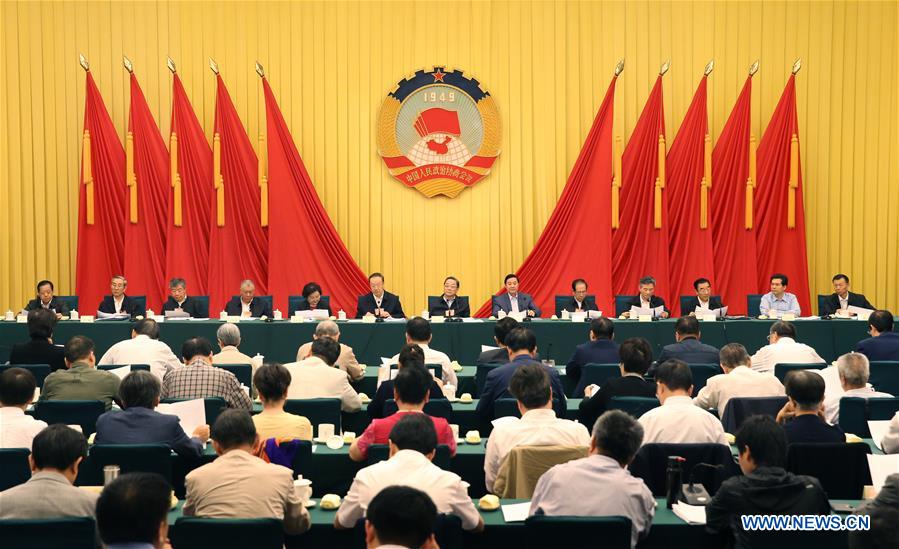
Yu Zhengsheng (C, back), chairman of the National Committee of the Chinese People’s Political Consultative Conference (CPPCC), presides over a meeting on how to build the country’s cultural confidence and tell China stories well, in Beijing, capital of China, May 23, 2017. (Xinhua/Yao Dawei)

BEIJING, May 23 (Xinhua) — Chinese political advisors met on Tuesday to discuss how to build the country’s cultural confidence and tell China stories well.

Yu Zhengsheng, chairman of the National Committee of the Chinese People’s Political Consultative Conference (CPPCC), the top advisory body, chaired the meeting. Continue reading Building cultural confidence

Stop feeding the egos of China’s cyber-nationalists (1)

Thanks. This was a refreshing take, on the tragic incident with the harassment of the Chinese student in Maryland.

I sympathize with the suggestion not to help spread the vitriol. However, it may not be like this SCMP contributor seems to assume, that “patriotic” campaigns like this is all done by actual extremists, who are the ones responsible for the “cesspools on the internet” that we should  ignore. I think it may be more serious than that.

Sure, many real-life ultranationalists feel compelled to join, or people are caught up in this “Red Guard”-style, — about these real-life people, see also http://chinadigitaltimes.net/2017/05/badiucao-yang-shupings-face-mask/; http://www.bbc.com/news/world-asia-39996940, http://www.bbc.com/news/av/world-asia-china-40021588/chinese-student-causes-uproar-with-us-graduation-speechhttp://www.bbc.com/news/av/world-us-canada-40021488/maryland-campus-on-furore-over-china-democracy-speech, and https://www.nytimes.com/2017/05/23/world/asia/chinese-student-fresh-air-yang-shuping.html).
Continue reading Stop feeding the egos of China’s cyber-nationalists (1)

Stop feeding the egos of China’s cyber-nationalists

Source: SCMP (5/25/17)
My Take: Stop feeding the egos of China’s rabid cyber-nationalists
Online rants about a Chinese student’s comments about the US and an actress’ dress are not worth paying attention to: don’t give them the oxygen of publicity
By Alex Lo

Yang Shuping, a graduate student at the University of Maryland in the United States, who praised United States’ fresh air and freedom of speech has been forced to apologise after she was slammed as a liar and told to stay in America by nationalistic netizens. Photo: Handout

China’s army of cyber-nationalists really doesn’t leave much room for discussion or celebration of the nation. A mainland student in the United States making a few complimentary statements about her host country in her graduation speech has been angrily denounced on the internet for belittling her motherland. Meanwhile, actress Xu Dabao was rounded on for walking on the red carpet at the Cannes Film Festival with a dress with a design that mimics the national flag. Continue reading Stop feeding the egos of China’s cyber-nationalists

One Belt, One Road, Total Corruption

This is Scott Savitt’s translation of an essay by Chang Ping on Xi Jingping’s “one belt, one road” initiative. The original Chinese version appeared on the Deutsche Welle website here and the translation will appear on the China Change site. We thank Scott for sharing this with the MCLC community. — Kirk

一带一路一腐败
One Belt, One Road, Total Corruption
by Chang Ping 长平

缺乏民主监督的”一带一路”就是一个腐败机制。

“…the lack of democratic supervision of ‘One Belt, One Road’ is a mechanism for corruption.”

上帝说,要有光,于是就有了光。习近平说,要搞个”世纪工程”,于是就有了”一带一路”。刚刚在北京举行的一个盛会上,习近平宣布,中国将投资数千亿美元,在60个国家里主导桥梁、铁路、港口和能源建设。这一被称为”一带一路”的计划涉及全球60%以上的人口,号称将改变全球政治经济秩序,可谓史上由单个国家发起的最大规模的海外投资行动。

God said: “Let there be light,” and then there was light. Xi Jinping said: “A ‘Project of the Century’ must be undertaken,” and then there was “One Belt, One Road.” At the just-completed summit in Beijing, Xi Jinping announced that China will invest hundreds of billions of U.S. dollars in 60 countries to lead in the construction of bridges, railways, ports and energy projects. This venture is known as “One Belt, One Road,” and involves more than 60 percent of the world’s population. It’s projected to transform the global political and economic order, and can be said to be the largest overseas investment project undertaken by a single country in history. Continue reading One Belt, One Road, Total Corruption

Xiamen University Malaysia

Source: Caixin (5/15/17)
First-Ever Overseas Campus by a Chinese University Taps Into Belt and Road Opportunities
By Ma Yanyan and Li Rongde

Xiamen University Malaysia Campus, in the country's Selangor state, is the first overseas campus to be set up by a renowned Chinese university and the first Chinese university branch campus in Malaysia. Photo: Xiamen University Malaysia Campus

Xiamen University Malaysia Campus, in the country’s Selangor state, is the first overseas campus to be set up by a renowned Chinese university and the first Chinese university branch campus in Malaysia. Photo: Xiamen University Malaysia Campus

(Beijing) – Construction at the first-ever overseas campus built by a Chinese university, Xiamen University Malaysia, is nearing its halfway mark.

The school says it has tapped into opportunities created under the Belt and Road Initiative, and had enrolled nearly 2,000 students by the end of April. Continue reading Xiamen University Malaysia

China’s Trojan Horse (3)

With appreciation and mutual due respects –

As stand-alone points, it is difficult to disagree: corporate influence does not justify Chinese state influence; your concerns are mine too.

But there is always a larger context. Our social reality is one that is stratified by forces and phenomena of different orders of magnitude/scale, that entail varying degrees of significance in their implications. The article conveniently ignores the context and as such, wittingly or otherwise, fails to capture the fuller picture. Certainly, there’s no connecting of dots.

While such tunnel-vision has its benefits for micro-analysis, they come at great cost to more complete analysis. Looking at matters so parochially, it becomes easy to lose sight of their whys and wherefores, and to inflate their seriousness. And so it is seems with the controversy over Confucian Institutes. Becoming the author’s single-issue obsession (specialisation?) of analysis, it has led to the charge that they are a “Trojan horse subverting US higher education.” No hyperbole? As an observer, the sense I get is of a tremendous fear of the outside. It’s difficult not to detect Cold War ideological overtones. Continue reading China’s Trojan Horse (3)

China’s Trojan Horse (2)

With all due respect, — I think you are conflating things that we should take care to differentiate.

The “privatisation” of higher ed with external funding from companies and the like, is one thing; it can of course be debated, including how it may, as you suggest, have paved the way for targeted investment from the Chinese government. But Chinese government interference building on such investments is another thing. One does not justify the other, corporate influence does not justify Chinese government interference.

Also, to identify the threat to academic freedom and freedom of expression from Chinese government interference is not xenophobia, or fearmongering — terms which would suggest it is unreal. But it is very real — it’s widely documented, and even directly admitted by that government — and should not be obscured.
Continue reading China’s Trojan Horse (2)