Gun ownership in the PRC?

Query about gun ownership in the PRC:

This “Tensions over dancing grannies” article mentions a Beijing man owning a shotgun, and Mr. Mo’s air rifle. My in-laws in Hailin, Heilongjiang have a small (‘old fashioned’ with wood stock, not automatic) 22 caliber rifle. Do any list members know about gun culture–laws, stores, clubs, hunting, government attitudes toward citizen gun possession, etc.–in China?

Nick Kaldis <nkaldis@gmail.com>

Tensions over ‘dancing grannies’

Source: Sinosphere, NYT (3/11/16)
One of China’s ‘Dancing Grannies’ Is Shot as Tensions Boil Over
By CHRIS BUCKLEY

Women dancing late at night near a residential compound in Beijing. CreditGreg Baker/Agence France-Presse — Getty Images

BEIJING — With the din they make, they are often mocked and berated and worse. Hounds have been loosed on them. Rocks flung, water sprayed. They have been pelted with excrement, more than once. And yet they shimmy on.

China’s “dancing grannies” are a tough bunch.

They are the middle-aged and elderly outdoor dance enthusiasts who crowd sidewalks, parks and squares. They include quite a few men, despite their popular name, and have become a colorful fixture in towns and cities, swirling, skipping and swaying in happy rows, during the mornings and often late into the night. Continue reading Tensions over ‘dancing grannies’

No Western values (except marxism) in the classroom

Source: China Real Time, WSJ (3/10/16)
Chinese Official: No Western Values in the Classroom … Except for Marxism
By Te-Ping Chen

In this photo taken Wednesday Feb. 24, 2016, Chinese students pass above their heads a flag of the Chinese Communist Party at a middle school in Chongqing. Associated Press

A Chinese government minister’s defense of ideology in the classroom has ignited a frenzied online debate over what it means to keep Western values out of the country’s schools.

Last year, education minister Yuan Guiren attracted controversy when he declared that Chinese professors should be on guard against the infiltration of Western ideas and avoid using teaching materials that “disseminate Western values.”

At a press conference Thursday, The Wall Street Journal asked Mr. Yuan if he could clarify his definition of Western values that he found problematic, given that Marxism, one of the foundations of Chinese Communist Party thought, originated in the West. The Journal also asked whether Mr. Yuan could offer any details on what the ministry was doing to manage materials containing Western values. Continue reading No Western values (except marxism) in the classroom

Rising cost of a bride

Source: BBC News (4/5/16)
The rising cost of a Chinese bride price

Chinese brides are in high demand

Chinese brides are in high demand. Getty Images.

A shocking, albeit unverified, story has been making the rounds on Chinese social media, highlighting concerns over the traditional practice of paying a bride price.

It was a tale that resonated with many Chinese people. A local station ran a story about a man who wanted to marry his pregnant girlfriend. But when he wasn’t able to afford a payment of more than £20,000 (about $30,000), the woman’s father put an end to any talk of a prospective wedding – and forced his daughter to get an abortion. Continue reading Rising cost of a bride

Films about migrants in Guangdong (10-12)

Ai Xiaoming’s 開往家鄉的列車/The Train To My Home Town documents the botched handling of migrant workers stuck at the Guangzhou Train Station on the eve of New Years’ in 2008. As with all of her films, very powerful.

The link can be found here:

http://youtu.be/LK79kMqLP08

Kevin Carrico <kjc83@cornell.edu>

====================================

If your student is interested in doc films, Dreamwork China is about migrant workers in Shenzhen and the PRD more broadly, and focuses on interviews as well as a portrait of migrant rights advocacy efforts by two Italian scholar-filmmakers (Facchin and Francheschini). Their photography and multi-media work in conjunction with the film is quite good too:

http://www.dreamworkchina.tv/en/

Jenny Chio <jenny.chio@emory.edu> Continue reading Films about migrants in Guangdong (10-12)

Films about migrants in Guangdong (1-9)

Thanks to all who responded to my query. FYI, below find a sampling of the responses.–Kirk

There are two films might be of your student’s interest: Zhang Liang’s Working Girls in Special Economic Zone (特区打工妹, 1990) and Tang Xiaobai’s Perfect Life (完美生活, 2008).

Fanghao Chen <fanghaochen@wustl.edu>

=============================

Maybe your student is only interested in fictional films, but if he or she is also consulting documentaries, Lixin Fan’s Last Train Home is a must-see.  The family Fan focused on had roots in Sichuan and worked in Guangzhou.

Andrew Clark A<aec@raggedbanner.com>

=============================

Does Fruit Chan’s Durian Durian  fit the bill?

nick kaldis <nkaldis@gmail.com>

============================= Continue reading Films about migrants in Guangdong (1-9)

Films about migrants in Guangdong?

Dear List,

I’m posting this query on behalf of a student in my graduate Chinese film course. Can anyone suggest titles of Chinese feature films about migrant workers going to Guangzhou or Guangdong province from other parts of the country. I’m aware of several films about migrant workers in other parts of China, but not Guangzhou/Guangdong. I’d be grateful for your suggestions.

Kirk <denton.2@osu.edu>

Pre-crime

Source: Bloomberg Businessweek (3/3/16)
China Tries Its Hand at Pre-Crime
Beijing wants to identify subversives before they strike.
By Shai Oster

750x-1

Illustration: Jay Daniel Wright for Bloomberg Businessweek

China’s effort to flush out threats to stability is expanding into an area that used to exist only in dystopian sci-fi: pre-crime. The Communist Party has directed one of the country’s largest state-run defense contractors, China Electronics Technology Group, to develop software to collate data on jobs, hobbies, consumption habits, and other behavior of ordinary citizens to predict terrorist acts before they occur. “It’s very crucial to examine the cause after an act of terror,” Wu Manqing, the chief engineer for the military contractor, told reporters at a conference in December. “But what is more important is to predict the upcoming activities.” Continue reading Pre-crime

Death and despair in the rustbelt

Source: Bloomberg Businessweek (3/1/16)
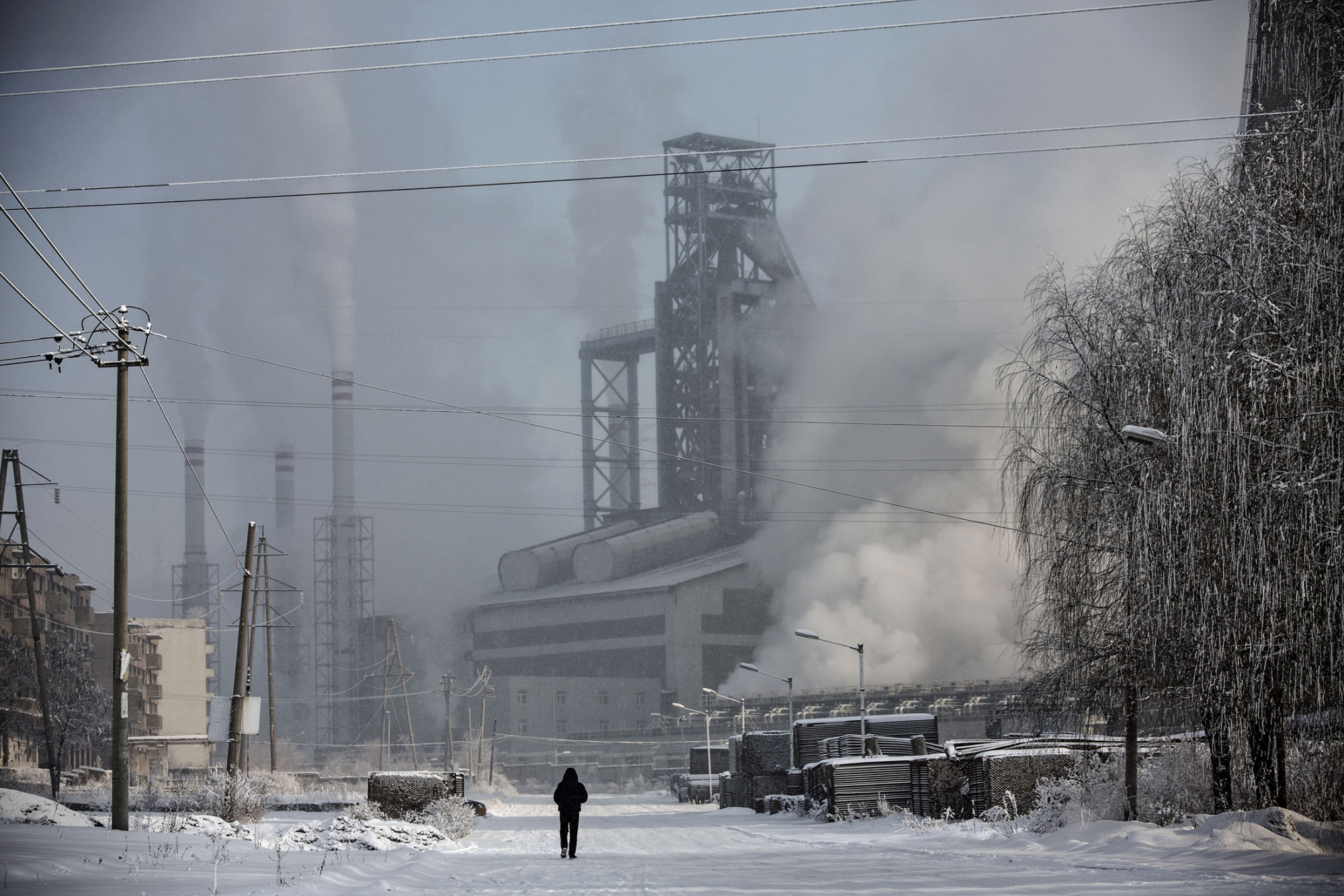
Death and Despair in China’s Rustbelt
By Bloomberg News

Death and Despair in China's Rustbelt as Xi Reforms State Firms

Photographer: Qilai Shen/Bloomberg

In a snow-covered valley in northeast China, an hour from the North Korean border, a street with brightly-painted apartment blocks hides a story of fear and anger as dangerous to the country as its rollercoaster stock market or sliding currency.

The frozen alluvial river plain that was once at the forefront of the Communist Party’s first attempt to build a modern economy has now fallen behind, leaving a valley of brutal murder, protests, anger, suicide and regret. Continue reading Death and despair in the rustbelt

Cyber warriors spar of Taiwan

Source: Reuters (3/3/16)
Cyber warriors spar over Taiwan’s relations with China
By JOSEPH CAMPBELL and FABIAN HAMACHER

A hacker, who requests not to have his name revealed, works on his laptop in his office in Taipei July 10, 2013. REUTERS/Pichi Chuang

A hacker, who requests not to have his name revealed, works on his laptop in his office in Taipei July 10, 2013. REUTERS/PICHI CHUANG

Rappers in China and Taiwan are among the combatants squaring off in cyberspace after a landslide election win for the island’s independence-leaning party fanned Beijing’s fears that it could renew a push for sovereignty.

Taiwan’s Democratic Progressive Party (DPP) won presidential and parliamentary polls in January, reviving China’s concern that the self-ruled island might be emboldened to seek formal independence.

DPP leader and president-elect Tsai Ing-wen says she wants to maintain the status quo and peace with China, but that has not deterred Chinese internet users from airing critical views on social media such as Facebook, provoking sharp responses in Taiwan. Continue reading Cyber warriors spar of Taiwan

Cultural Revolution at 50, part 2

Here’s Part Two of the conversation with Denise Ho, Fabio Lanza, Yiching Wu, and Daniel Leese on the Cultural Revolution. Part One was posted on 2/24.–Kirk

Source: LA Review of Books (3/2/16)
THE CULTURAL REVOLUTION AT 50 — A Q&A WITH FOUR SPECIALISTS (PART TWO)
By Alexander C. Cook

Red_Guards

[Editors’ note: This is the second of a two-part interview Alexander C. Cook conducted with four specialists in the study of China’s Cultural Revolution. We will have at least one more post related to this year’s anniversary of the Cultural Revolution, in the form of a list of suggested readings that flags recommended books, most of which deal with issues discussed in this two-part interview.]

ALEXANDER C. COOK: We left off last time talking about the culture of the Cultural Revolution. Of course we know about the Little Red Book of quotations at the center of the Mao cult, and also the famous model works that were meant to represent the new revolutionary culture. But Yiching Wu also mentioned that artistic and literary works of the period were both more diverse and more successful that we have usually acknowledged.

DENISE Y. HO: In the past, Cultural Revolution culture has been easy to dismiss. Despite Western fascination will objects that we might call “Mao kitsch” — buttons, statues, and posters — and Chinese nostalgia for Cultural Revolution music or plays, we have written off these cultural products as “just propaganda,” or not really culture at all. Recent scholarship has tried to change this view. One historian has suggested that the Communist Party created its own political culture, and that this was a key source of its legitimacy. Others have examined the art and music to show how Cultural Revolution culture was a modernization of both Chinese and Western traditions, part of a much longer project. Still others have focused on audience reception of these works, which could produce meanings beyond their propaganda messages. Continue reading Cultural Revolution at 50, part 2

Sexual revolution

Source: BBC News (2/27/16)
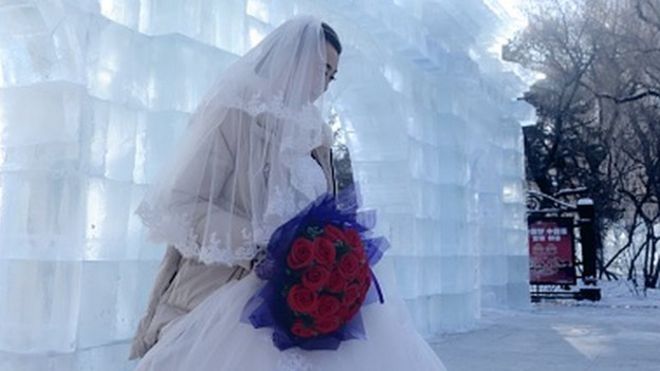
China’s high-speed sexual revolution
By Sarah Buckley

Chinese couple kissing

Straight Talk

Source: China Daily (2/24/16)
A history of change in the words of those who lived it
By Mei Jia (China Daily)

A history of change in the words of those who lived it

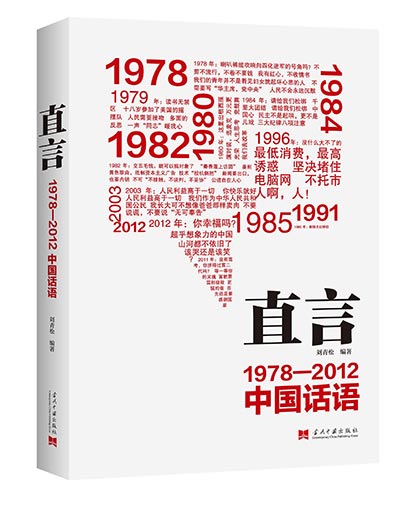
Straight Talks: Chinese Social Discourses from 1978-2012, compiled by Liu Qingsong. [Photo provided to China Daily]

For readers like Zhang Qin, born in the 1990s, it’s news that in 1978 there was a movement against flared trousers. Teachers would then catch the offenders and cut off the “extra” cloth in an effort to keep the young away from “bourgeois corruption”, symbolized by such “weird” fashion.

And till March that year, quotes by Karl Marx, Friedrich Engels, Vladimir Lenin, and Mao Zedong had to be printed in bold while published in newspapers.

It was Deng Xiaoping who put a stop to the practice.

“I know how dramatic the changes were in 1978, the start of the reforms and the opening up, but there were so many details about our recent history that I did not know,” says Zhang.

Zhang’s comments were in relation to a 346-page book, Straight Talks: Chinese Social Discourses from 1978-2012, which has grabbed her attention. Continue reading Straight Talk

Beida graduate reports on village problems

Here’s an interesting report in Chinese by a Beida graduate who returned to his native Luling, in Jiangxi, and was shocked by the changes he saw: the absence of age-old village traditions, the pursuit of money above all else, and poor education for children.–Kirk

Source: China Youth Daily (2/19/16):

一位北大社会学毕业生的返乡报告
杨仁旺(人大附中西山学校教师,毕业于北京大学社会学系) 《 中国青年报 》( 2016年02月19日   12 版)

我的老家在江西庐陵,这里是欧阳修故里,山清水秀,人杰地灵;这里也是革命老区,星星之火,在此燎原。

我生于斯,长于斯,出于对这片故土的热爱,从北大毕业后,曾满怀着一腔热血返乡从教,算是对这片热土的一点点反哺。后来回京工作,故乡依旧萦绕心头,几乎每年春节我都尽量返乡探亲访友。

由于工作的缘故,我最近两年的春节都是在国外度过的。今年一放寒假我便匆匆赶回老家。其间的所见所闻,让我惊讶于故乡的面貌变化之大,远超我的想象;有些变化,甚至令我不寒而栗。虽然之前看到过不少“返乡日记”之类的文章,描绘乡村凋敝的景象,也读过作家梁鸿的《中国在梁庄》这类纪实文学作品,对中国乡村的剧变有一些感性的认知,然而当自己回到故乡,直面家乡的面目全非时,心头依然涌起巨大的悲凉。 Continue reading Beida graduate reports on village problems