Wukan crushed

Source: BBC News (9/13/16)
China’s protest village of Wukan crushed
By Stephen McDonell, BBC News, on the outskirts of Wukan

Villager Wei Yonghan makes a speech before assembled Wukan villagers, who are demanding justice for a series of land grabs and for the release of their elected village chief Lin Zuluan, who was arrested by authorities, in the southern province of Guangdong, China June 20, 2016.

REUTERS: Image caption; Villagers in Wukan have been protesting for months

They came at three o’clock in the morning and started smashing in doors to arrest those seen as leaders but it was never going to be straightforward for the Chinese authorities to retake Wukan.

The footage sent out to media outlets, including the BBC, appears to show a street battle that came with the breaking of dawn. Continue reading Wukan crushed

Official tributes to Mao subdued

Source: China Real Time (9/9/16)
Official Tributes to Mao Subdued on 40th Anniversary of His Death
Government policy dictates that past leaders’ birthdays, rather than the anniversary of their passing, are celebrated

On the fine-arts end of the Mao-appreciation spectrum, portraits of late chairman at the opening of an exhibition of Mao-related art in Beijing this month.

On the fine-arts end of the Mao-appreciation spectrum, portraits of late chairman at the opening of an exhibition of Mao-related art in Beijing this month. THOMAS PETER/REUTERS

Four decades after Mao Zedong died, the dictator’s life is being marked with solemn pilgrimages, online braised-pork tributes — and little official fanfare.

Chinese government policy dictates that past leaders’ birthdays, rather than the anniversary of their passing, get celebrated, and official notice of the date has so far been muted.

In Mao’s hometown of Shaoshan, thousands of pilgrims are arriving to pay tribute and lay flowers for him in a public square, said Li Wentao, who works for a local history and e-commerce website devoted to Mao. For those unable to go in person, she said the site is also encouraging people to send virtual chrysanthemums, cigarettes and dishes of red-braised pork (one of Mao’s favorites) via a special platform they’ve built online. Continue reading Official tributes to Mao subdued

Silencing the echoes of Tiananmen

For the interest of the MCLC list: An online article on how Tiananmen is not remembered:

Silencing the Echoes of Tiananmen. By Louisa Lim. World Policy Journal 33.3 (2016), 6-11. http://wpj.dukejournals.org/content/33/3/6.full

–forwarded by Magnus Fiskesjö <nf42@cornell.edu>

ps. –It reminds me that neurology researchers are developing new methods for erasing and replacing memories. Currently it is done in mice (“Memory Hackers. Scientists are learning how we can edit memories—and delete our worst fears.” PBS NOVA, February 10, 2016. http://www.pbs.org/wgbh/nova/body/memory-hackers.html), with a view to offering helpful therapies for people with phobias, and such. But, once developed, such new methods might also be deployed on people so they forget what the powers-that-be want them to forget, in China and elsewhere. In such a future, the current Chinese propaganda and censorship techniques for inducing “national amnesia” on a massive scale — as Louisa Lim discusses in this article on China — might come to seem too laborious, and obsolete, — as would the current techniques for torturing prisoners to make them parrot lies on TV. A simple memory-replacing therapeutic session might do it. Is this our Zombie future, we can ask.

Lam Wing-kee’s ordeal in his own words

The original account in Chinese was published here: https://theinitium.com/article/20160803-hongkong-opinion-cwbbookstore/

Kirk

Source: Hong Kong Free Press (9/11/16)
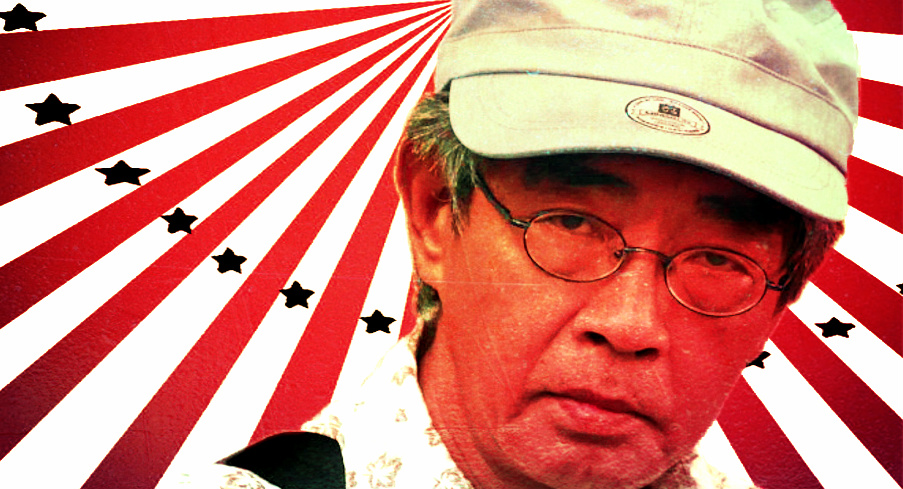
The Missing Bookseller: Lam Wing-kee’s ordeal, in full and in his own words

Below is a full translation of previously missing bookseller Lam Wing-kee’s own account of his disappearance from Hong Kong and detention in China. Lam, the founder and later manager of Causeway Bay Books, was one of the five booksellers who went missing last year.

lam wing kee

As I drew apart the curtains, light spilled abruptly into the room. The clouds curled flatly against the horizon, pressing Lei Yue Mun into a small lump. The sky and the sea merge. There are a few boats on the sea. The elegant coastline is adorned by a few dark green hills. What used to be a beautiful landscape was destroyed by the landfills across the shore. Through the corner of my eye, the slopes of the hills resembled torn wounds, revealing lakes of sludge. The dozen warehouses or so and the two or three car factories beneath it seemed to wall the bay up into a typhoon shelter. The cranes of the pontoons seemed to stretch through each of the weatherproof plastic green tarps towards the sky. Next to the barges were small boats and jetties. A few trawling ships were parked across the narrow aqueducts, their sides striped in black and white; the sun was setting, but they were still glimmering. Continue reading Lam Wing-kee’s ordeal in his own words

Hu Shigen thought

Source: China Change (9/11/16)
What Is Hu Shigen Thought and the ‘Topple-the-Wall’ Movement Anyway?
By Zhao Xin

“Chinese state media spilled much ink on the “three factors” and “five main proposals” to demonize Hu Shigen, but avoided discussing Hu’s “three stage” roadmap to change. This is because if the 88 million Communist Party members hear about such a moderate and rational roadmap for transition, some of them may very well embrace it, leading to fissures within the ruling clique itself.”

Hu Shigen show trial. Final statement: https://www.youtube.com/watch?v=S920f3k8kmw

HU SHIGEN SHOW TRIAL. HIS FINAL STATEMENT: HTTPS://WWW.YOUTUBE.COM/WATCH?V=S920F3K8KMW

From August 2 to 5, The Tianjin Intermediate People’s Court carried out a four-day so-called “open trial” against Hu Shigen (胡石根), Zhou Shifeng (周世锋), Zhai Yanmin (翟岩民), and Gou Hongguo (勾洪国), where they were charged with subversion of state power. The first two were sentenced to 7.5 and 7 years of imprisonment, while the latter two were given suspended sentences. Their punishments were so severe, on evidence that was so rash and far-fetched, in a trial that was so expedited, that both foreign media and China watchers were outraged. The Chinese activist community called it Beijing’s version of the “Moscow show trials.” Continue reading Hu Shigen thought

New push for Taiwan representation at UN

Source: Sinosphere, NYT (9/8/16)
New Push for Taiwan’s Representation at the United Nations
By KAROLINE KAN

27chinataiwan01-master768

Weight lifter Tan Chi-Chung competed in the Rio Olympics under the banner of “Chinese Taipei,” not Taiwan. A civic group is pushing for Taiwan to be recognized as a country under its own name. Credit: Mike Groll/Associated Press

BEIJING — The 71st session of the United Nations General Assembly opens on Tuesday, and 45 members of the Taiwan United Nations Alliance are heading to New York and other cities in the United States, including Washington, Boston and Philadelphia, to make the case for Taiwan’s representation in the world body.

The Republic of China, on Taiwan, lost the China seat in the United Nations to the People’s Republic of China, on the mainland, in 1971. Since then, Beijing, which claims Taiwan as Chinese territory separated by civil war in the 1940s, has mostly blocked the island’s attempts to join international organizations. Taiwan did compete in the recent Olympics, but as “Chinese Taipei.” Continue reading New push for Taiwan representation at UN

Xi’s authoritarianism (3)

I largely agree with Magnus’s comments, but analysis of the history and development of exhibitions of the terra-cotta warriors may require a bit more nuance (which may be present in Magnus’s 2015 essay, which I haven’t yet read –apologies).

Around the time I viewed the “Son of Heaven: Imperial Arts of China” exhibit (with terra-cotta statues as its centerpiece) in early Spring 1989, my classmates, friends, coworkers (at the Ohio State University library), and professors were enthusiastically following events in Beijing, and equally enthusiastic about the marvelous archeological finds being made in China, then showing in Columbus. As I recall, almost all of these people were in sympathy with and support of the students at Tiananmen. In other words, Westerners, Chinese (both nationals and Chinese-Americans)–most everyone I knew at the time–greatly enjoyed this exhibit without feeling that it aligned them with “Strongman” authoritarianism or that it contradicted or undermined their democratic aspirations.

So, at least based on my experience, I don’t feel that this type of exhibit was in Spring 1989 imbued with “widespread loss of faith in free politics, and a new yearning for Strongmen,” although I don’t doubt that later iterations might play into–and nourish–such “infatuations.”

Nick Kaldis <nkaldis@gmail.com>

Xi’s authoritarianism (2)

It is eerie to read this Bell, an authoritarianist sycophant. I think this sort of sycophancy is a historical type which re-emerges periodically, and so emerges increasingly now, with the current turn to Strongmen, who will sponsor and pay people to do this. Or, people volunteer themselves as sycophants. In both cases, it seems that the more powerful the Chinese state, and its bullying at home and abroad, the more we will see this kind of type stand up for and justify Chinese authoritarianism. In the hands of Westerners it carries a certain racist flavor (in the hint that somehow Chinese are childlike and unfit, and must be kept in chains or they will get out of hand).

But I think far more important is the embrace of the ideology of “unity”, which here underpins the argument. Continue reading Xi’s authoritarianism (2)

Xi’s authoritarianism (1)

This is a response to the Wasserstrom/Merkel-Hess piece posted earlier.–Kirk

Source: The World Post (Huffington Post)
Western Critics of China Need to Avoid a Colonial Mindset
By Daniel A. Bell (Philosopher, Tsinghua University; author “The China Model”)

XIXINXING VIA GETTY IMAGES

BEIJING — Kate Merkel-Hess and Jeffrey Wasserstrom’s thoughtful response to an essay on Chinese politics by WorldPost editor-in-chief Nathan Gardels reminds us of the need to take into account the rich and multifaceted political traditions in China.

From the Spring and Autumn period until the collapse of imperial rule, Chinese thinkers defended a diverse array of Confucian, Legalist, Daoist and Buddhist values, and since then they have also debated political traditions imported from the West, including Marxism, liberalism, anarchism and feminism. It’s a mistake to say that there is only one political tradition in Chinese history and to draw implications for contemporary China based on that assumption. I don’t think Gardels makes this mistake — he refers to a “mainstream view” and allows for the possibility of counter-currents.

Continue reading Xi’s authoritarianism (1)

Xi’s authoritarianism

Source: The World Post (Huffington Post) (9/8/16)
Xi Jinping’s Authoritarianism Does a Disservice to China’s Nuanced Political Tradition
By Jeffrey Wasserstrom (Chancellor’s Professor of History, UC Irvine), and Kate Merkel-Hess (Assistant professor of history and Asian studies, Penn State)

AP

The People’s Republic of China was created by a revolutionary upheaval spearheaded by Chinese Communist Party leader Mao Zedong. The 40th anniversary of his death is Sept. 9 and as it nears, Chinese President Xi Jinping expresses reverence for this radical founding figure, despite the horrendous human misery caused by some of the chairman’s policies — especially the famine-inducing Great Leap Forward. Continue reading Xi’s authoritarianism

Zhang Yimou directs G20 gala

Source: CCTV America (9/1/16)
G20 evening gala opens with entertainment showcase on West Lake

The G20 leaders are in for quite a treat once they all arrive in Hangzhou. A performance Sunday evening will be directed by one of the most famous people in China’s entertainment industry. And something spectacular awaits the G20 leaders in the lakeside town. Actors and directors are gearing up for the evening gala on September 4th, in a showcase what will be an unforgettable view of the magnificent West Lake. Continue reading Zhang Yimou directs G20 gala

Censors scramble after Xi’s G20 speech

Source: Voice of America (9/5/16)
China’s Censors Scramble After Xi’s G-20 Speech
By VOA News

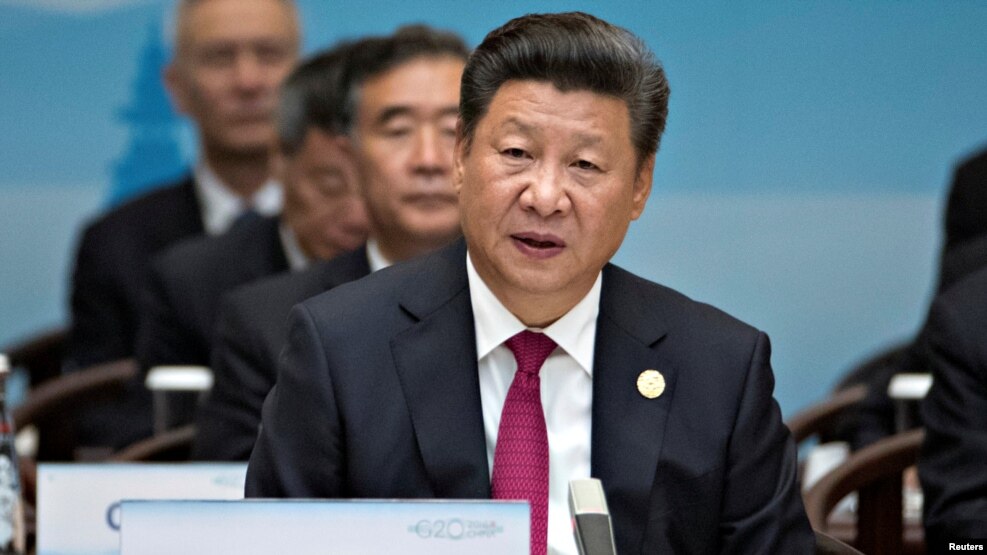
China’s President Xi Jinping speaks during the opening ceremony of the G-20 Summit in Hangzhou in eastern China's Zhejiang province, Sept. 4, 2016.

China’s President Xi Jinping speaks during the opening ceremony of the G-20 Summit in Hangzhou in eastern China’s Zhejiang province, Sept. 4, 2016.

Censors in China are working overtime to scrub the Internet and social media of any mention of a slip-up made by Chinese President Xi Jinping made during a speech in Hangzhou before the Group of 20 Nations leaders’ summit.

In a speech Saturday to the Business 20 (B20) summit, which advises the G-20 leaders on policy decisions, Xi talked about the global economy and quoted an ancient Chinese phrase: “Make the tariff light and the road smooth, promote trade and ease agricultural policy.” [轻关易道,通商宽农]

But because the last character in the phrase for agriculture is very similar to the one for clothes, he ended up saying “taking one’s clothes off” [宽衣] instead of “ease agricultural policy.” [宽农] Continue reading Censors scramble after Xi’s G20 speech

Protest leaders win seats in HK elections

Source: NYT (9/4/16)
In Hong Kong, Young Protest Leaders Win Seats in Local Elections
By MICHAEL FORSYTHE and ALAN WONG

HONG KONG — A group of young people committed to rewriting the rules that govern Hong Kong’s relationship with China were swept into office on Sunday in elections for the city’s legislature, lifted by record voter turnout, according to a government vote tally.

Some of the young protesters who took part in Hong Kong’s enormous 2014 pro-democracy demonstrations will now wield a small measure of real political power for the first time. Continue reading Protest leaders win seats in HK elections

Core socialist values (1)

Oh, I see these on posters with traditionally dressed fat children on the walls around construction sites. I seem to notice them more in Chengdu than Beijing. It’s good to see them all together, and I suddenly noticed: is prosperity really a “value”? And, perhaps apart from “harmony,” aren’t these all liberal democratic values? One wonders how they are distinctively “socialist.”

Charles Laughlin <charleslaughlin@virginia.edu>

Core socialist values

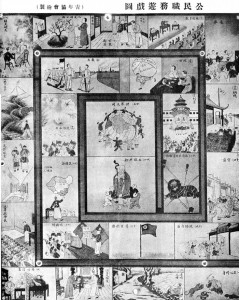
Here’s a handy study guide for the 12 “core socialist values,” divided into three hierarchically-organized categories: nation, society, citizen. Compare this with a Republican era chart on how to be a citizen (see below), a 25-step process that begins with mental and physical self-cultivation (lower right hand corner) and ends with world harmony (middle). If you’re reading this in email format, you’ll have to click the title link above to see the images. Yes, there will be a quiz.–Kirk

F201312250959512471529903

Source: Renmin wang

citizen

Source: Liangyou huabao