Source: SCMP (11/27/18)
Filmmaker who revealed horrors of Mao’s Chinese gulags talks about exposing the hidden China
Wang Bing says he doesn’t think about whether his films will foster social change, but is happy to ‘plant the seeds’ in Chinese audience members. Making documentaries with a small crew has allowed him to stay under the radar of Chinese authorities in a way feature-film makers can’t
By James Richard Havis
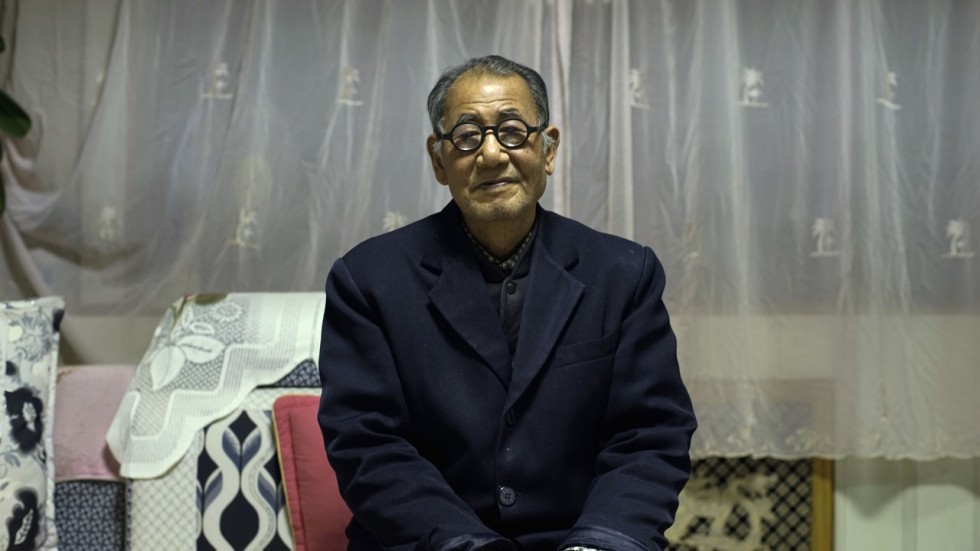
Qi Luji in a still from documentarian Wang Bing’s latest film, Dead Souls, about a labour camp in the Gobi Desert, most of whose inmates starved to death in China’s Great Famine between 1958 and 1960. The eight-hour film was screened at this year’s Cannes festival.
Capturing life as it happens, and recording life as it happened, could be the twin mantras of Chinese documentary filmmaker Wang Bing. Since his epic nine-hour 2002 documentary Tie Xi Qu: West of the Tracks, which followed the lives of workers in the decaying state-run factories of China’s rust belt northeast, 51-year-old Wang has become one of China’s most important filmmakers, and earned an international reputation.
Wang, whose films are not screened in China because of their controversial political and social subject matter, was recently the subject of an all-encompassing retrospective in New York, hosted by three prestigious venues and institutions: The Metrograph, which screened a six-film selection of his work; the Film Society of Lincoln Centre, which screened West of the Tracks in three parts; and the Asia Society. The event was put together by the Beijing Contemporary Art Foundation. Continue reading Wang Bing on exposing the hidden China