What does Liu Xiaobo stand for (1)

Yesterday, I posted an essay by Barry Sautman and Yan Hairong with the subject line “What does Liu Xiaobo stand for,” which I dated 7/17/17. I mistakenly assumed it was a recent article, written in response to Liu’s death, when in fact, as some of you may have noticed if you followed the link to the The Guardian website, it’s from 2010, when Liu was awarded the Nobel Prize. My apologies for this mistake.

Kirk Denton <denton.2@osu.edu>

Liu Xiaobo paid the price of freedom

Source: Nikkei Asian Review (7/17/17)
How Liu Xiaobo paid ‘the price of freedom’
Confidante reflects on Nobel laureate’s passion to awaken China’s intellectuals
By Scott Savitt

Liu Xiaobo, 2nd from right, in New York in February 1989 with poet Bei Ling, right, and other friends. (Courtesy of Bei Ling).

I first met Liu Xiaobo in Beijing in 1987. I was 23, working as a translator at the Beijing Foreign Languages Press and writing freelance articles for Hong Kong-based Asiaweek magazine. Liu, almost a decade my senior, had just begun a PhD program in comparative literature at Beijing Normal University.

The future Nobel Peace Prize laureate was in the process of taking the literary worlds of Beijing, and of China, by storm. He had just published his groundbreaking first book, “Critique of Choices: Dialogue with Li Zehou.” Continue reading Liu Xiaobo paid the price of freedom

What does Liu Xiaobo stand for

Source: The Guardian (7/15/17)
Do supporters of Nobel winner Liu Xiaobo really know what he stands for?
The Chinese dissident has praised the invasions of Iraq and Afghanistan – and said China should be fully westernised
By Barry Sautman and Yan Hairong

Chinese dissident Liu Xiaobo

‘If Liu Xiaobo’s politics were well-known, most people would not favour him for a prize, because he is a champion of war, not peace.’ Photograph: EPA

In recent weeks, Nobel prizewinner Liu Xiaobo’s politics have been reduced to a story of a heroic individual who upholds human rights and democracy. His views are largely omitted to avoid a discussion about them, resulting in a one-sided debate. Within three weeks, in Hong Kong, for example, more than 500 articles were published about Liu, of which only 10 were critical of the man or peace prize.

In China, before the award, most people neither knew nor cared about Liu, while, according to Andrew Jacobs, writing in the International Herald Tribune, an “official survey of university students taken since the prize was awarded found that 85% said they knew nothing about Mr Liu and Charter ’08.” A Norwegian Sinologist has elicited comments from Chinese people and indicated that younger Chinese still do not care about Liu. Older Chinese intellectuals are interested in discussing the award, but many do not think Liu is an appropriate recipient. Continue reading What does Liu Xiaobo stand for

Poem for Liu Xiaobo (1)

After discussion with Meng Lang and his long-time translator Denis Mair, I have made two changes to my translation of Meng Lang’s poem:

They did some sleight of hand

changed to:

They did some sleight of hand at the scene
Like him, his bones the scaffolding of
the museum of humanity.

changed to

Like him, alone, thinned down to bones
still buttressing the museum of mankind.

The poem has been revised at CDT.

The outpouring of poetry for Liu Xiaobo began when he was moved, still a prisoner, to the hospital, and has not stopped. Just a week before his passing, an anonymous poem showed up on the WeChat public account 小众童网. It was quickly deleted, but has been archived and translated at CDT:

There is someone who will die soon

There is someone who will die soon
as I write these words
he dies a bit more.
He’s as thin as the last scrap of paper
left in our time. Continue reading Poem for Liu Xiaobo (1)

The Passion of Liu Xiaobo

Source: NY Review of Books (7/13/17)
The Passion of Liu Xiaobo
By Perry Link

Liu Xiaobo, mid-2000s

In the late 1960s Mao Zedong, China’s Great Helmsman, encouraged children and adolescents to confront their teachers and parents, root out “cow ghosts and snake spirits,” and otherwise “make revolution.” In practice, this meant closing China’s schools. In the decades since, many have decried a generation’s loss of education.

Liu Xiaobo, the 2010 Nobel Peace Prize laureate who was sentenced to eleven years for “inciting subversion” of China’s government, and who died of liver cancer on Thursday, illustrates a different pattern. Liu, born in 1955, was eleven when the schools closed, but he read books anyway, wherever he could find them. With no teachers to tell him what the government wanted him to think about what he read, he began to think for himself—and he loved it. Mao had inadvertently taught him a lesson that ran directly counter to Mao’s own goal of converting children into “little red soldiers.” Continue reading The Passion of Liu Xiaobo

Memorial tribute to Liu Xiaobo

With great sorrow I wrote this memorial tribute for Liu Xiaobo, which also bespeaks the guilt a Chinese Canadian feels at this moment.–Shuyu Kong

The Choices We Make When Candlelight is Forbidden…..
By Shuyu Kong

My lawyer friend in Beijing posted on Wechat a video of thunder and lightning at midnight on July 13, with the caption: “That martyr who dared to speak out for the masses must have risen to the Kingdom of light”.  She was careful not to mention any sensitive names, but through this “obscure” comment she both communicated her message and simultaneously suppressed her real anger and sorrow in a way that would strike a chord with most Chinese people.

This morning Chinese people around the world are divided into those who can publicly say goodbye to Liu Xiaobo and those who can’t. Even those who are physically outside mainland China but use Chinese social media apps such as Tencent Wechat or Sina Weibo (microblog) are restricted. A Hong Kong journalist deplored the fact that all her memorial posts on Weibo were deleted, with one-line message, “candlelight not allowed ” (candlelight is Wechat expression for commemoration). Continue reading Memorial tribute to Liu Xiaobo

Getting around censors to mourn Liu Xiaobo

Source: SCMP (7/14/17)
How Chinese internet users got round censors to mourn Liu Xiaobo
Indirect references and imagery used online to express sadness over the death from cancer of the jailed political activist and Nobel Peace Prize winner
By Eva Li

Large numbers of internet users in China have used elaborate methods to get round the censors to express their grief over the death from liver cancer of the political activist and Nobel Peace Prize winner Liu Xiaobo.
References to Liu’s name were blocked on Weibo, China’s version of Twitter, as well as other phrases linked to the rights activist such as “I have no enemy” – a line from his final statement to court during his trial on subversion charges in 2009.

Liu was sentenced to 11 years in jail, but was released on medical parole and treated in hospital after his cancer was diagnosed in May. He died on Thursday. Continue reading Getting around censors to mourn Liu Xiaobo

Liu Xiaobo memorialised in social art

Source: BBC News (7/14/17)
Liu Xiaobo: The Chinese dissident memorialised in social art

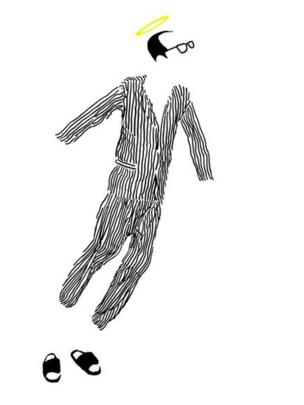
Badiucao's latest cartoon commemorating Liu Xiaobo's death, called Final Freedom

Image copyright BADIUCAO Image captionArtist Badiucao’s cartoon commemorating Liu Xiaobo’s death, called Final Freedom

Nobel laureate Liu Xiaobo was an inspiring figure for a new generation of Chinese pro-democracy activists and his death is being remembered by political artists.

Many activists saw him as a godfather for their cause, and have paid tribute to a man who was branded a criminal by Chinese authorities for his activism and jailed several times for “subversion”.

One source of inspiration was the well-documented love between Liu Xiaobo and his wife, Liu Xia, who has also been placed under house arrest.

This image of them, which was circulated recently by their activist friends, particularly resounded with many. Continue reading Liu Xiaobo memorialised in social art

RIP Liu Xiaobo

Source: Ragged Banner (7/13/17)
Presser on Mt. Olympus

It was a bit of liver trouble, longstanding . . .

The eagle, every night . . .

—That eagle brimmed with positive energy.
Why, they played badminton together!
The bird used its wing as a racket.

Chained upon the rock . . .

—According to law.

Such a waste.

—Prophylaxis. Chaos if our mountain falls.

It was a gift of fire.

—So-called fire.
Who wants it? No one wants it here.
Show me one person here who wants it!

[A long silence. They stare at each other.]

A. E. Clark
July 13, 2017

Liu Xiaobo dies at 61 (1)

Source: Sup China (7/13/17)
Liu Xiaobo died on July 13 at a hospital in Shenyang, age 61

Liu Xiaobo 刘晓波 (December 28, 1955–July 13, 2017) was a literary critic, essayist, activist, and dissident who was sentenced to 11 years in prison on charges of subversion in 2009. Liu is the third person to have been awarded the Nobel Peace Prize while detained by his government, and the second to die in detention, after the German pacifist Carl von Ossietzky, who was awarded the Nobel Prize in 1935 and died in a Nazi concentration camp in 1938.

Media coverage

Continue reading Liu Xiaobo dies at 61 (1)

Liu Xiaobo dies at 61

Source: NYT (7/13/17)
Liu Xiaobo, Chinese Dissident Who Won Nobel While Jailed, Dies at 61
By CHRIS BUCKLEY

Liu Xiaobo was arrested most recently in 2008, after he helped promote Charter 08, a bold petition calling for democracy, the rule of law and an end to censorship. Credit Odd Andersen/Agence France-Presse — Getty Images

BEIJING — Liu Xiaobo, the renegade Chinese intellectual who kept vigil on Tiananmen Square in 1989 to protect protesters from encroaching soldiers, promoted a pro-democracy charter that brought him an 11-year prison sentence and was awarded the Nobel Peace Prize of 2010 while locked away, died on Thursday. He was 61.

The bureau of justice of Shenyang, the city in northeastern China where Mr. Liu was being treated for cancer, announced on its website that Mr. Liu had died.

The Chinese government revealed he had liver cancer in late June only after it was virtually beyond treatment. Officially, Mr. Liu gained medical parole. But even as he faced death, he was kept silenced and under guard in a hospital, still a captive of the authoritarian controls that he had fought for decades. Continue reading Liu Xiaobo dies at 61

Liu Xiaobo near death

Source: Sup China (7/12/17)
Liu Xiaobo near death

Dissident Liu Xiaobo 刘晓波, who has been out on medical parole since June 26 from his 11-year prison sentence to have his terminal liver cancer treated, is “in septic shock and his organ functions continue to fail,” according to a statement (in Chinese) signed by Liu’s family members and released by the hospital where Liu is being held. The Guardian notes that many observers see this statement as unreliable, as some argue it is “designed to bolster Beijing’s assertion that Liu is unfit to leave China rather than accurately convey the state of his health.” Just several days ago, two doctors from the U.S. and Germany visited Liu and contradicted Chinese government statements that he was too sick to travel.

What now for Liu?

  • The New York Times solemnly reported (paywall) that “Mr. Liu could become the first Nobel laureate to die in state custody since Carl von Ossietzky, the German pacifist and foe of Nazism who died under guard in 1938.” Continue reading Liu Xiaobo near death

Poem for Liu Xiaobo

Posted by: Magnus Fiskesjö (nf42@cornell.edu)
Source: China Digital Times (7/10/17)
Meng Lang: Untitled Poem for Liu Xiaobo

Jailed since 2009, Nobel Peace Prize laureate Liu Xiaobo was moved from prison last month to undergo hospital treatment for advanced liver cancer. Liu and those closest to him are hoping that he will be granted permission to leave China for treatment abroad, but conflicting reports from authorities and visiting physicians indicate little chance that such allowance will be granted. As his supporters continue to issue calls for his release, poet Meng Lang today posted an untitled poem honoring the terminally ill activist, translated below:

Untitled
by Meng Lang

Broadcast the death of a nation
Broadcast the death of a country
Hallelujah, only he is coming back to life.

Who stopped his resurrection
This nation has no murderer
This country has no bloodstain.

They did some sleight of hand
A doctor’s sleight of hand, benevolent
and full of this nation, this country.

Can you lose some weight? A little more?
Like him, his bones the scaffolding of
the museum of humanity.

Broadcast the death of a nation
Broadcast the death of a country
Hallelujah, only he is coming back to life.

July 11, 2017, 12:58 a.m.

Poem translated by Anne Henochowicz.

[Chinese: ] Continue reading Poem for Liu Xiaobo

China ships troops to Djibouti

Source: DW (7/12/17)
China ships troops to Djibouti to set up first overseas base
China has dispatched personnel from the People’s Liberation Army to Djibouti to staff its first military base abroad. Several countries have established a martial presence in the small Horn of Africa country.
mkg/rt (Reuters, AFP, dpa, AP)

Chinese troops on board a ship bound for Djibouti

Personnel have departed to begin setting up China’s first overseas military base, in Djibouti, on the Horn of Africa. China has officially designated the Red Sea base as a logistics facility.

“The base will also be conducive to overseas tasks – including military cooperation, joint exercises, evacuating and protecting overseas Chinese, and emergency rescue, as well as jointly maintaining security of international strategic seaways,” the state news agency Xinhua reported on Wednesday, but did not announce when operations would formally begin or how many troops the country had sent. Continue reading China ships troops to Djibouti

A grim vigil

Source: Sup China (7/10/17)
A grim vigil

Dissident Liu Xiaobo 刘晓波, out on medical parole from his 11-year prison sentence to have his terminal liver cancer treated, has been seen by two doctors from the U.S. and Germany: