Big fleas have little fleas, and little fleas have …

“Great fleas have little fleas upon their backs to bite ’em,
And little fleas have lesser fleas, and so ad infinitum.”

Jonathan Swift (paraphrased)

While this is not quite true, here is a picture of mites on mites on ants. This image was taken using an LT-SEM (Low Temperature Scanning Electron Microscope). It shows an ant in ventral view (belly up). The original idea was to get an image of Antennophorus mites (the large mite under the head, but also one hiding behind the third pair of legs of the ant). Antennophorus are kleptoparasites, they steal food from the ants. Ants feed other ants by regurgitating small amounts of food, which are eaten by the receiving ant. That is one way ants in the nest get to eat even if they do not forage outside themselves. Antennophorus takes advantage of this.  They mimic the antennal palpitation of ants begging food from their sisters using their own elongate legs, stealing the regurgitated food. Ants do not seem to be able to recognize the thieves. Only adult mites steal food, we are not quite sure what the immature mites do.

Ant with mites that have mites

Ant with mites that have mites

When taking this picture we realized that we saw an entire community. Not just an ant and Antennophorus, but also acarid (e.g. on the antenna) and histiostomatid (e.g. on the Antennophorus) deutonymphs and even a nematode (riding on one of the deutonymphs on the abdomen). Deutonymphs are dimorphic, second nymphal instars specialized for phoresy, that is transport on a host to a new habitat. Not quite “ad infinitum“, as in the story, but still kind of neat.  Jonathan Swift might have been impressed.


About the Author: Dr. Hans Klompen is professor in the department of Evolution, Ecology and Organismal Biology and director of The Ohio State University Acarology Collection.


Show stoppers

The specimen digitization project that we are about to start at the Triplehorn Insect Collection will create a large body of information about butterflies.  Those data, combined with the data from all the collections that are part of LepNet, will be a monumental resource for scientific research. The information on the specimen labels and the images of selected specimens will be fully available online and accessible to all interested parties, from scientists to government agencies to 4-H programs to school classes to the general insect-loving public.

Ohio State has never been a powerhouse of butterfly research, nevertheless we hold a very interesting collection of these fascinating insects. For example, we have some butterfly specimens that were collected in 1880s (they are as old as the Statue of Liberty!). Some of our specimens were collected in natural habitats that are now gone, completely modified by human activity. We have representatives of rare and endangered species. The Parshall donation added depth and breadth to our collection. What amazing new knowledge will we gain from accessing all those data together? The next months and years will be interesting ones!

While we wait for the data, we can enjoy the beauty of the specimens in the collection.

About the Author: Luciana Musetti is an Entomologist and the Curator of the Triplehorn Insect Collection.  Photos by the author.

Butterflies going digital

Last year the Triplehorn Insect Collection received a large donation of butterflies from Mr. David Parshall. More than 50,000 pinned specimens, and many thousands more in paper envelopes. You might have read about it on the Pinning Block (here and here.) We have also posted some photos of the collection move on Twitter.

We have specimens of all insect orders and from all regions of the world, but because we never had a faculty or staff who specialized on Lepidoptera, our moth and butterfly collection was not nearly as big as, for example, our beetle or leafhopper collections. This has changed with the addition of the massive Parshall donation.

Afrodite fritillary, <i>Speyeria aphrodite</i>, dorsal view.

Aphrodite fritillary, Speyeria aphrodite, dorsal view.

Afrodite fritillary, <i>Speyeria aphrodite</i>, ventral view.

Aphrodite fritillary, Speyeria aphrodite, ventral view.


The Parshall collection is a complete collection of the butterfly and skipper species found in the state of Ohio. It really stands out, though, because it also contains a huge number of specimens collected in the Arctic Canada and Alaska. (Imagine chasing butterflies in Churchill, Manitoba with the very real threat of polar bears around you! Makes the butterfly hunt just a little more interesting, don’t you think?)

<i>Limenitis</i>, admiral butterflies.

Limenitis, admiral butterflies.

The National Science Foundation has recently funded a large project called the “Lepidoptera of North America Network” (LepNet). This project, which just began this month, is a collaborative effort of 29 institutions across the United States with the goal of making 2.1 million butterfly specimen records freely available on the Internet. If that were not enough, LepNet also aims to produce over 95,000 images of the moth and butterfly species that these data refer to. The project is being coordinated by Northern Arizona University, and the Triplehorn Insect Collection will participate through a subcontract to “digitize” the Parshall collection.

Digitization, for us, means capturing and storing the information contained on each specimen label and storing it in our xBio:D database. And from there, to the world!

Every specimen in a collection has (or should have!) a label with information on where it was captured, when, and by whom. Often we find additional biological data on the labels, like the host plant that an insect was feeding on, the habitat in which it was collected, or the method by which it was collected.

Lycaenidae butterflies showing specimen labels.

Lycaenidae butterflies showing specimen labels.

Taken together, all of these bits of information tell us a lot about the geographic distribution of species going as far back as the late 19th Century, the flight period of the adults, and much more. We have not even scratched the surface of all the knowledge we can obtain from biological collections. On July 13th a story was published in the New York Times about a team of ecologists using these same data for plants to find out how many different tree species exist in the Amazon Forest (the researchers found over 11,000!).

Digitization can also mean taking pictures of the specimens. But with millions of butterfly specimens in collections we cannot reasonably take and store several pictures of each and every one of them. So the goal of LepNet is smaller, but 95,000 is still a big number.

The Triplehorn collection’s own contribution to LepNet is more modest, but important nevertheless. The Parshall collection’s strength in Arctic butterflies is particularly interesting and even before we had fully unpacked the collection after the move the specimens were already being used by scientists (see Warren et. al., 2016).

In an era of climate change, knowing where those butterflies used to be found in years and decades past will give a good impression of the impact of environmental change.

Drawer full of Lycaenidae butterflies

Drawer full of colorful Lycaenidae butterflies.


Reference:

Warren, Andrew D.; Nakahara, Shinichi; Lukhtanov, Vladimir A.; Daly, Kathryn M.; Ferris, Clifford D.; Grishin, Nick V.; Cesanek, Martin; Pelham, Jonathan P. 2016.  A new species of Oeneis from Alaska, United States, with notes on the Oeneis chryxuscomplex (Lepidoptera: Nymphalidae: Satyrinae). The Journal of Research on the Lepidoptera (The Lepidoptera Research Foundation, Inc.) 49: 1–20


About the Author: Luciana Musetti is an Entomologist and Curator of the Triplehorn Insect Collection.

Detective Work and Rare Collections II

Continued

What did the once hidden collections contain?

The Hildreth Collection contained a total of 84 different species of freshwater molluscs, 64 of which were from the Ohio River System, 12 from other river systems, and 8 specimens from other places around the globe such as France.

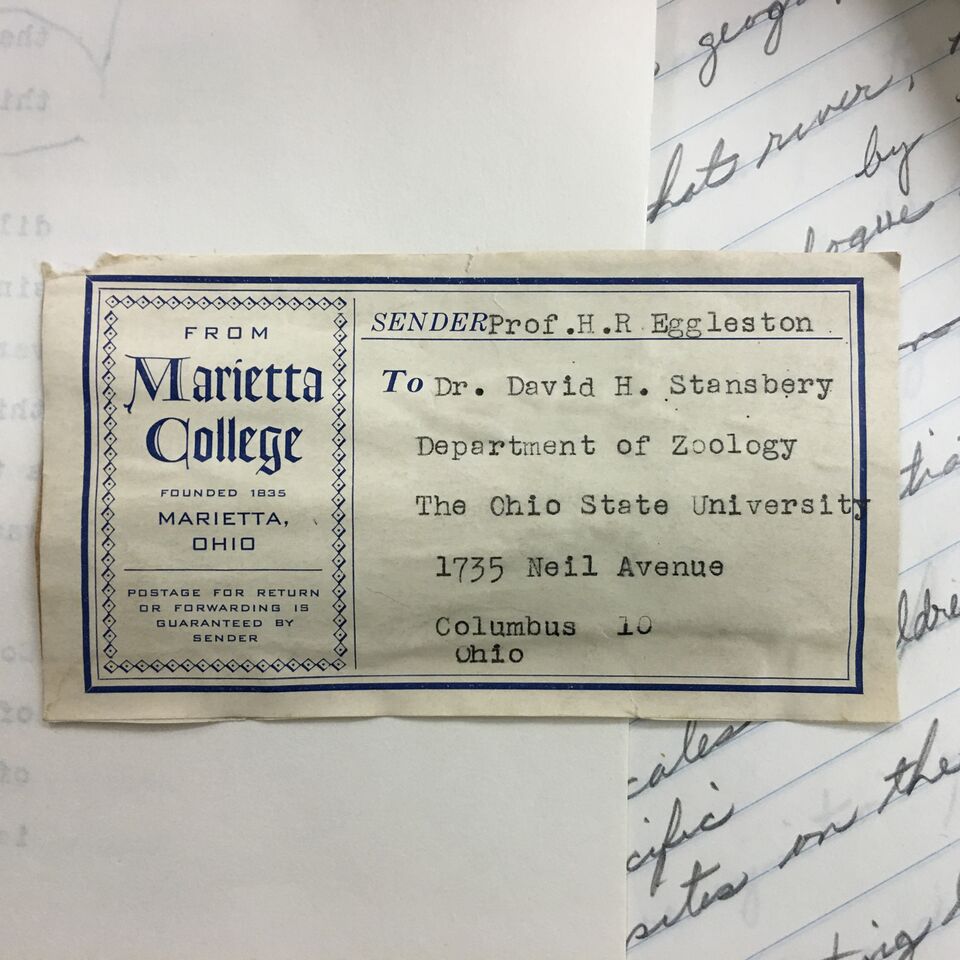
Shipping label

The original shipping label for the Hildreth and Holden collections as sent to Dr. David H. Stansbery, emeritus Curator of Molluscs, from H.R. Eggleston.

In 1828, Hildreth published his Observations on, and Descriptions of the Shells found in the Waters of the Muskingum River, Little Muskingum and Duck Creek in the vicinity of Marietta in the American Journal of Science Vol. XIV, 1828. In it Hildreth wrote about the abundance and distribution of twenty-six species of the molluscs found in Marietta Ohio. Luckily some of the text clearly references parts of his actual collection, and it was possible to figure out the original shell’s location by comparing the two.

The most interesting part of Hildreth’s 1828 publication is where he wrote about a species called Dysnomia foliata, now known as Epioblasma flexuosa. This particular species, according to the notes and letters he left behind (as well as the many specimens he sent to other collections all over the USA), was relatively abundant. It is now extinct and no one has seen it since around 1900. How did something once so abundant disappear? Maybe someone will eventually figure it out…

How do we know when the specimens were collected?

As Hildreth added specimens to the collection, he recorded the scientific names for each of them. Scientific names often change over time as new taxonomic research is done and new methods become available. Thus a particular scientific name for a species can be used as a time stamp and, in this case, allowed us to estimate a date range for collection.

A tally of dates

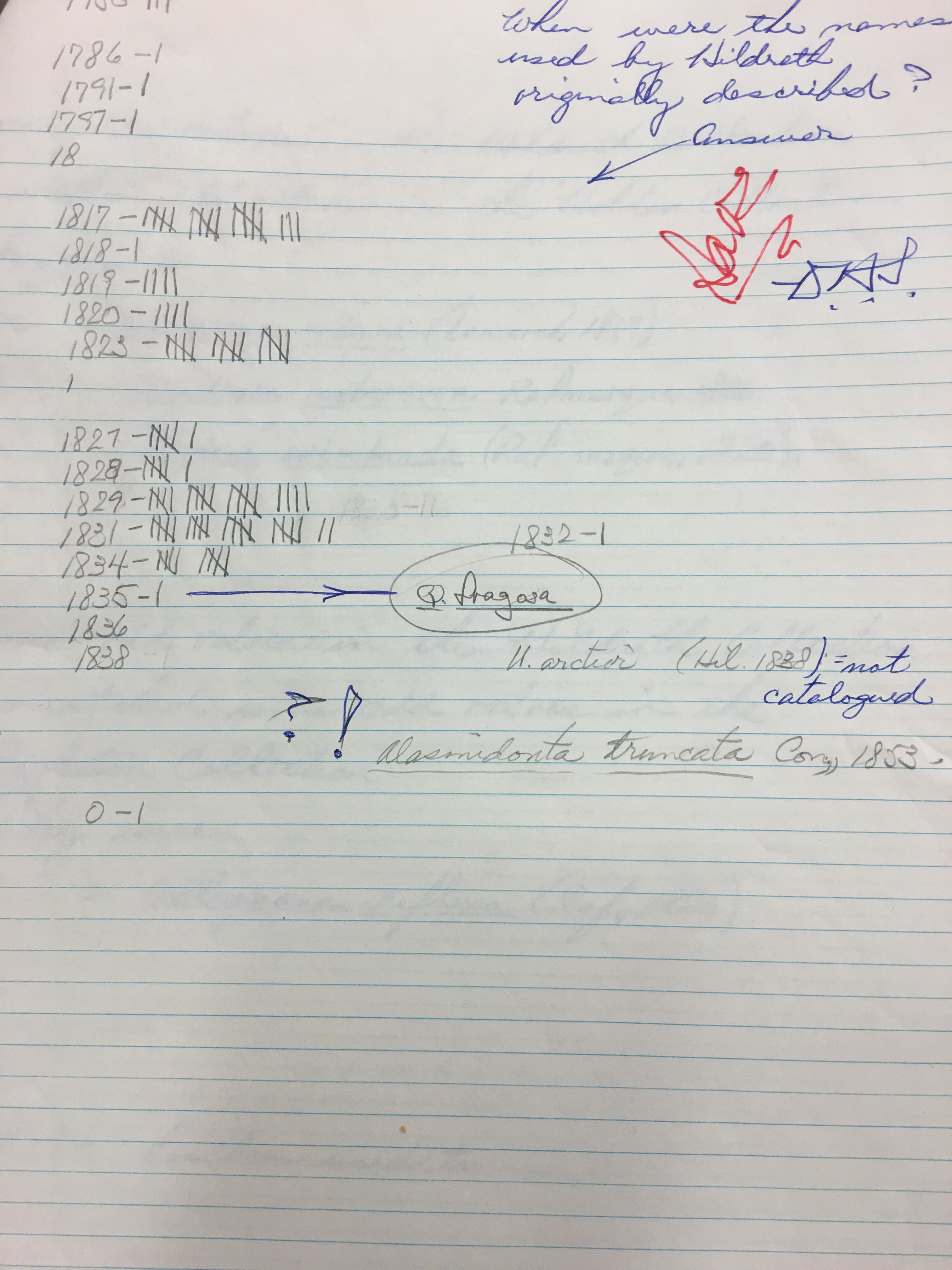
One of the papers left behind by Dr. David H. Stansbery regarding his study of the collection. This is his tally of the dates that species names were being used.

When all the names in the Hildreth collection where tallied up by Dr. David H. Stansbery, emeritus Curator of Molluscs, the story became clearer: The absolute most recent name, Quadrula fragosa, was from 1835. It is, therefore, likely that the collection itself ends a few years after that. My best guess, after going through the Marietta College database of his collected correspondence, is that the collection was set aside in 1840. That is the date when his letters stop mentioning shell exchanges and instead start focusing on geological coal surveys. I also found the first mention of a shell exchange in a letter in 1824.  This indicates that, to the best of our current knowledge, the collection was made over a time-span of around 15 years.


The Holden Collection was the smaller collection of the two, made by a Mr. William Holden. It consists of either one or a few collection events from the Ohio River at Marietta in the year 1879. The Holden collection, therefore, constitutes a very rare look at the nature of the Ohio River naiad (freshwater mussel) fauna of that region between the time of Dr. Samuel P. Hildreth (1825-1840) and the time of Dr. Arnold E. Ortmann (1900-1927).

Letter about Collection

A letter from 1977 found among the documentation relating to the collections.

Ortmann, in his monograph on the Naiads of Pennsylvania, lists records of all Ohio River species of Pennsylvania present in the Carnegie Museum, but does not seem aware of the existence of the Holden Collection. This makes sense, if the collection had been sealed up in a wall between that time and WWII when it was finally discovered.

It does certainly look like this collection’s story has been told before, but unfortunately everyone I tried to track down in reference to it has long since passed away.


About the author: Sara Klips is still the Mussel Fairy and wishes more people realized how engaging shell bound mollusks can be. She hopes that you know that the “eye stalks” on slugs are called tentacles, and that you realize that filmy plastics can never be put in the recycling bin.

Detective Work and Historical Collections

One of the big challenges of freshwater natural history is that it is hard to determine what exact animals were present in rivers before modern collections began. Preservation of pristine freshwater environments has been almost impossible as anything upstream affects everything downstream. Our zoological museums are a physical catalogue of the historical wildlife in an area and a guide for where our habitat reconstruction goals should be set.

Physical collections are fragile. It’s easy to lose data somewhere along the line and have the specimens themselves become nothing more than physical curiosities. It’s even easier to have an extensive and meticulous collection fall into the hands of disinterested heirs and be lost to us. Specimens need to be cared for properly to maintain their quality, and the longer it has been since they were collected, the less likely it is that the historical value is maintained. Occasionally these collections are saved via thoughtful preservation by some concerned individual or institution or, much less often, by a fortuitous fluke of storage through a period when, had it been accessible, it might well have been destroyed.

Hildreth Labels

A collection of old labels, now dissociated from their original specimen.

A perfect example of this kind of fortuitous preservation is represented by two collections, The Hildreth and Holden Collections, currently located in our Bivalve Collection. These two collections were discovered together at Marietta College, Ohio. Few details exist today regarding the exact discovery, but some information has been preserved. Everyone directly involved with the discovery has, as far as I can tell, passed away long ago without publishing the details of the find.

It’s a weird twisting tale and, I believe, it deserves to be informally recorded here.

Our next post will fully detail the relevance of this collection and its history, but for now let’s just set the scene…

Continue reading Detective Work and Historical Collections

Am I or Am I Not a Dinosaur? Skull Identification Quiz

Do you love dinosaurs? Many of us grew up in the shadow of Jurassic Park Mania, and went through a dino-crazed phase during our childhood. Still, can you identify a dinosaur when you see one? There seems to be a lack of public awareness of what is actually classified under the label of Dinosauria.

Test your knowledge with this tetrapod skull ID quiz and check your answers below. The truth may surprise you! We would love to get comments from you. Which of these skulls is the most challenging?

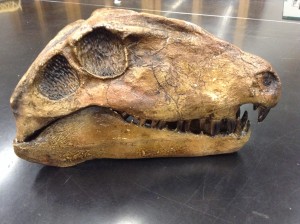
1. Dinosaur or not a dinosaur?

(Image Source: G Terrell 2016)

2. Dinosaur or not a dinosaur?

(Image Source: G Terrell 2016)

3. Dinosaur or not a dinosaur?

(Image Source: G Terrell 2016)

4. Dinosaur or not a dinosaur?

(Image Source: G Terrell 2016)

5. Dinosaur or not a dinosaur?

(Image Source: G Terrell 2016)

6. Dinosaur or not a dinosaur?

(Image Source: G Terrell 2016)

7. Dinosaur or not a dinosaur?

(Image Source: G Terrell 2016)

8. Dinosaur or not a dinosaur?

(Image Source: G Terrell 2016)

9. And finally, dinosaur or not a dinosaur?

(Image Source: G Terrell 2016)

(all photos are by G Terrell 2016)


Answers

1) Yes! This is the skull of Herrerasaurus ischigualastensis. Herrerasaurus was an early theropod dinosaur from the late Triassic period, and one of the first predatory dinosaurs. (Image Credit: http://images4.fanpop.com/image/photos/22200000/Herrerasaurus-dinosaurs-22232913-1438-588.jpg)


2) No! This meter-long skull is from the living crocodilian, Gavialis gangeticus, or gharial. Gharials can be easily distinguished from crocodiles and alligators by their incredibly thin jaws, which are  an adaptation for catching fish.

(Image credit: https://en.wikipedia.org/wiki/Gharial#/media/File:Gharial_san_diego.jpg)


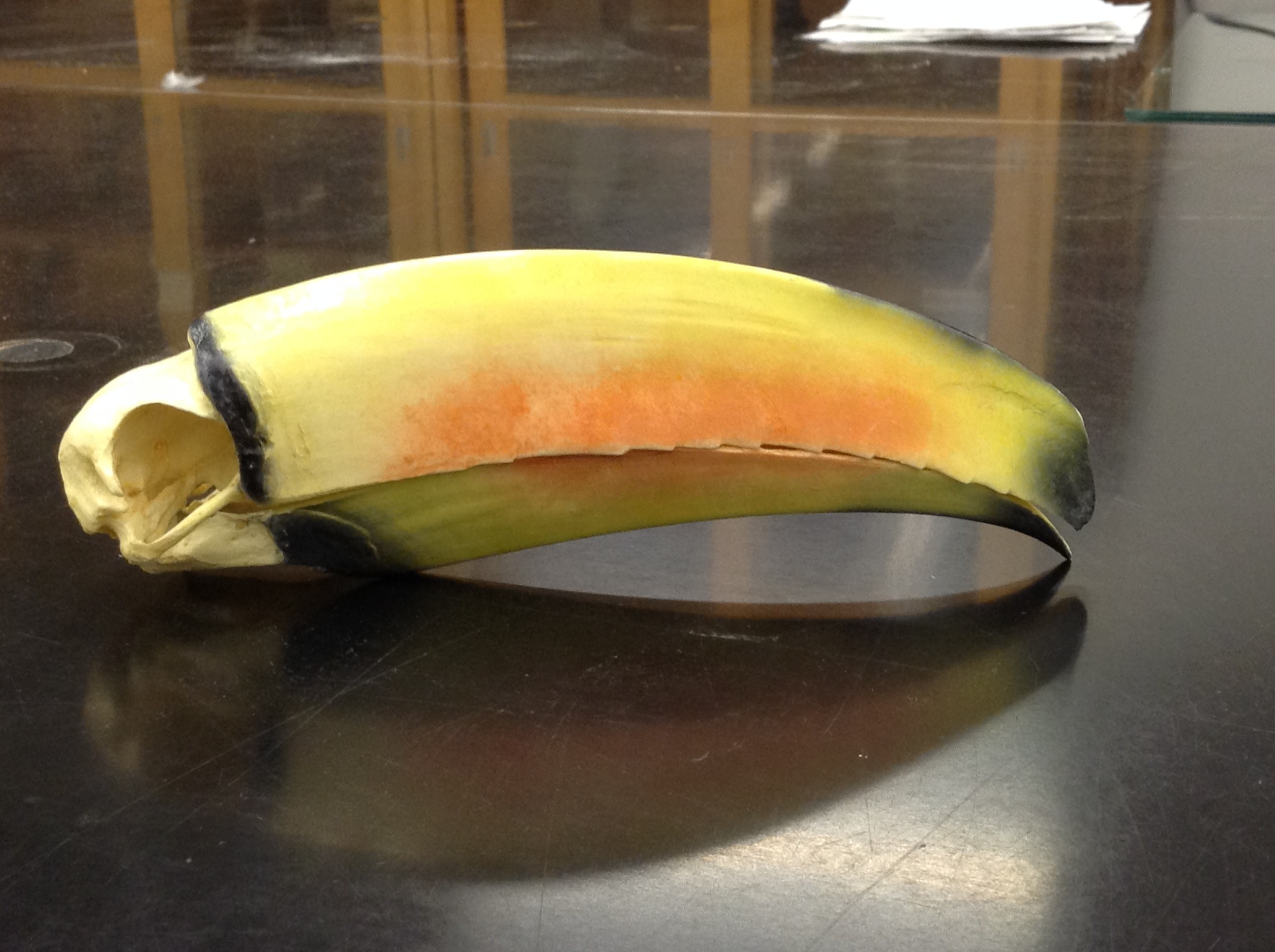
3) Yes! This skull is from the Keel-billed Toucan (Ramphastos sulfuratus), a colorful Latin American member of the toucan family Ramphastidae. Living birds comprise the only extant members of the dinosaur family tree. Dinosaurs are not really extinct at all, there are approximately 10,000 species of living birds. Keel-billed Toucans may seem to have cumbersome bills, but they are surprisingly lightweight and useful for thermoregulation.

The closely related Chestnut-mandibled Toucan Ramphastos swainsonii (Credit: G. Terrell 2016)
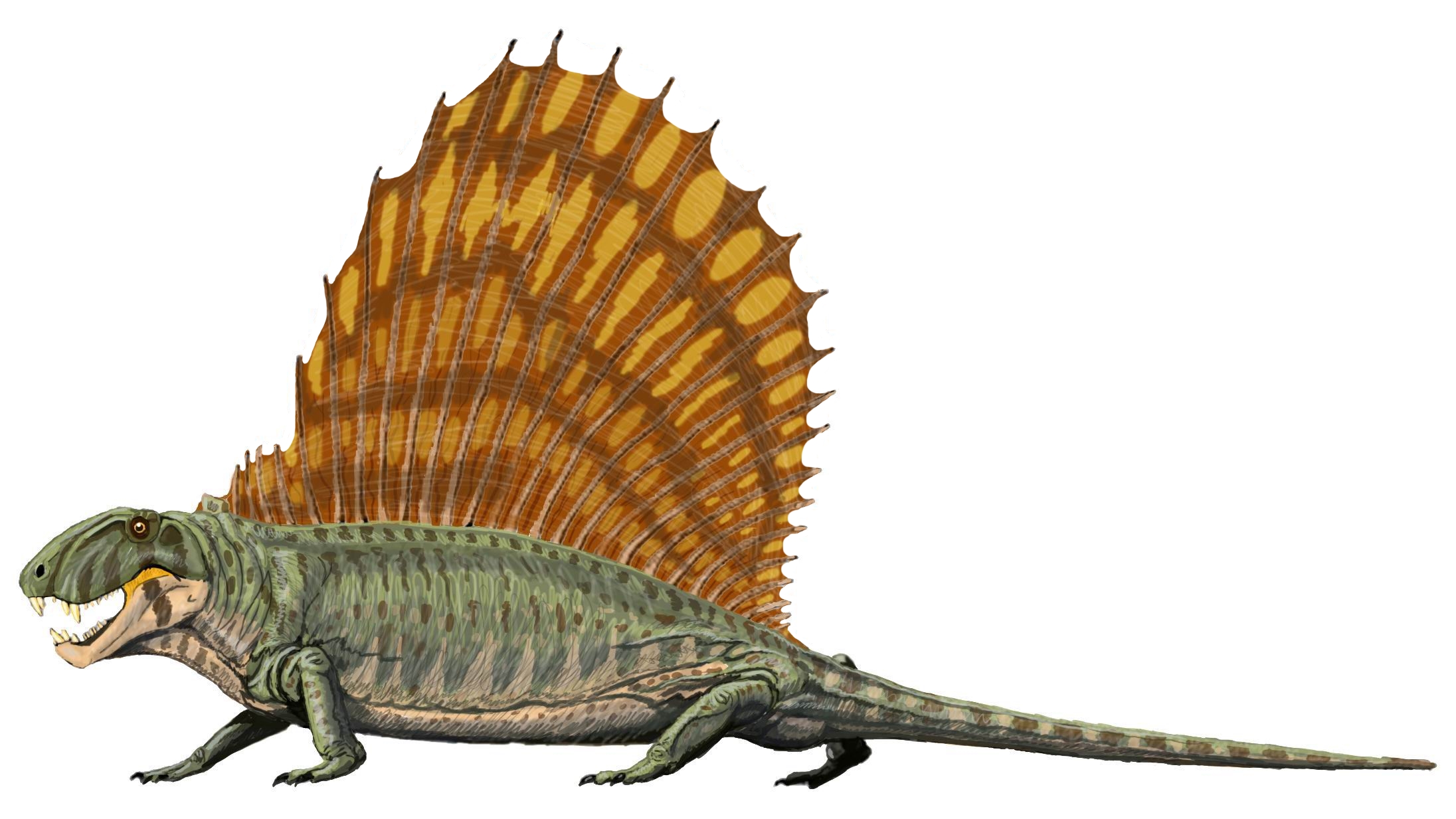
 

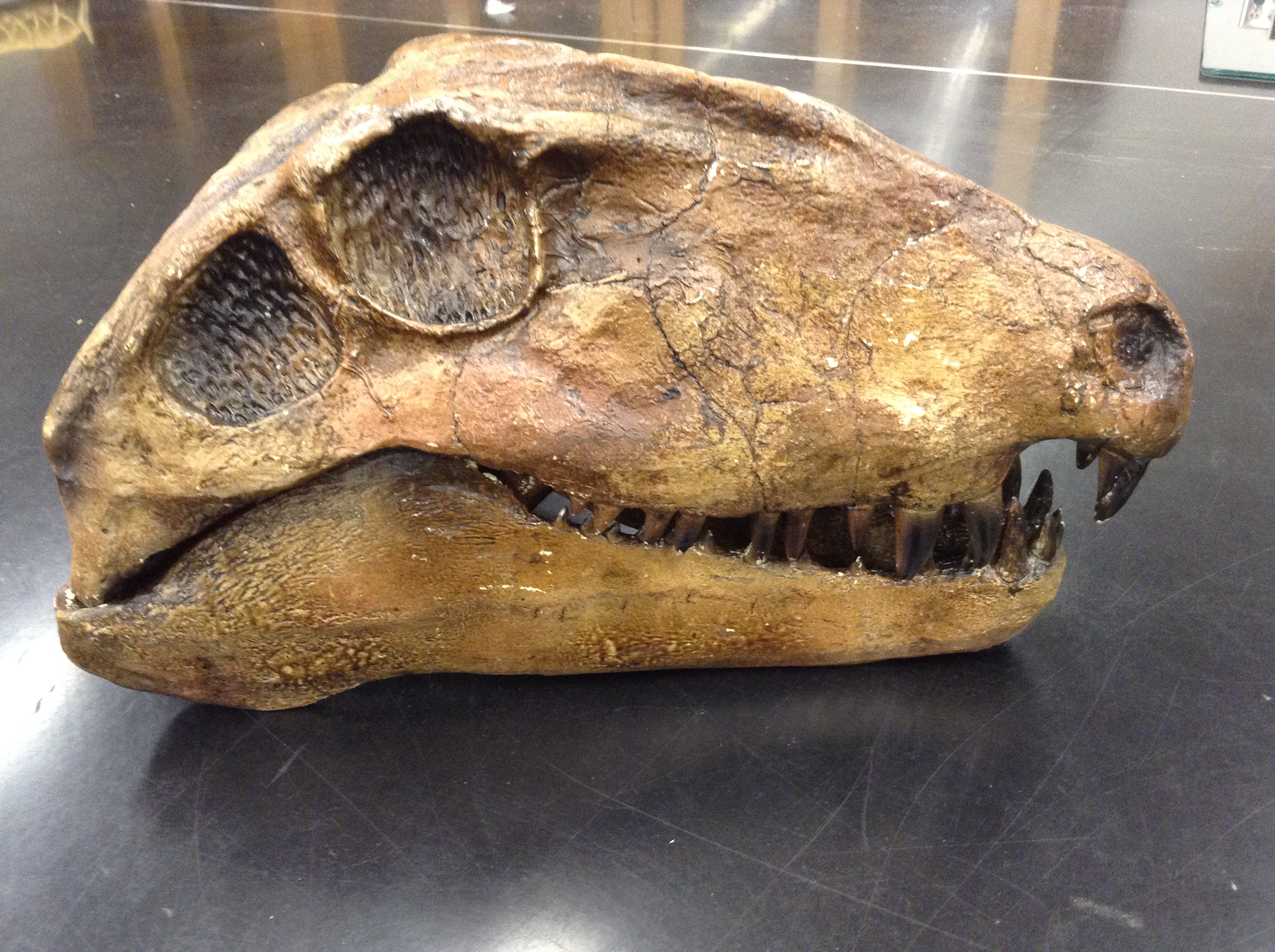
4) No! This skull belongs to the early synapsid of the Permian period, Dimetrodon. Dimetrodon is often (mistakenly) labeled as a dinosaur in the popular media. In fact, Dimetrodon is a member of the lineage that eventually lead to mammals. So, as mammals, we humans are far closer relatives of Dimetrodon, than Dimetrodon is of any dinosaur.

(Image credit: https://commons.wikimedia.org/wiki/File:Dimetrodon_grandis.jpg)
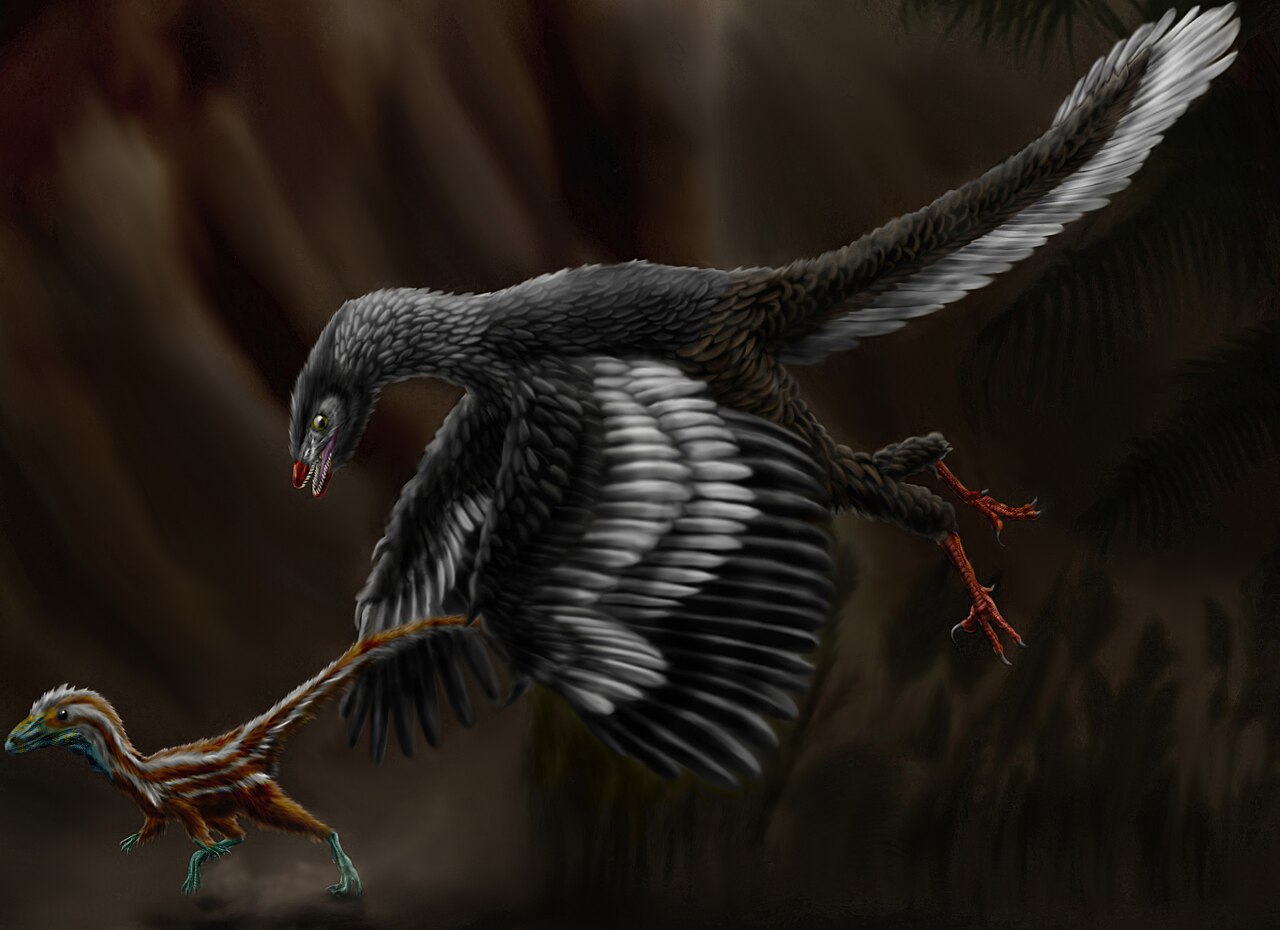
5) Yes! This skull is from the late Jurassic dinosaur, Archaeopteryx . Often recognized as the “first bird,” Archaeopteryx was actually just one of many feathered, fluffy, winged dinosaurs that flitted around the forests of the Jurassic. Though probably not as well as modern birds, it is thought that Archaeopteryx was capable of briefly-sustained flight.

(Image credit: https://upload.wikimedia.org/wikipedia/commons/thumb/3/33/Archaeopteryx_lithographica_by_durbed.jpg/1280px-Archaeopteryx_lithographica_by_durbed.jpg)
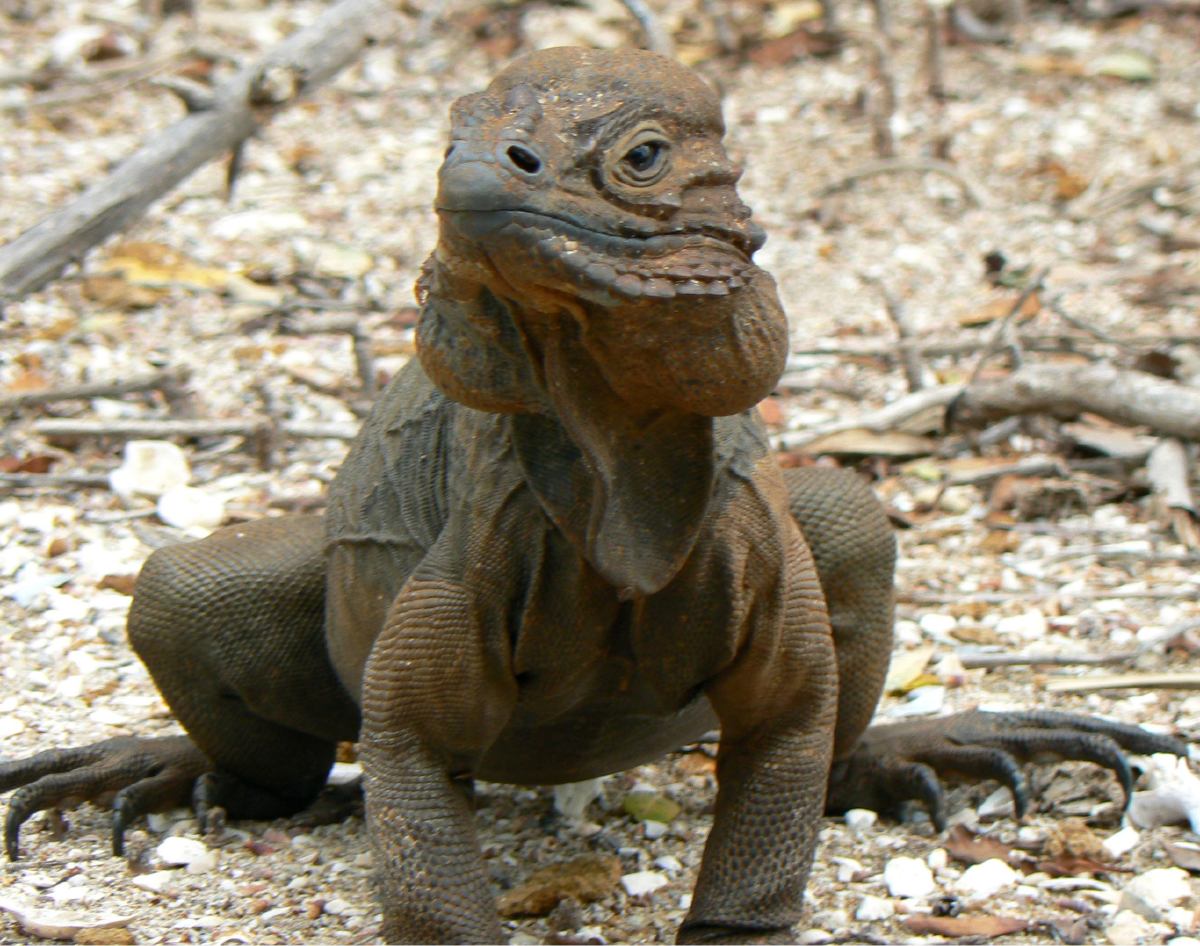
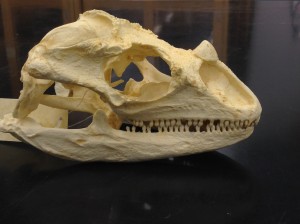
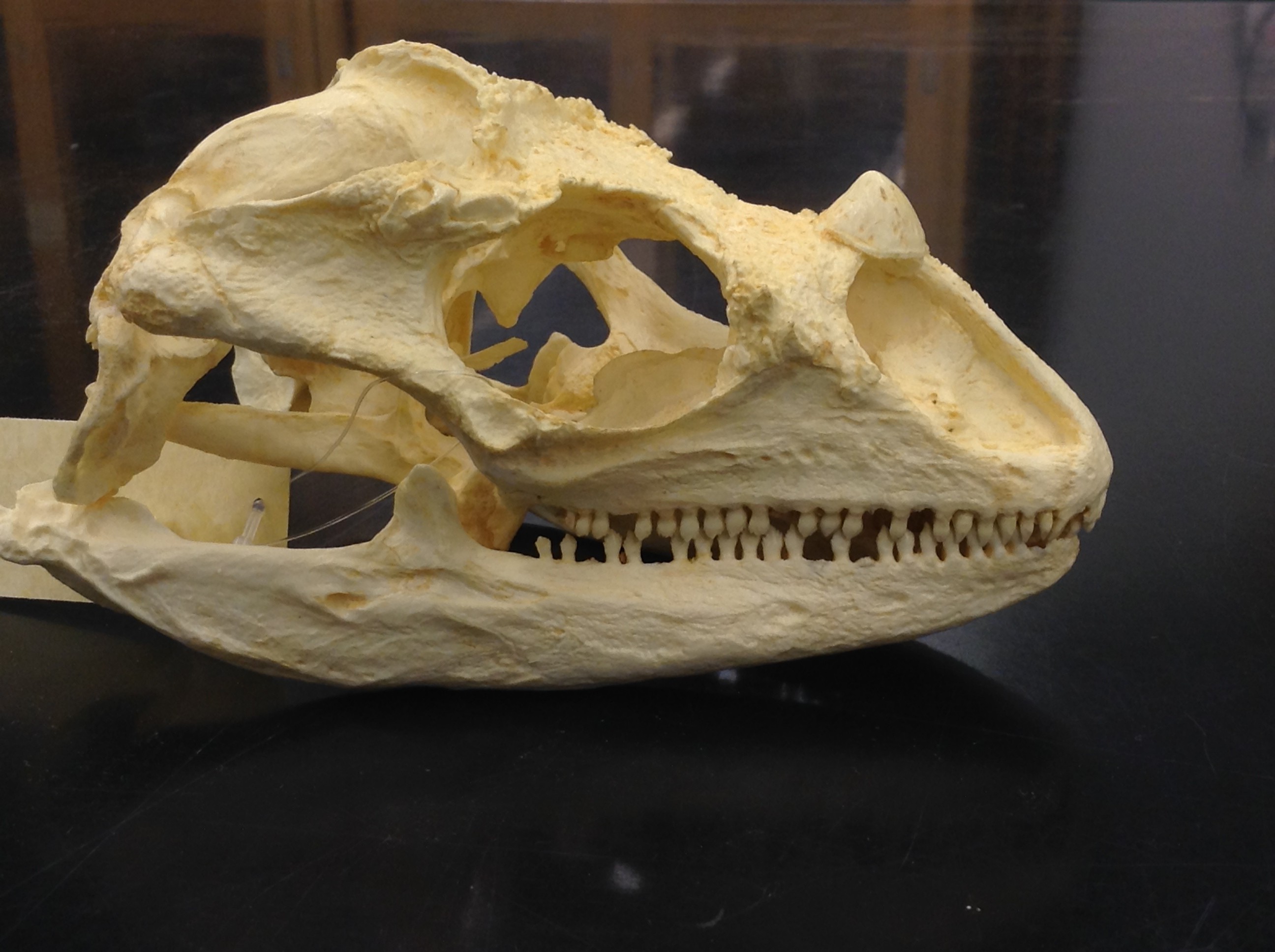
6) No! This is the skull of the rhinoceros iguana (Cyclura cornuta), a species of lizard in the family Iguanidae. Rhinoceros iguanas live on the island of Hispaniola, where they can reach up to 54 inches in length.

(Image Credit: https://en.wikipedia.org/wiki/Rhinoceros_iguana#/media/File:RhinoIguanaMay07Pedernales.jpg)
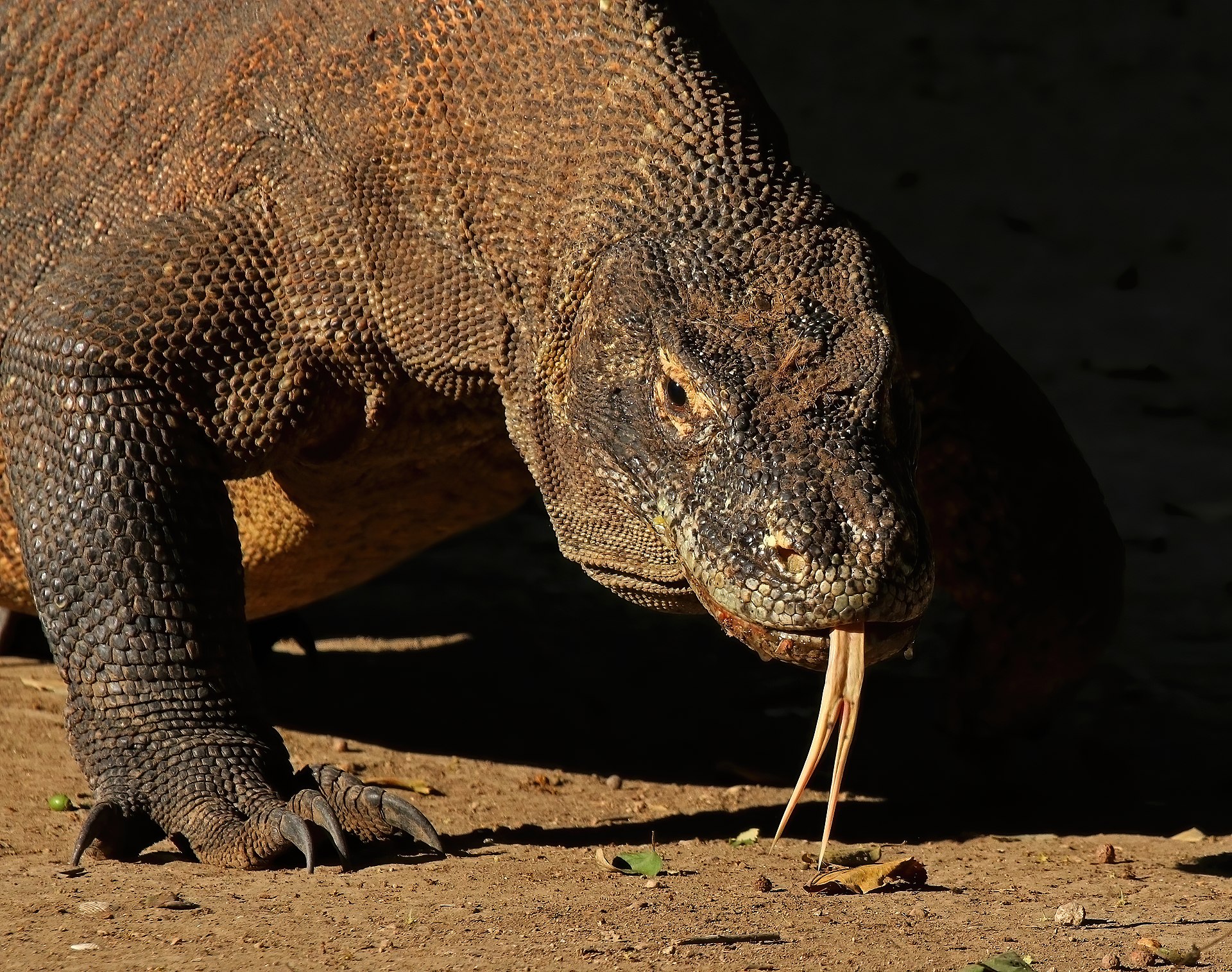
7) No! This skull is the skull of a Komodo dragon, Varanus komodoensis, a species of lizard in the monitor lizard family Varanidae. Komodo dragons are the largest living lizards. They reach lengths of up to 10 feet! These large lizards have been known to prey upon water buffaloes.

(Image source: https://en.wikipedia.org/wiki/Komodo_dragon#/media/File:Komodo_dragon_(Varanus_komodoensis).jpg)
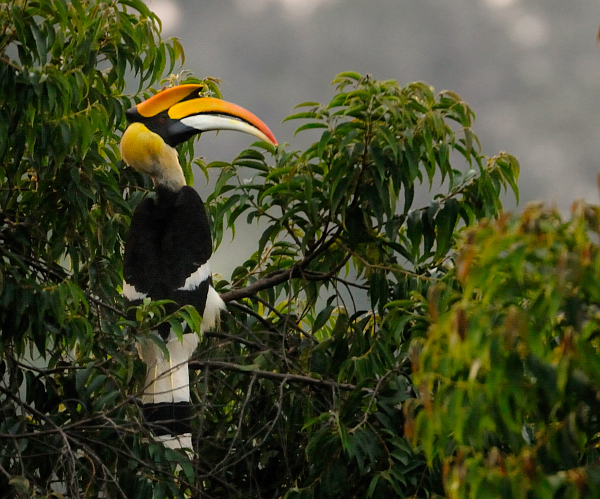
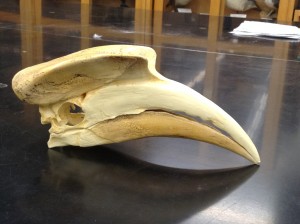
8) Yes! This is the skull of the Great Hornbill, Buceros bicornis. Great hornbills are large, mostly frugivorous birds of South Asia in the family Bucerotidae. Like many extinct dinosaurs, hornbills possess seemingly-bizarre head ornamentation that is only present in adult individuals.

(Image credit: https://en.wikipedia.org/wiki/Great_hornbill#/media/File:Great-Hornbill.jpg)

9) Yes! This skull belongs to the famous Velociraptor mongoliensis. This late cretaceous predator, made famous by the Jurassic Park franchise, was a member of the Dromaeosauridae. This family of dinosaurs is extremely closely related to birds. All members of this family were fully feathered, possessed wings, and would have appeared to be “weird birds with teeth and tails.”

(A Velociraptor with prey. Image source: https://en.wikipedia.org/wiki/Velociraptor#/media/File:Velociraptor_restraining_an_oviraptorosaur_by_durbed.jpg)


GTerrellAbout The Author: Grant Terrell is a second year student in Evolution and Ecology at The Ohio State University. He works as a research assistant in the Tetrapod Collection at The Museum of Biological Diversity.

Puffin time on Eastern Egg Rock

Have you heard of the Atlantic Puffin, a species of seabird in the auk family? It is the only puffin native to the Atlantic Ocean.

Two Atlantic Puffins on Eastern Egg Rock

Atlantic Puffin on Eastern Egg Rock

I have been lucky to see this bird on both, the eastern and western   coast of its breeding range. In 1996 when I studied at Bangor University in Wales, UK I first encountered Atlantic Puffins off-shore from Puffin Island, an uninhabited island off the eastern tip of Anglesey, Wales. The island, as you may have guessed, was named after a breeding colony of Atlantic Puffins. Unfortunately puffins no longer breed on this island after the introduction of a fierce predator of eggs and chicks, the brown rat. On the other side of the Atlantic Oceans puffins faced similar problems, they were extirpated from many areas by a combination of egg collection, hunting for meat and feathers, and displacement by expanding Herring and Great Black-backed Gull populations. Now, thanks to Dr. Stephen Kress, I have seen Atlantic Puffins off the coast of Maine, on a small island named Eastern Egg Rock.

Eastern Egg Rock is a small, treeless island in the outer Muscongus Bay area. It is designated the Allan D. Cruickshank Wildlife Sanctuary in honor of Allan Cruickshank, a Maine ornithologist and photographer.


In 2015, when I taught at one of the Hog Island Audubon camps, I was lucky to land on Eastern Egg Rock as the instructor of a group of teenagers enrolled in the Coastal Maine Bird Studies for Teens.

Crossing in DoryWe landed on the island in one of the traditional fishing boats, a dory.

Access to Eastern Egg Rock is strictly limited, a small group of researchers spends the summer in the single hut on the island monitoring the numerous birds that breed on the island. Common Terns and Laughing Gulls are probably the most common species on the island that establish nests. Less common breeders are Arctic and Roseate Tern, Black Guillemots, Common Eiders and also Atlantic Puffins.


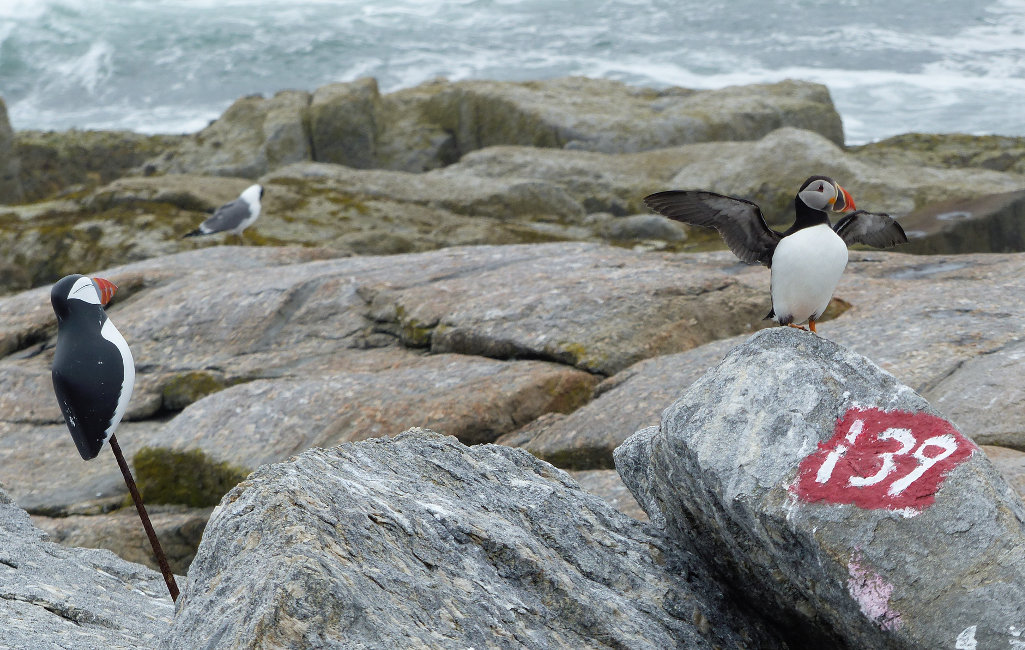
The Atlantic Puffins are a success story for conservation, the world’s first restored seabird colony. When Dr. Stephen Kress started the project in 1973 the last puffin breeding on the island had been seen in 1885. He was determined to bring a population back to this area and with the translocation of nearly 1,000 young puffins from Newfoundland, and social attraction through decoys and mirror boxes he succeeded!

Atlantic Puffin and decoy on Eastern Egg Rock

Atlantic Puffin (right) and decoy (left) on Eastern Egg Rock

The first pairs of puffins began nesting on the island in 1981, now more than 100 pairs nest regularly on Eastern Egg Rock and can be seen in the waters of near-by islands.


When we visited the island for the day, we each had the opportunity to spend some time in a small hut (bird hide) of which numerous are distributed across the island. There you sit in solitude, well hidden from the breeding birds that surround you and get to absorb views and sounds.


I brought my recording equipment (a Audio Technica 8035 microphone connected to a Marantz PMD670) and captured the multitude of sounds:

Listen to this recording of Laughing Gulls (note the gull chicks calling in the background!):


Listen to this recording of Common Terns (also with chicks calling in the background):


It is a truly unforgettable experience to become part of this fragile ecosystem for a few hours! You can visit Eastern Egg Rock on a puffin cruise which leaves from New Harbor, ME daily during the summer months and circles the island to provide amazing views of the Atlantic Puffins and other seabirds.


About the Author: Angelika Nelson is the Curator of the Borror Laboratory of Bioacoustics and instructor of Hog Island Audubon camps.

Sucker Bridgework

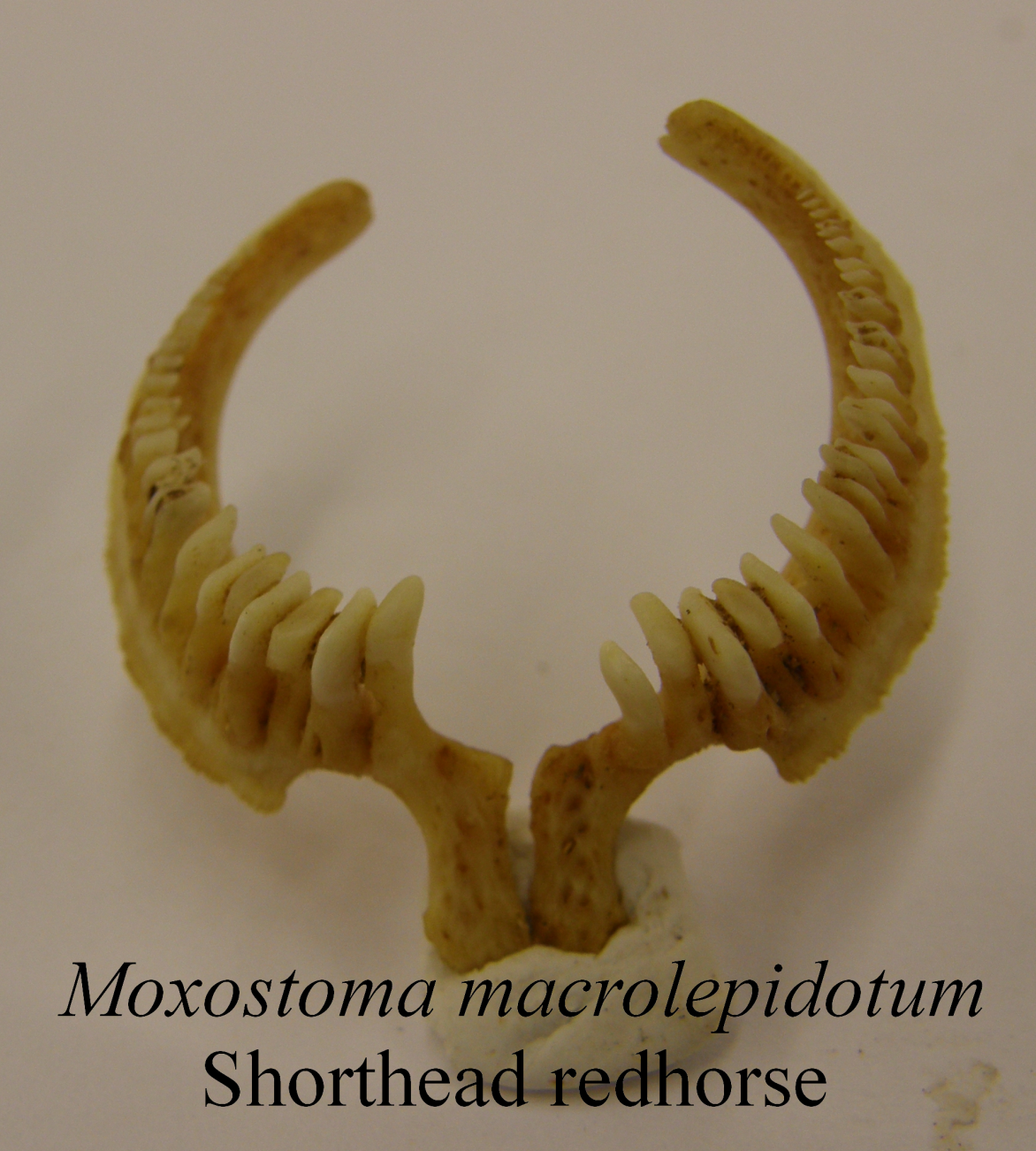
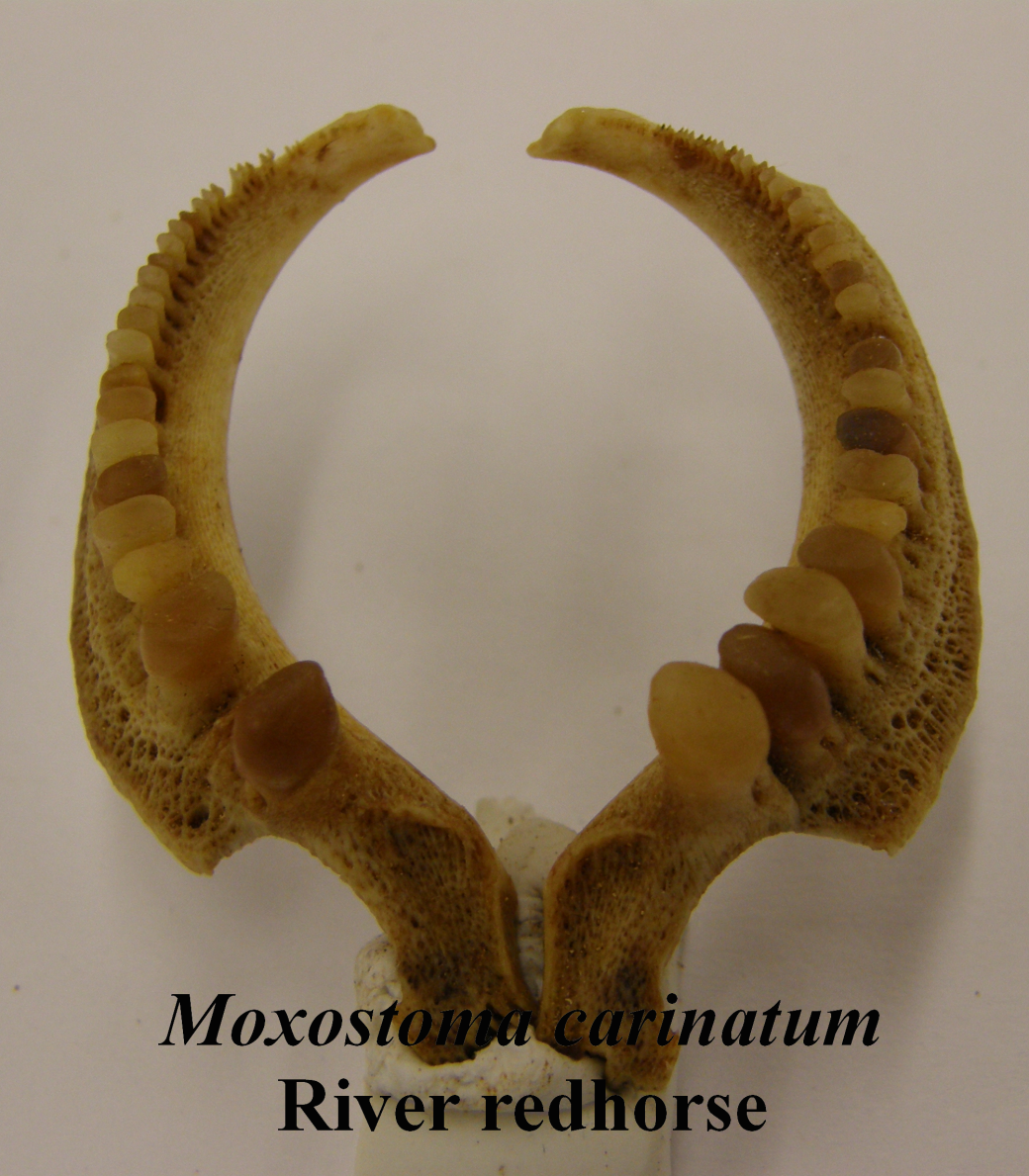
Comparative anatomies of skeletons stored at the OSU Museum Fish Division can be studied to reveal information on the sort of ecological niches a particular species occupies.  One example is the feeding niche that various sucker fish species exploit.  Based on structures of their throat teeth and the type of prey items retrieved from their digestive tract it would appear that buffalo and carpsucker species use their fine, comblike teeth for sieving their prey, while suckers with larger teeth (most redhorses, hogsuckers, spotted suckers) are said to “masticate” their soft prey, and finally those with the sturdiest teeth are able to shatter the hard shells of molluscs.

The photo below shows the anterior portion of a Silver Redhorse skeleton (OSUM 101341), with an arrow pointing to the pharyngeal tooth arch (position indicted by arrow) located at the rear of the gill basket.

SilverRedhorseSkeletonOSUMHeadshowingpharyngealteeth

There are  16 extant species of sucker fishes in Ohio’s waters.  Images of four of those species with pharyngeal tooth arches removed from some of our skeletons are shown below.

Spotted Sucker1 from Wolf Creek (Kankakee River) IN 07 01 07 by BZ

Spotted Sucker, Minytrema Melanops.  Photo by Brian Zimmerman.

MinytremamelanopsSpottedSuckerPharyngealTeeth

The Spotted Sucker has been reported to feed on organic fragments, diatoms, copepods, cladocerans, and midge larvae.

SmallmouthBuffalo

Smallmouth Buffalo, Ictiobus bubalus.

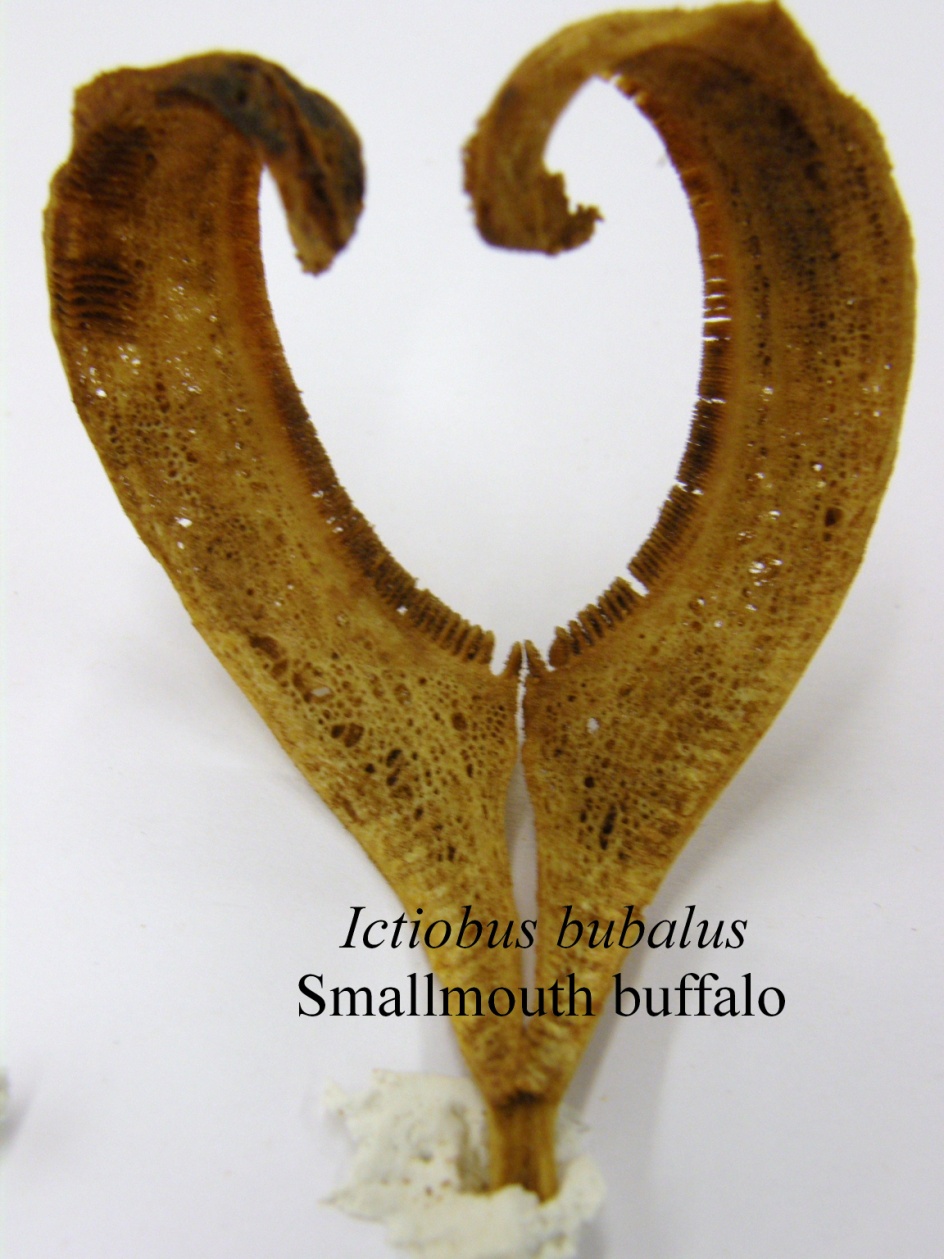
IctiobusbubalusSmallmouthBuffaloPharyngealTeeth

Smallmouth Buffalo suckers with their relatively delicate teeth feed on diatoms, dipteran larvae, copepods, cladocerans, ostracods, bryozoans, and incidental algae attached to bottom substrates.

ShortheadRedhorse

Shorthead Redhorse, Moxostoma macrolepidotum.  Photo by Ben Cantrell.

MoxostomamacrolepidotumShortheadRedhorsePharyngealTeeth

Shorthead Redhorse stomach contents have revealed their diet to consist primarily of midge, mayfly and caddisfly larvae.

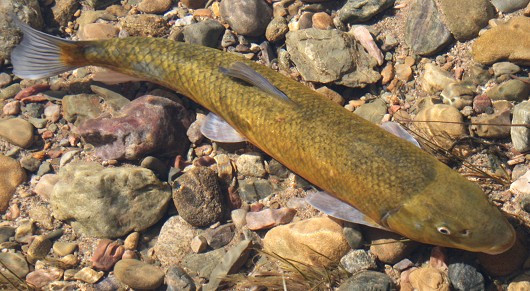
River Rehorse from the Duck River at Shelbyville TN by Uland Thomas

River Redhorse Moxostoma carinatum.  Photo by Uland Thomas.

MoxostomacarinatumRiverRedhorsePharyngealTeeth

The River Redhorse has the sturdiest teeth of the four sucker species’ teeth shown here, so much so that they are capable of cracking the shells of bivalve molluscs and snails.

For comparison, inserted below is a photo of the molariform pharyngeal teeth from a Freshwater Drum.  The drum is primarily a carnivore, its diet comprised more extensively of bivalve mollusc and gastropod shells, while the omnivorous sucker fishes find most of their food by grazing the bottom of streams and lakes, sifting sand and gravel to find their little morsels.

drum pharyngeals downsized


About the Author: Marc Kibbey is Assistant Curator of the OSUM Fish Division.

Bottom Feeders

Comparative anatomy is among our oldest scientific pursuits as humans, allowing us to differentiate between delectable and deadly, and helping us to make inferences about novel organisms, the threats they might pose, and the uses to which they might be put.  Because the diversity of organisms in a museum collection exceeds that of any one location or habitat, museums are the premiere resource for comparative anatomy, allowing scientists to look at many individuals and many species, and to consider how form relates to function, evolutionary lineage, or location.

Fish Division collections manager Marc Kibbey has been using the Museum of Biological Diversity collections to study the anatomies of the feeding apparatus in suckers and minnows (order Cypriniformes).  These fish (and several others) have a complex palatal organ (PO), first described by Aristotle from a common carp, that enables them to sort out food items from the inorganic material vacuumed from the bottom of the stream. Strongly analogous to a tongue, the organ is covered with taste receptors that send information to gustatory regions of the fish’s brain. The palatal organ’s motile structure is comprised of muscle, adipose and connective tissue, and fibers.  Muscular expansion of the palatal organ pins food items to the gill arches allowing expulsion of the non-food items out of the gills.  The food is then selectively moved back to the area between the chewing pad (CP) and the pharyngeal teeth for mastication.

DooseyPOCPCatostomusoccidentalis


This photograph is from Michael Doosey (2011), showing the head of a Sacramento Sucker with the operculum and gill basket removed, revealing the palatal organ (PO) and chewing pad (CP).   The preparation of our skeletons uses dermestid beetles that would consume the muscular palatal organ, but the skeleton of the keratinous chewing pad remains.

CatosomusoccidentalisbyUCDavisviaFishbase

Sacramento Sucker, northern and central California.  Image from Fishbase.

The food of suckers is chewed, but not by teeth in the mouth: suckers have throat teeth instead of  jaw teeth.  These teeth are part of the gill apparatus, and differences in the shape and number of the teeth, and depth and breadth of the pharyngeal bones, help identify species and determine the types of food items they eat.  Pharyngeal teeth are constantly replaced as they are lost.

Hypenteliumnigricansgillbasket

The gill basket of a Northern Hogsucker, showing the pharyngeal teeth on the posteriormost gill arch.

Hypentelium nigricans Northern Hog Sucker

Northern Hogsucker, Mississippi River and Great Lakes drainages.  Photo by Uland Thomas.

Other clues to the biology and ecology of fishes lie in the anatomy of their swim bladders. Morphological differences in size and shape, and number of chambers in the swim bladders vary between and can help identify the species.  Size of the swim bladder corresponds to where the fish spends most of its time (suspended above or on the bottom). As with pharyngeal teeth, correspondence and consistency in the distribution of these features allows us to make inferences about the biology of new species.

ShortheadRedhorseswimbladder

Carpsuckerswimbladder

The swim bladders of the two sucker species shown here are diagnostic for their genera in that redhorse swim bladders are three chambered while carpsucker species have two chambers.  The Ostariophysi (group that includes the minnows, suckers, characins and catfishes) have larger swim bladders that enable them not only to more easily maintain position in the water column but also to more effectively detect vibrations in the water due to connection to the Weberian apparatus.  While most of the sucker species do have large swim bladders their bodies and skeletons are rather heavy, suiting them to their benthic lifestyle.

About the AuthorsDr. Marymegan Daly is an Associate Professor in the Department of Evolution, Ecology and Organismal Biology and Director of the OSU Fish Division.  Marc Kibbey is Associate Curator of the Fish Division in the Museum of Biological Diversity.

Virtual tour


I greatly enjoy the National Museum of Natural History virtual tour. It allows people from all over the world to view some of the exhibits that the museum has to offer.  Of course it’s not as gratifying as visiting the museum in person, but it is pretty cool.

The MBD does not have exhibits and is not regularly open to the public. Nonetheless there’s a fair amount of interest from the local community about the work we do here and the collections we hold. We frequently receive requests for tours of the facility, from local schools to OSU classes to family groups. Tours allow visitors to view some of the many specimens and objects held by the various collections and to talk to some of the faculty and curators associated with the collections. I had the pleasure of leading a number of these tours in recent months. I tried to document each tour, taking photos and posting on social media.

Here are some of the photos I took during the most recent tours. Not as fancy as a virtual tour, but hopefully cool enough to get more people excited about a future visit to the Museum of Biological Diversity.

Note that there are almost no photos of the tour groups when they are at the Triplehorn Insect Collection. I can never manage to answer questions about the collection I curate and to take photos at the same time. Oh, well!

Enjoy!


About the Author: Luciana Musetti is an Entomologist and Curator of the Triplehorn Insect Collection.