Small Business and Big Cemeteries in France

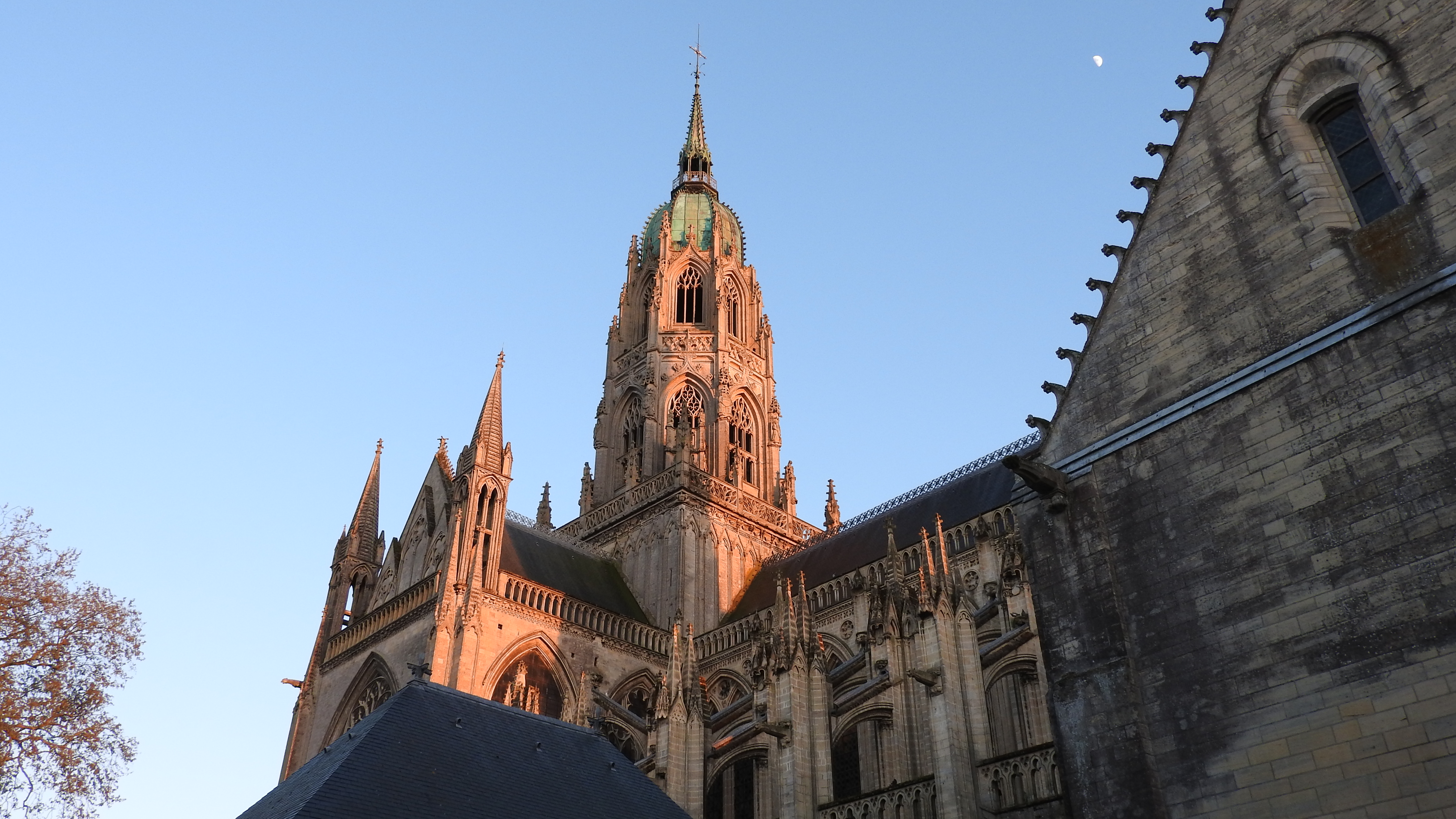
The second country I visited for my study abroad tour was France. On Saturday, May 14th we took a ferry across the English Channel from Portsmouth, England to Caen, France. Our journey began here because of the historical significance of this area in 1944 and 1945 when the Allies launched the D-Day invasion at Normandy beach. We stayed in a small town named Bayeux. This is a humble town is centered around a cathedral that was built in the medieval times. Our main excursions while here were to museums and monuments in and around Omaha and Utah beach, which are the locations where American forces began the Normandy invasion. It was an incredibly moving experience to stand on the beaches where men gave their lives in order to help liberate Europe from Nazi control. I was particularly moved by a few specific experiences during my six-day stay in Bayeux. These experiences led me to get to know two people in very different ways. One was an owner of a café in Bayeux. The other was a soldier who died on June 6, 1944.

We stayed in a small town named Bayeux.

We stayed in a small town named Bayeux.

This small town was a change of pace after being in a city like London. The only way to travel around town was to walk. There was one main street and one grocery store. However, the town did not disappoint with the number of eateries and cafes. They lined most of the little streets. During my stay, I became particularly fond of a small café named Au Georges II. I went there frequently to get a Crepe with Nutella on it (tastes as good as it sounds). After a couple of days, I befriended the owner of this shop. I learned that his name is Jacques. Despite the obvious language barrier (he only spoke French and four years of high school Spanish didn’t really help me in France), I said hello to him every day I passed the café. On our last day in Bayeux, I was able to memorize a few sentences and give him a small gift.

I made a new friend in France. He is a small business owner named Jacques.

I made a new friend in France. He is a small business owner named Jacques.

This unlikely friendship is symbolic of what it was like to live in small town France. It had a feel unlike the large cities that we will be spending much of our trip in. It was a more relaxed pace and it was easy to feel at home. At the same time, this was nothing like the suburban lifestyle I have become accustomed to in the United States. Everybody walked to the outdoor shops and restaurants that were located along the river that ran straight through the town. The biggest concern as a tourist in Bayeux was whether or not the wifi would work (it usually didn’t). This peaceful town with beautiful architecture was a great change of pace for a group that also went to London and Paris.

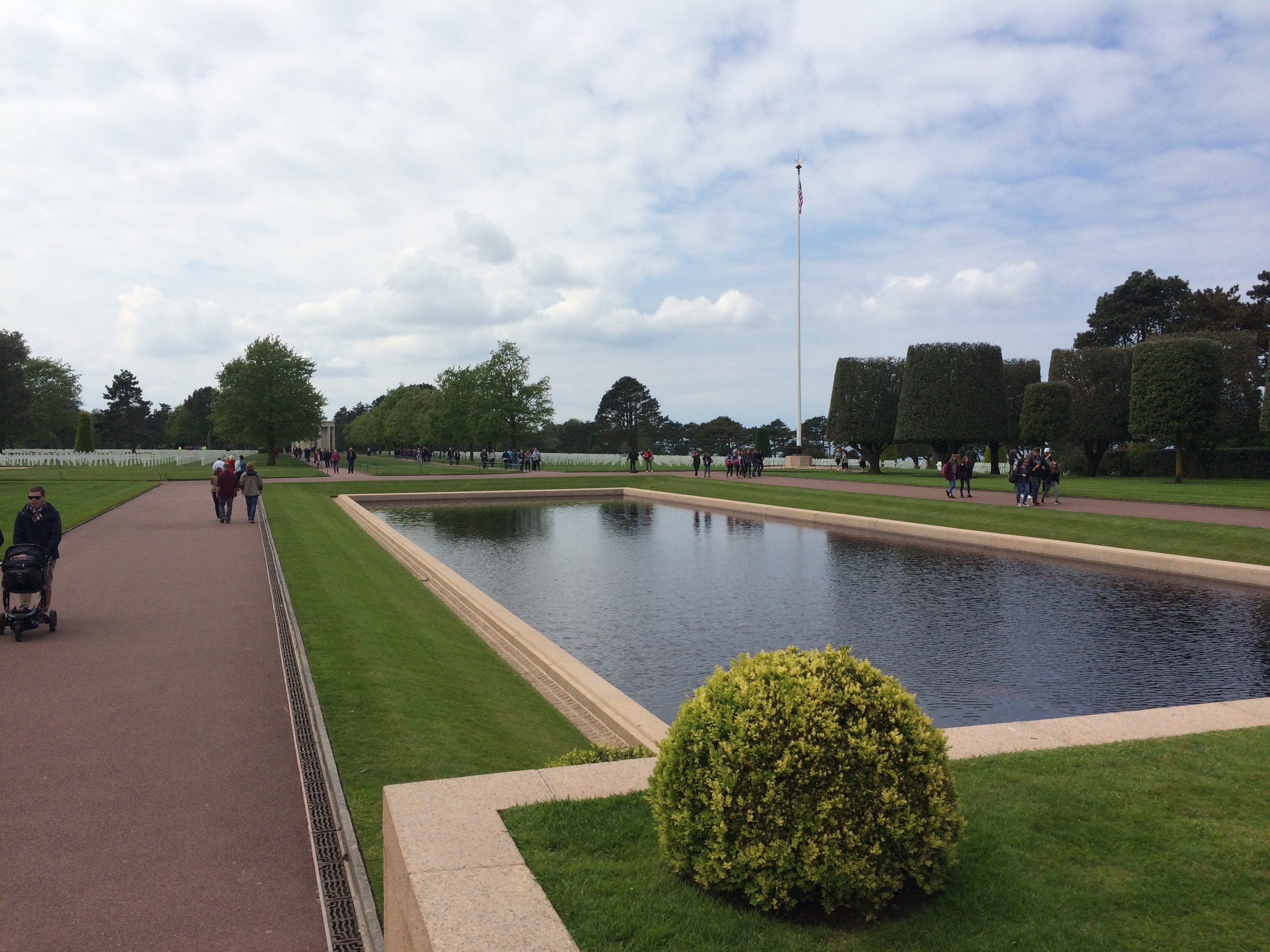
Walking through the American Cemetery in Normandy.

Walking through the American Cemetery in Normandy.

In addition to my stay in Bayeux, another big part of this site was the cemeteries we visited. In total, we visited three cemeteries: a German cemetery, a British cemetery, and an American cemetery. They each held the graves of soldiers who were killed during the Normandy campaign. It was stunning to be at both the places soldiers fought and the places they were laid to rest. I was particularly struck by the American cemetery. The cemetery is located just beyond the sands of Omaha beach, where the bloodiest fighting took place on D-Day. We began by placing a flag at the grave of twelve Ohio State students and faculty that died during the Normandy campaign and are buried in that cemetery. After this, we were given time to look around the grounds where 9,387 young men were buried. Time to pay our respects. Time to reflect. Time to contemplate. The rows and rows of crosses made it easy to yearn to know the stories of each individual soldier represented by each gravestone. This really hit me during my time alone at the cemetery. I wanted to know about each man, or at least think about who he was. When this thought hit me, I immediately walked down a row and stopped at a random grave to contemplate and gather my thoughts.

The grave of PFC Fred W. Plumlee.

The grave of PFC Fred W. Plumlee.

I don’t know Private First Class Fred W. Plumlee. I don’t know where he was when he died in combat on June 6, 1944. I don’t know where he lived in Georgia, what his family was like, or what he wanted to do with his life. All I know is what is engraved on his gravestone. A simple google search did not lead to anything definitive about this man. All I know is that his grave was in the exact spot where I stopped to spend a half an hour contemplating individuality in World War II. Though he is just a small grave in a sea of thousands of gravestones, he was still a person. I thought about what his dreams may have been, what his past was, and who the people were that he loved. Though I can’t answer any of these questions, I thought about who he might have been and considered whether or not he had anything in common with me. It was here that I reached a great understanding. Though we can’t know the story of every soldier who died in World War II, that’s not the part that matters. What matters is that we recognize that behind each gravestone is a unique man who deserves to be recognized as such. Though I couldn’t and think at all 9,387 graves, I did stop at one. And that made all the difference.
Scratching the Surface in Normandy and Paris

During World War II, the Vichy government in France collaborated with the Nazis. It deported people to concentration and death camps who were considered unworthy of living as well as accommodating other needs of the Nazis. This bit of history is learned when a student starts studying World War II in depth, but when students are taught about the war in middle school they are just told that it only took six weeks for France to fall to the Nazis and that is the end of the lesson. What I found in France is that the museums pretty much stop there too and move on to D-Day.

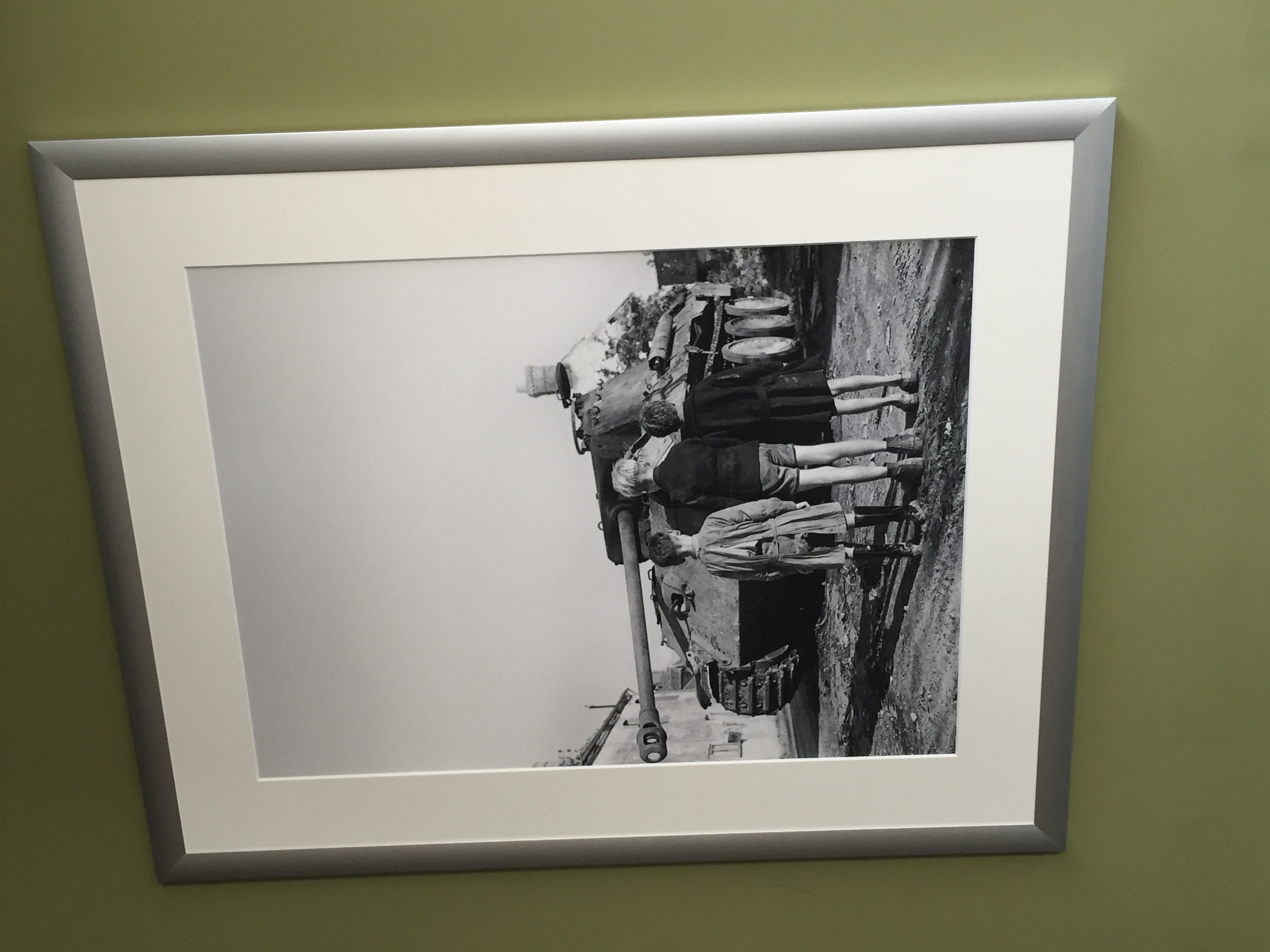
A photo displayed in the Caen Memorial Museum showing three French boys staring at a tank.

A photo displayed in the Caen Memorial Museum showing three French boys staring at a tank.

On May 15, we went to the Caen Memorial Museum. The museum started off with a downward spiraling staircase taking us through the years leading up to World War II. The downward spiral is supposed to symbolize the world’s descent into hell as Nazi Germany gained more and more power. Then came the section on the invasionn of France. This part of the museum made me feel like I was being geared to pity the French much more than I normally would have. It was dimly lit with pictures of recently homeless French children and dead soldiers. Having studied World War II in depth for the past four months, it was easier for me and most of my classmates to pick up on the manipulation of the museum.

A photo also displayed at the Caen Memorial Museum. This photo depicts that the French people were lively and happy, and then suddenly surrounded by the Nazi forces out of the blue.

A photo also displayed at the Caen Memorial Museum. This photo depicts that the French people were lively and happy, and then suddenly surrounded by the Nazi forces out of the blue.

Then the museum had a very small section on the Holocaust. It displayed the basic information that most people already know about the Holocaust. It had said that the Germans were systematically killing Jews and others in an effort to exterminate undesirables. However, there was absolutely nothing in the museum about how the Vichy government, under the control of Marshal Pètain, helped deport people from France for the Nazis. In fact, there was nothing in the Caen Memorial Museum or any museum we travelled to in Normandy or Paris that even mentioned the Vichy government.


I have learned in these past months that the French government ignored the Holocaust for a few years when the war ended. It is evident that the French government knows it made a mistake in doing this, but I found a quote in the Caen Memorial Museum that almost excuses the lack of action from the French government: “It took some time, however, for comprehension of what had been happening to sink in, given the near impossibility of grasping a reality so monstrous that it seemed inconceivable to those alive at the time.” This was at the very beginning of the Holocaust section of the museum. This quote is blatantly excusing the French government for ignoring the Holocaust for so long.

There is a similar pattern in most governments where the state barely acknowledges something they did wrong if it is acknowledged at all. I have yet to see information in a museum about the Japanese internment camps that were set up in the United States after the bombing at Pearl Harbor. Children are told that Thanksgiving was a time when the Pilgrims and Native Americans shared a dinner when they finally settled their differences. In reality, it was a celebration thrown on by a hand-full of colonists after they massacred an entire tribe of Native Americans.

Another student mentioned during a reflective talk that he would have preferred to be left with questions after having received all the facts instead of having questions because of a lack of facts, referring to the museums we have seen. This moment just keeps reoccurring to me because he was one-hundred percent correct. Without all of the information, there is no logic in drawing conclusions about a specific topic, especially one about a serious blunder made by a government. The museums in Normandy and Paris gave the impression that it is much better to forgive and forget than to actually discuss what went wrong and why. If we choose to forgive and forget, how will we ever learn from our mistakes?

They Gave It All

The next stop on our trip after London was a small city called Bayeux in Normandy, France. We were to spend about five days there learning about and exploring the sites associated with the D-Day invasion June 6, 1944. One aspect we covered thoroughly was the loss of life during this operation. We visited three cemeteries: the British cemetery, the German cemetery, and the American cemetery.

The American cemetery had a large impact on me. It was a rude awakening to enter and see thousands of white headstones dedicated to the fallen American soldiers in Normandy. It is one thing to see and study the numbers of the dead Americans. It is an entirely different thing to see that number physically in front of you, represented by Crosses and Stars of David.

IMG_1072

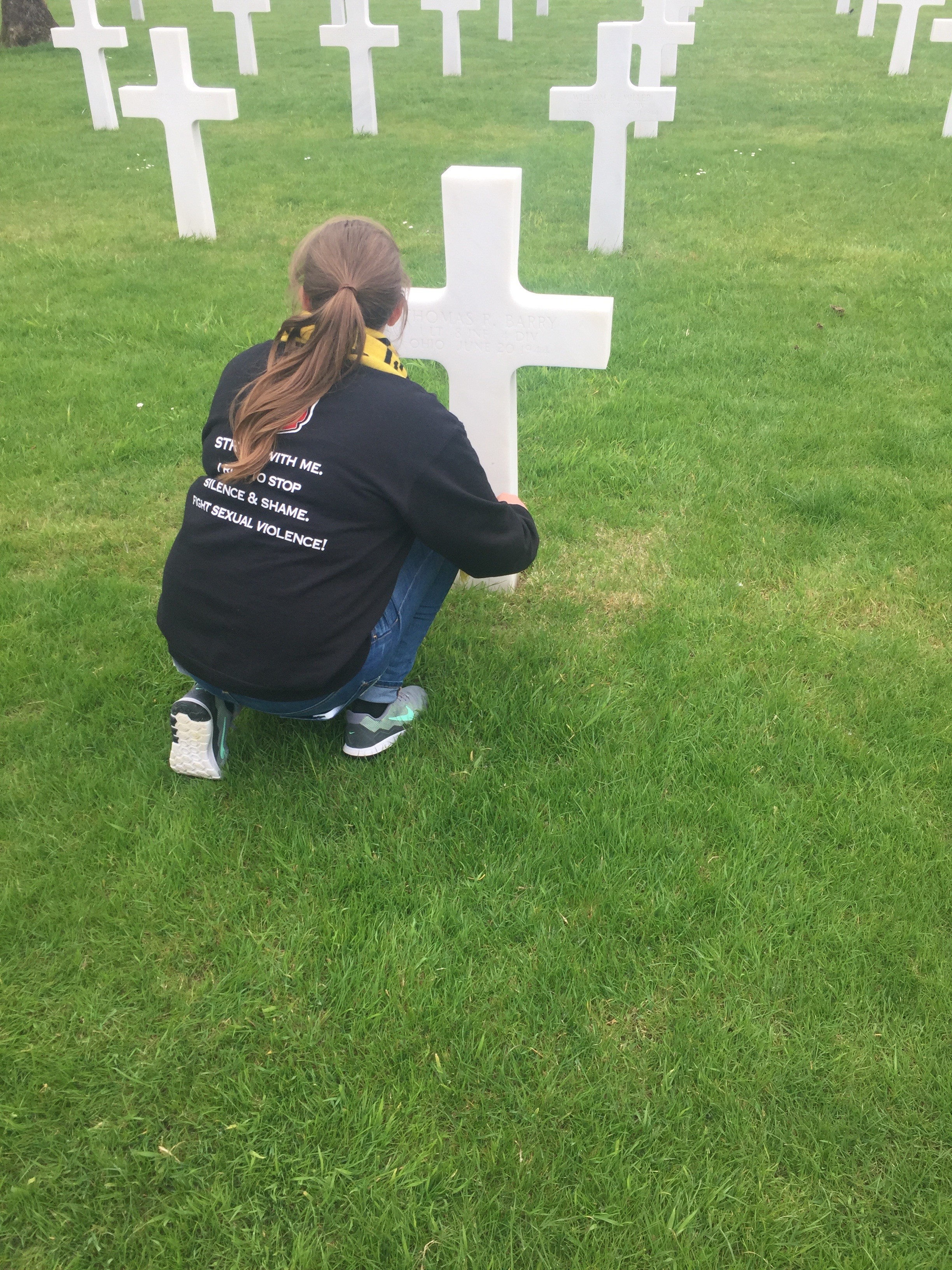
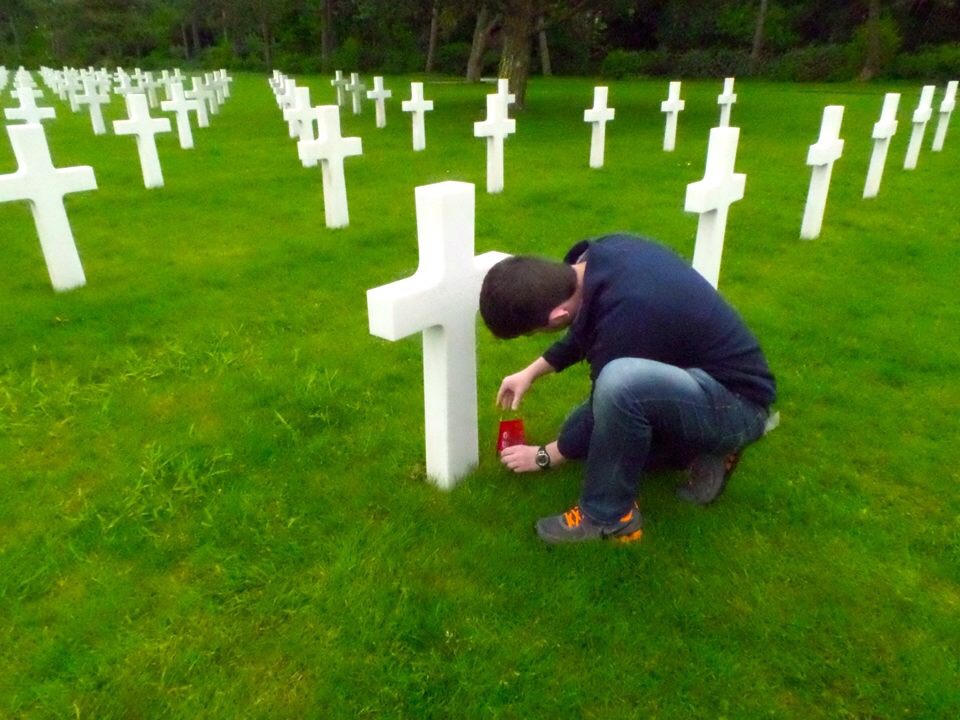
While visiting the cemetery, I had the honor of placing a flag on the grave of a former student of The Ohio State University. It was not an honor I took lightly or for granted. This action held a very special place in my heart. I was representing not only my study abroad group, but also my university and ultimately my country. I felt very humbled as I knelt before the Cross engraved with Thomas R. Barry.

IMG_1231

The American cemetery represented something else to me that day. While on this trip, my grandfather passed away. He was a World War II veteran who served his country in the navy. He served aboard the escort carrier USS Wake Island (CVE-65) as an Aviation Boatsman, 3rd Class Petty Officer. He traveled to Karachi, India and back and hunted German U-boats in the Atlantic, sinking one in the process. He traveled to the Pacific Ocean through the Panama Canal and participated in the Invasion of the Philippines, where he was wounded by shrapnel. He also participated in the Invasion of Okinawa, where his ship was hit by two Kamikaze aircrafts. He was serving on the USS Wake Island when it became the first carrier to land a jet-propelled plane on November 6, 1945.

I grew up hearing all of the different stories connected to these excursions. It is a large part of my own history and is one of the main reasons I chose this study abroad trip. I was unable to attend his funeral and pay him final respects. There was no closure. Being there that day and honoring the fallen soldiers of the same war he fought in gave me a little bit of that closure I was longing for. Thomas R. Barry, among thousands of others, died in a foreign country. Family members did not have that closure and final goodbye when he/she died and was buried. Walking through the cemetery and paying my respects felt like I was doing just that. I honored the great sacrifice they made when they gave it all.

IMG_1058

The Tale of Pointe du Hoc

A small section of the total area of Pointe du Hoc; picture taken from the top of one of many German fortifications still in place.

A small section of the total area of Pointe du Hoc; picture taken from the top of one of many German fortifications still in place.

Out of all of the amazing cities we had scheduled for this trip, I was most excited to head to the city of Bayeux, which is located in the area of Normandy. I’ve spent a lot of my free time over the years studying and reading about World War II and most of that time has been devoted to learning more about the D-Day invasions and the Normandy campaign. Long before the trip began, before I had even gotten into the program and just saw the list of the locations on the itinerary, I was most excited about headed for the beaches. I wanted my chance to stand where so many others fought and fell for freedom and liberation. I wanted to finally get a chance to stand in the same places that I had read about in books and articles, places I had seen in documentaries and in movies. I wanted to head for the beaches. As the preparations for the actual study abroad portion of the trip progressed and we all got closer to our departure date, there was one location I became more and more interested in visiting besides the famous invasion beaches: Pointe du Hoc.

Filled with many examples of personal stories and amusing mishaps, reading Dog Company reminded me very much of Ambrose's Band of Brothers. Highly recommend if you were a fan of Band of Brothers

Filled with many examples of personal stories and amusing mishaps, reading Dog Company reminded me very much of Ambrose’s Band of Brothers. Highly recommend if you were a fan of Band of Brothers.

Over the years I had read a little about what happened at Pointe du Hoc on June 6th 1944. I knew it was a crucial part in the success of D-Day but through the pre-requisite class I had to take before I could study abroad, I was able to learn so much about this location and who fought there. One of the main parts of the pre-requisite class was that each student had to become the expert on one site that we would visit during our trip abroad. When I first received my site assignment I have to admit I was a little disappointed when I did not get one of the beaches or the airborne drops but because Pointe du Hoc was still part of D-Day and the Normandy campaign, I was not too broken up about it; within the first hour of starting my assigned book I needed to read for my site report I was so happy I had been assigned the location of Pointe du Hoc. The book I was assigned, Dog Company: The Boys of Pointe du Hoc by Patrick K. O’Donnell, covered the amazing experiences of the 2nd Rangers Battalion’s D Company through the Second World War with a special focus on their pivotal role in D-Day.

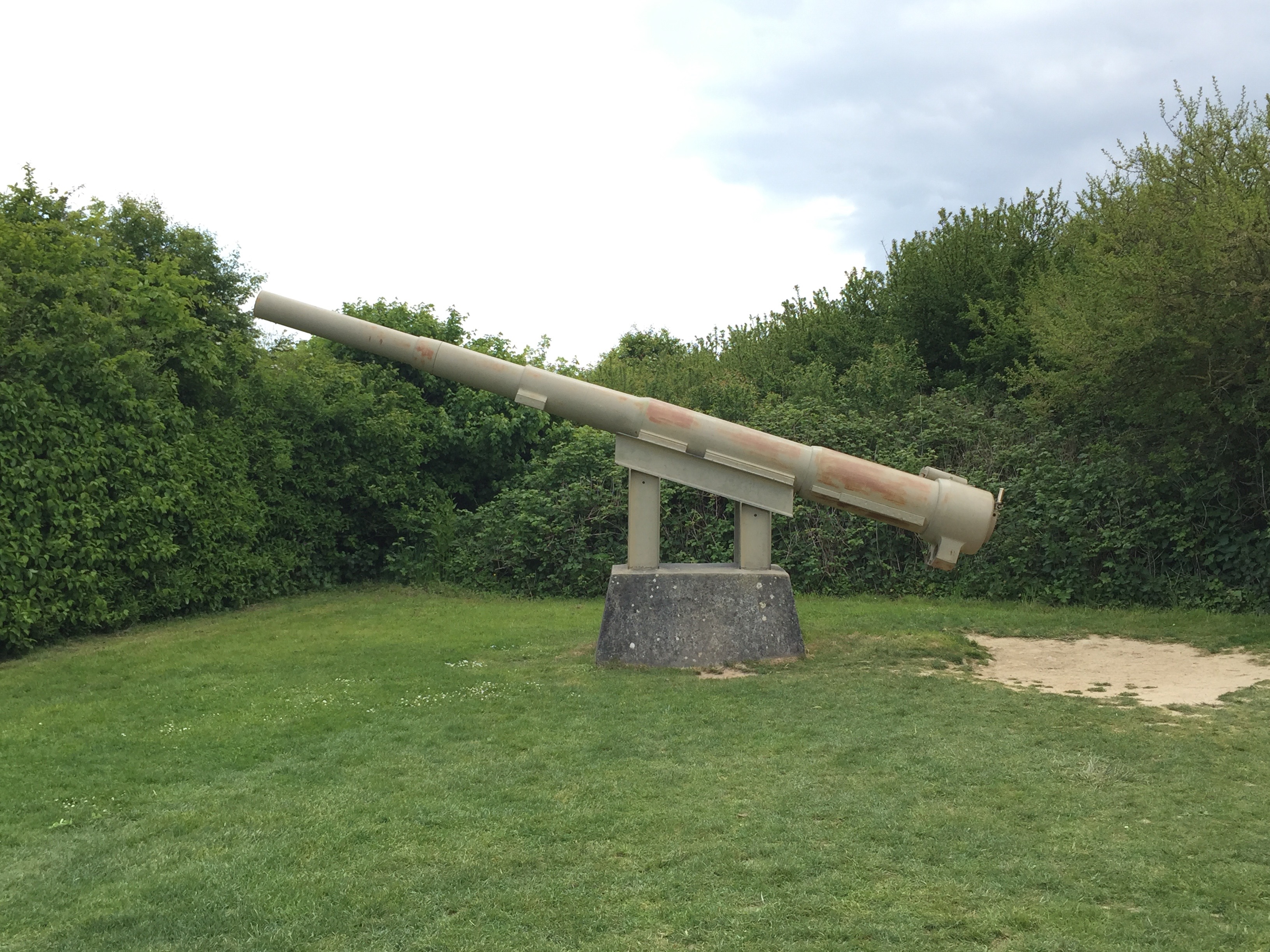
A recreation of one of the 155mm guns the Rangers were tasked with taking out.

A recreation of one of the 155mm guns the Rangers were tasked with taking out.

Now when the allied command began planning the specifics of D-Day, they realized that the area of Pointe du Hoc, a high point that rises about 90 feet out of English channel with Utah beach on its east and Omaha beach on its west, was an area of critical importance. Reconnaissance photos had found that the Germans had six 155mm guns located on top of the cliffs that could be used to wipe out any invading allied forces on Omaha beach. If the invasion of Omaha beach were to succeed, the guns had to be taken out. Pointe du Hoc at that time was a seemingly impenetrable position with its 90 foot high cliffs on one side, machine guns posted along the edges of the cliffs, and the area covered in land mines. Thankfully, the American army had recently created a special operations unit called the Rangers who specialized in guerilla fighting and stealth missions and who were probably the Allies best chance at getting onto Pointe du Hoc. The Rangers of the 2nd Battalion trained every day for months, climbing similar cliffs along the southern coasts of England, in preparation for D-Day when they would climb the 90 foot cliffs of Pointe du Hoc. But even with all the specific training, the planners of D-Day agreed that the Rangers mission was the most dangerous of the day and there were expected causalities as high as 70-percent.

018

My friend Bethany stands at the bottom of the crater while I stand at the top so you can get an idea of how big the craters are.

On the morning of June 6th, the 225 Rangers cross the English Channel and headed for the Normandy coast. As the Rangers crossed the channel, some realized that they were headed in the wrong direction, which meant that they would be behind schedule and ruin the extremely time sensitive invasion plan. Despite the delays, the Rangers eventually managed to reach the bottom of the cliffs and did not hesitate to scale the 90 foot cliffs under heavy enemy fire. At around 7:30 a.m., the Rangers reached the top of the cliffs and by about 8:30 a.m. all six of the German guns were destroyed. The Rangers were not done when they destroyed the guns however; for two days the remaining undermanned, undersupplied, and extremely exhausted Rangers fought off German soldiers within the area of Pointe du Hoc until they could finally be released on June 8th. When the Rangers were finally relieved on D+2, out of the original 225 Rangers who crossed the channel two days earlier, only 90 men were still able to fight.

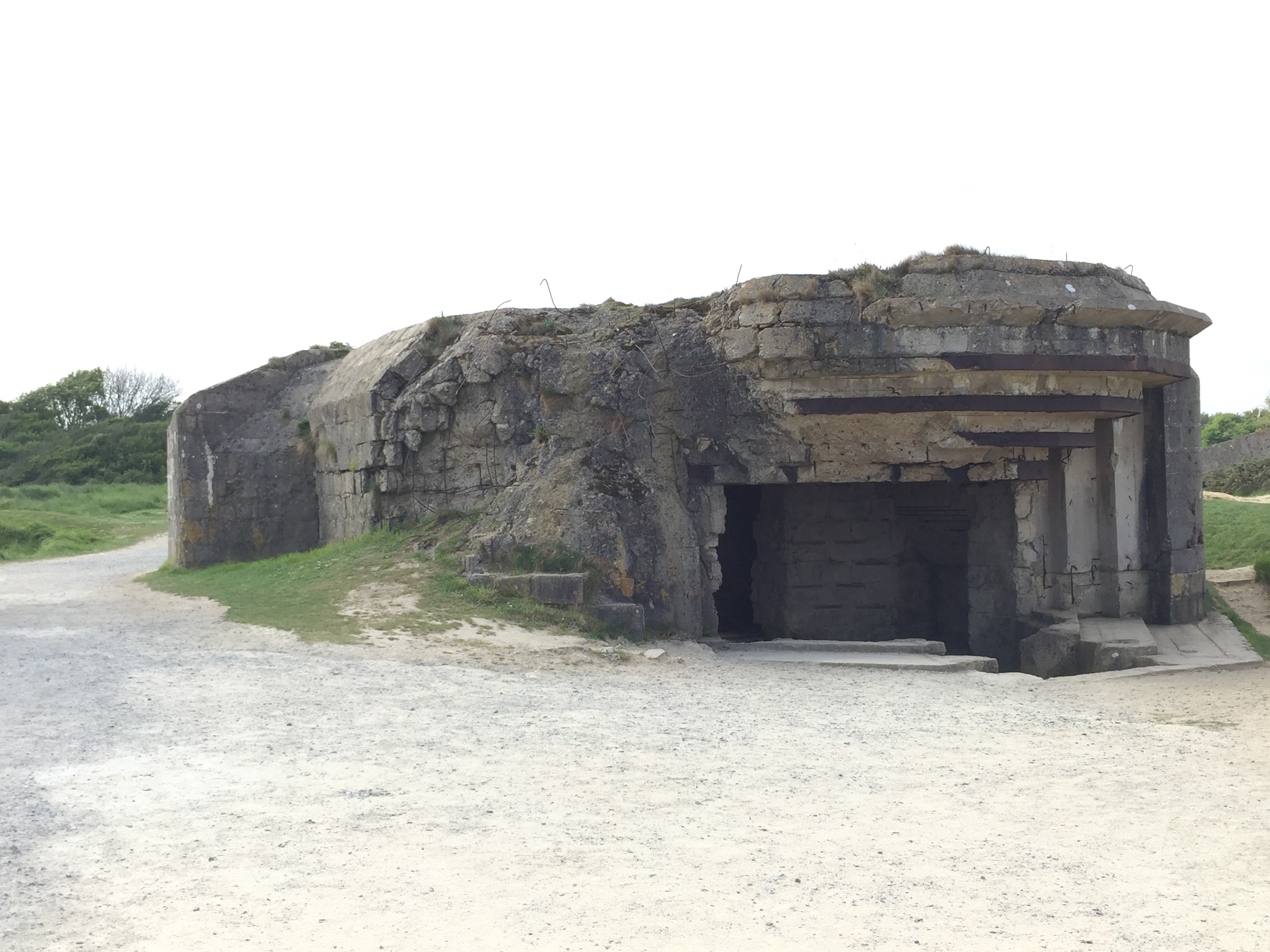
One of many German fortifications that still stand in Pointe du Hoc.

One of many German fortifications that still stand in Pointe du Hoc.

After studying the Rangers at Pointe du Hoc for months, I was so excited to visit the location where the intense battle happened that not even the fact that I had to give an oral presentation at the site could lessen my excitement

Me, goofing around for a moment while standing in a German fortification.

Me, goofing around for a moment while standing in a German fortification.

Unlike some of the other sites we had visited earlier in our trip, Pointe du Hoc remained very similar to how the Rangers left it back in 1944: deep bomb craters still littered the area, German fortifications still stood strong in places, and the postwar additions to the site were few and far between. I was taken aback the first time I laid eyes on the site at both how large the total area of Pointe du Hoc really was and just how big some of the bomb craters got. It was powerful to stand out at the edge of the cliffs- where the monument for the 2nd Rangers Battalion now stands -, look down at the gravely strip of land at the bottom, and imagine what it must have felt like for a German soldier on that historic day to look down and see the Rangers climbing towards you without hesitation or fear. Once the initial shock of the location passed, however, it was almost too easy to lose myself in the site and for a moment I forgot what the place really was. It was easy to run through the dark, cement German fortifications with my classmates and joke how it looked like a scene from the Blair Witch project. There was no hesitation to take cheesy pictures together and reenact the Lion King on some of the larger rock outcroppings that stuck up from the Earth. On that beautiful, sunny May morning, even with the land still so torn up, for a few moments I was able to forget what had happened there. But as I began my presentation and started to repeat the words that I had been rehearsing for days, the novelty of the day washed away and the memory of what happened returned at full force: soldiers- some of them really just kids, what with them being either my age or even younger –fought and struggled and died on the very land I stood and spoke on so that they could help take back almost an entire continent from Nazi rule.

The simple monument, made of granite and formed roughly to represent the Ranger dagger, is one of the few post war additions to the location. The monument is dedicated to the Rangers who fought there almost 72 years ago.

The simple monument, made of granite and formed roughly to represent the Ranger dagger, is one of the few post war additions to the location. The monument is dedicated to the Rangers who fought there almost 72 years ago.

Pointe du Hoc stands today as a symbol of the struggle show by the Rangers that day in their mission to help take back Europe. I am so thankful I was able to not only learn more about those amazing men but be able to get the chance to educate others on them as well.


Faint Memory of Blood and Triumph

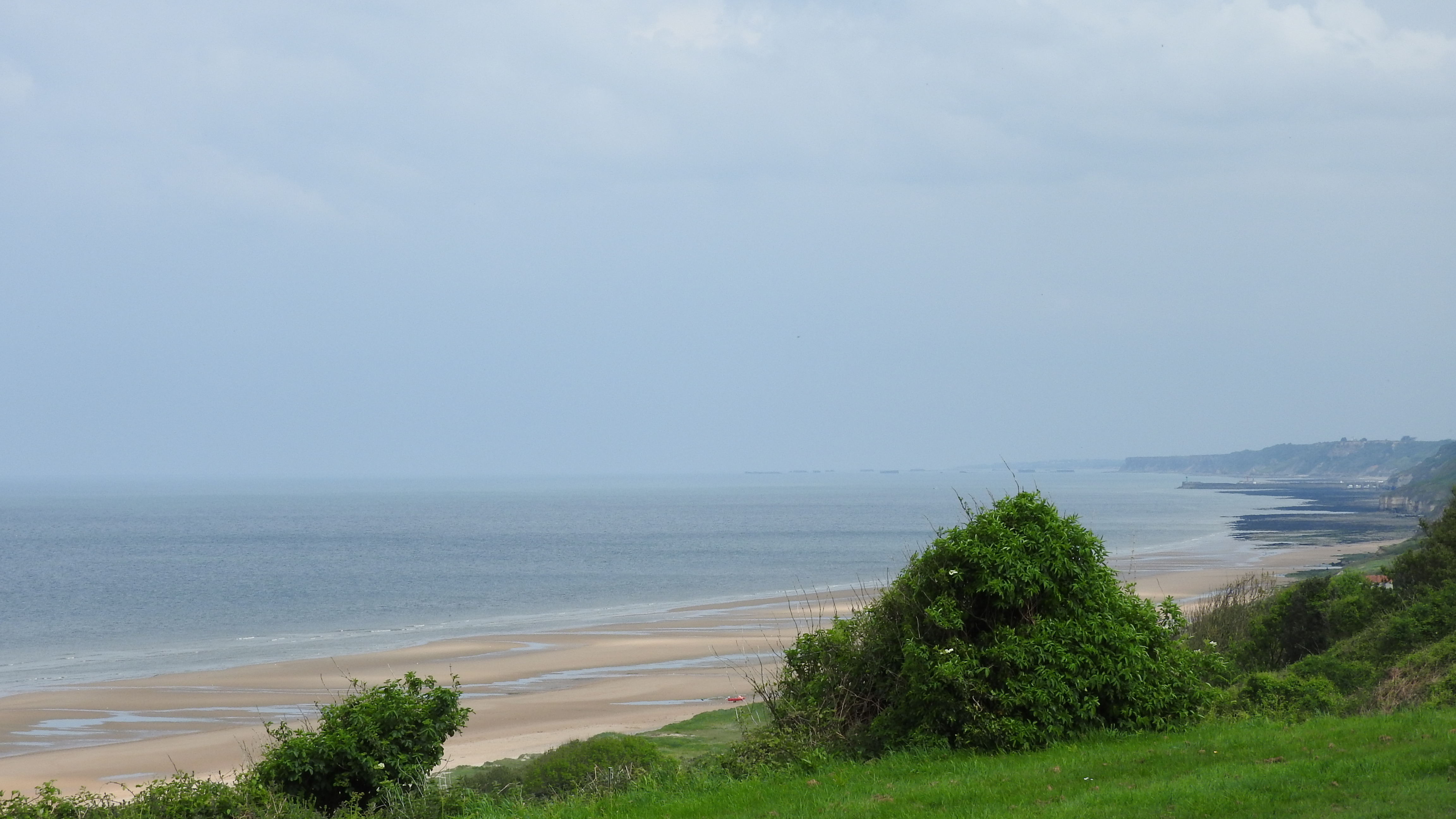
One can’t talk about Normandy without mentioning D-day, and one of the first things that pops into my mind when I hear Normandy are the beach invasions. We’ve seen it in “Saving Private Ryan”, in all the reenactments, and in documentaries, but nothing compares to standing on the beaches themselves: the same beaches where thousands of soldiers died. Looking around, they might seem like ordinary beaches, except for the remnants of German bunkers scattered across the beaches. Each beach was significantly different from the other and tell different stories of sacrifice and success.

Looking down Utah Beach during low tide

Utah Beach during low tide.

Utah Beach, the place where even when things did go wrong, it still ended in favor of the Allies’ success. Utah reminded me a lot of beaches seen in places like the North Carolina coast, with sand dunes blocking the ocean from moving in further. Seashells littered the beach and even with the tide out, it didn’t seem like a large beach to begin with. At Utah Beach, the only thing that signified what had occurred was the museum that had been built on top of a Nazi bunker used during the war. The rest of the beach looked as though the sea had taken most, if not all, the evidence of the Normandy Invasion.

Looking down Omaha Beach while the tide recedes.

Omaha Beach where the 29th infantry division landed,  tide receding.

Not too far from Utah Beach is the infamous Omaha Beach. Omaha was completely different from Utah. Some of the larger differences between the two were Omaha didn’t have sand dunes like Utah, it met enormous bluffs right on the coastline, and it wasn’t hard to spot the remnants of the Atlantic Wall. The beach wasn’t at low tide, but it seemed significantly farther than Utah and to run from the beach to the bluff, with all the obstacles that were in the way, would have most definitely been nearly impossible. Two slots in the cliffs showed where the Germans had kept the machine guns that completely slaughtered the American soldiers that were on the beaches. There had to have been more than those two on that beach but they were well hidden by the shrubbery growing on the bluffs.

Looking down Omaha Beach in the direction of Pointe Du Hoc.

Omaha Beach, looking in the direction of Pointe Du Hoc.

The last beach I had the opportunity to see, although from a distance, was Gold beach. Gold was similar to Omaha with the bluffs but Gold has a town that runs right onto the beach. The presence of the Atlantic Wall was there but more hidden and overshadowed by the remains of the Mulberry Harbour that was used to transport most of the supplies for the Allied forces into France until months later when ports under German control are finally liberated. Seeing those slabs of one of the most amazing engineering feats of the invasion was mind boggling.


Arromanches and Gold Beach with remnants of the Mulberry Harbour.

Arromanches and Gold Beach with remnants of the Mulberry Harbour.

Each beach had an important role in bringing the Allies towards success in the Normandy invasion. Sadly walking around on the beaches doesn’t even begin to describe what had occurred over 70 years ago. The only way someone could truly grasp what happened was to be there on D-day. With the passage of time, the remnants of that bloody day are few and far. The Nazis are gone, and the tides have long since washed away the blood but the memories will forever remain. Today Utah, Omaha, and Gold appear nothing more than ordinary beaches; beaches with the faint memory of blood and triumph.


Remembering the Dead of Normandy

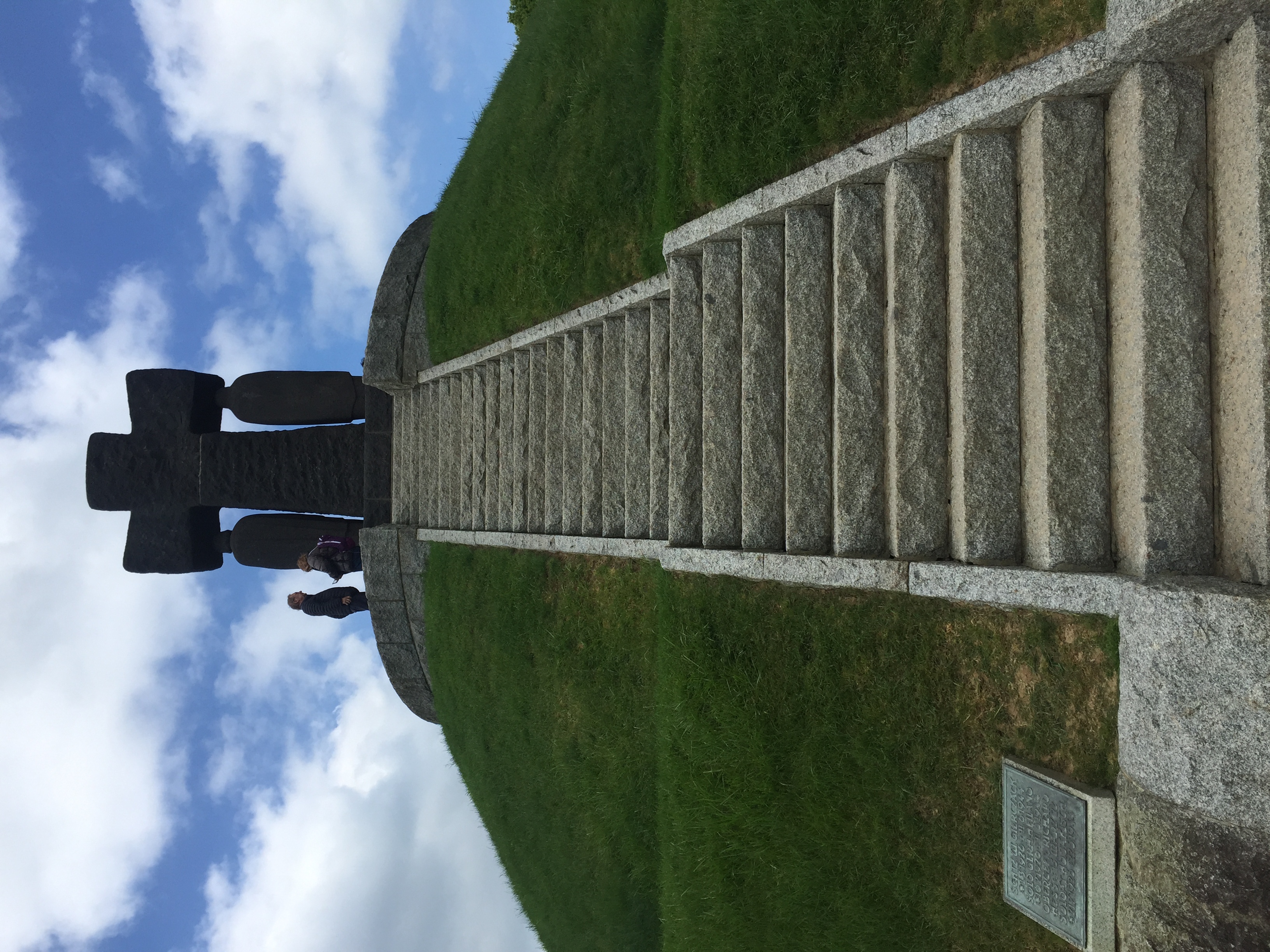
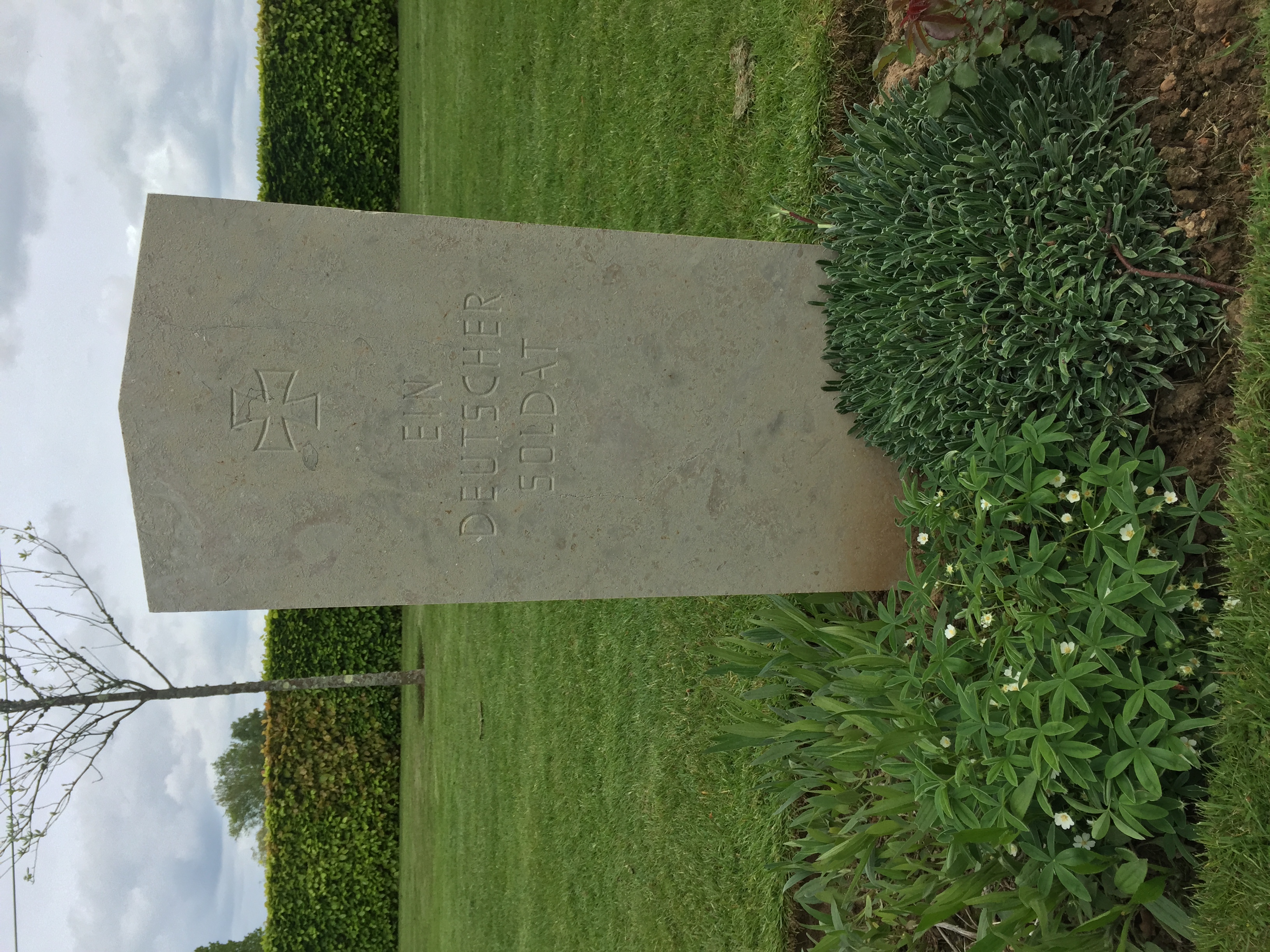
We walked through the gates of the German military cemetery in Normandy and it stretched out in front of us. The manicured, grassy lawn was interrupted from place to place by small, short gravestones that marked the dead. The markers were simple, evenly sided stone crosses on top of square cement slabs. The epitaphs bore witness to one or two names and their respective dates of birth and death. Many inscriptions read only “Ein Deutscher Soldat.” At varied intervals throughout the cemetery, five crosses, side-by-side, dotted the grass. Two shorter crosses were on either side of a taller cross, but all of them stood taller than the unimpressive gravestones. There were no flowers except for the small, appropriately simple wildflowers that sprung up graveside in the grass. Trees shadowed many of the graves. In the center of the cemetery, a large earthen mound rose up as the place’s only impressive structure. Around the base, small metal plaques marked the names of more of the dead. The mound was topped by a large gray cross, and two solemn-looking figures stood beneath the cross’s wings. The place was very quiet, and there were few visitors present to pay their respects.

German Graves One

A German grave with a set of five crosses behind it. In the background, the cemetery’s mound can be seen.

To me, the cemetery’s distinctly simple design seemed to have meaning. There were no grandiose structures, no walls with quotes to show the sacrifice and valor of the dead, no flowers to supplement the stone, and no words, save their names, to mark the soldiers’ resting places. The entire design seemed to plea with visitors to respect the dead, though not their cause. The simplicity of the place distanced the soldiers from the grand plans of the Nazis and the  incredible persona of the Fuhrer. The soldiers were made, through their graves, into simple soldiers, simple people, who died the same death as any other soldier regardless of cause. And the many crosses of the grounds tie the German soldiers there to soldiers of various other nations around Normandy. The cemetery states that just as American families

German Graves Two

The steps leading to the top of the mound in the center of the German cemetery. The backs of the figures under the wings of the cross can be seen at the top.

have found asylum in their sons’ crosses, so too can German families; just as American soldiers can find rest in heaven, so too can German soldiers.

American Graves One

The blank sides of crosses as they stretch into the distance at the American cemetery in Normandy.

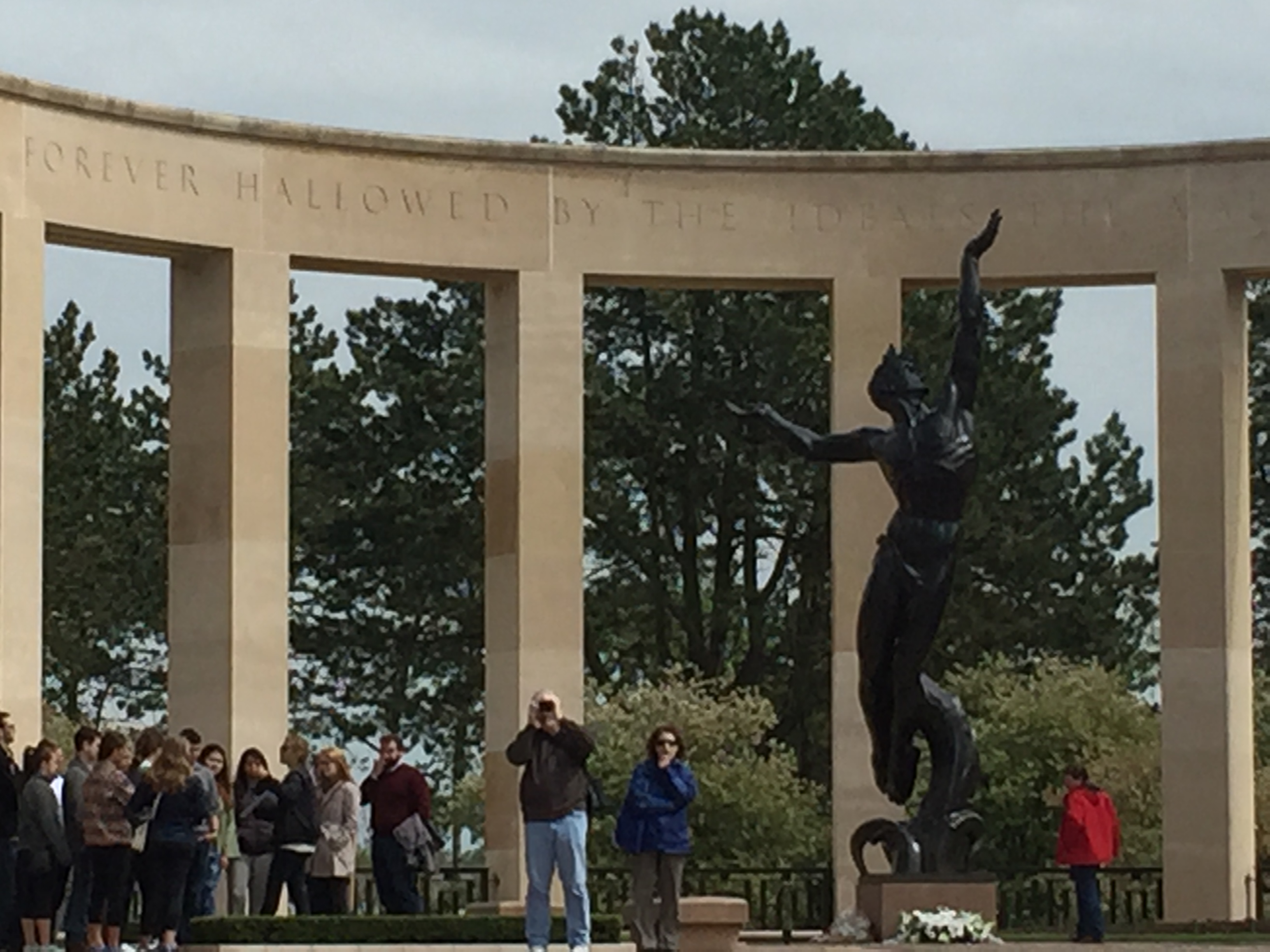
The American cemetery in Normandy offers a different picture. As we walked into the cemetery, we passed through a large stone-surfaced area. The back of the area had a columned arch that declared the eternal honor due the dead who were sacrificed in a campaign to uphold basic human ideals. In the center of the area was a large, black statue of a man looking up with his arms outstretched toward the sky. The statue seemed to represent the Allied cause, embodied in the dead American soldier, a cause which upheld the ideals of a free world. Down steps, we saw a large, dark pool of water, and passed that two tall American flags rose. Next were the graves, a seemingly endless sea of white crosses and six-pointed stars. The epitaphs told the soldier’s name, division, home state, and date of death. Well-kept trees and flowers surrounded and dotted the grounds. A small, domed chapel was in the center of the graves. There was a view along one side of the cemetery to Omaha Beach below and the ocean beyond. The place was busy with people, and a ceremony was ending when we arrived. Many Americans were there, but I also saw groups of people from France and Great Britain. Many faces looked indifferent, even happy, but others were solemn, even tearful.

The cemetery gave the impression, by stating it as fact, that the American fight was a just fight. The American dead were made into heroes and martyrs. The location of the cemetery also encouraged the idea that they were liberators. The graves sat high above the beaches, many marking those who died taking that very sand. The arch discussing just ideals, the crowds, and the white crosses looking down at the beach seemed to validate that those buried there had liberated that place. They had been selflessly sacrificed to regain France’s freedom.

American Graves Two

The tall, black statue at the front of the American cemetery. The arch declaring the sacred ideals of the Allied cause is behind the statue.

But the cemetery also worked to dehumanize the dead. Of the waves of graves, there were only two designs, and most were the same white cross. The American soldier’s grave, and thus the American soldier, became mass produced. The graves looked as if they had come straight off the assembly line. The soldier became a tool of efficiency, quantity, and replaceability. There were no personal epitaphs or tombstones. The soldier’s epitaphs all seemed to become that of the arch that declared the ideals of the Allied cause. And the soldiers all became the large statue that held up those ideals. The white crosses became small, just footstools for the statue that watched over them. The soldiers, or the entire military, became Atlas, the weight of the world had fallen upon them, and they had held it high. The white markers seemed to be mere twinkles in Atlas’ eyes, necessary, tragic, and heroic.

British Graves One

A gravestone at the British cemetery marking the place of a dead British soldier.

The British cemetery was different still. As we walked through the entrance a green lawn stretched back into the distance, baring about a third of the way back what resembled a gray tomb with the words “their name liveth for evermore.” On either side of the tomb was a columned mausoleum-like building, and hanging, purple flowers snaked and drooped around the columns.  A large gray and black cross rose up another ways back, the tallest monument of the cemetery. Graves rose around these structures in rows, many of which were skirted in various flowers and covered in trees’ shadows. The gravestones were all the same shape, and they were designed with a cross, six-pointed star, or neither, as well as the insignia from the soldier’s fighting force. The gravestones also indicated the soldier’s rank, name, date of death, and age. At the bottom of the stone, most of the graves had a personalized epitaph picked by the soldier’s family. The cemetery even had graves for war dead from such countries as Germany, Canada, and the United States.

British Graves Two

The gravestone of a German soldier at the British cemetery.

To me, this was a cemetery for soldiers, but even more, a cemetery for people. The dead were not exalted to lofty ideals and not degraded to sorry soldiers who died hapless deaths. There was not the same exclusivity that the German and American cemeteries had. Personal notes and flowers adorned the graves similar to civilian cemeteries. Though the cemetery was unmistakably a military one, these things  made it feel more personal, and to me, almost more sincere. The cemetery seemed to convey that the people buried there had signed up, or were drafted, to fight, not to die. It seemed to say that while in death they remain forever part of the military and its cause, they return to their family and friends in memory and mourning where they truly belong.

Matt McCoy

The Atlantikwall at Pointe du Hoc

Pointe du Hoc was my favorite place we have gone to so far on our study abroad.  Pointe du Hoc is a 90-foot cliff near Omaha Beach at Normandy that the American Rangers climbed to take out Nazi artillery emplacements.  These cannons had up to an 18-mile firing range and could have been used against American forces landing at Omaha Beach.  Fortunately, after the Rangers took the cliff, they realized the guns had been replaced with telephone poles to trick Allied reconnaissance.

The cliff of Pointe du Hoc

The cliff the Rangers climbed at Pointe du Hoc

This past semester I studied Nazi defenses and the creation of the Atlantic Wall.  While learning about the Atlantic Wall it was difficult to imagine the scale the Nazi’s fortifications.  The Atlantic Wall was a series of bunkers, offshore obstacles, and machine-gun nests along the 2,800-mile Atlantic coastline the Nazis occupied.  To this day mines are still being found which were part of Nazi coastal fortifications.  This territory stretched from the Spanish-French border to the top of Norway and along the French-Mediterranean Sea border.

Pointe du Hoc is one of the best sites left from the war that exhibits the Atlantic Wall, with many almost complete bunkers and fortifications left alone since the 1945.  My experience visiting Pointe du Hoc allowed me to comprehend the magnitude of the Nazi’s Atlantic defenses by witnessing the remnants in person.  After seeing the vast distance which makes up the stretch of Norman coastline the Allies landed at – not only by viewing it from afar but by driving the distances to each beach – it is mind-boggling that the Nazis believed they could have had the manpower to defend so many beachheads.  The construction of the wall to me was first a political display of power and second a defense mechanism.

Nazi bunker

A Nazi fortification

The first thing I noticed when we arrived at Pointe du Hoc – besides the numerous French school children running around – were the extremely large and sometimes steep craters that made up the landscape.  I walked along the paths above and in-between the craters while observing my surroundings at Pointe du Hoc.  It took me a while to piece together that this landscape was created by Allied pre-invasion bombing.  One might not notice at first that the landscape is man-made because grass and brush have grown abundantly over the craters making them look natural.  It is truly incredible to see the long-term destruction one 500lb bomb will leave on a landscape, let alone several hundreds of them.

Me at the top of a crater where a Nazi bunker used to be

Me standing at the top of a crater on remnants of a Nazi bunker

The bunkers had no lights inside, and I had to use my iPhone for a flashlight.  Most of the bunkers had bent and rusted metal exposed through the concrete due to deterioration over the years.  It was amazing to think that men day-in and day-out guarded their post here throughout the war, just waiting for an Allied attack.  When you see the size and number of walls alone at Pointe du Hoc, it is amazing to think how much work was put into laying the amount of concrete needed to fortify all of the bunkers of the Atlantic coastlines with 10ft ceilings and 6.5ft walls.

Artillery used to defend the Atlantic Wall

The artillery used to defend the Atlantic Wall

My final observations are that it was interesting that the site of Pointe du Hoc had no acknowledgements of the Atlantic Wall and its significance.  It was significant because it made up the whole landscape and environment of Pointe du Hoc where the Rangers landed.  The site felt more like an American memorial because of all the quotes from American leaders and plaques commemorating the Americans who died at Pointe du Hoc.  Part of the reason I think they don’t speak much of the Atlantic Wall is due to the fact that the Vichy Régime in France collaborated with the Nazis, using French construction companies as well as slave labor to help build the fortifications.  The Atlantic Wall in France used to be called the “food wall” because if French families wanted a job under the Nazis, they had to work building the fortifications.  In the end, seeing the Atlantic Wall in person was an amazing experience that shows the remnants of history and how the French culture interprets and displays it for the public.

The landscape of Pointe du Hoc

The landscape of Pointe du Hoc


History Obliterates

I returned to Toledo for spring break prepared to quell the persistent urgings of my sister. For months she insisted that I listen to Hamilton: An American Musical. “You’re a dancer. You’re a history major. This is a musical about history. Why are you not obsessed with this?!” Ok. I gave it a shot. As I listened through the cast recording, I was struck by a recurring theme battling with what history is, what it means, and how it is told.

In a newly independent America, the musical’s antagonist, Aaron Burr, fights an ideological crusade for power against Alexander Hamilton. He considers his place in history and American collective memory:

“Death doesn’t discriminate between the sinners and the saints. It takes and it takes and it takes. And we keep living anyway. We rise and we fall and we break and we make our mistakes” (“Wait For It,” Act I).

He continues this idea in Act II:

“History obliterates every picture it paints. It paints me and all my mistakes […] I survived but I paid for it. Now I’m the villain in your history” (“The World Was Wide Enough,” Act II).

As I walked Utah and Omaha beaches, I thought about how history obliterates. I pondered historical memory as Burr does throughout Lin Manuel-Miranda’s musical. I considered how we remember these areas and this war. The waves of the beach rolled in and out as I watched the tide ebb farther from view.

I looked at the beaches and thought of the men who fell there. Some took only a few steps onto to the beach they were preparing to storm for months. I saw only broken shells, crab legs, and fine Normandy sand.

I tried to imagine the sounds of bullets. I heard the roll of the low tide in the distance and the whispers of my classmates.

I watched for the German cavalry in the projections of my mind. Instead, I saw three Frenchmen racing horses down the coast. I heard the clicks of their hooves, as steady as a metronome.

Depleting resources caused Germany to be more reliant on horses than mechanized division towards the end of the war.

Depleting resources caused Germany to be more reliant on horses than mechanized division towards the end of the war (Musee du Debarquement de Utah Beach).

Three Frenchmen race horses down Utah Beach.

Three Frenchmen race horses down Utah Beach.

I pictured the Atlantic Wall, a massive German defensive construction. I saw only a piecemeal barbed wired fence enclosing the perimeter of the beach.

The war obliterated. Time slowly erased the brutality of these battles. The beaches once littered with stuff—human stuff, as journalist Ernie Pyle wrote in his columns—no longer suggested this history. Save for a few plaques and memorials along the entrances of the beaches, one would never consider such picturesque scenes as sites of such horror.

Manuel-Miranda’s Aaron Burr concerned himself with the collective memory of his life and legacy: “Now I’m the villain in your history.” We travelled from the beaches to the German, American, and British war cemeteries. Standing in the green Normandy grass by these graves, it was suddenly harder to identify the villains in history. There was no visible enemy shooting across a line. Strangely, the cemeteries had obliterated these distinctions.

Gray stone slabs and crosses lined the German cemetery. A sea of alabaster head stones spread as far as the eye could see in the American cemetery situated on the coastline. The British remembered their dead with flowers and personalized graves displaying phrases of love, rest, sacrifice, and faith.

Concrete crosses throughout the German cemetery.

Concrete crosses throughout the German cemetery.

DSCN5463

A sea of white stones in the American cemetery.

On these grounds, history obliterates nothing but the villain. They did not paint the mistakes of the Allied or Axis powers. They showed, as Burr acknowledged, that death does not discriminate between the sinners and the saints.

“History obliterates. It exhibits no restraints […] It takes and it takes and it takes. And we keep living anyway. We rise and we fall and we break and we make our mistakes.” The beaches of D-Day and the cemeteries underscore this notion. History obliterates; death does not discriminate. We remember the past through relationships to victory and villains. As we watched the afterbirth of a new world post-WWII, the memory of the D-Day landings began to be washed away with the tides of their beaches. We remember the Invasion and its actors not through pictures of mistakes and villainy, but through respect and sacrifice.

First Stop: The War Rooms

Despite the similar language, the culture was very different in London. People did not really leave tips, previous London bombing attempts resulted in the removal of most public trash cans, and fried fish was the biggest food there. London has a vast history of World War II. In London I was fortunate enough to see the Churchill War Rooms. They seemed to give some very interesting insight into World War II.

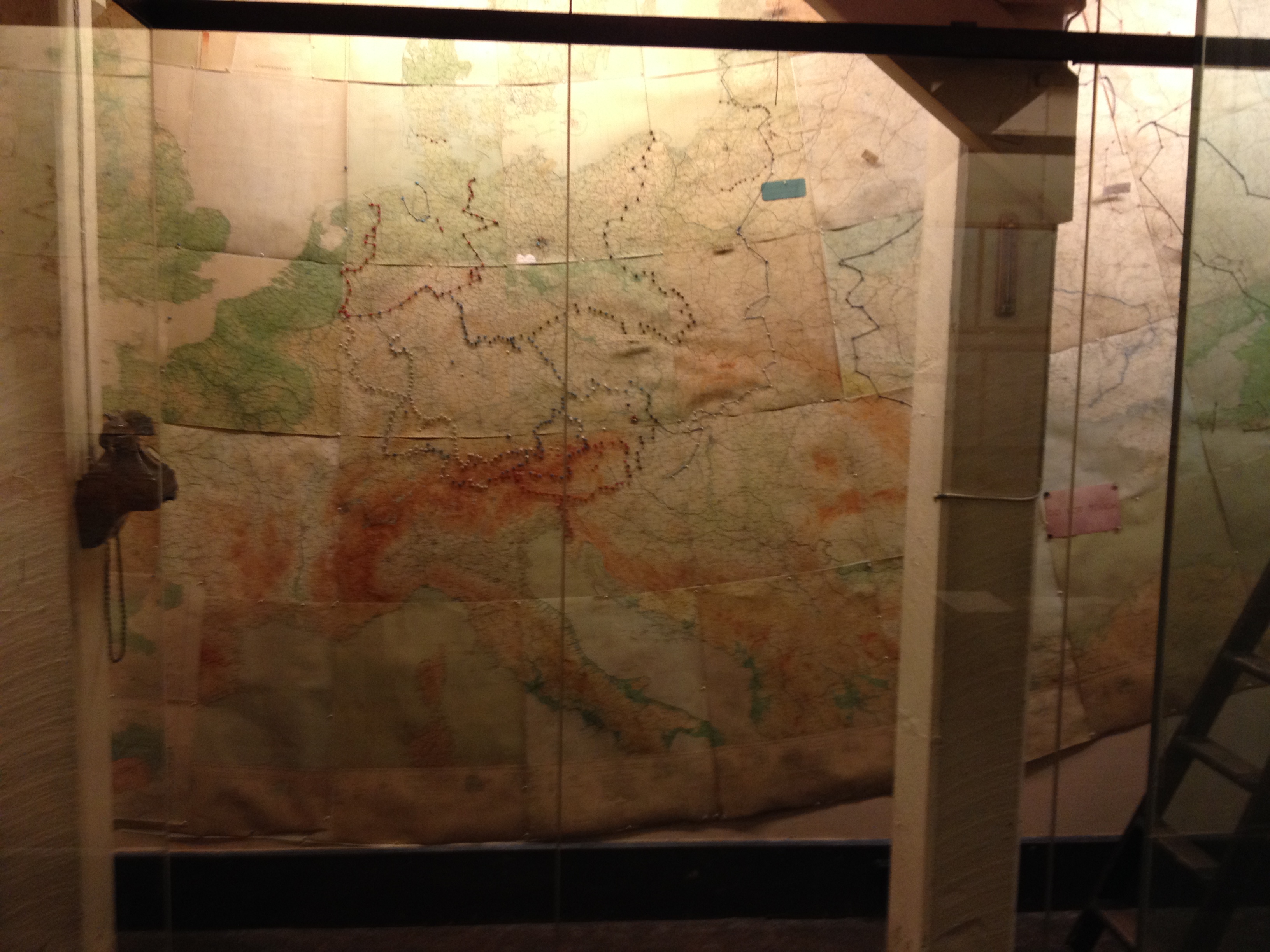
The Churchill War Rooms were the actual rooms where Churchill and his staff made their war plans. After the war ended, they simply just walked out and sealed up the doors, leaving the office exactly as it was. Upon being discovered, it was made into a museum, with the rooms rearranged as they would have been during the war when they were being used; mannequins were also dressed up and placed in spots where the real people would have been, in order to lend authenticity. The rooms were extremely small and really helped to show how cramped and hot it must have been during the war. Churchill’s room was the biggest, but it was also right next to the map room, which was described as the busiest and loudest room. The map room was by far the most interesting of the War Rooms. The map room was full of huge maps covering the entire walls up to the ceiling. The maps really helped to give a much better perspective of the scale of the war as it was progressing. Most maps I have seen of the war before are usually no bigger than a laptop screen or book, so seeing them on a bigger map with the details of specific battle points and fronts really helped to show the massiveness of it. I noticed this especially with Germany’s invasion of the Soviet Union. Although the invasion was initially somewhat successful, people often refer to Germany’s invasion of the Soviet Union as one of their ultimate downfalls during the war. The maps, however, really did help to show how successful Germany’s initial invasion was, as it gave a much better perspective of how deep they actually reached.

The map rooms were also laired with mannequins who represented the many people who used the map rooms every day. The mannequins showed how the officers used the massive maps to help predict the movement of opposition troops and plan the advance of their own. Winston Churchill’s room was located directly next to the map rooms. Considering the busyness of the map rooms, it seems to pretty clearly show how little sleep he and others were actually getting. They speculated at the exhibit that people got more sleep during random naps throughout the day than actual sleep at night. The Churchill War Rooms really helped to give me a much better insight into how a war is actually planned out. I never realized how many different rooms there would need to be and how much people actually worked and how stressful it was in making plans during the war. Communicating around that much commotion while also feeling the vibrations of bombs dropping above them would have been immensely difficult. It truly is amazing how they were able to organize an entire war effort in such difficult circumstances.

A picture of one of the biggest maps in the War Rooms. This was located in an annex of the War Rooms and showed in great detail the advances and positions of the Germans and the Soviets at the time during the war.

A picture of one of the biggest maps in the War Rooms. This was located in an annex of the War Rooms and showed in great detail the advances and positions of the axis and allies in the European Theatre.

Life as a Londoner

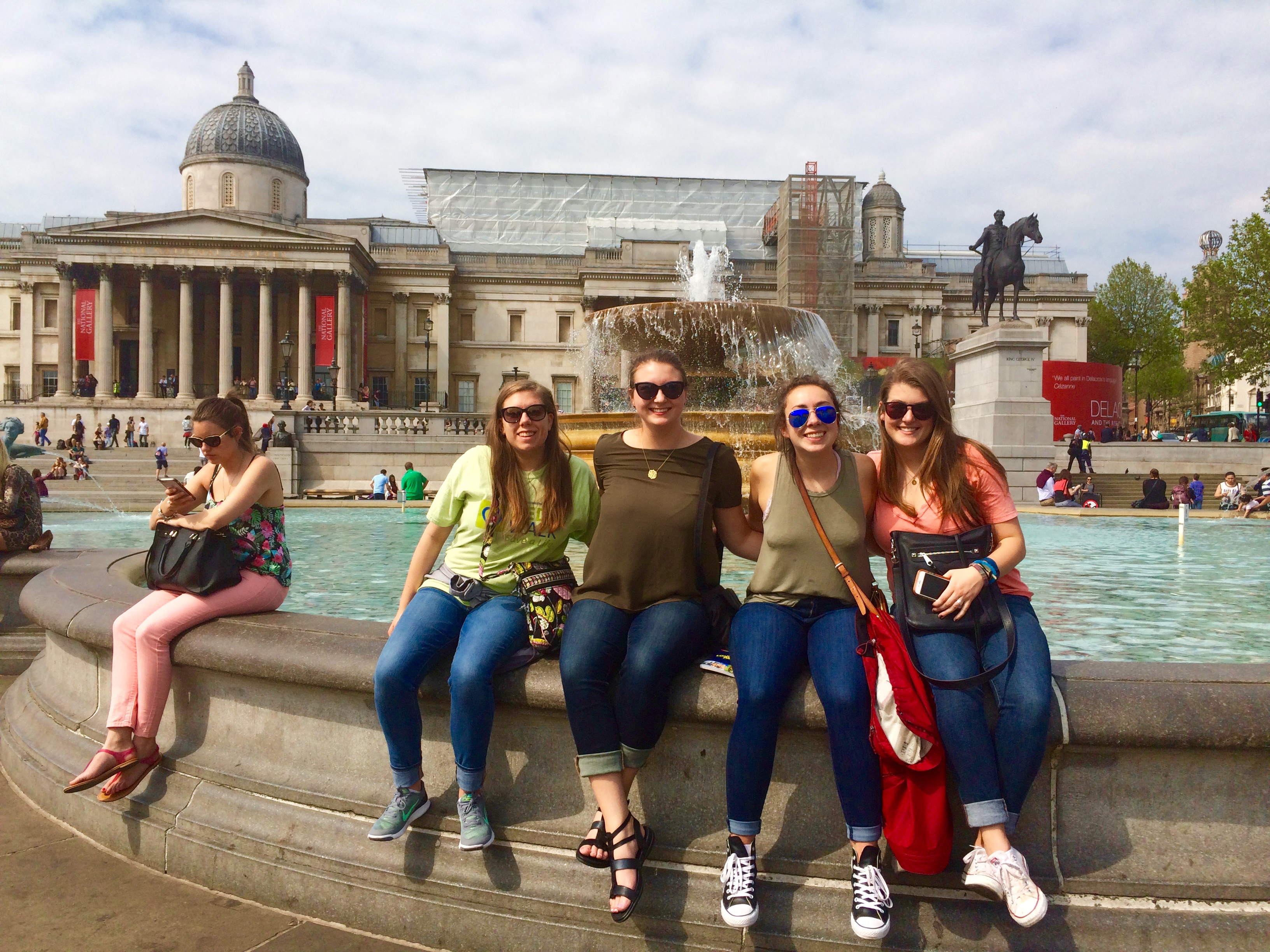
London is an absolutely amazing city that is so full of history and culture.   The hustle and bustle of the city added an element that made exploration so exciting. We started the study tour off with a bang when we were given the task of finding our way to Trafalgar Square by using the Tube (London’s underground subway system). The Square was absolutely beautiful, with views of the National Gallery, Nelson’s Column, and amazing fountains. This excursion sparked my excitement to explore as much of London as I could in the short amount of time I was there.


Sitting on the fountain of Trafalgar Square

Sitting on the fountain of Trafalgar Square

While in London, I was surprised by how I felt like I was in a foreign country, yet I also felt very comfortable at the same time. Through my time in London, I realized what Professor Steigerwald was saying when he told us it was ok to make mistakes. It is through making mistakes that I learned how to be self-sufficient in an unknown city, while also (hopefully) not sticking out like a sore thumb as a tourist. For example, a few of us missed our stop on the tube, and we had to regroup in order to figure out a way to get back to the hotel. It ended up working out for the better, but this was just one of the problem solving situations I faced that helped me to become more confident in getting around the city.

The museums were stunning both inside and out, and they enhanced my experience by helping me to learn more about World War II in ways I could not at home in the United States. First and foremost, London actually played a significant role in the front lines of the war. This gave an authentic feel to the museums that I would not be able to get if I were at home in the states. The museums had so many different things to offer from a tour through the Churchill War Rooms to walking through the Imperial War Museum, I had the opportunity to see so many exhibits for the war. As I saw all of these exhibits I got to put all the little details of the war together into a big picture of how the war went, what it was actually like, etc.


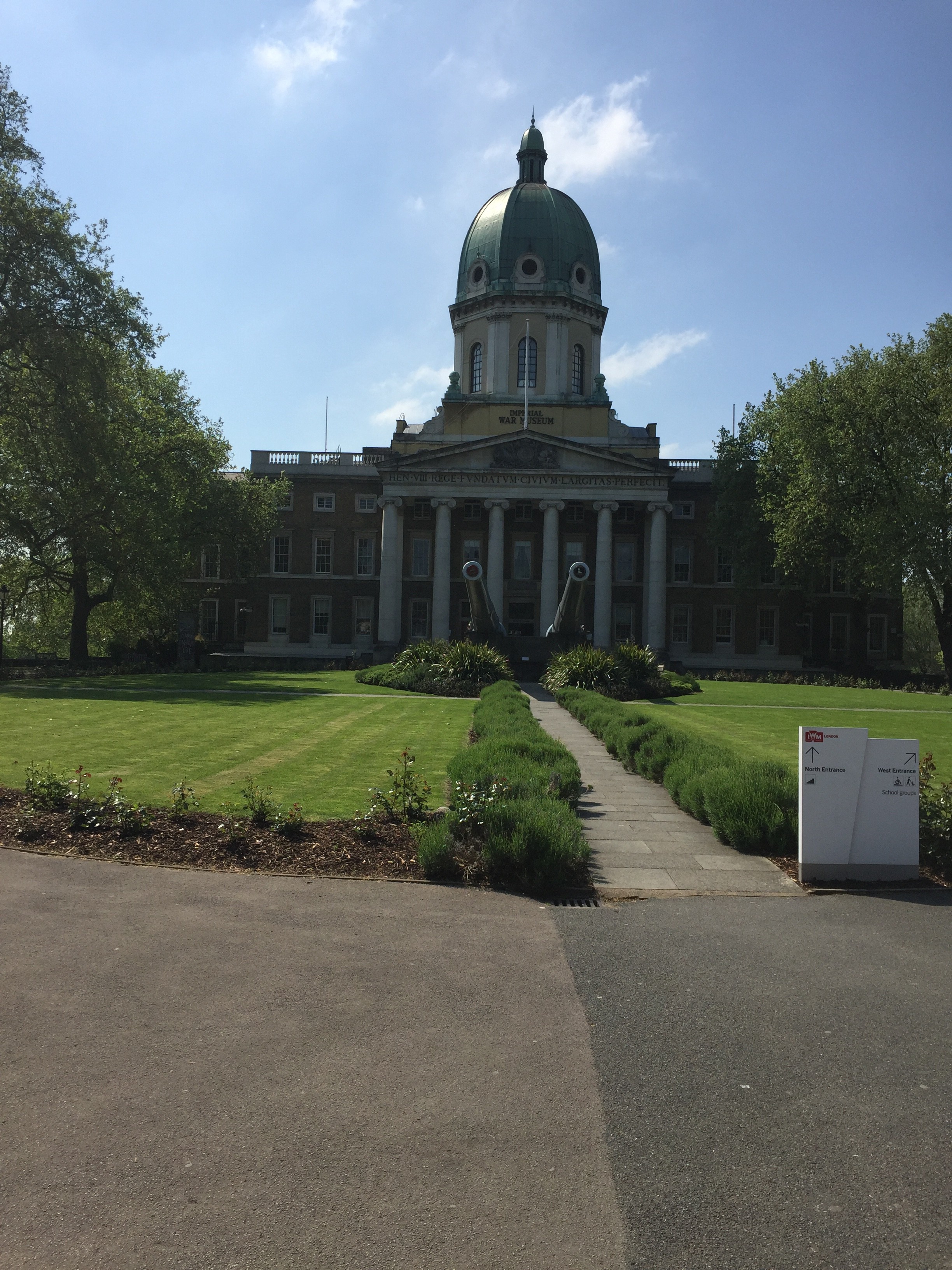
Photo of the beautiful Imperial War Museum

Photo of the beautiful Imperial War Museum

I came to London with an idea of what I was going to see in terms of all the sites, places, and museums, but the culture of the people was very interesting to observe in person. Smoking is very popular, which took me by surprise actually. Young or old, you could not walk down the streets of London without passing multiple people who were smoking a cigarette. I was warned about the restaurant etiquette and how it is different in Europe, but it was still very different than I was expecting. For one, I had to ration my drink to last a whole meal because there are no free refills. Being so used to not having to pay attention to details like this, I had to make a conscious effort if I wanted my drink to last. Another thing that was interesting was the fact that once you got your food, the waiter did not come back and you had to flag them down in order to get your check. Then once you got your check, it was all together instead of separate. It was actually very nice not having the waiter bother you

Overall, London was a wonderful experience that enriched my knowledge of World War II events, while also getting to experience as much of the modern aspects of London as possible in the five days we were there. Now off to Normandy!

The Blitz and the Buckeyes

Professor David Steigerwald

Last fall when the OSU marching band performed for the NFL in London, a good friend of the WWII Program, Steve Habash, had dinner with an alumni and his wife who live there.  Steve has a knack for making good things happen for us, and he is not one to miss a chance.  In this case, the Buckeyes he met were Tim and Jenny Ringo.  Tim is a 1994 graduate of the Fisher School, who has made a career in Human Resources and Human Capital Management for such companies as Anderson Consulting, Accenture, and IBM.  Jenny, a native of greater London, also worked for Anderson, and the two met while on a joint project in Prague.  Jenny’s father, Michael Handscomb, was a teenager during WWII.  And this was the chance that Steve sensed: Would Mr. Handscomb have any interest in meeting with the Buckeye WWII students and regale them with stories about growing up in the midst of war?

Regale us he did.  With all the style and vigor of a practiced lecturer, Michael told us of buzz bombs and doodlebugs, black-out nights and strict rationing.  His family lived just east of London in a small community, Bexleyheath, that metropolitan London long ago collected into its expansive maw.  He was the eldest of two boys, his father a scientific tool-maker and his mother a university graduate and a school teacher who continued to work even after marriage—both then rarities for women.

When the war began, Michael’s father thought it was best to decamp—literally—to a relative’s property on the coast near Portsmouth.  It seemed well out of the way of potential violence.  There, Michael and his brother, Colin, lived like Boy Scouts, tramping around the property, playing war, building forts out of the remnants of an old brickyard, and learning how to catch and skin rabbits, a skill that unexpectedly came in handy once rationing clamped down.

This was 1939, the year of the “phony war,” when Britain was technically at war with Germany but the Nazis had not yet made their drive west. Like a great many people across Western Europe, Michael’s parents were lulled into complacency and decided to take the family back home.

So, in the first few days of September 1940, the Handscombs returned to Bexleyheath.

And the Blitz began.

Having secured air bases in France and the Netherlands, the Germans began their systematic air attacks and took aim at London.  Nighttime bombings intensified during the second and third weeks of September, before the Royal Air Force prevailed.  In the meantime, large sections of the London metro area were pummeled, thousands died, and much of the population found some small measure of safety in the city’s bomb shelters, often improvised in subway tunnels.

While no place was safe—Buckingham Palace itself was hit twice—the East End suffered most.  The main targets were the factory and wharf neighborhoods along the Thames.  East of the city, Bexleyheath lay directly on the flight path both in and out of London.  If a German pilot hadn’t released his load going in, he had to drop it going back out.  Bexleyheath was as good as anyplace to leave it.

So 11-year-old Michael got his first taste of war.  His father served as a community air-raid warden.  Every night after dark, he walked the neighborhood to make sure the blackout rules were being honored.  The family spent night after night in their Anderson shelter, a prefab metal unit installed in family gardens.  As Michael explained it, these acts of civic activism and family pluck gained inspiration from Winston Churchill’s crucial leadership.

Unknown-1

An Anderson Shelter: Easily installed at home, the shelters were supposed to be covered with 18 inches of dirt for extra protection.  They could never defend against a direct hit.  But they did provide protection against shrapnel, flying debris, and other deadly residue of bombings.  Above all, they provided confidence, a sense of control, and an antidote against despair.  And they reinforced the nuclear family, since a household with an Anderson didn’t need to mingle in the depths of Tube stations with so many other people.


Though the bombings diminished, one could never take safety for granted.  The black-outs remained.  Rationing grew to extremes.  To students accustomed to summoning up pizzas from their phones, hearing that basics like cheese and butter were limited to a few ounces a week was pretty shocking.  Michael explained that though meat was rationed, a friendly butcher might be expected to slide a bit extra round the corner with regularity.  And if he caught a rabbit, well, it fell into skilled hands.

Michael’s most dramatic stories weren’t of the Blitz so much as of the VI and V2 attacks of 1944.   Even more than during the Blitz, Bexleyheath was in the line of fire.  These terrifying weapons were notoriously inaccurate—indeed their most unnerving quality was that no one could be sure where they would land, least of all the Germans.  The V1 was aimed at London, more or less, but it fell wherever it ran out of fuel, and the Handscombs’ neighborhood too often was just that place.  You could always hear them coming, Michael explained as he imitated the peculiar buzzing noise of the incoming “doodlebug.”

Whenever the siren sounded, Michael’s father snapped to duty.  If need be and the worst happened, Michael was pressed into service to clear damage and even extract victims.  “It was the first time I’d ever seen a dead body,” he told the students.

Unknown

Mr. Michael Handscomb and the 2016 World War II students, London.

Yet life went on, its routines woven oddly, yet necessarily, around the presence of disaster.  Once, he and his brother were playing in the countryside when a rocket barreled to earth so close that the explosion knocked Colin out of the tree he was climbing.  What was the boys’ first reaction?  They ran to see what the crater looked like and to help themselves to any souvenirs.  Their second reaction: Don’t tell mother.

As he catalogued the anguish and resolution of the British people, Michael ended with a most thoughtful postscript.  Shortly after the war, he won a contest with a junior United Nations group and was invited to travel to Prague by no less a figure than Jan Masaryk, the famous Czech patriot.  This was 1947, and Europe had hardly begun to recover from the war’s massive destruction.  Stopping briefly in Cologne and Nuremburg, he saw the complete devastation that Allied bombing had brought to Germany.  Though what he saw hardly lessened his pride in England’s wartime efforts, he took it as a sobering lesson that no one really wins wars and that, in the event, misery is humanity’s common possession.

__________________________

Not only was Michael’s visit with us a terrific lesson in personal history.  It reminded me of how important our Ohio State connections are and what a broad reach this institution has.  We can count friends worldwide, friends who can bring a wealth of experience and a breadth of perspective to our students.  And in turn, we expect this group of Ohio State students to take inspiration from the contacts we present to them and to imagine living to the model of the global citizen.

A Typical Tourist in London

There she goes! Arriving in London was a much smoother transition than I expected. After overcoming my jet lag in Dublin I was ready to take London. I had limited knowledge of the city before hand and expected it to be similar to New York. On the first day we had to take the underground to our destination, and I was amazed at the extent of the underground system. Everyone knew where they were going and what they were doing even though there are more than 100 stops and routes. People also wore business casual attire and pants the entire time. Not that we don’t wear pants, but shorts were extremely uncommon which was surprising because the weather was warm. I was genuinely surprised by how assimilated I became to city life by the end of five days. I loved the big city life. I have never been in such a fast-paced environment, and I felt as though everywhere I went I had a distinct purpose. The street food was also amazing. I’ve never had such delicious caramel and sugar covered almonds.

I have never been in a city with buildings that were originally built before my country was even formed. The architecture and preservation were amazing. I would say my favorite part of London was the mix of such rich history and the modern world. The mindfulness of the citizens in the previous centuries impressed me significantly. They realized the importance of the monuments and buildings in their city and worked to protect them. I’ve seen and heard about so many castles but did not expect to find them in the middle of the city. The tourism economy is huge. The Londoners seemed to be accustomed to tourists. Even when we accidentally missed our tube stop a local boy just laughed and gave us proper directions.

london

Ben, Amelia, and I acting as typical tourists.

I’m thankful my first European experience began with an English speaking country. Just the culture change was enough to throw me the first couple of days. It’s almost more difficult to adjust to London only because the language tricks you into believing the culture is just as similar. The lifestyle in London however, is only similar to Columbus by the language. Even the things you would think to be the same were not. I walked into a McDonalds and expected to see the same foods but I did not. The London menu consisted of the “Tastes of America Collection.” The sandwiches on the menu looked much healthier than options offered in the US.  I was expecting to find similar or the same menu as I can find in Columbus and was pleasantly surprised at the difference. Watching others eat I also realized what a social event eating is. People would sit around for hours just chatting with their meals lasting almost as long.  And although the street food was delicious it seemed to be only tourists eating or buying it.  Overall, I loved the city and although France is exciting, leaving London behind was tougher than I expected.

A Tale of Two Cities: Bayeux and Paris

My French adventure began in Bayeux, a friendly, quaint town where cows outnumber people. Bayeux resembles a village from a fairy tale more than anything else – it was like my childhood dream had come true and I had been transported to the scene from Beauty and the Beast where they all sing “Bonjour” to Belle.

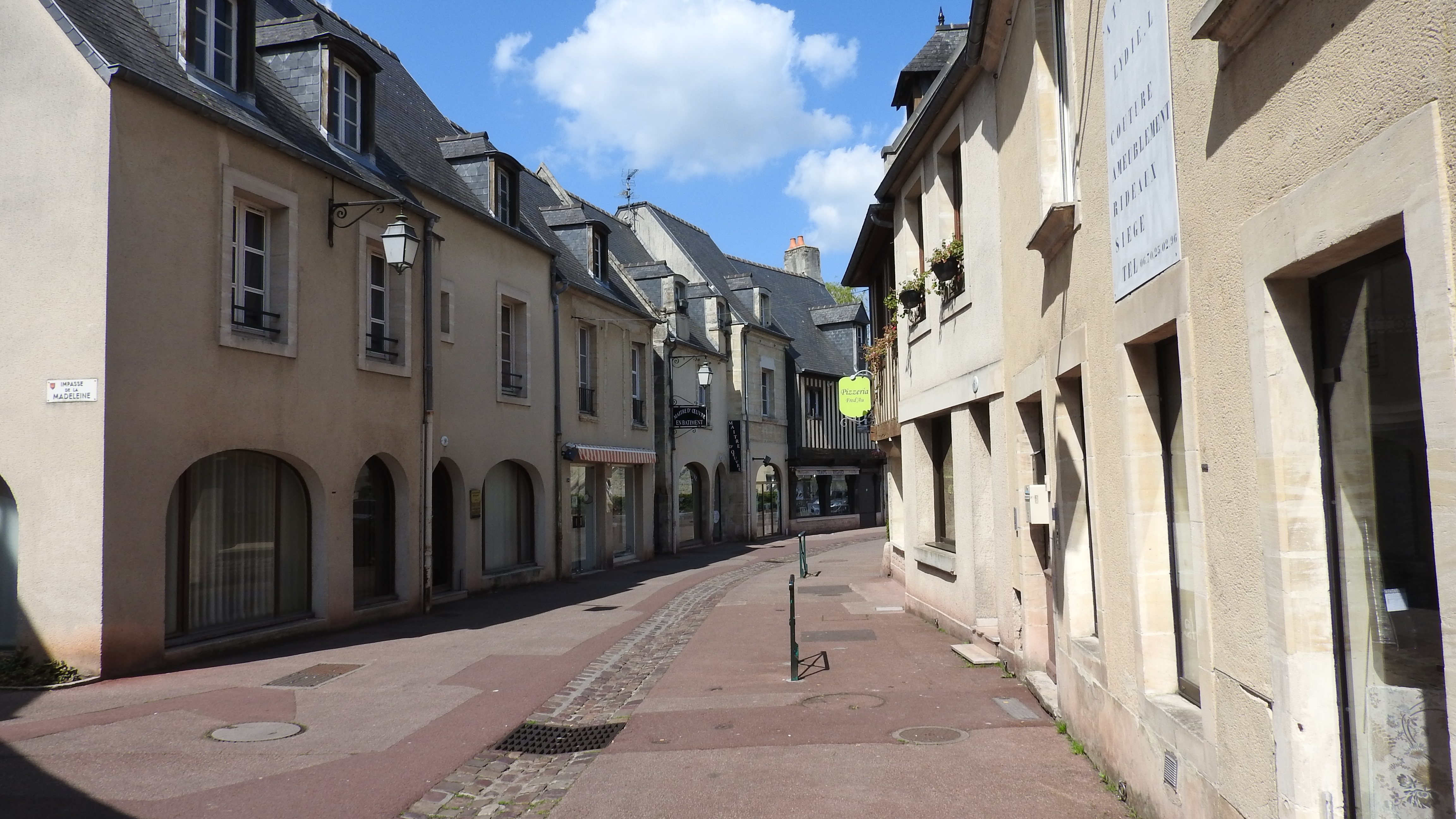
The main street in Bayeux reminded me of a movie set – it truly made me feel like I was in a foreign country.

The main street in Bayeux reminded me of a movie set – it truly made me feel like I was in a foreign country.

My investigation of French culture commenced with our first meal, in true French style. We were first served a cheese tart, then a savory chicken entrée and an apple tart with ice cream for desert. Even during that first meal, the cultural differences were evident. We had been briefed that sharing a meal is very important to the French; therefore it was crucial that we remember to be polite, and attempt to communicate in French as a sign of respect. This respect was mirrored in the servers’ and proprietors’ genuine concern for whether or not you were enjoying your meal. The responsibility the restaurant staff took for your experience was unlike anything I’ve experienced in the United States. However, there is a major difference in status of restaurant staff in France compared to the United States. In France, servers earn a good living and have been educated in the field.

Macaroons were a daily necessities in Bayeux.

Macaroons were a daily necessities in Bayeux…

Along with a miniature cup of coffee!

along with a miniature cup of coffee!

After our first meal, we all decided to venture into town to see the Cathedral de Notre Dame de Bayeux. It was a magnificent sight. Fortunately, that weekend was the Festival of Cathedrals, a time when all the cathedrals across France organize activities including concerts, games and special events. On our first night, we had the opportunity to attend an organ and choir concert, a prayer service and see the Cathedral illuminated by only candlelight. The evening was truly an experience. Not only was I able to admire the beautiful architecture, but also immerse myself in a very prominent aspect of French society: Catholicism.
As a side note: one of my favorite aspects of Bayeux’s culture was that there was a dog in the hotel and almost every store and restaurant in the town. They were beautiful dogs and so well behaved, perching themselves in the doorways to greet you as you came in and out.

 Our hotel’s puppy that we affectionately called “Jacques.”


Our hotel’s puppy that we affectionately called “Jacques.”

After a week in Bayeux, we departed for Paris. My Parisian experience began with the sight of the Notre Dame Cathedral de Paris. After seeing the inside of its Bayeux counterpart, I immediately knew that I wanted to attend a service in the stunning structure. A few days later, a small group of us attended Mass at the cathedral. Although I am not Catholic, I enjoyed sitting quietly and taking in the ritual and beauty of the space. As a lover of music, the songs and acoustics mesmerized me. Being that Catholicism plays a central role in French history, I was happy to have the opportunity to experience it alongside our exploration of French history and art museums, the city and its cultural landmarks.

La Cathedral de Notre Dame de Bayeux

La Cathedral de Notre Dame de Bayeux

La Cathedral de Notre Dame de Paris

La Cathedral de Notre Dame de Paris

Art is a striking element of French culture. It displays both the value they place on beauty and creativity. We were lucky enough to visit the d’Orsay Museum of Art on a special night where all the museums in the city were open to the public, free-of-charge. The atrium of the museum resembled its former glory as a train station. But instead of being filled with trains, the space was inhabited by sculptures and paintings. As we enjoyed the works of the world’s greatest Impressionist, jazz musicians performing for the special event accompanied our perusal. I had always heard that France had an artistic culture, an observation confirmed by the massive crowd that was in attendance that night – along with the quintessential sight of a Frenchmen oil painting along the Seine River.

Reflecting on my time in France, my greatest challenge was the language barrier. I didn’t struggle in Paris as much as I did in Bayeux. For the most part, the Bayeux locals knew the necessary English for basic exchanges, but my French was limited to the simple yes, no, hello, goodbye, please and thank you. I found myself feeling very rude and ignorant whenever I was unable to communicate with a local. Although they were always very kind and understanding, I couldn’t help but think about all of the times I’ve been frustrated with someone in the United States that doesn’t speak English, and how the French locals were probably a bit frustrated with me. It certainly gave me a new perspective on the language barriers that many immigrants face in the United States – and generally our citizens are not nearly as willing to work with them as the locals of Bayeux were with me.

The Beaches of Normandy

Visiting Normandy, specifically Omaha Beach, is the part of the trip I have been looking forward to the most. My grandfather fought on Omaha Beach and in Normandy. He is the reason why I have always had an interest in World War II. He is the reason why D-Day has fascinated and interested me since I was very young. To walk on the beach that he, along with thousands of other men, fought on, was chilling.

IMG_4510

Les Braves Memorial on Omaha Beach.

Thousands of young men, many younger than me, risked their lives while storming the beach. To stand where they fought and died was a truly humbling and surreal experience. It was difficult to imagine what Omaha Beach must have been like on the morning of June 6, 1944. When I looked out over the beach, it hit me as to just how vulnerable the soldiers were. There was so much distance between the water’s edge and any sort of protection. With the Channel at their backs and facing enemy fire, they had nowhere to hide and nowhere to run to. They had to rally together and push forward

Standing at the top of the beach, looking down, I struggled to imagine what the Germans must have been thinking when they woke up on that Tuesday morning and looked out over the channel to see hundreds of ships that had not been there the night before. I wonder how they felt. I imagine they were terrified. They had to know a large battle was coming. It can be hard to commiserate with the German soldiers because they were our enemy, but they were also people though. They had families and jobs that they had to leave behind. While I do not believe in the cause they were fighting for, I still feel sorry for them. So many of their lives were cut short, leaving widows, children without fathers, and parents without sons.

The German Cemetery.

The German Cemetery.


After visiting Omaha Beach, we went to the Normandy American Cemetery and Memorial to pay our respects to the fallen soldiers, including twelve Ohio State students, alumni, and staff who are buried there. I, along with my classmates, placed Ohio State flags at each of the twelve graves. As I knelt down to place the flag, I thought about how similar I am to these men. I am the same age as many of the American soldiers were during the war. They had dreams and hopes for their futures. They had parents, siblings, girlfriends, and friends who they loved. They had jobs, school, hobbies, and responsibilities. They left all of this behind when duty called, and they left all of it behind when they made the ultimate sacrifice.

I placed an Ohio State University flag at one of the twelve Ohio State students. alumni, and staff graves at the Normandy American Cemetery and Memorial.

Looking out over the well-manicured, green lawn of the cemetery, I saw row after row of headstones. I did not fully grasp the magnitude of destruction and death caused by the war. The cemetery is the final resting place for 9,387 soldiers. Chills went through my body as I stood there, taking it all in. These men sacrificed their lives for future generations.

Omaha Beach and the Normandy American Cemetery and Memorial made me feel proud but sad. Standing on the sands that thousands died to seize back from the Nazis, I was proud of my grandfather, proud of his generation, and proud of the USA. I was also thankful for the sacrifices made by so many men, thankful that more did not die, and thankful that the soldiers who died on D-Day did not die in vain.

Erik Smith

My First Impressions of France

DSCN1379

A typical street in Bayeux

With six years of French language classes under my belt and a general interest in modern French history, I was most excited for our program’s stop in France.  Despite my Francophile tendencies, I was still a little nervous about my first visit to the country.  Would it live up to my expectations?

Fortunately for me, my stay in Normandy did not disappoint.

DSCN1466

The countryside outside of Bayeux, with the old cathedral steeples rising above the treeline

After traveling from London to Portsmouth and taking a ferry across the English Channel, our group arrived in Normandy and took a bus to the small Norman town of Bayeux, where we stayed over the following six days.  On our final day there, Professor Steigerwald referred to our time in Bayeux as being in “fairytale land,” and in fact, this is probably the most apt way to describe it.  Bayeux is a small, quiet town surrounded by scenic countryside and rolling hills.  It was a welcome reprieve from the fast-paced hustle and bustle of London, and, in some ways, reminded me of my own hometown in rural Ohio.  That being said, it was still unlike anything I had ever seen or experienced in the United States.

Most communities in Europe can be dated back not hundreds, but thousands of years.  In the United States, where everything is relatively new, a building over a hundred years old easily qualifies as

DSCN1174

The Bayeux Cathedral, built nearly a thousand years ago during the time of William the Conqueror

“old.”  In Europe, however, such aged buildings are the norm. I commented in my last post on the amount of history to be found in the city of London.  Bayeux was more than just a town full of history.  Entering the town itself felt like stepping into another time: many of the buildings appeared to be hundreds of years old, and lots of streets were still paved with brick and cobblestone.  At the center of the town was a cathedral nearly a thousand years old, built in the time of William the Conqueror.  Fortunately, during the Battle of Normandy in 1944, German forces occupying the town fled without putting up much of a fight, sparing the town from the destruction rained down on so many other Norman cities and villages during World War II.

DSCN1392

The central street running through Bayeux, full of stores, restaurants, and cafés

Aside from the location itself, another aspect of Normandy that I was attentive to was the local people themselves.  On the whole, my observations were unsurprising.  The French have a certain “joie de vivre” about them that is much more evident than in Britain or the United States: they enjoy relaxing, socializing, and eating great food.

Some observations I made in Bayeux (and now in Paris as well) were a little more startling for me, however.  The French are often stereotyped as being unkept, and while I can’t attest to the personal habits of the locals in Bayeux, one thing that took me aback was my encounters on the sidewalks (even right outside our hotel) with les crottes de chien: dog feces.  I don’t know if there are any particular laws in France demanding owners clean up after their dogs, but if they exist, many French dog owners seem to pay no attention.

Putting such peculiarities aside, most interesting for me was observing how the locals reacted to us Americans.  Despite our own stereotypes of the French as snobbish and inherently anti-American, most of my interactions with the locals in Normandy were positive.  When an interaction was negative, it seemed to be out of their annoyance with us more than anything else, and the locals certainly had reasons to be annoyed.  I noticed that the French are a generally quiet people who keep to themselves in public.  When it comes to Americans, on the other hand, this is not so much the case.  Walking through the streets of Bayeux, our large, rambunctious group attracted more than a few stares, and some of us were told occasionally to quiet down.  While taking a shuttle bus to Mont Saint-Michel, it was quite obvious that many of the French passengers (and especially the older ones) were not happy to have a group of American students crowding onboard and pushing them aside.

Most of my interactions with the locals took place around food (either at the grocery store or at restaurants and cafés), and while almost all of these were positive, there was one instance on our first evening in Bayeux (during a group dinner) that one of our servers commented on our poor dining etiquette.  Some of us had been picking apart our food, and the server laughed and told us we “ate like birds.”

DSCN1770

Omaha Beach today, as seen from the American Cemetery at Colleville-sur-Mer

In writing about my experiences in Normandy, of course, it would be impossible for me to go without mentioning the 1944 invasion of Normandy during World War II and my visits to the various battle sites, museums, and cemeteries associated with the war.  Visiting the Utah and Omaha landing beaches were especially poignant moments.  Bloodshed and carnage immediately come to mind when thinking about the D-Day landing beaches (thanks, no doubt, to films like Saving Private Ryan), which is why I was immediately struck by the serenity and beauty of these places today.  After viewing them

Airborne Museum

A French father and son at the Airborne Museum. I was surprised at the large number of French tourists visiting sites dedicated solely to the American war effort

firsthand, it’s difficult to think of these beaches as former battlegrounds, much less as battlegrounds where thousands of American troops took their last steps.  The only word I could use to describe my feelings being there is “surreal,” and even now, I don’t think the full immensity of the events that took place there over seventy years ago has sunken in.

Particularly moving for me was the French and their reactions to the war today.  Despite being stereotyped as anti-American, and despite the few negative interactions I personally experienced, the French (at least in Normandy) have certainly not forgotten the efforts of American, British, and Canadian forces to liberate their country from Nazi occupation.  Aside from the cheesy signs at tourist sites reading “Welcome, our liberators,” it was clear to me that many local Frenchmen still remember and appreciate what happened in Normandy over seventy years ago.  Many museums dedicated to the memory of the American war effort (like the museum at Utah Beach) are maintained by French staff, and I was touched reading the comments in a guest book (nearly all of them written in French) at the Airborne Museum, praising the museum and highlighting the need to preserve the memory of D-Day for future generations of Frenchmen.

“We have not forgotten, we will never forget, the debt of infinite gratitude that we have contracted with those who gave everything for our liberation.” – French President René Coty

Some program members were bothered by the swarms of French schoolchildren taking fieldtrips to the sites (there were several busloads of them when we visited Pointe du Hoc), as well as the lack of respect that many of them seemed to display.  While, to be fair, most of these schoolkids were too young to fully understand the importance of the places they were at, I thought their very presence said a lot about the French.  The fact that schools continue to send their students on fieldtrips to war sites in Normandy highlights the importance that the French attach to the Allied invasion in their national history.  The effort to preserve the memory of D-Day for future generations is alive and well in France.  At the American Cemetery in Colleville-sur-Mer, a fitting quote from French President René Coty was inscribed on a wall outside the visitor center, summing up my observations of the French in Normandy: “We have not forgotten, we will never forget.”