Auschwitz-Birkenau as a Tourist Destination

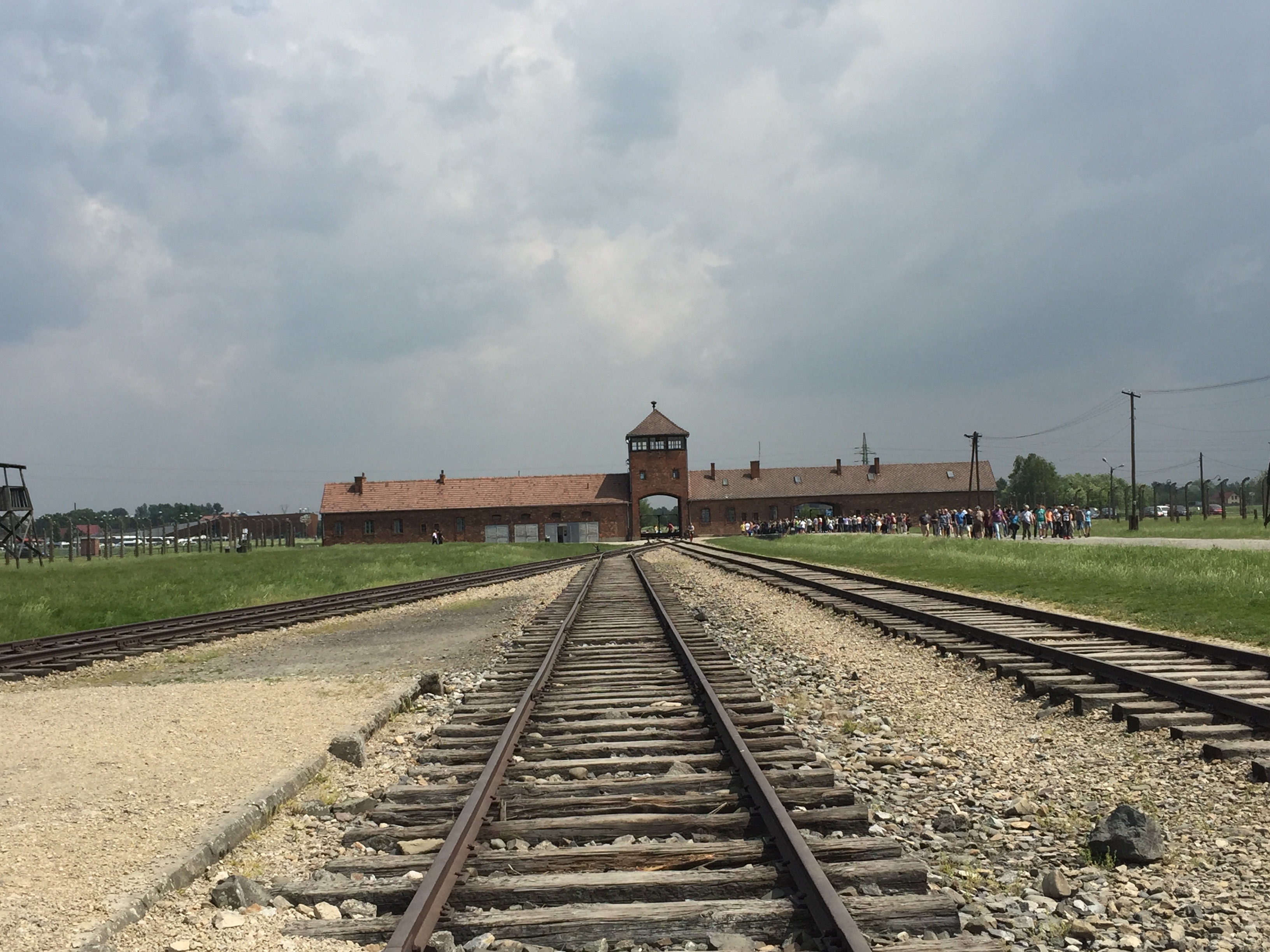
The Nazi concentration and death camps known simply as Auschwitz-Birkenau are a top tourist destination for visitors of Kraków, Poland.  Before I visited Auschwitz-Birkenau, I didn’t imagine the small Polish town of Oświęcim where it is located to receive the amount of visitors it does each year.  I was shocked to see advertisements throughout Kraków saying “Auschwitz day tour” and “cheap shuttles to Auschwitz,” as I was not expecting it to be a tourist attraction.  When we got to Auschwitz-Birkenau my preconceived ideas were wrong.
IMG_8324

Birkenau

The ticketing area of Auschwitz-Birkenau was full of large groups of people – including ourselves – speaking different languages and waiting for their turn with their guide to tour the grounds.  Although most of the people seemed to be schoolchildren, I did notice some Jews who were wearing shirts with the name of the organization that brought them on a pilgrimage to Auschwitz-Birkenau.  Around the main entrance there was a gift shop that sold books and posters (yes, posters) about the Holocaust, a snack bar, and a post office to send your Auschwitz-Birkenau postcards home right away.

When we were on the tour, there were many people taking photographs of everything as if it were just a normal tourist destination.  As for myself I limited my photographs to the outside of the camps rather than the artifacts on the interior to be able to take in their significance and out of respect for the victims.  When we were walking through the old camp barracks that were renovated into museum buildings there were specific rooms that held artifacts where visitors were not allowed to take photographs.  These buildings were packed full of people, and we had to walk in lines on the left and right through the building to be able to see everything and yet not cause chaos.  On our tour other visitors continued to take pictures of these artifacts as our tour guide yelled at them to turn off their cameras several times.  Maybe these visitors didn’t speak Polish or English and didn’t understand our guide’s orders to turn off their cameras.  When we went inside of the Crematorium I located at the original Auschwitz camp, I noticed a teenage girl taking a video for her Snapchat.  It made me think about how society has become that we have to live-feed everything on social media, rather than experiencing the moment.

In my opinion, part of the problem is that many people are visiting Auschwitz-Birkenau as tourists with limited knowledge on the Holocaust and therefore not in the right mindset to be at such a place.  Indeed, some disrespectful people etched graffiti inside one of the prisoner barracks at Birkenau.  This barrack was used to hold prisoners before they were to be sent to the gas chambers.  In this barrack people wrote their different words and phrases, as well as hearts with couples’ names in the middle, on the walls which was shocking to me.  I am fortunate enough to have visited Auschwitz-Birkenau after a semester of studying the history of World War II and the Holocaust, which enhanced my experience and appreciation for the things I saw.

IMG_8349 (1)

Graffiti Inside the Prisoners’ Barrack

The main problem I see is that there is a difference between visitors coming to educate themselves and pay their respects and tourists wanting to site-see.  Auschwitz-Birkenau has had problems with tourists in the past, most notably the girl who took the infamous Auschwitz Selfie that caused outrage as it went viral on social media.  The most logical solution to me to solve this problem is to not allow visitors to bring cameras onto the grounds, and hope people come with an understanding of the camps’ historical and cultural significance to the world.  I don’t think they should close Auschwitz-Birkenau to visitors, but rather find a way to monitor visitors’ actions better to create a more respectful atmosphere.

It is also the decision of the Auschwitz-Birkenau Memorial and Museum which image of themselves they want to project to the public, whether that be a memorial site or tourist attraction.  After my visit I would argue they seem a lot like a tourist attraction from the way they advertise and sell souvenirs.  Most memorials don’t have an entrance fee or gift shop.  In addition, I believe that they want to be a tourist attraction due to the fact that at the end of our tour our guide asked us to like/follow Auschwitz-Birkenau on Facebook and Twitter.  Auschwitz-Birkenau is a great example of how we can turn anything into a money making venture, even the most solemn of places.

Auschwitz

After visiting Auschwitz I do not think I can look at the Holocaust or World War II the same as I did before seeing the concentration and death camps of Auschwitz and Birkenau. No book, picture or anything else can compare to actually seeing the camp in person. Reading about the Holocaust and seeing pictures does not truly represent the feelings and thoughts that I had while there and afterwards.

While in the camp I was speechless. I was looking not at just suitcases, eyeglasses, pots and pans and other personal objects people brought to the camp. I was looking at someone’s suitcase or other personal and valuable items that were important enough to them that they brought them for starting their new life. That realization was very evident with seeing the names on the suitcases.

In one hallway the walls were covered with pictures of the prisoners with the date they entered the camp and then the date they died if they did not survive the camp. At first I was looking at every face and every date. By the time we left the hallway, I was just looking at the dates and imagining how someone could have survived. The guide pointed out several pictures on the wall for people who only lived one night. We were told that the reason why the prisoners were tattooed with their numbers at only Auschwitz was because the pictures originally taken of them would no longer be able to identify the person. Starved and repeatedly beaten, inmates quickly grew unrecognizable. The walls on both sides of the hallway were covered in these pictures and it was moving to see individuals. The holocaust usually is talked about with mass numbers because the number of people killed was on such an unimaginable scale. The tour guide made sure to point out individuals and tell personal stories that survivors have shared where the individuality is seen.

The guide took us into a room with two tons of hair in it. He explained that when the camp was liberated there was three times the amount of hair that is currently displayed for visitors. When the camp was liberated the hair would not have been on display. It would have been stored somewhere waiting to be used for the war effort.  I was not prepared to see two tons of hair. The hair was much more touching and terrifying than anything else up and until that point of the tour. The next area had pots and dishes in it. It was terrifying to know that before liberation the Nazis started a fire to try destroy and cover up the war crimes.

After leaving Auschwitz I had a feeling that what I saw was surreal.  Seeing the reconstructed gas chamber and crematorium was so terrible and moving. I could not imagine how terrifying it would have been for all the victims who died in there. Even walking into the buildings /where 700 or more people would have slept . I could not truly imagine the living conditions and what it must have been like to try to survive in the hellish conditions. The building afforded little protection. It was was not heated or well ventilated. We were told that the building would be about the same as the outdoor temperature. The most horrific part of the building was a story a survivor told of a night living there. A twelve year old boy  woke up and thought that the people next to him had a blanket. They were not given blankets so that was odd. The man then realized that it was cockroaches. These living conditions and the inhumanity was unbelievable that people could subject anyone to the conditions that were present at the camp.

The worst part of visiting Auschwitz was when the tour guide told us that the one crematoria and gas chambers was closed because it could not kill enough people at once. That was why the crematorium numbers two and three where used. They could kill more people at once. After seeing the reconstructed crematorium number one and seeing how many people it killed at once it was hard to imagine the ruble of crematorium numbers two and three being larger and build just to kill people faster. Overall, seeing Auschwitz really changed my perspective on the Holocaust and what life was like for the people who were forced to live and die in the concentration and death camps.  Seeing the housing rooms and gas chambers with crematorium really made me realize just how terrible it was in a camp. Seeing the pictures of a small select few of individuals who were at the camp added a personal touch to know that everything that happened there was not statistics but happened to actual people and added a personal sense to the holocaust for me.

Paris: As Seen By Me

When we first drove into Paris, I was disappointed. The city looked nothing like I had expected. The metro was old and confusing, and the streets were small and filled with perplexing traffic. I was surprised by the number of people that smoke in Europe, and especially Paris. I saw people of all ages, ethnicities, and classes smoking. During one dinner, I was sitting next to a man who was continuously blowing smoke onto my pizza, and it was not a pleasant experience. The smokers in Europe makes me wonder if they have the same level of anti-smoking education as schools do in the United States. I saw a lot of boarded up shops, homeless people, street vendors selling cheap and low quality wares, and some seemingly unsafe neighborhoods. Of course, these things exist in every major metropolitan area, but Paris is shown as a romantic city that is better than all other cities.

After the initial let down, I discovered the beauty of Paris. I saw things that I had dreamed of seeing for years: the Louvre, the Eiffel Tower, and Pont Bir Hakiem (the bridge from Inception).

image3-2image1-2

The style of the French people is beautiful and sophisticated, as are their buildings and their use of poetry. The Eiffel Tower was all that I dreamed it would be, except that it was very geared towards tourists with multiple street vendors and long ticket lines. The Louvre was incredibly extensive, so much so that I could go there five times and discover something new and wonderful with each visit. Katie Holman, Kelly Pilarski and I walked around for hours and only saw the Italian and Spanish paintings, sculptures from assorted areas around the globe, Napoleon III’s apartments, and a few other small sections. The diversity of people at both of these popular sites was astonishing. There were tourists from all around the world, speaking different languages and some wearing their traditional dress, like saris and dashikis. However, even with all of the diversity, we ended up sitting next to a group of Ohio State students at the Eiffel Tower. The university was right when they said that there are OSU students and alumni all over the world.

image2-2

Everywhere I turned in Paris, there was a monument or plaque commemorating an event in French history. There was a memorial to an unknown soldier of World War I under l’Arc de Triumph that had an eternal flame and beautiful flowers. I saw multiple plaques on street corners in rememberance of resistance fighters who had been killed at that spot, not to mention the Memorial of the Deportation where I gave my site report. This memorial was in memory of everyone who was deported from France to Nazi concentration camps under the Vichy Regime, and it was located near Notre Dame.

image3

The memorial to the unknown soldier

Paris was a fascinating and unique city, but don’t be fooled by the media. You probably won’t find true love under the Eiffel Tower.

The French: Celebrators and Criticizers of the French Liberators

Post card featuring the "Welcome our Liberators" phrase.

Post card featuring the “Welcome our Liberators” phrase.

World War II began on September 1,1939; about a year later one of the major global powers, France, fell to the powerful German forces. In almost every history class I have taken, my teacher has found a way to make the French the punch line of a joke because of France’s fall in 1940. Four years passed before Allied forces finally liberated the French. Between its fall in 1940 and its liberation in 1944 there has been a debate about whether there was predominate French collaboration with the Germans or predominate French resistance. The impression I have always been under is that for the most part, the French could be considered collaborators. The Germans seemed to be well on their way to taking over the entirety of Europe, and the French needed to figure out how they would fit into Germany’s new empire. Or so the story goes in the American narrative I grew up learning. The French narrative is a bit messier. This was extremely evident when comparing the town of Bayeux to the Caen Memorial Museum we visited.

On Saturday May 14 we made the transition from the fast-paced city of London to the quieter, slower-paced Bayeux. Bayeux is about forty minutes away from the beaches where the Normandy Invasion took place. Even though D-Day occurred on June 6, 1944, almost 71 years ago, the events of the invasion still seem to be fresh in the minds of the people of the surrounding area.

Bayeux itself is not very big. Therefore, it was very easy to walk around and get a good sense of the city. The more I explored the city, the more I began to notice the same phrase. It read, “Welcome to our Liberators.” I saw this phrase in the windows of several restaurants scattered throughout the city, on the doors to the Welcome Center of the British cemetery, and even on postcards at a souvenir shop. Obviously the liberators this phrase is referring to are the Americans, the British and the Canadians.

The phrase “Welcome to our Liberators” seems to contradict what I was presented with about the French national narrative of World War II that was present in the Caen Memorial Museum. There were several things I liked about this museum, the first being the overall setup. I liked that the pre-war exhibit made visitors feel like they were descending into hell gradually. The flooring changed, the walls went from smooth to rough, but the changes were subtle enough so you didn’t really notice the changes until you had descended quite a ways. To me, this helped the visitors get a visually accurate representation to how the war started. There were seemingly small, insignificant things happening that led to WWII rather than the abrupt beginning that many histories of the war still seem to have.

IMG_3021

The plaque talking about French liberation.

However, what I found frustrating in the museum was that it celebrated the French resistance too much and seemed to downplay the role of the other Allies, especially in regards to D-Day. In the museum’s section on D-Day there was a phrase that stuck out to me in particular, it was on one of the plaques hanging on the wall. It read: “With or without the help of the Allied forces, most of France had been liberated by August and September 1944.” This phrase downplays the significance the Americans, British and Canadians had in the French liberation and gives much of the credit to the French resistance. While there was French resistance it was not so significant as the Caen museum would lead you to believe.

The juxtaposition between what I saw in the museum and what I saw around Bayeux leads me to believe that the French still are struggling with how they want to remember World War II. While on one hand its difficult for such a large global power to admit that it needed help

IMG_3177

“Welcome to our Liberators” as seen in the window of a local restaurant.

liberating itself, it still needs to be acknowledged. This is why I feel like I saw so many “We welcome our Liberators” throughout Bayeux. The phrase was found in random places, almost seeming to blend in to the surroundings. This is the French way of saying that they know how big of a role others played in their liberation without having to completely admit it in their national narrative.


In Remembrance of Those Who Have Fallen Fighting for our Freedom

Walking into the American Cemetery in Normandy was one of the most moving experiences I’ve had. Before reaching the actual cemetery, we walked through a museum that told the stories of some of the people that were buried there. Many of these people left behind wives, children, and parents. They were truly courageous people with many having great lives that they were never able to fully live out. One of the most touching stories was of the Niland family. They were four brothers, Robert, Preston, Edward, and Frederick Niland, from Tonawanda, New York. Robert and Preston died within the first two days of the D-Day invasion, while Eddie went missing just a few days later in the Pacific. Robert “Bob” Niland was killed on June 6, 1944 when volunteering with two others to help hold off a German advance; he was the only one of the three who died. Preston was killed near Utah Beach the next day. Edward Niland went missing on May 16 after he parachuted out of his aircraft. He was captured as a Prisoner of War by the Japanese in Burma and was not known to be alive until he was released a year later in 1945. The only known brother alive at the time was Frederick, who was returned back to the United States to finish the rest of his service there after the tragedies of his three brothers. There is a quote by Stephen Adly Guirgis that says, “No parent should have to bury a child….No mother should have to bury a son. Mothers are not meant to bury sons.” Within a month, a mother was left with the possibility of burying three of her sons. The story of the Niland brothers is the basis for the movie “Saving Private Ryan.” Although the most well-known and perhaps most unique story, this is not the only family that suffered harsh tragedies. Just about every family lost multiple people throughout the war and thousands of mothers had to bury their sons.

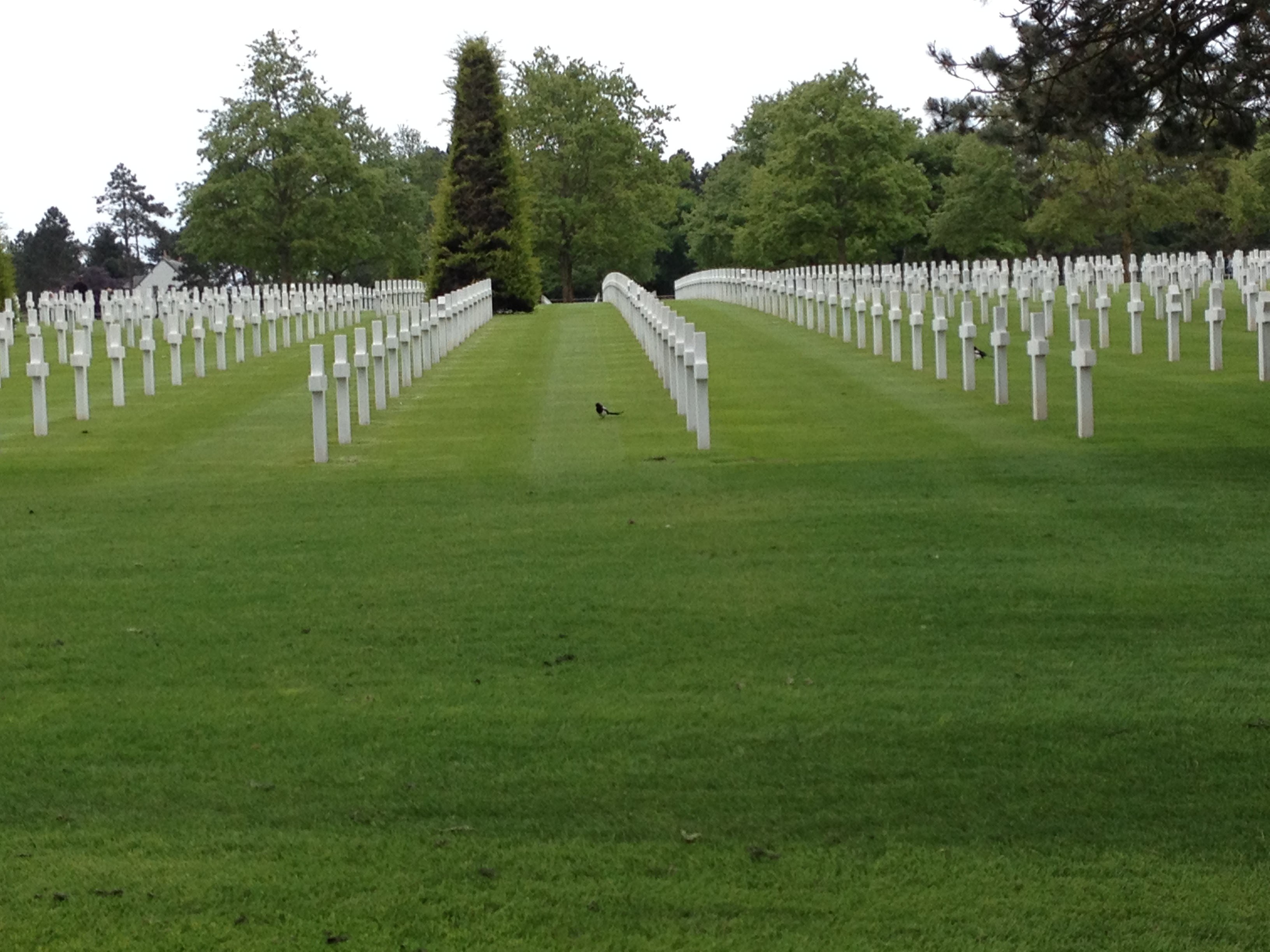
As I walked through the entrance to the actual cemetery grounds, the wind blew around me, and it felt as if the ghosts of thousands of people were still flying about. The cemetery was filled with over 9,000 graves of fallen American soldiers. The crosses were lined up perfectly and seemed to go on forever. The gravestones just displayed the soldier’s name, unit and division, the state that they were drafted in, and the date of their death. Many of these crosses covered the graves of soldiers that could never be identified. Seeing the massive size of the graveyard and realizing that it wasn’t even one percent of the amount of people to die during the war is pretty striking. It just seemed as if so many lives were wasted.

One of the rows of graves at the American Cemetery in Normandy

One of the rows of graves at the American Cemetery in Normandy

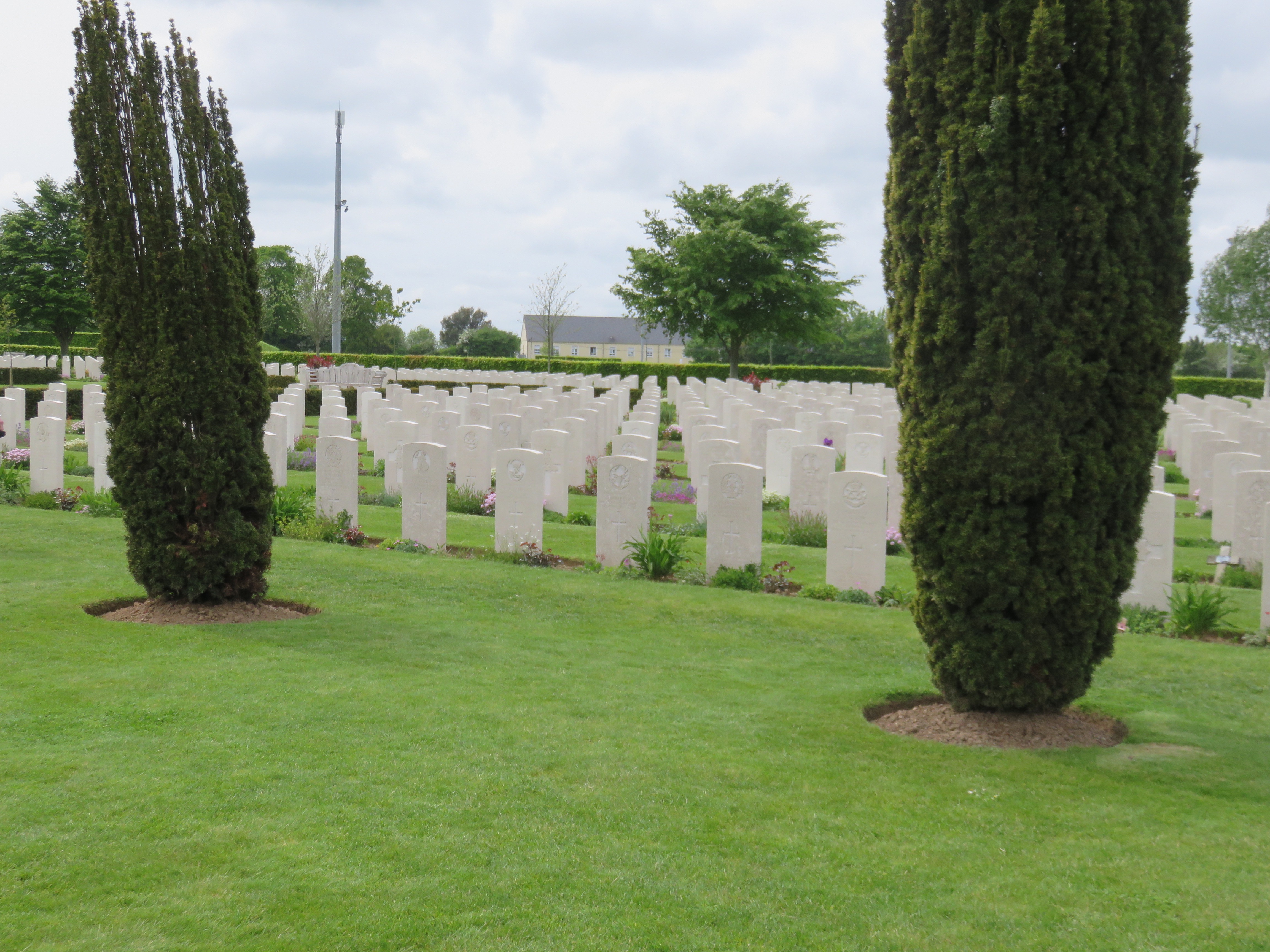
Although the American Cemetery was very hard to walk through, the British one in Normandy was even harder for different reasons. The American cemetery grounds seemed to place more emphasis on the sheer number of people killed in the war, although they did acknowledge individuals in the museum section before heading outside. They didn’t have dates of birth or the soldiers’ age when they were killed, and they didn’t have anything really personal on the actual gravestone itself. The British one, however, albeit being smaller, was much more personal on each one. It gave the age of their death and a personal quote from the family of each soldier on every gravestone. I remember one in particular saying something along the lines of, “In remembrance of a great father and an even better daddy.” The quotes on them really helped to give a much better perspective of the fact that each person was different and a unique individual; they all had families that they left behind. The ages also helped to put me in their shoes even more. Many of the people buried were only 18, 19, or 20. They were younger than I am. I feel like I still have so much of my life left to look forward to. It’s really hard to imagine not even living to the age that I am or my younger brother is. If I lived in that time period, it’s very likely that I would have been buried in one of these cemeteries myself.

Rows of graves at the British Cemetery in Normandy

Rows of graves at the British Cemetery in Normandy

Memorial at the British Cemetery in Normandy that reads "Their Name Liveth For Evermore"

Memorial at the British Cemetery in Normandy that reads “Their Name Liveth For Evermore”

So many people died much too young during World War 2 and although their sacrifice was honorable and important, the sacrifice of so many people’s lives is not something that we should ever want to come to. Hopefully we can all look back and learn from our mistakes and prevent such evil from rising to power again; and prevent ourselves from having to build more cemeteries on the scale of these ones.

New Country, New Perspective

Stop two, Bayeux, France.

Heading into the trip I knew this would be one of the places that affected me the most emotionally. After focusing on Omaha Beach during class, I was intrigued to experience the sight in person. Before the program I couldn’t picture the thousands of soldiers or the setup of the beach. I assumed the bluffs were similar to dunes and didn’t understand the exact set up of the German defense and just how deadly it was.

A few things drastically changed my perspective. First, the American Cemetery in Normandy opened my eyes to the people involved. The graves just kept going and they were all identical, aside from the Jewish stones which contained the Star of David. The stones were perfectly set so each row was a perfect line in any direction. The British Cemetery was also quite emotional for different reasons. Although the number of graves were much smaller, the graves had personal messages which humanized and brought attention to who the individual soldiers were. I happened upon a grave with my last name, and the soldier died at the age of twenty. This stuck me especially hard because as a current 20 year old I began to imagine what my life would be during that time period.

Tombstone of W.J. Ayres

Tombstone of W.J. Ayres

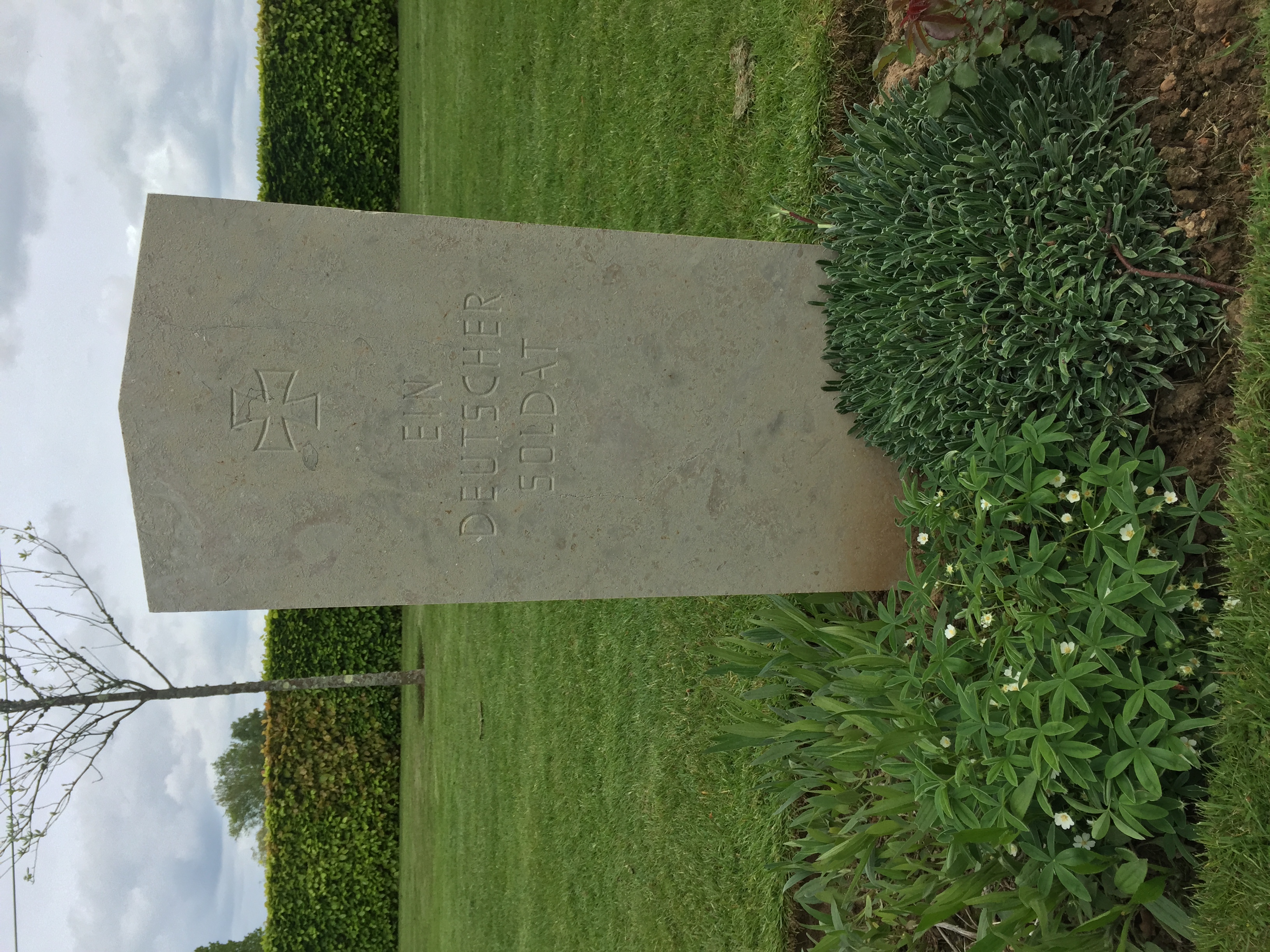
I also was shocked at the amount of unknown soldiers and the way they were set to rest. In the German Cemetery, the stones simply translated as “Unknown German Soldier,” whereas the British and American cemeteries gave much more honorable dedications both saying the soldiers were known but to God. Evidently, the honor bestowed on the soldiers was depending on their country.

Second, the actual beach still contains the German bunkers. These bunkers are not only directly on the beach but also much higher up than I imagined. The bluffs are much taller than dunes and semi- resemble small mountains in which the German gunman and snipers could easily pick apart the American troops. The beach was also much wider than I imagined, and it was truly horrifying imagining the fear and determination as the men tried to make their way to the bluffs.  We were standing in the spot where the first waves of the 29th division landed, specifically, the 116th infantry. This group of about 150 National Guard soldiers suffered a huge loss with only around 19 soldiers not being killed or injured. These men were told they would be given a front row seat to the greatest show on earth. The Allies believed their bombing and naval shelling campaigns would destroy or at least damage the German bunkers and the men would simply walk up the beach. This however was not the case as the campaigns did relatively nothing. As compared to Point Du Hoc, which had bomb craters everywhere, Omaha was basically untouched. The bunkers were set up in such a manner that the first waves of men had almost no hope of survival. They had around 500 yards of open sand before the bluffs. Standing on the beach with the tide out really showed just how dreadfully far the men had to run without cover and with enemy fire as strong as a storm wind. Lastly, Point Du Hoc gave me a chance to see just how difficult the tasks at hand were. The cliffs that Rangers had to climb were much higher than I expected, and the bombs left such deep craters in the ground. It amazed me that the site remained intact and no one interfered with preserving it. The bunkers and even the craters in the ground were basically untouched. Although some of the bunkers had collapsed from wear and tear of weather, the remains were not moved. The craters were also not filled in which gave a great perspective of the destruction of the bombs.

6da28f3284304677b6e9f03c456cf9cb

Me standing in a bomb crater, Point Du Hoc.

Overall Normandy was incredibly moving. I enjoyed it because you were consistently immersed in the history even when we were just walking around the town. You couldn’t go anywhere without seeing the rich history the town had worked so hard to preserve.

Small Business and Big Cemeteries in France

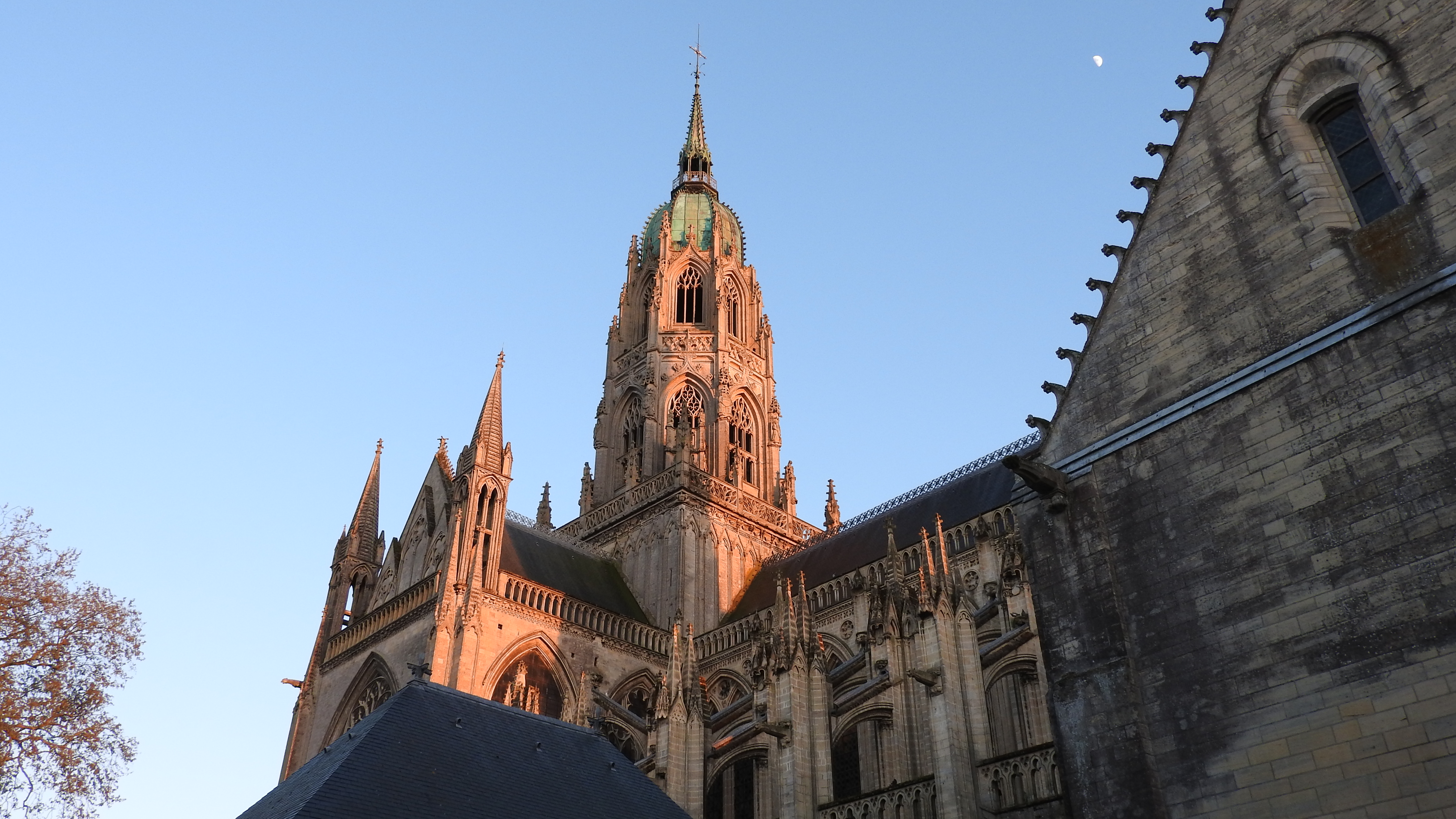
The second country I visited for my study abroad tour was France. On Saturday, May 14th we took a ferry across the English Channel from Portsmouth, England to Caen, France. Our journey began here because of the historical significance of this area in 1944 and 1945 when the Allies launched the D-Day invasion at Normandy beach. We stayed in a small town named Bayeux. This is a humble town is centered around a cathedral that was built in the medieval times. Our main excursions while here were to museums and monuments in and around Omaha and Utah beach, which are the locations where American forces began the Normandy invasion. It was an incredibly moving experience to stand on the beaches where men gave their lives in order to help liberate Europe from Nazi control. I was particularly moved by a few specific experiences during my six-day stay in Bayeux. These experiences led me to get to know two people in very different ways. One was an owner of a café in Bayeux. The other was a soldier who died on June 6, 1944.

We stayed in a small town named Bayeux.

We stayed in a small town named Bayeux.

This small town was a change of pace after being in a city like London. The only way to travel around town was to walk. There was one main street and one grocery store. However, the town did not disappoint with the number of eateries and cafes. They lined most of the little streets. During my stay, I became particularly fond of a small café named Au Georges II. I went there frequently to get a Crepe with Nutella on it (tastes as good as it sounds). After a couple of days, I befriended the owner of this shop. I learned that his name is Jacques. Despite the obvious language barrier (he only spoke French and four years of high school Spanish didn’t really help me in France), I said hello to him every day I passed the café. On our last day in Bayeux, I was able to memorize a few sentences and give him a small gift.

I made a new friend in France. He is a small business owner named Jacques.

I made a new friend in France. He is a small business owner named Jacques.

This unlikely friendship is symbolic of what it was like to live in small town France. It had a feel unlike the large cities that we will be spending much of our trip in. It was a more relaxed pace and it was easy to feel at home. At the same time, this was nothing like the suburban lifestyle I have become accustomed to in the United States. Everybody walked to the outdoor shops and restaurants that were located along the river that ran straight through the town. The biggest concern as a tourist in Bayeux was whether or not the wifi would work (it usually didn’t). This peaceful town with beautiful architecture was a great change of pace for a group that also went to London and Paris.

Walking through the American Cemetery in Normandy.

Walking through the American Cemetery in Normandy.

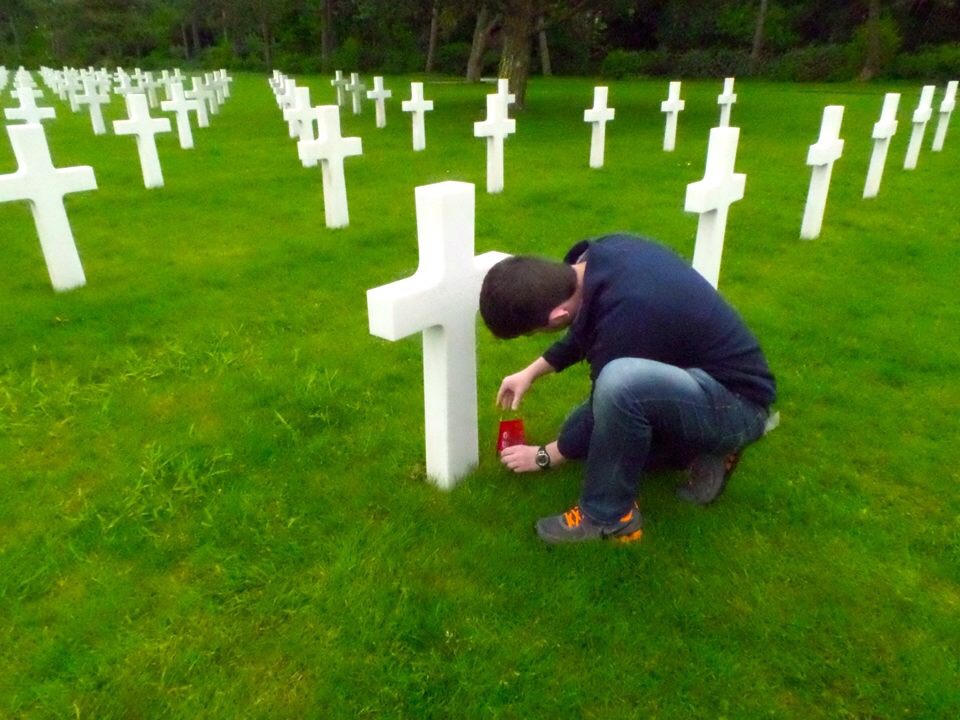
In addition to my stay in Bayeux, another big part of this site was the cemeteries we visited. In total, we visited three cemeteries: a German cemetery, a British cemetery, and an American cemetery. They each held the graves of soldiers who were killed during the Normandy campaign. It was stunning to be at both the places soldiers fought and the places they were laid to rest. I was particularly struck by the American cemetery. The cemetery is located just beyond the sands of Omaha beach, where the bloodiest fighting took place on D-Day. We began by placing a flag at the grave of twelve Ohio State students and faculty that died during the Normandy campaign and are buried in that cemetery. After this, we were given time to look around the grounds where 9,387 young men were buried. Time to pay our respects. Time to reflect. Time to contemplate. The rows and rows of crosses made it easy to yearn to know the stories of each individual soldier represented by each gravestone. This really hit me during my time alone at the cemetery. I wanted to know about each man, or at least think about who he was. When this thought hit me, I immediately walked down a row and stopped at a random grave to contemplate and gather my thoughts.

The grave of PFC Fred W. Plumlee.

The grave of PFC Fred W. Plumlee.

I don’t know Private First Class Fred W. Plumlee. I don’t know where he was when he died in combat on June 6, 1944. I don’t know where he lived in Georgia, what his family was like, or what he wanted to do with his life. All I know is what is engraved on his gravestone. A simple google search did not lead to anything definitive about this man. All I know is that his grave was in the exact spot where I stopped to spend a half an hour contemplating individuality in World War II. Though he is just a small grave in a sea of thousands of gravestones, he was still a person. I thought about what his dreams may have been, what his past was, and who the people were that he loved. Though I can’t answer any of these questions, I thought about who he might have been and considered whether or not he had anything in common with me. It was here that I reached a great understanding. Though we can’t know the story of every soldier who died in World War II, that’s not the part that matters. What matters is that we recognize that behind each gravestone is a unique man who deserves to be recognized as such. Though I couldn’t and think at all 9,387 graves, I did stop at one. And that made all the difference.

They Gave It All

The next stop on our trip after London was a small city called Bayeux in Normandy, France. We were to spend about five days there learning about and exploring the sites associated with the D-Day invasion June 6, 1944. One aspect we covered thoroughly was the loss of life during this operation. We visited three cemeteries: the British cemetery, the German cemetery, and the American cemetery.

The American cemetery had a large impact on me. It was a rude awakening to enter and see thousands of white headstones dedicated to the fallen American soldiers in Normandy. It is one thing to see and study the numbers of the dead Americans. It is an entirely different thing to see that number physically in front of you, represented by Crosses and Stars of David.

IMG_1072

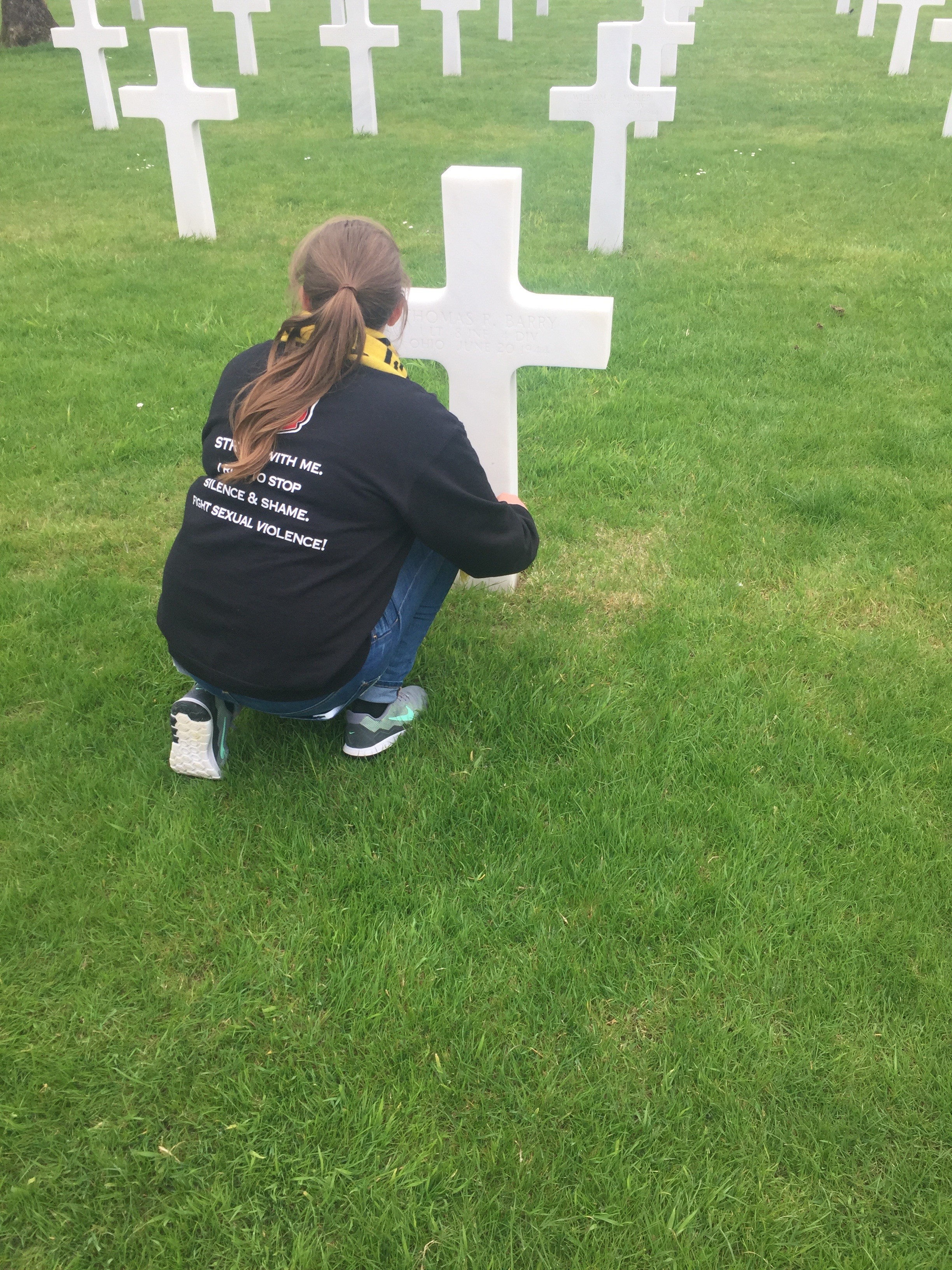
While visiting the cemetery, I had the honor of placing a flag on the grave of a former student of The Ohio State University. It was not an honor I took lightly or for granted. This action held a very special place in my heart. I was representing not only my study abroad group, but also my university and ultimately my country. I felt very humbled as I knelt before the Cross engraved with Thomas R. Barry.

IMG_1231

The American cemetery represented something else to me that day. While on this trip, my grandfather passed away. He was a World War II veteran who served his country in the navy. He served aboard the escort carrier USS Wake Island (CVE-65) as an Aviation Boatsman, 3rd Class Petty Officer. He traveled to Karachi, India and back and hunted German U-boats in the Atlantic, sinking one in the process. He traveled to the Pacific Ocean through the Panama Canal and participated in the Invasion of the Philippines, where he was wounded by shrapnel. He also participated in the Invasion of Okinawa, where his ship was hit by two Kamikaze aircrafts. He was serving on the USS Wake Island when it became the first carrier to land a jet-propelled plane on November 6, 1945.

I grew up hearing all of the different stories connected to these excursions. It is a large part of my own history and is one of the main reasons I chose this study abroad trip. I was unable to attend his funeral and pay him final respects. There was no closure. Being there that day and honoring the fallen soldiers of the same war he fought in gave me a little bit of that closure I was longing for. Thomas R. Barry, among thousands of others, died in a foreign country. Family members did not have that closure and final goodbye when he/she died and was buried. Walking through the cemetery and paying my respects felt like I was doing just that. I honored the great sacrifice they made when they gave it all.

IMG_1058

The Tale of Pointe du Hoc

A small section of the total area of Pointe du Hoc; picture taken from the top of one of many German fortifications still in place.

A small section of the total area of Pointe du Hoc; picture taken from the top of one of many German fortifications still in place.

Out of all of the amazing cities we had scheduled for this trip, I was most excited to head to the city of Bayeux, which is located in the area of Normandy. I’ve spent a lot of my free time over the years studying and reading about World War II and most of that time has been devoted to learning more about the D-Day invasions and the Normandy campaign. Long before the trip began, before I had even gotten into the program and just saw the list of the locations on the itinerary, I was most excited about headed for the beaches. I wanted my chance to stand where so many others fought and fell for freedom and liberation. I wanted to finally get a chance to stand in the same places that I had read about in books and articles, places I had seen in documentaries and in movies. I wanted to head for the beaches. As the preparations for the actual study abroad portion of the trip progressed and we all got closer to our departure date, there was one location I became more and more interested in visiting besides the famous invasion beaches: Pointe du Hoc.

Filled with many examples of personal stories and amusing mishaps, reading Dog Company reminded me very much of Ambrose's Band of Brothers. Highly recommend if you were a fan of Band of Brothers

Filled with many examples of personal stories and amusing mishaps, reading Dog Company reminded me very much of Ambrose’s Band of Brothers. Highly recommend if you were a fan of Band of Brothers.

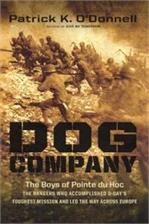
Over the years I had read a little about what happened at Pointe du Hoc on June 6th 1944. I knew it was a crucial part in the success of D-Day but through the pre-requisite class I had to take before I could study abroad, I was able to learn so much about this location and who fought there. One of the main parts of the pre-requisite class was that each student had to become the expert on one site that we would visit during our trip abroad. When I first received my site assignment I have to admit I was a little disappointed when I did not get one of the beaches or the airborne drops but because Pointe du Hoc was still part of D-Day and the Normandy campaign, I was not too broken up about it; within the first hour of starting my assigned book I needed to read for my site report I was so happy I had been assigned the location of Pointe du Hoc. The book I was assigned, Dog Company: The Boys of Pointe du Hoc by Patrick K. O’Donnell, covered the amazing experiences of the 2nd Rangers Battalion’s D Company through the Second World War with a special focus on their pivotal role in D-Day.

A recreation of one of the 155mm guns the Rangers were tasked with taking out.

A recreation of one of the 155mm guns the Rangers were tasked with taking out.

Now when the allied command began planning the specifics of D-Day, they realized that the area of Pointe du Hoc, a high point that rises about 90 feet out of English channel with Utah beach on its east and Omaha beach on its west, was an area of critical importance. Reconnaissance photos had found that the Germans had six 155mm guns located on top of the cliffs that could be used to wipe out any invading allied forces on Omaha beach. If the invasion of Omaha beach were to succeed, the guns had to be taken out. Pointe du Hoc at that time was a seemingly impenetrable position with its 90 foot high cliffs on one side, machine guns posted along the edges of the cliffs, and the area covered in land mines. Thankfully, the American army had recently created a special operations unit called the Rangers who specialized in guerilla fighting and stealth missions and who were probably the Allies best chance at getting onto Pointe du Hoc. The Rangers of the 2nd Battalion trained every day for months, climbing similar cliffs along the southern coasts of England, in preparation for D-Day when they would climb the 90 foot cliffs of Pointe du Hoc. But even with all the specific training, the planners of D-Day agreed that the Rangers mission was the most dangerous of the day and there were expected causalities as high as 70-percent.

018

My friend Bethany stands at the bottom of the crater while I stand at the top so you can get an idea of how big the craters are.

On the morning of June 6th, the 225 Rangers cross the English Channel and headed for the Normandy coast. As the Rangers crossed the channel, some realized that they were headed in the wrong direction, which meant that they would be behind schedule and ruin the extremely time sensitive invasion plan. Despite the delays, the Rangers eventually managed to reach the bottom of the cliffs and did not hesitate to scale the 90 foot cliffs under heavy enemy fire. At around 7:30 a.m., the Rangers reached the top of the cliffs and by about 8:30 a.m. all six of the German guns were destroyed. The Rangers were not done when they destroyed the guns however; for two days the remaining undermanned, undersupplied, and extremely exhausted Rangers fought off German soldiers within the area of Pointe du Hoc until they could finally be released on June 8th. When the Rangers were finally relieved on D+2, out of the original 225 Rangers who crossed the channel two days earlier, only 90 men were still able to fight.

One of many German fortifications that still stand in Pointe du Hoc.

One of many German fortifications that still stand in Pointe du Hoc.

After studying the Rangers at Pointe du Hoc for months, I was so excited to visit the location where the intense battle happened that not even the fact that I had to give an oral presentation at the site could lessen my excitement

Me, goofing around for a moment while standing in a German fortification.

Me, goofing around for a moment while standing in a German fortification.

Unlike some of the other sites we had visited earlier in our trip, Pointe du Hoc remained very similar to how the Rangers left it back in 1944: deep bomb craters still littered the area, German fortifications still stood strong in places, and the postwar additions to the site were few and far between. I was taken aback the first time I laid eyes on the site at both how large the total area of Pointe du Hoc really was and just how big some of the bomb craters got. It was powerful to stand out at the edge of the cliffs- where the monument for the 2nd Rangers Battalion now stands -, look down at the gravely strip of land at the bottom, and imagine what it must have felt like for a German soldier on that historic day to look down and see the Rangers climbing towards you without hesitation or fear. Once the initial shock of the location passed, however, it was almost too easy to lose myself in the site and for a moment I forgot what the place really was. It was easy to run through the dark, cement German fortifications with my classmates and joke how it looked like a scene from the Blair Witch project. There was no hesitation to take cheesy pictures together and reenact the Lion King on some of the larger rock outcroppings that stuck up from the Earth. On that beautiful, sunny May morning, even with the land still so torn up, for a few moments I was able to forget what had happened there. But as I began my presentation and started to repeat the words that I had been rehearsing for days, the novelty of the day washed away and the memory of what happened returned at full force: soldiers- some of them really just kids, what with them being either my age or even younger –fought and struggled and died on the very land I stood and spoke on so that they could help take back almost an entire continent from Nazi rule.

The simple monument, made of granite and formed roughly to represent the Ranger dagger, is one of the few post war additions to the location. The monument is dedicated to the Rangers who fought there almost 72 years ago.

The simple monument, made of granite and formed roughly to represent the Ranger dagger, is one of the few post war additions to the location. The monument is dedicated to the Rangers who fought there almost 72 years ago.

Pointe du Hoc stands today as a symbol of the struggle show by the Rangers that day in their mission to help take back Europe. I am so thankful I was able to not only learn more about those amazing men but be able to get the chance to educate others on them as well.


Faint Memory of Blood and Triumph

One can’t talk about Normandy without mentioning D-day, and one of the first things that pops into my mind when I hear Normandy are the beach invasions. We’ve seen it in “Saving Private Ryan”, in all the reenactments, and in documentaries, but nothing compares to standing on the beaches themselves: the same beaches where thousands of soldiers died. Looking around, they might seem like ordinary beaches, except for the remnants of German bunkers scattered across the beaches. Each beach was significantly different from the other and tell different stories of sacrifice and success.

Looking down Utah Beach during low tide

Utah Beach during low tide.

Utah Beach, the place where even when things did go wrong, it still ended in favor of the Allies’ success. Utah reminded me a lot of beaches seen in places like the North Carolina coast, with sand dunes blocking the ocean from moving in further. Seashells littered the beach and even with the tide out, it didn’t seem like a large beach to begin with. At Utah Beach, the only thing that signified what had occurred was the museum that had been built on top of a Nazi bunker used during the war. The rest of the beach looked as though the sea had taken most, if not all, the evidence of the Normandy Invasion.

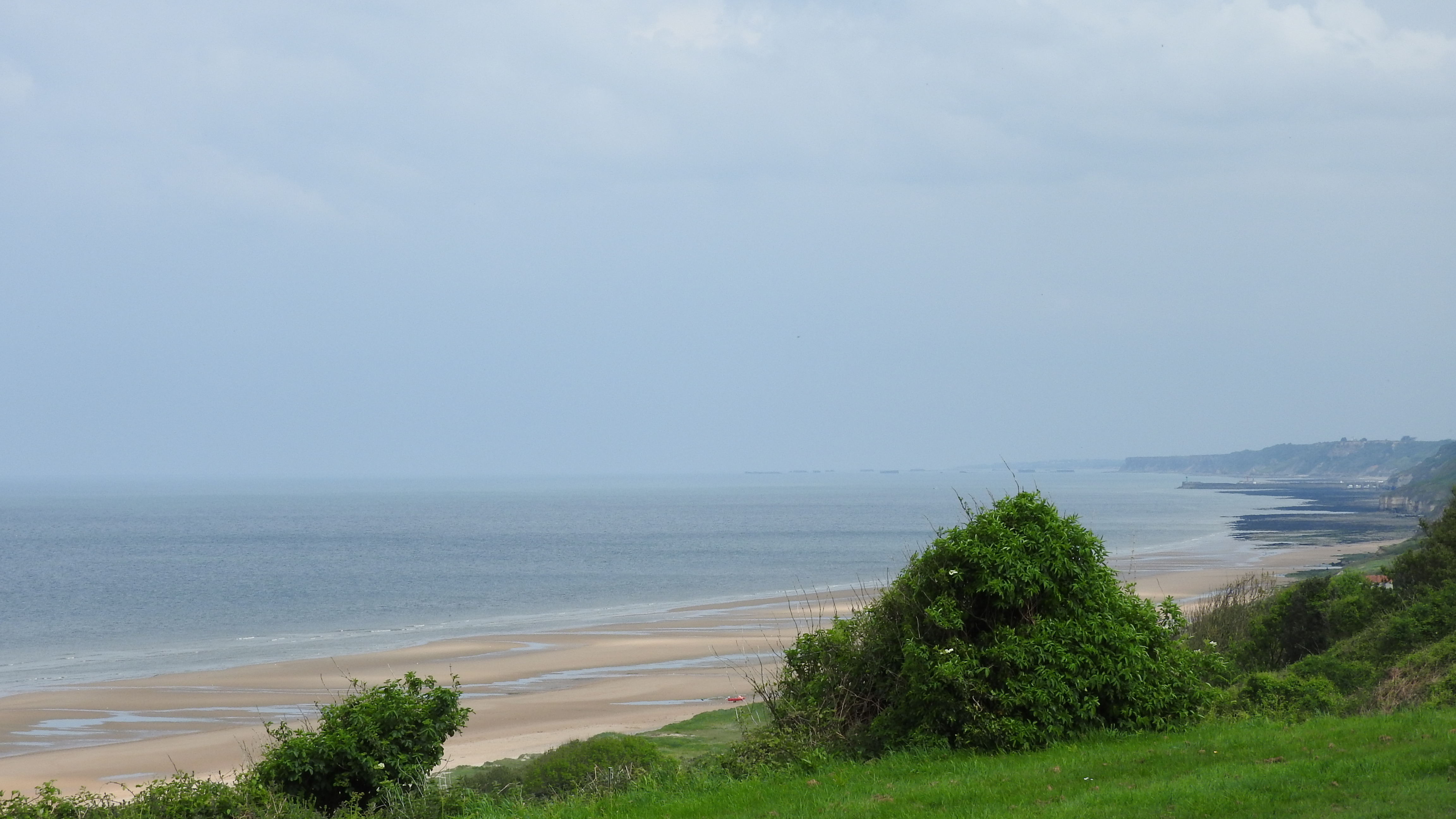
Looking down Omaha Beach while the tide recedes.

Omaha Beach where the 29th infantry division landed,  tide receding.

Not too far from Utah Beach is the infamous Omaha Beach. Omaha was completely different from Utah. Some of the larger differences between the two were Omaha didn’t have sand dunes like Utah, it met enormous bluffs right on the coastline, and it wasn’t hard to spot the remnants of the Atlantic Wall. The beach wasn’t at low tide, but it seemed significantly farther than Utah and to run from the beach to the bluff, with all the obstacles that were in the way, would have most definitely been nearly impossible. Two slots in the cliffs showed where the Germans had kept the machine guns that completely slaughtered the American soldiers that were on the beaches. There had to have been more than those two on that beach but they were well hidden by the shrubbery growing on the bluffs.

Looking down Omaha Beach in the direction of Pointe Du Hoc.

Omaha Beach, looking in the direction of Pointe Du Hoc.

The last beach I had the opportunity to see, although from a distance, was Gold beach. Gold was similar to Omaha with the bluffs but Gold has a town that runs right onto the beach. The presence of the Atlantic Wall was there but more hidden and overshadowed by the remains of the Mulberry Harbour that was used to transport most of the supplies for the Allied forces into France until months later when ports under German control are finally liberated. Seeing those slabs of one of the most amazing engineering feats of the invasion was mind boggling.


Arromanches and Gold Beach with remnants of the Mulberry Harbour.

Arromanches and Gold Beach with remnants of the Mulberry Harbour.

Each beach had an important role in bringing the Allies towards success in the Normandy invasion. Sadly walking around on the beaches doesn’t even begin to describe what had occurred over 70 years ago. The only way someone could truly grasp what happened was to be there on D-day. With the passage of time, the remnants of that bloody day are few and far. The Nazis are gone, and the tides have long since washed away the blood but the memories will forever remain. Today Utah, Omaha, and Gold appear nothing more than ordinary beaches; beaches with the faint memory of blood and triumph.


Remembering the Dead of Normandy

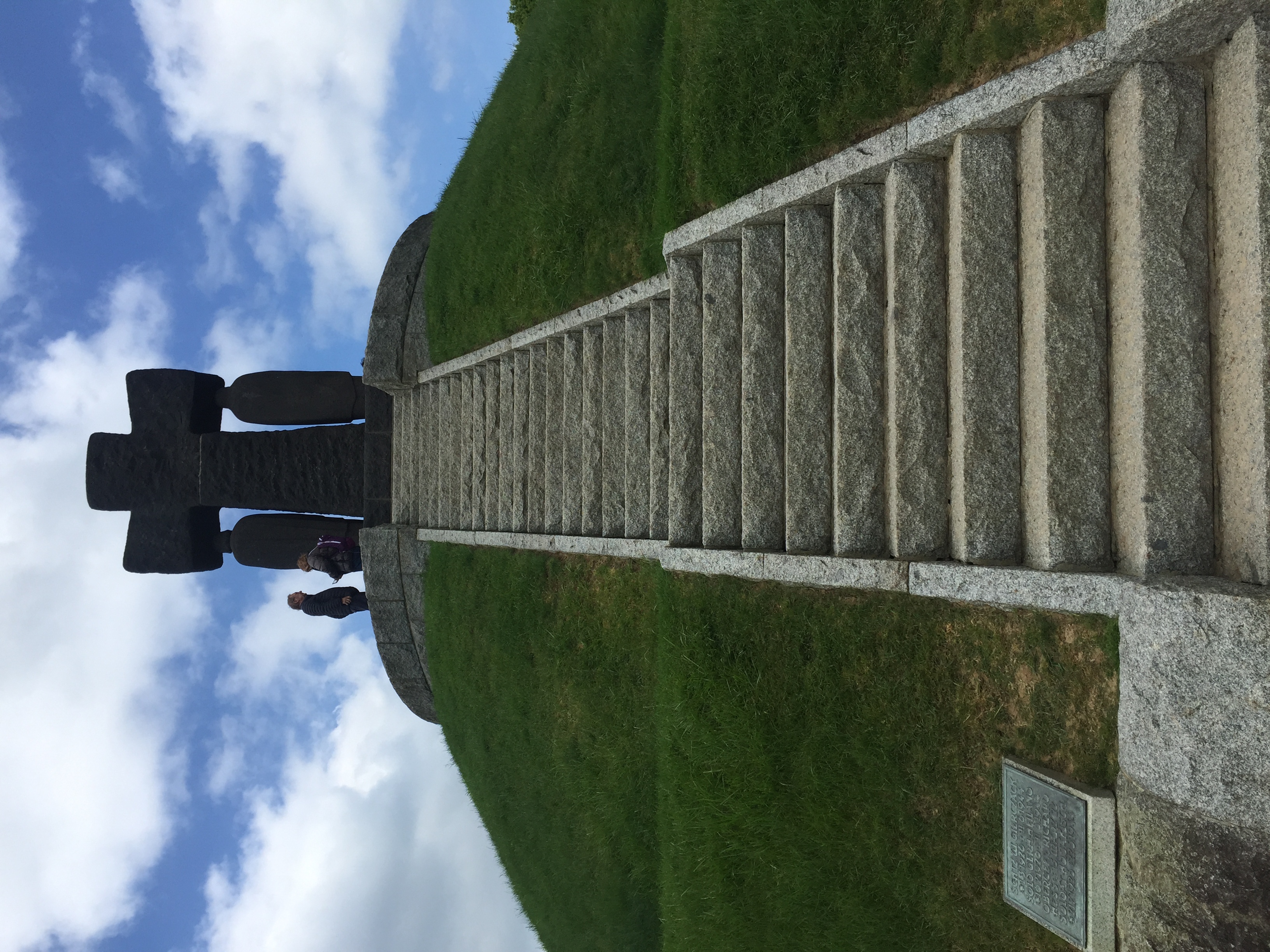
We walked through the gates of the German military cemetery in Normandy and it stretched out in front of us. The manicured, grassy lawn was interrupted from place to place by small, short gravestones that marked the dead. The markers were simple, evenly sided stone crosses on top of square cement slabs. The epitaphs bore witness to one or two names and their respective dates of birth and death. Many inscriptions read only “Ein Deutscher Soldat.” At varied intervals throughout the cemetery, five crosses, side-by-side, dotted the grass. Two shorter crosses were on either side of a taller cross, but all of them stood taller than the unimpressive gravestones. There were no flowers except for the small, appropriately simple wildflowers that sprung up graveside in the grass. Trees shadowed many of the graves. In the center of the cemetery, a large earthen mound rose up as the place’s only impressive structure. Around the base, small metal plaques marked the names of more of the dead. The mound was topped by a large gray cross, and two solemn-looking figures stood beneath the cross’s wings. The place was very quiet, and there were few visitors present to pay their respects.

German Graves One

A German grave with a set of five crosses behind it. In the background, the cemetery’s mound can be seen.

To me, the cemetery’s distinctly simple design seemed to have meaning. There were no grandiose structures, no walls with quotes to show the sacrifice and valor of the dead, no flowers to supplement the stone, and no words, save their names, to mark the soldiers’ resting places. The entire design seemed to plea with visitors to respect the dead, though not their cause. The simplicity of the place distanced the soldiers from the grand plans of the Nazis and the  incredible persona of the Fuhrer. The soldiers were made, through their graves, into simple soldiers, simple people, who died the same death as any other soldier regardless of cause. And the many crosses of the grounds tie the German soldiers there to soldiers of various other nations around Normandy. The cemetery states that just as American families
German Graves Two

The steps leading to the top of the mound in the center of the German cemetery. The backs of the figures under the wings of the cross can be seen at the top.

have found asylum in their sons’ crosses, so too can German families; just as American soldiers can find rest in heaven, so too can German soldiers.

American Graves One

The blank sides of crosses as they stretch into the distance at the American cemetery in Normandy.

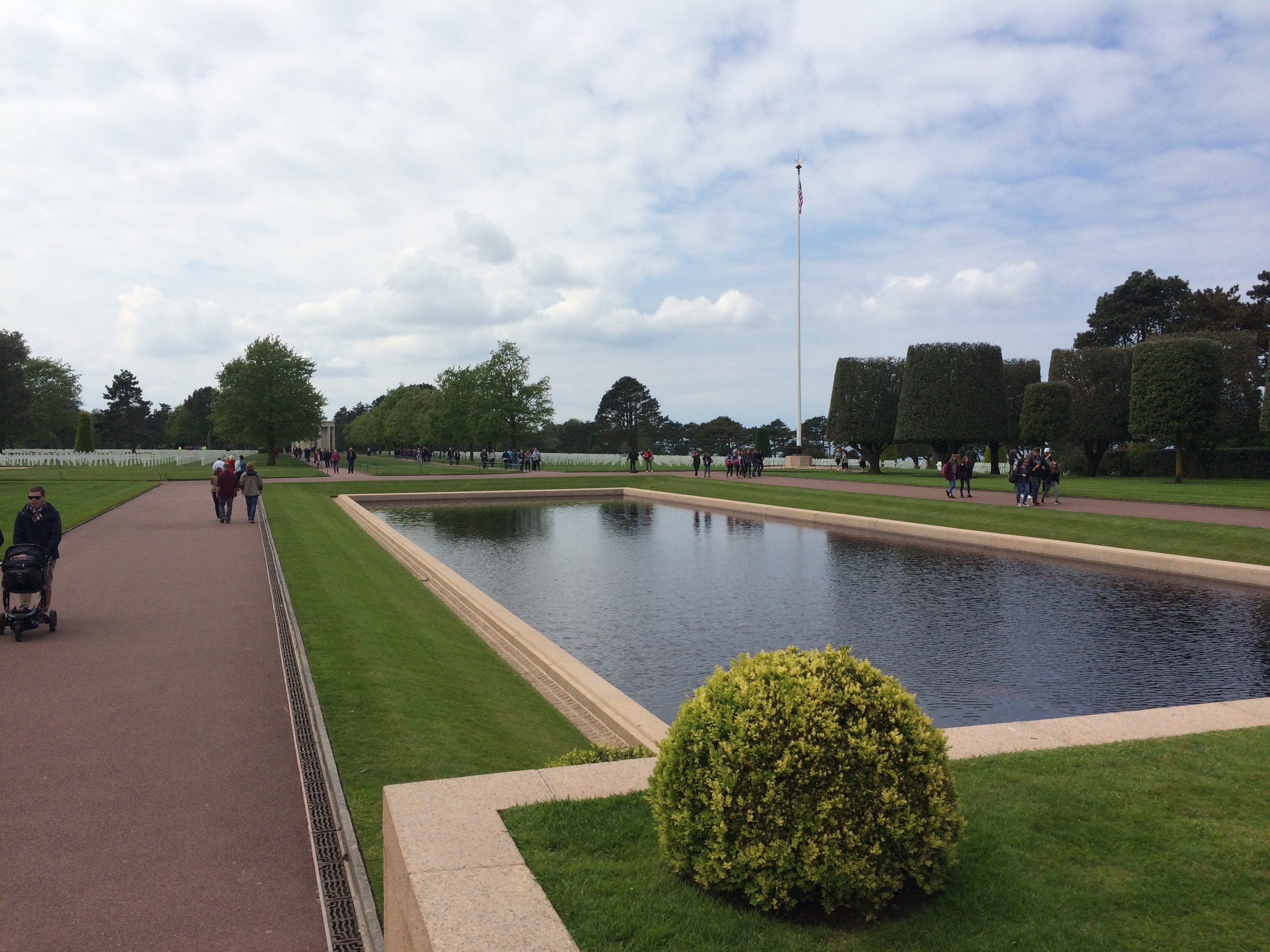
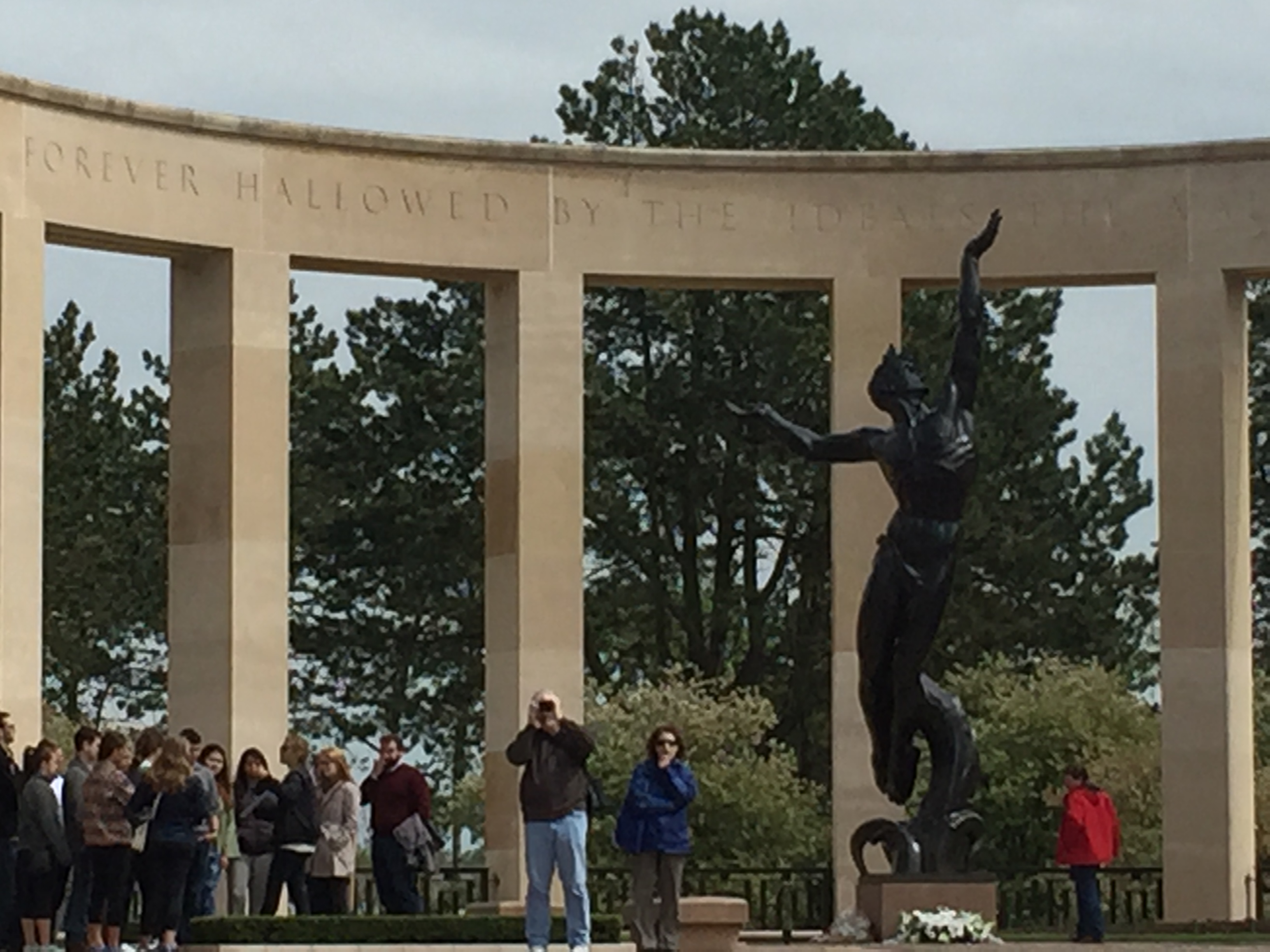
The American cemetery in Normandy offers a different picture. As we walked into the cemetery, we passed through a large stone-surfaced area. The back of the area had a columned arch that declared the eternal honor due the dead who were sacrificed in a campaign to uphold basic human ideals. In the center of the area was a large, black statue of a man looking up with his arms outstretched toward the sky. The statue seemed to represent the Allied cause, embodied in the dead American soldier, a cause which upheld the ideals of a free world. Down steps, we saw a large, dark pool of water, and passed that two tall American flags rose. Next were the graves, a seemingly endless sea of white crosses and six-pointed stars. The epitaphs told the soldier’s name, division, home state, and date of death. Well-kept trees and flowers surrounded and dotted the grounds. A small, domed chapel was in the center of the graves. There was a view along one side of the cemetery to Omaha Beach below and the ocean beyond. The place was busy with people, and a ceremony was ending when we arrived. Many Americans were there, but I also saw groups of people from France and Great Britain. Many faces looked indifferent, even happy, but others were solemn, even tearful.

The cemetery gave the impression, by stating it as fact, that the American fight was a just fight. The American dead were made into heroes and martyrs. The location of the cemetery also encouraged the idea that they were liberators. The graves sat high above the beaches, many marking those who died taking that very sand. The arch discussing just ideals, the crowds, and the white crosses looking down at the beach seemed to validate that those buried there had liberated that place. They had been selflessly sacrificed to regain France’s freedom.

American Graves Two

The tall, black statue at the front of the American cemetery. The arch declaring the sacred ideals of the Allied cause is behind the statue.

But the cemetery also worked to dehumanize the dead. Of the waves of graves, there were only two designs, and most were the same white cross. The American soldier’s grave, and thus the American soldier, became mass produced. The graves looked as if they had come straight off the assembly line. The soldier became a tool of efficiency, quantity, and replaceability. There were no personal epitaphs or tombstones. The soldier’s epitaphs all seemed to become that of the arch that declared the ideals of the Allied cause. And the soldiers all became the large statue that held up those ideals. The white crosses became small, just footstools for the statue that watched over them. The soldiers, or the entire military, became Atlas, the weight of the world had fallen upon them, and they had held it high. The white markers seemed to be mere twinkles in Atlas’ eyes, necessary, tragic, and heroic.

British Graves One

A gravestone at the British cemetery marking the place of a dead British soldier.

The British cemetery was different still. As we walked through the entrance a green lawn stretched back into the distance, baring about a third of the way back what resembled a gray tomb with the words “their name liveth for evermore.” On either side of the tomb was a columned mausoleum-like building, and hanging, purple flowers snaked and drooped around the columns.  A large gray and black cross rose up another ways back, the tallest monument of the cemetery. Graves rose around these structures in rows, many of which were skirted in various flowers and covered in trees’ shadows. The gravestones were all the same shape, and they were designed with a cross, six-pointed star, or neither, as well as the insignia from the soldier’s fighting force. The gravestones also indicated the soldier’s rank, name, date of death, and age. At the bottom of the stone, most of the graves had a personalized epitaph picked by the soldier’s family. The cemetery even had graves for war dead from such countries as Germany, Canada, and the United States.

British Graves Two

The gravestone of a German soldier at the British cemetery.

To me, this was a cemetery for soldiers, but even more, a cemetery for people. The dead were not exalted to lofty ideals and not degraded to sorry soldiers who died hapless deaths. There was not the same exclusivity that the German and American cemeteries had. Personal notes and flowers adorned the graves similar to civilian cemeteries. Though the cemetery was unmistakably a military one, these things  made it feel more personal, and to me, almost more sincere. The cemetery seemed to convey that the people buried there had signed up, or were drafted, to fight, not to die. It seemed to say that while in death they remain forever part of the military and its cause, they return to their family and friends in memory and mourning where they truly belong.

Matt McCoy

First Stop: The War Rooms

Despite the similar language, the culture was very different in London. People did not really leave tips, previous London bombing attempts resulted in the removal of most public trash cans, and fried fish was the biggest food there. London has a vast history of World War II. In London I was fortunate enough to see the Churchill War Rooms. They seemed to give some very interesting insight into World War II.

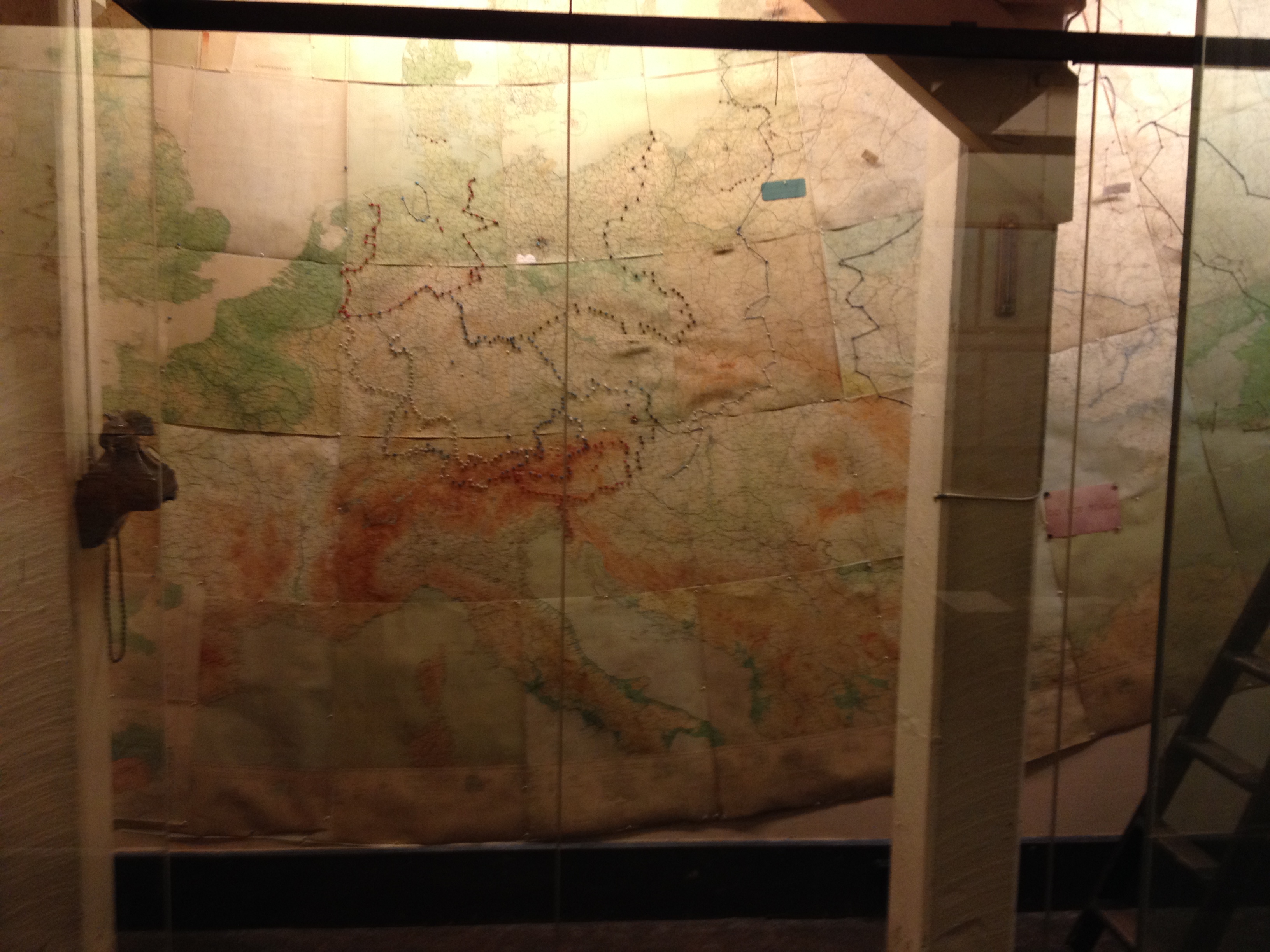
The Churchill War Rooms were the actual rooms where Churchill and his staff made their war plans. After the war ended, they simply just walked out and sealed up the doors, leaving the office exactly as it was. Upon being discovered, it was made into a museum, with the rooms rearranged as they would have been during the war when they were being used; mannequins were also dressed up and placed in spots where the real people would have been, in order to lend authenticity. The rooms were extremely small and really helped to show how cramped and hot it must have been during the war. Churchill’s room was the biggest, but it was also right next to the map room, which was described as the busiest and loudest room. The map room was by far the most interesting of the War Rooms. The map room was full of huge maps covering the entire walls up to the ceiling. The maps really helped to give a much better perspective of the scale of the war as it was progressing. Most maps I have seen of the war before are usually no bigger than a laptop screen or book, so seeing them on a bigger map with the details of specific battle points and fronts really helped to show the massiveness of it. I noticed this especially with Germany’s invasion of the Soviet Union. Although the invasion was initially somewhat successful, people often refer to Germany’s invasion of the Soviet Union as one of their ultimate downfalls during the war. The maps, however, really did help to show how successful Germany’s initial invasion was, as it gave a much better perspective of how deep they actually reached.

The map rooms were also laired with mannequins who represented the many people who used the map rooms every day. The mannequins showed how the officers used the massive maps to help predict the movement of opposition troops and plan the advance of their own. Winston Churchill’s room was located directly next to the map rooms. Considering the busyness of the map rooms, it seems to pretty clearly show how little sleep he and others were actually getting. They speculated at the exhibit that people got more sleep during random naps throughout the day than actual sleep at night. The Churchill War Rooms really helped to give me a much better insight into how a war is actually planned out. I never realized how many different rooms there would need to be and how much people actually worked and how stressful it was in making plans during the war. Communicating around that much commotion while also feeling the vibrations of bombs dropping above them would have been immensely difficult. It truly is amazing how they were able to organize an entire war effort in such difficult circumstances.
A picture of one of the biggest maps in the War Rooms. This was located in an annex of the War Rooms and showed in great detail the advances and positions of the Germans and the Soviets at the time during the war.

A picture of one of the biggest maps in the War Rooms. This was located in an annex of the War Rooms and showed in great detail the advances and positions of the axis and allies in the European Theatre.

The Beaches of Normandy

Visiting Normandy, specifically Omaha Beach, is the part of the trip I have been looking forward to the most. My grandfather fought on Omaha Beach and in Normandy. He is the reason why I have always had an interest in World War II. He is the reason why D-Day has fascinated and interested me since I was very young. To walk on the beach that he, along with thousands of other men, fought on, was chilling.

IMG_4510

Les Braves Memorial on Omaha Beach.

Thousands of young men, many younger than me, risked their lives while storming the beach. To stand where they fought and died was a truly humbling and surreal experience. It was difficult to imagine what Omaha Beach must have been like on the morning of June 6, 1944. When I looked out over the beach, it hit me as to just how vulnerable the soldiers were. There was so much distance between the water’s edge and any sort of protection. With the Channel at their backs and facing enemy fire, they had nowhere to hide and nowhere to run to. They had to rally together and push forward

Standing at the top of the beach, looking down, I struggled to imagine what the Germans must have been thinking when they woke up on that Tuesday morning and looked out over the channel to see hundreds of ships that had not been there the night before. I wonder how they felt. I imagine they were terrified. They had to know a large battle was coming. It can be hard to commiserate with the German soldiers because they were our enemy, but they were also people though. They had families and jobs that they had to leave behind. While I do not believe in the cause they were fighting for, I still feel sorry for them. So many of their lives were cut short, leaving widows, children without fathers, and parents without sons.

The German Cemetery.

The German Cemetery.


After visiting Omaha Beach, we went to the Normandy American Cemetery and Memorial to pay our respects to the fallen soldiers, including twelve Ohio State students, alumni, and staff who are buried there. I, along with my classmates, placed Ohio State flags at each of the twelve graves. As I knelt down to place the flag, I thought about how similar I am to these men. I am the same age as many of the American soldiers were during the war. They had dreams and hopes for their futures. They had parents, siblings, girlfriends, and friends who they loved. They had jobs, school, hobbies, and responsibilities. They left all of this behind when duty called, and they left all of it behind when they made the ultimate sacrifice.
I placed an Ohio State University flag at one of the twelve Ohio State students. alumni, and staff graves at the Normandy American Cemetery and Memorial.

Looking out over the well-manicured, green lawn of the cemetery, I saw row after row of headstones. I did not fully grasp the magnitude of destruction and death caused by the war. The cemetery is the final resting place for 9,387 soldiers. Chills went through my body as I stood there, taking it all in. These men sacrificed their lives for future generations.

Omaha Beach and the Normandy American Cemetery and Memorial made me feel proud but sad. Standing on the sands that thousands died to seize back from the Nazis, I was proud of my grandfather, proud of his generation, and proud of the USA. I was also thankful for the sacrifices made by so many men, thankful that more did not die, and thankful that the soldiers who died on D-Day did not die in vain.

Erik Smith

My First Impressions of France

DSCN1379

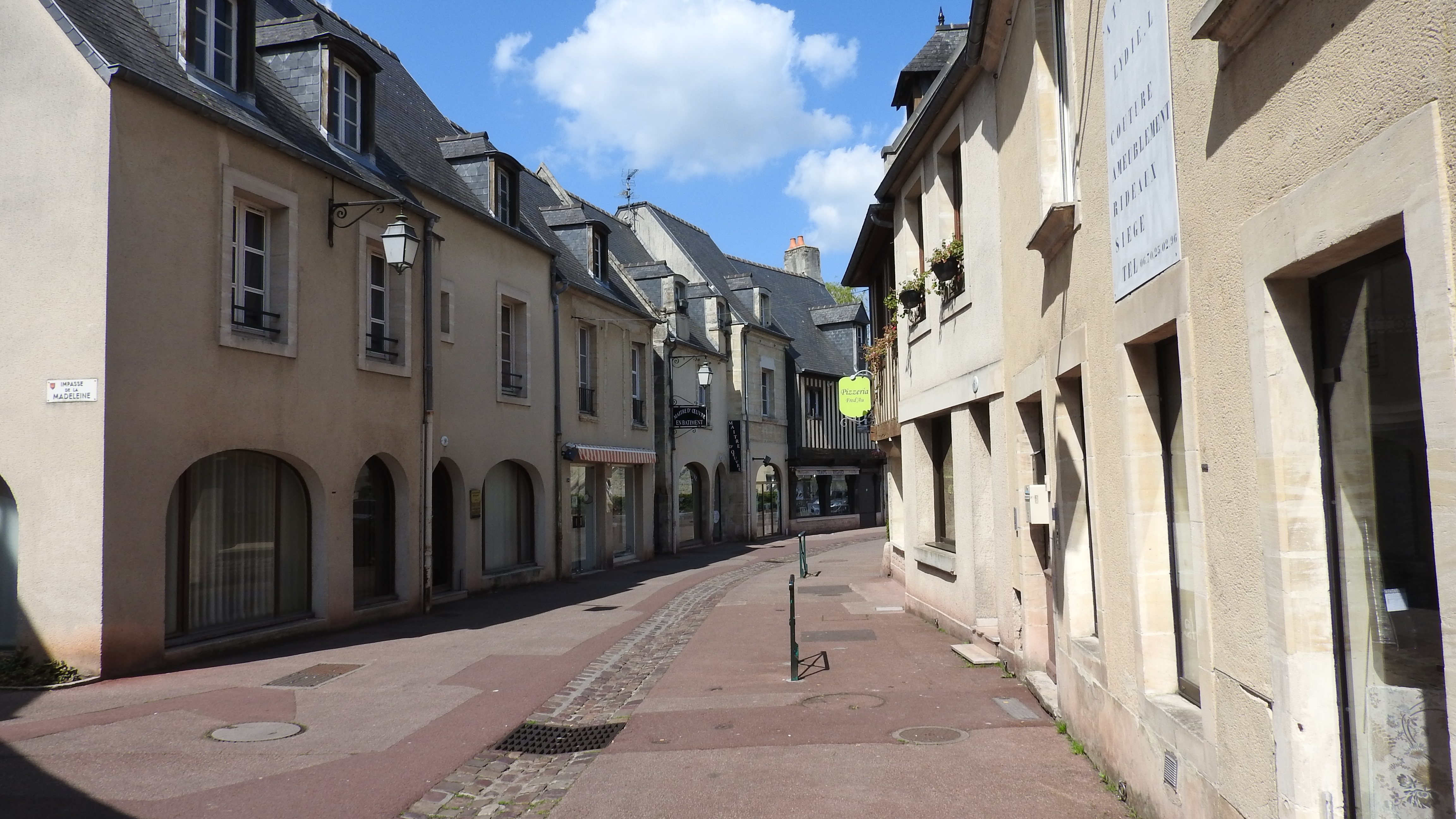
A typical street in Bayeux

With six years of French language classes under my belt and a general interest in modern French history, I was most excited for our program’s stop in France.  Despite my Francophile tendencies, I was still a little nervous about my first visit to the country.  Would it live up to my expectations?

Fortunately for me, my stay in Normandy did not disappoint.

DSCN1466

The countryside outside of Bayeux, with the old cathedral steeples rising above the treeline

After traveling from London to Portsmouth and taking a ferry across the English Channel, our group arrived in Normandy and took a bus to the small Norman town of Bayeux, where we stayed over the following six days.  On our final day there, Professor Steigerwald referred to our time in Bayeux as being in “fairytale land,” and in fact, this is probably the most apt way to describe it.  Bayeux is a small, quiet town surrounded by scenic countryside and rolling hills.  It was a welcome reprieve from the fast-paced hustle and bustle of London, and, in some ways, reminded me of my own hometown in rural Ohio.  That being said, it was still unlike anything I had ever seen or experienced in the United States.

Most communities in Europe can be dated back not hundreds, but thousands of years.  In the United States, where everything is relatively new, a building over a hundred years old easily qualifies as

DSCN1174

The Bayeux Cathedral, built nearly a thousand years ago during the time of William the Conqueror

“old.”  In Europe, however, such aged buildings are the norm. I commented in my last post on the amount of history to be found in the city of London.  Bayeux was more than just a town full of history.  Entering the town itself felt like stepping into another time: many of the buildings appeared to be hundreds of years old, and lots of streets were still paved with brick and cobblestone.  At the center of the town was a cathedral nearly a thousand years old, built in the time of William the Conqueror.  Fortunately, during the Battle of Normandy in 1944, German forces occupying the town fled without putting up much of a fight, sparing the town from the destruction rained down on so many other Norman cities and villages during World War II.

DSCN1392

The central street running through Bayeux, full of stores, restaurants, and cafés

Aside from the location itself, another aspect of Normandy that I was attentive to was the local people themselves.  On the whole, my observations were unsurprising.  The French have a certain “joie de vivre” about them that is much more evident than in Britain or the United States: they enjoy relaxing, socializing, and eating great food.

Some observations I made in Bayeux (and now in Paris as well) were a little more startling for me, however.  The French are often stereotyped as being unkept, and while I can’t attest to the personal habits of the locals in Bayeux, one thing that took me aback was my encounters on the sidewalks (even right outside our hotel) with les crottes de chien: dog feces.  I don’t know if there are any particular laws in France demanding owners clean up after their dogs, but if they exist, many French dog owners seem to pay no attention.

Putting such peculiarities aside, most interesting for me was observing how the locals reacted to us Americans.  Despite our own stereotypes of the French as snobbish and inherently anti-American, most of my interactions with the locals in Normandy were positive.  When an interaction was negative, it seemed to be out of their annoyance with us more than anything else, and the locals certainly had reasons to be annoyed.  I noticed that the French are a generally quiet people who keep to themselves in public.  When it comes to Americans, on the other hand, this is not so much the case.  Walking through the streets of Bayeux, our large, rambunctious group attracted more than a few stares, and some of us were told occasionally to quiet down.  While taking a shuttle bus to Mont Saint-Michel, it was quite obvious that many of the French passengers (and especially the older ones) were not happy to have a group of American students crowding onboard and pushing them aside.

Most of my interactions with the locals took place around food (either at the grocery store or at restaurants and cafés), and while almost all of these were positive, there was one instance on our first evening in Bayeux (during a group dinner) that one of our servers commented on our poor dining etiquette.  Some of us had been picking apart our food, and the server laughed and told us we “ate like birds.”

DSCN1770

Omaha Beach today, as seen from the American Cemetery at Colleville-sur-Mer

In writing about my experiences in Normandy, of course, it would be impossible for me to go without mentioning the 1944 invasion of Normandy during World War II and my visits to the various battle sites, museums, and cemeteries associated with the war.  Visiting the Utah and Omaha landing beaches were especially poignant moments.  Bloodshed and carnage immediately come to mind when thinking about the D-Day landing beaches (thanks, no doubt, to films like Saving Private Ryan), which is why I was immediately struck by the serenity and beauty of these places today.  After viewing them

Airborne Museum

A French father and son at the Airborne Museum. I was surprised at the large number of French tourists visiting sites dedicated solely to the American war effort

firsthand, it’s difficult to think of these beaches as former battlegrounds, much less as battlegrounds where thousands of American troops took their last steps.  The only word I could use to describe my feelings being there is “surreal,” and even now, I don’t think the full immensity of the events that took place there over seventy years ago has sunken in.

Particularly moving for me was the French and their reactions to the war today.  Despite being stereotyped as anti-American, and despite the few negative interactions I personally experienced, the French (at least in Normandy) have certainly not forgotten the efforts of American, British, and Canadian forces to liberate their country from Nazi occupation.  Aside from the cheesy signs at tourist sites reading “Welcome, our liberators,” it was clear to me that many local Frenchmen still remember and appreciate what happened in Normandy over seventy years ago.  Many museums dedicated to the memory of the American war effort (like the museum at Utah Beach) are maintained by French staff, and I was touched reading the comments in a guest book (nearly all of them written in French) at the Airborne Museum, praising the museum and highlighting the need to preserve the memory of D-Day for future generations of Frenchmen.

“We have not forgotten, we will never forget, the debt of infinite gratitude that we have contracted with those who gave everything for our liberation.” – French President René Coty

Some program members were bothered by the swarms of French schoolchildren taking fieldtrips to the sites (there were several busloads of them when we visited Pointe du Hoc), as well as the lack of respect that many of them seemed to display.  While, to be fair, most of these schoolkids were too young to fully understand the importance of the places they were at, I thought their very presence said a lot about the French.  The fact that schools continue to send their students on fieldtrips to war sites in Normandy highlights the importance that the French attach to the Allied invasion in their national history.  The effort to preserve the memory of D-Day for future generations is alive and well in France.  At the American Cemetery in Colleville-sur-Mer, a fitting quote from French President René Coty was inscribed on a wall outside the visitor center, summing up my observations of the French in Normandy: “We have not forgotten, we will never forget.”

Some Happy Norman Cows

I’ll be honest: I have a deep appreciation for cows and did not think that my travels to France would lead me to writing about them for one of my blog posts. I was born into a family that has maintained and operated an average-sized Ohio dairy farm through generations for the last seventy years or so. Cows are something constant I have been around my whole life. While I did not physically grow up on the farm, I spent a lot of time there and being able to go to grandma and grandpa’s and likewise, out to the barn, was a real treat growing up.

Because of being around the dairy farming culture growing up, I understand the business side of it in some capacity. Cows and the milk that they produce are necessary on a daily basis for millions of Americans (my family included) to make a living and also provide the products that many Americans like to fill their fridges and pantries with. The United States produces the most gallons of milk annually and will always remain an important piece of what makes up the American workforce.

IMG_1672

Holstein peering at me at the brief moment at which he isn’t eating grass.

Coming in second place in world annual milk production, the cows of France, and the Normandy area specifically, seem to tell a different story from my observations. Starting last semester, our class was studying the Normandy invasion one week and discussing a particular piece that involved families – and their animals – being in the direct battle line of the invasion. The number of cows alone lost during D-Day nears 100,000 and gives an indication of the toll the invasion took on livestock in Normandy. Losses aside, as we were discussing D-Day, the topic of “Happy Norman Cows” came up in class, and I was quite skeptical of just how happy they were at first. Although, the first time on the bus I saw a field of cows just laying around grass fields that stretched for miles and miles, soaking in the sun, gnawing grass to the soil, my skepticism instantly evaporated. These cows are genuinely ecstatic, excited, and all-around generally joyful. While the cows I’ve been around all of my life roam the fields, are always treated with care and with comfort, and are used in the right way, the animals are also valuable tools to producing product and therefore profit that helps put food on the table. In comparison, Norman cows live like animal royalty if there were distinctions for such things. I cannot recall ever seeing a cow smile, nor am I completely sure that they can, but I’m almost certain that I have seen it here (pictured right) in the French countryside. I did not get to see an actual French dairy farm, though I’m sure they are fairly similar to American farms in the way they operate. Nonetheless, the way American and French cows live are different, but that’s okay and interesting to see and compare.

IMG_1695

Please try and tell me this Holstein isn’t smiling — I won’t believe you.

As it relates to World War II, I did a small amount of research on the involvement of cows within Operation Overlord out of pure curiosity. While the results were slim, the information I got was superb. From the September 2, 1994 edition of the Free Lance-Star of Fredericksburg, Virginia, I found an article titled, “Normandy’s cows played curious role in WWII.” The opening two sentences give a clue-in to just how odd but fascinating their role was as it says: “The curiosity of Normandy cows could get a soldier killed or captured in the summer of ’44. If he were lucky, those natural – but neutral – animal allies could save his life.” Cows served various purposes in the operations. While the cows’ honest curiosity of the invading Americans in their area lead the animals to unintentionally give away allied positions, they also would stare at enemy German soldiers to within two-three meters, giving the allies across the field indication that the field held an enemy. Even more so, American soldiers used cow carcasses as bearings for when giving directions and orders to follow. The hedgerows in Normandy are tall and hard to navigate through, so using the carcasses was something that useful to point out that differentiated from the hedgerows to help navigate. The troops were entirely grateful for being able to use the fallen creatures.

IMG_1620

A trio of Normande cows enjoy the cool May afternoon.

Again, I never thought that traveling to France as part of our World War II trip would enable me to write about these furry, ginormous, milk-producing creatures, but in retrospect, I highly doubt that American soldiers rushing the beaches of Normandy thought that these same creatures would serve as bearing points, indicators of enemies ahead, or that a field hadn’t been mined because there were still cows trotting through it. From Eisenhower down to the lowly, neutral – but happy – Norman cow, every ally involved with the Normandy invasion played their part on the way to a successful operation.