Model United Nations

40 Fake Friends Memes That Are Totally Spot-On | SayingImages.com | Funny  happy birthday meme, Inappropriate birthday memes, Funny birthday meme

Recently I took part in PUNC (Penn State United Nations Conference), which is a crisis-centered conference. This means, the people (aka delegates) in the conference need to address ongoing issues, while also having their own side agendas occurring throughout the conference. It was my first genuine introduction to this form of a conference, and I was not pleasantly surprised. I believe that as International Affairs Scholars it is important to address global crises, but also remember that people can have false pretenses and only support issues that “benefit the common good” in order to fit their own agenda or increase their pocket size. In the conference, these were the delegates who got awards. In reality, these are the people who need to be caught and removed from a public office. As a person who is hoping to enter the world of global affairs to maintain a calm atmosphere for the US citizen and for the common wealth of all people on Earth, this was a sad wake-up call for me, but I feel invigorated and ready to take on this challenge. This conference has taught me multiple things: your strongest ally is not a person/group, but your own national security; your biggest enemy is more likely than not your alleged ally, and when one truly wants to make a difference in the world, they need to be able to break through corrupted barriers without looking back or going into hiding. I hope to remember this as I continue on in my pursuit of peace and international diplomacy.

Current Events

At the current events meeting, we discussed international conflicts and events that have occurred. These included things such as:

  • Myanmar had originally just shut down Facebook and Instagram due to internal conflict and coups that have been occurring, but they have now also shut off access to the Internet. People are still protesting in response to this, and it is debated if this was a reasonable response.
  • Russia has expelled German, Swedish, and Polish diplomats, who were accused of being involved in a series of protests.
  • There was a big dam disaster in Brazil and some Brazilian communities are now being compensated. The settlement was $7 billion, which was a price I was not expecting. 
  • To add on to the several natural disasters they’ve already have, Australia recently experienced a bush fire.

The key takeaway from all of this is: everyone at this point in time is hanging on for dear life.

Just kidding.

In all seriousness, all of these conflicts are going to have a lasting impact on an already tense global atmosphere due to COVID, and I can only hope that at least the issues in Brazil and Australia are solved with relative ease and the people who have been affected can get back to some sense of normalcy soon. Seeing as I want my career to be in the realm of international relations, all of these situations will pertain to me in the future. Issues over human rights, privilege vs. freedom, and more will continue to target citizens, and people all over the world will continue trying to balance “do we give the country the freedom to fight on their own?” and “let’s step in and help them” pertaining to both social, political, and environmental issues. Hopefully, the intensity of these problems will simmer down by the end of the pandemic.

S.T.A.R.T..

https://start.umd.edu

I participated in group zoom where a woman discussed her internship with START and her experience with studying German. I was excited to learn about START because I had never heard of it before, and I was able to hear experience about Fulbright and how that missed opportunity led to START. START is a really interesting organization that focuses on things like domestic and international terrorism, which is something that relates to international relations (obviously) and me personally, seeing as I’m looking into that area as part of a possible career choice. I also found out about the GTD, aka Global Terrorism Database, which is apparently open to the public. That’s interesting for multiple reasons: I never thought that information like this would be open to the public, and I never knew that was connected to START. She said that she’s working in PIRUS (profiles of individual radicalization in the United States), and is focusing on figuring out things like what groups have the most influence over people and what groups are most populated. As far as experience goes, I feel like an internship like that is very beneficial generally, and I’m excited that I’ve found out about the opportunity. In the future, I look forward to finding out more about the organization and deciding if that is an organization that I would want to do an internship for. As an IA Scholar, I’m aware that hard work is rewarded with a successful future, and this kind of work would definitely help me further my ability to impact international relations on the aspect of cyber/physical security. 


Pumpkins and Markets

I participated in the pumpkin painting and in the trip to the North Market. On both the pumpkin painting and the market event I did not know anyone, and I ended up making a couple friends. At the North Market, I was excited to see all of the different ethnic food that was there, and got to taste authentic Polish food, which tasted a lot like the food my family makes back home. I learned about the market’s existence, and I was excited to see that the prices weren’t to heavy on the pocket. I also was surprised to see artwork in addition to food for sale, and I definitely learned more about other’s ethnic backgrounds in the group. We discussed what would be an appropriate answer to someone who minimizes someone’s experiences with discrimination and hatefulness. Overall, the girl who lead the social hour was really sweet, and so were a couple of the girls that came with us to the market. I wouldn’t say I made friends with everyone because some were unsociable towards me, but I’m glad that I came along!

Oct. 28 Comm Meeting

I took part in the optional community meeting, where we spoke about Latino Studies Minor opportunities, Introduction to Human Rights Courses, and Racial Capitalism courses towards the beginning of the meeting. The speaker mentioned the works of Dubious a lot and the counters in opinion people have had when it came to Marx’s capitalist theory (because of race issues). She mainly focused her discussion on the idea of how discrimination has disadvantaged people in the past with career, education, and human rights opportunities. We also talked about “ethnic whites” and how they’ve also been discriminated against and struggled throughout history. I wish she had further elaborated on the idea of how some people believe the discrimination ethnic whites  face (especially in Eastern Europe) is talked down and ignored, but I was too nervous to ask in a public area (because it is a really personal topic).

This meeting relates to both our scholars course and the broader idea of International Affairs because it is an important part of history that we need to continue to discuss, as well as an important part of our current events. Discrimination continues, and there is still propaganda being made to separate people through social distinctions made between the human race. My key takeaway was that there is a lot of complexity and research that can go into this topic, and the courses she said recommended or generally brought up can offer aid in our journey to doing our own complex research.

Current Events

I participated in the current events discussion, which spoke about worldwide protests that are occurring, the housing crsis, the repopulation of an endangered animal, and the use of entertainment to help children cope with COVID-19. This relates to International Affairs because they are, quite literally, international affairs. In addition, I believe that it’s important to realize that what may seem like a small, isolated issue can grow into a worldwide debate and showcase the importance of quantity in numbers, educated debate/discussion, and possibly a need for change. 

To summarize the meeting, we began with speaking about the beheading of teacher in France. He was killed over his display of satirical images of Profit Mohammad during a freedom of speech and expression class. This not only led to a local investigation, but also brought to light a greater issue: the islamist extremists that are creating chaos and a possible increase in islamophobia. We then shifted gears to student-led protests in Bangkok, Thailand, over the country’s huge military influence in the classroom. Protesters want three things: resignation (of the PM, Prayuth Chan-ocha), rewriting (of the Constitution that took away citizen power), reformation (by bringing monarchy under the purview of the constitution). They are on their 70th constitution and have had numerous coups, so their instability could lead to a dramatic shift in governmental power. Additionally, anti-police brutality protests in Nigeria (#EndSARS) have led to mass defiance in Nigeria. Youths are trashing the palace of the highly respected oba – a traditional ruler – by dragging his throne around, looting his possessions, and swimming in his pool. In other words, what was originally a protest against police brutality seems to have escalated into a way for the youth to vent their anger over their government. There was also discussion about the 12 Loa frogs that were nursed back to health in Chile; they repopulated into the 200s, which took over a year to do and became a huge deal in Latin American news. As previously stated, there’s also now a socially distanced Sesame Street in Jordan, which is meant to relate to children and help them cope with their struggles during COVID-19. Inventory of homes for sale are also dropping, meaning people less receptive to selling their home. This led to prices being at an all time high since 1968 (even when adjusted for inflation) and banks making less money.

The key take away is that there is a lot going on outside of the United States. Protests, movements, economic crises, and reasons for rejoice are occurring all over the world and it is our duty to stay informed on them. This is not only because we one day will be responsible for promoting/condemning/discussing these situations, but also because small, local issues can result in a global disruption.

PhD Programs

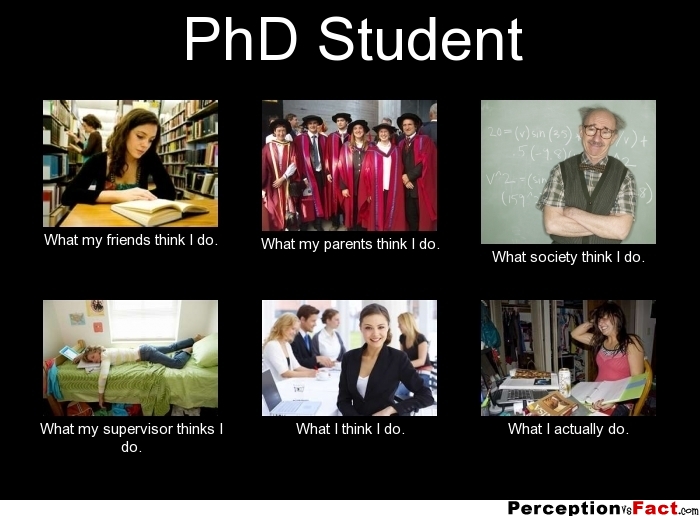
I participated in the PhD Program discussion, which was an informational presentation about transitioning from grad school, and what a PhD program consists of (more specifically, for an economics program). This relates to International Affairs, because getting a PhD can make people more influential in their career. This increase in influence can lead to more worldwide impact in the future, especially with programs such as economics, business, or international studies. 

We learned about creating personal statements in our applications, the importance of figuring out where we generally want to move towards as far as field specification goes, and the importance of research. Research is a very important thing to highlight in your application for a PhD program, and research is a huge aspect of the PhD program after one completes their first year. I learned, shockingly, that it’s okay once I get into the program to not be dead set on a program specialization. It is, however, important to have a general idea of where you want to go to move forward in your degree.  The first year is a lot of work with fundamental education on your field, and the rest of your years will revolve around “field courses” (ex: in your second year, choose two classes that specialize in the field you wanna do) and projects/research. I was interested to find out about GREs, which I had no idea existed, and about the fact that most classes will be half-semester classes. She talked about half-semester classes being stressful due to a huge workload being put on her in a short amount of time, and she spoke about the GREs resembling a more difficult version of an ACT. I was also interested to find out Ivy schools aren’t always the way to go for PhD programs, but I obviously would have researched into this regardless come time for applying. My key takeaway was that PhD programs are a lot more stressful than I had anticipated, but are nevertheless an exciting aspect of learning and getting ahead in your future career. As an IA Scholar, I’m aware that hard work is rewarded with a successful future, but as of right now I am not sure how far I want to go into my post-high school education. This was, however, really helpful in developing a clearer picture of my future, and I’m happy that I decided to look into this presentation. 


CCWA: A Personal I.A. Investigator

My second, Steven-approved program visit was with CCWA. More specifically, CCWA’s Model United Nations (MUN) team. The informational program was mainly done by Anthony Perrins (head delegate), who I’d later speak to about the specifics of the club. Generally speaking, OSU’s MUN team is like any other MUN team: you pretend to be a member country of the UN in conferences that take place around the nation. In those conferences, you must argue your country’s policy verbatim. Otherwise, you risk endangering your people – even worse – getting called out by a conference committee’s chair.

However, you must also keep in mind that the point of these conferences is to compromise and find common ground with countries in order to solve an ongoing problem. This year, OSU MUN is going to be focusing really hard on training their delegates on how to perform well at these conferences, which is excellent for my purposes. 

Primarily, as it relates to IA Scholars, I will be learning more about how to properly research and understand the viewpoints of several countries. While doing so, I will also be learning how to maintain a firm ground when arguing for my country. The training, however, will help show me when it is more effective to compromise and when it is more effective to not give up my country’s goal. This especially important distinction is what I need to keep in mind for my professional career in global diplomacy, which is what makes this club highly beneficial for me. 

MUN actually intersects with one of my current courses: Intro to Peace Studies. Both the course and the club help me understand the complexity of varying opinions and shows me how varying opinions – if not understood/handled properly – can lead to conflict or escalate into war. That being said, going to the CCWA MUN meeting definitely was worthwhile and I am excited to see how I grow through participating in the club.


CRIS: Building a Happier Community

My first adventure brought me to a CRIS meeting, where I learned through an informational program about becoming a liaison/mentor to refugee students in the Columbus area. 

This relates to International Affairs because, as an I.A. Scholar, we must not only realize that we need to be involved in current international events but also understand that international events affect small communities in the United States as well. In other words, every part of the world is interconnected, and we must keep in mind that everything happening around the world still directly or indirectly influences our country (prime example: COVID 19). 

In the meeting, I learned about the shocking fact that there is a huge refugee community in Columbus, and I was excited to find out that I could help them. It relates to my professional interests because I want to be able to help others cross the bridges of prejudice and stereotypes and learn that identifying with different cultures doesn’t mean having different values. Especially today, it is important to keep in mind that peace-conflict relations do not just mean war. Peace-conflict relations also means studying abroad, helping refugees/immigrants, and showing people that stereotypes and broad generalizations are not something to look at as a guidebook. 

My key takeaway was that there are a lot of children in this world who are going through the same anxiety and uncertainty that children signed up with CRIS are going through. One day, I hope to rid them of that anxiety; a great way to begin that process is joining this organization.