Differential diagnosis I
Joint Disorder
Rationale:
The patient has been experiencing leg pain with ambulation for several years and recently it has increased. Given the age of the patient and the fact that they have been experiencing the pain for years, it could be likely that their pain is a result of a disorder of their joints. Osteoarthritis, for example, is a noninflammatory joint disease that is a progressive deterioration of cartilage in joints filled with synovial fluid, such as the hips and knees. It is common among older patients and is the leading cause of disability (McCance & Huether, 2014). Secondly, a reported side effect of the lipid-lowering agent that the patient is taking is arthritis, which could exacerbate any degenerative changes (Davis’s drug guide for nurses, 2019).

Figure 1. Diagram comparing normal and osteoarthitic joints (Courtesy of Gavura, 2011)
Differential diagnosis II
Atherosclerosis
Rationale:
The medical, social, and surgical history of the patient strongly suggests that their leg pain with ambulation could be the result of atherosclerotic changes to the peripheral arteries of the lower legs. They have been medically diagnosed with hypertension, diabetes mellitus-type 2, and hyperlipidemia. Their social history indicates that they have a cigarette pack life of 104 years. Within their surgical history, it is reveled that they have been positively diagnosed and treated for coronary artery disease in the past. Similarly, to the angina that patients with CAD experience, claudication is the pain experienced in the lower extremities when blood flow is decreased because of atherosclerotic changes (Berkowitz, 2007). Given the history and presentation of the patient, this is likely the cause of his leg pain.
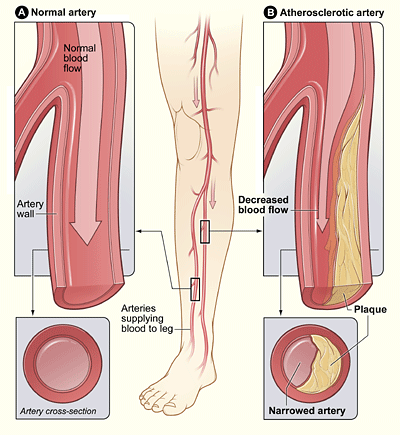
Figure 2. Diagram comparing normal and atherosclerotic artery anatomy (Courtesy of Pathology leading to amputation, 2019)
Differential diagnosis III
Nerve Root Compression
Rationale:
Taking into consideration the sex and age of the patient, it is possible that the pain they are experiencing is the result of nerve root compression. The compression would likely be within the lumbar spine and be the result of a herniated intervertebral disk. Men in the 30- to 50- year age group are affected more frequently from nerve root compression. A herniated intervertebral disk can present clinically as pain that radiates along the buttock and into the calf or ankle, making it difficult to walk (McCance & Huether, 2014).

Figure 3. Diagram of various nerve compression injuries (Courtesy of Sekhon, 2019)