What I Do: Building a personal brand in social media


I was flipping through work notes from my recent Fulbright project in Ethiopia, and the topic of personal branding using social media caught my attention.

Earlier this year, I presented my course “Branding, Content and Social Media” to faculty and staff in two Ethiopian universities.

Daily, I wrote an outline of the topics I expected to cover for each session so I wouldn’t forget anything.

For the personal brand topic, I actually wrote out more of a script. I don’t include this subject in my iTunes U course, but I wanted to emphasize the use of social media in personal branding for my Ethiopian students.

I thought I’d share my notes here:

Branding is not just for your organization. It also applies to you.

Your personal brand is similar to reputation – how others view you and how you show up in your daily life.

Are you a genius? Trustworthy? Responsive?

Do you do what you say you will?

One way to communicate your personal brand is to write a blog about a special project or a cool hobby. Since I work in higher education, I am always looking for faculty who can be thought leaders on an issue of importance.

If that person writes a blog, then we can tweet about it, promote it on our websites, or include it in e-newsletters. Expert blog posts can also be promoted to external media as a possible information source or future interview.

However, having a blog can be a big time commitment. Perhaps your experts can’t invest the time in regularly posting to a blog. One option is to pitch that expert as a guest writer on someone else’s blog. The key is to be a relevant voice and add value to the site’s followers.

What to write about? Perhaps there is a photograph that speaks to your expertise. Writing about the backstory for that image could be a great blog post.

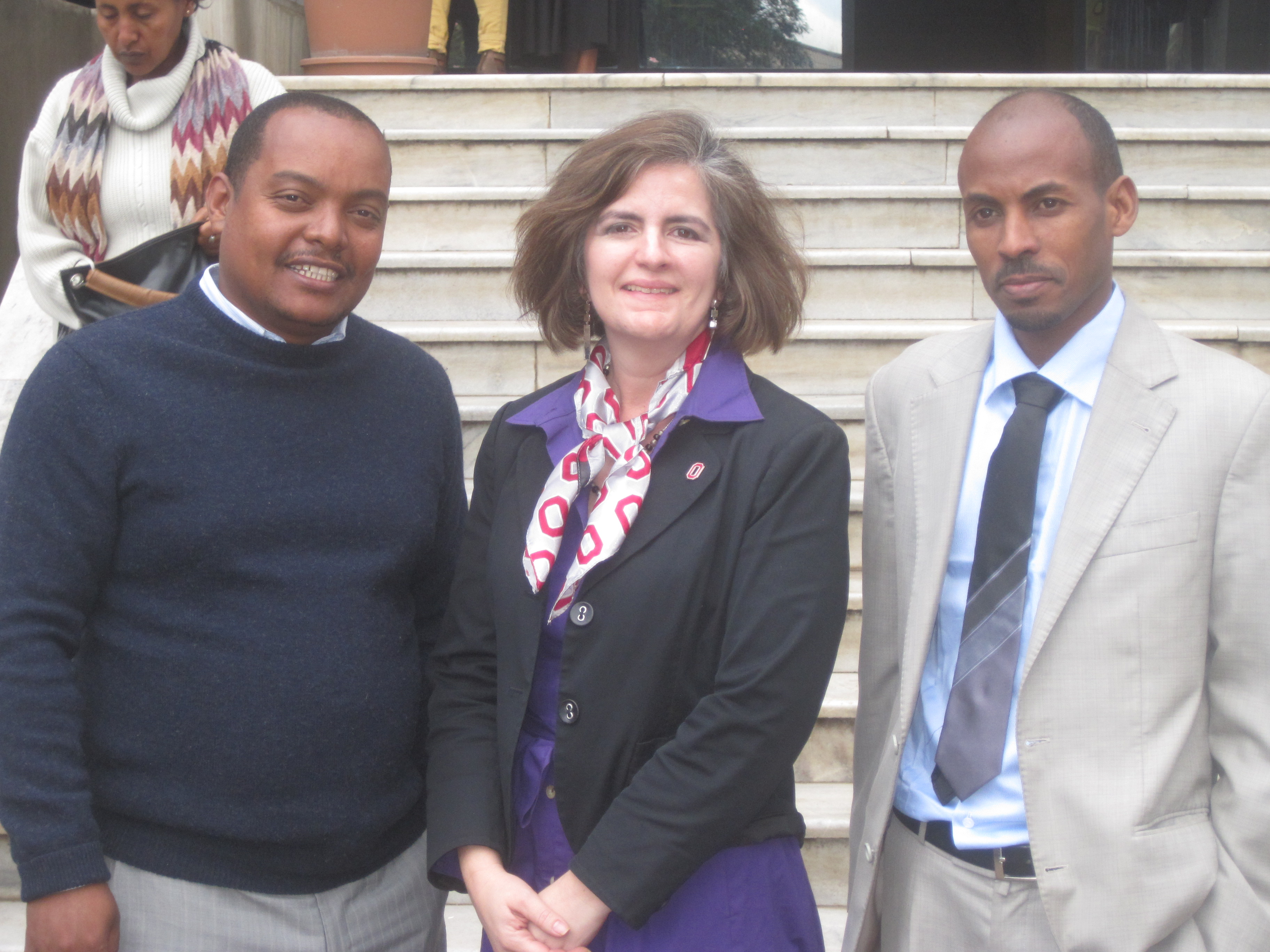
Here’s an example: We have a great photograph of our American students and Ethiopian partners conducting surveys on perceptions related to rabies. Here it is:

interview (1)

The Ethiopian expert in the photo could write a post about what is happening and why, what she was thinking when this was happening, and the challenges of getting to and from the rural location.

Throughout my course, I focus on an organization’s use of brand, content and social media. My point here is that it can also apply to your personal brand.

Friday links: August 8, 2014


 Rolling.Stones.Spain_-640x360 Mick Jagger talking about Monty Python: “Still a bunch of wrinkly old men trying to relive their youth and make a load of money. I mean, the best one died years ago.” I love it.
 Ebola_Americans-03809-2087 The dedication of our front line health care workers just cannot be underestimated. Whether it’s an infectious disease epidemic like Ebola or a natural disaster, they put themselves in harm’s way to care for others.
 churchill A correspondent to Winston Churchill wrote, “OMG” in a 1917 letter. Here are other “modern” phrases that have been around for a while. Next we’ll find Egyptian hieroglyphs that say LOL.
 6c368822 Great speech by Bill Gates at Addis Ababa University. My favorite quote: “Usually, people assume that realism and optimism describe two different schools of thought. I disagree. I believe my optimism about the future of Africa is extremely realistic.”


Thought bubble: Comfort zones and organizational wins

When I was 22, I volunteered for a work assignment, then chickened out at the last second. I was a rookie newspaper reporter. The task was to get the vote counts for our county on election night and call them in to a national network.

This sounded very cool, but then I got intimidated. At the last second, I backed out. For a short while, that county had a blank spot on the national network’s map.

I’m still embarrassed about it years later.

But it also taught me a good lesson – refusing to step outside of your comfort zone has consequences and not just for you. Your organization and your coworkers also have to deal with the results.

Since then, I have avoided fear-based decision-making.

In fact, over the last year, I’ve stepped outside of my comfort zone at work on several key projects. This has resulted in opportunities I never would have had and has paid off for my university.

In early 2013, I voluntarily left a secure job for a newly created position in the same university. We needed some big, splashy attention that illustrated the combined strength of our health sciences colleges to our key audiences, especially alumni and friends.

I took a risk and invested in a plane ticket to Ethiopia for our staff photojournalist. He followed our faculty and students for two weeks, documenting their work in video and photography.

No one in our university had made quite that kind of investment before.

As a result, we got great content that has been used in multiple places. Here are three:

Not only did my risk pay off for me, but it paid off for my institution and my colleagues.

In the same year, I applied for a Fulbright grant, got it, and traveled to Ethiopia for a four-week communications project. This was a risk:

  • My university has many faculty and student Fulbrighters, but few staff take advantage of the Fulbright.
  • I had never been to Africa.
  • I would be away from my family for just over a month.

This was definitely stepping outside of my comfort zone! But what an experience for me and a great payoff for my university. Throughout my project, I was able to represent my university to key health partners in Ethiopia.

IMG_1067

An important ingredient here is supervisor support. My supervisor supported me in both the examples above, knowing that these were outside of the norms for our university.

The key is to link those risks to the business purpose.

In both my examples above, the risks were linked to a strategic purpose. We want to show the world the collective strength of my university’s health sciences colleges. Our One Health initiative in Ethiopia accomplishes that goal. The photojournalist and my Fulbright project are tactics in support of the communications strategy.

These experiences also help the photojournalist and me grow as professionals.

When we encourage people in our organizations to step outside their comfort zones, it pays off for the organization. My charge to you is to step outside our comfort zone in ways that pay off for your organization and for your professional development.

Here’s one more thing I did just this week to step outside my comfort zone. Just so you know — my brother sings in a band. I do not.

karaoke-singing


What I Do: Skype Q&A with an Ethiopian colleague

Sintayehu is a friend who is part of the collaboration between Ohio State and the University of Gondar (UOG), Ethiopia. This summer, Ohio State sent a team of students and faculty to partner with UOG on a spay/neuter program and dog inventory as part of a rabies elimination pilot project. Below is a transcript of a Skype conversation between Sintayehu and myself. Sintayehu, a veterinary medicine faculty member, describes the field training UOG provides its vet students.

Christine: Now that the Diamond Jubilee is over, what’s going on at the University of Gondar? Is it summer break?

Sintayehu: Well, I am out of office for field work with students on their clinical field experience. Most of the schools are on summer vacation now, but students in Medicine and Health College, Vet Faculty and freshmen in various departments are still in campus.

Christine: What kind of field work do the vet students do?

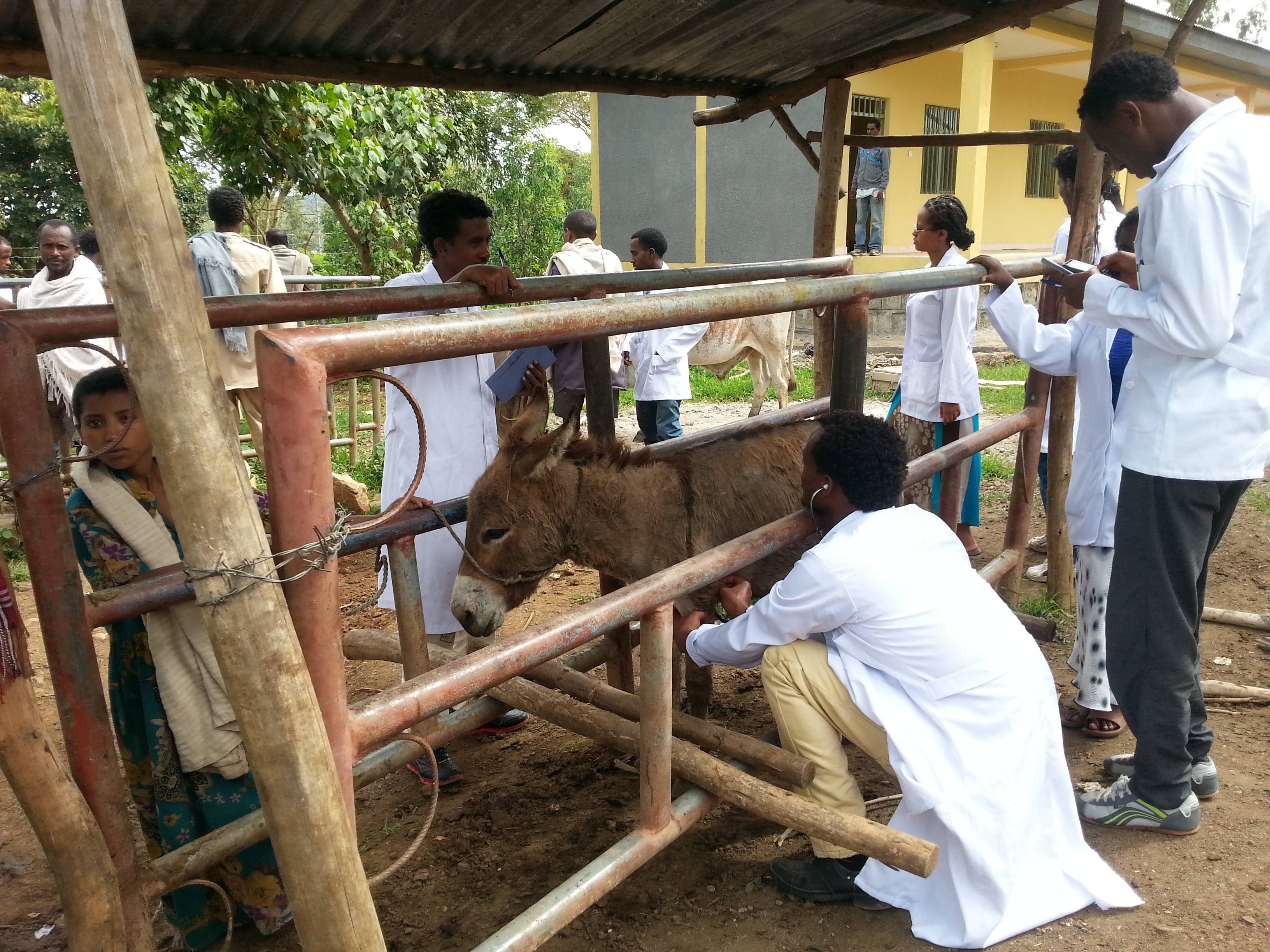
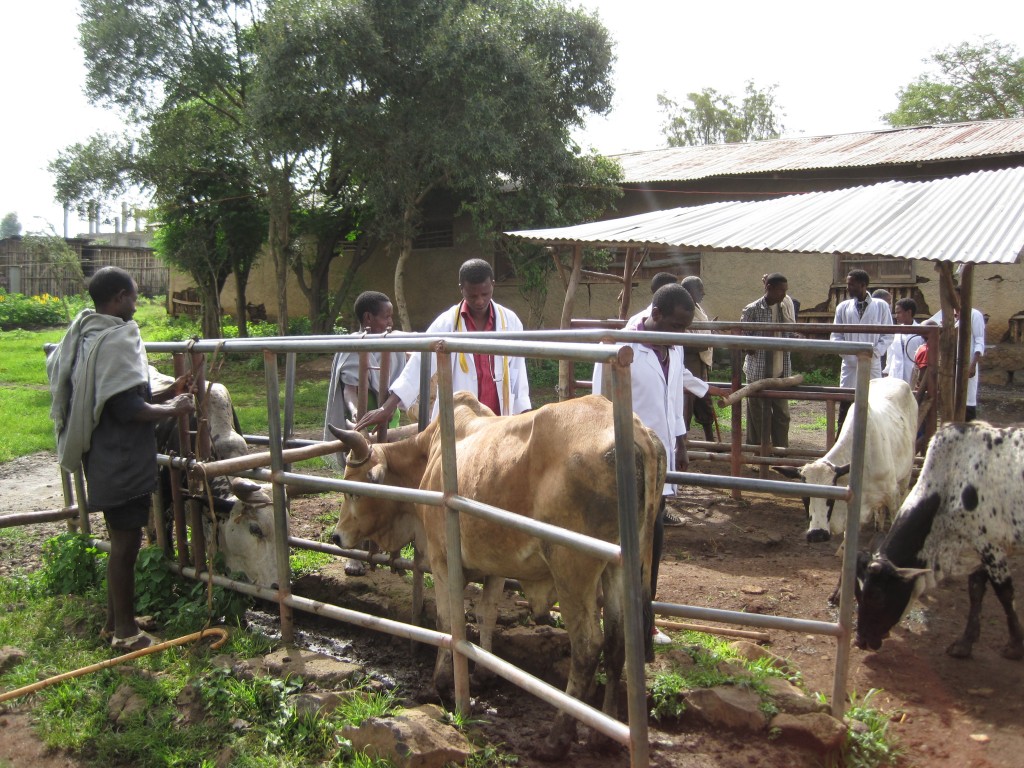
Sintayehu: To support clinical medicine course and help them develop confidence and get acquainted with the real picture at clinics out there in working place, students take a course called off-campus training. The students will have about two weeks’ time exposure to different districts’ government vet clinics where they work as clinical vet students with close supervision by one faculty staff from UoG, and the district’s vet.

donkey-in-pen

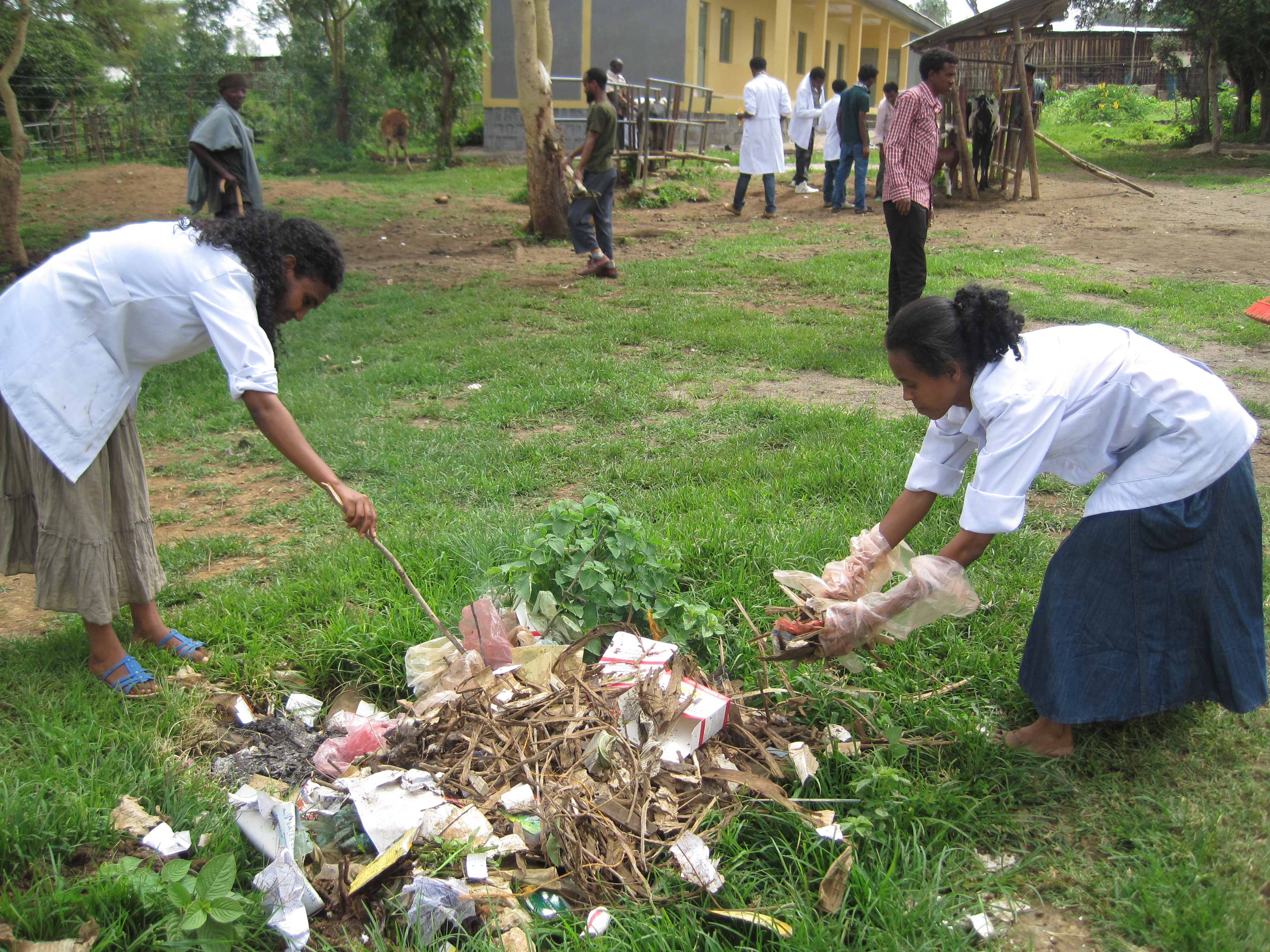
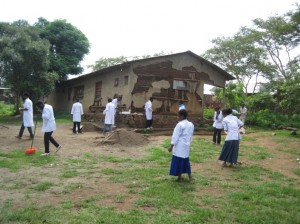
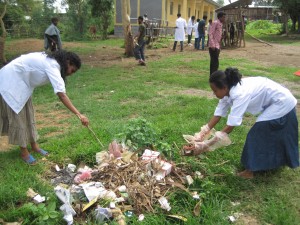
Sintayehu: They also engage in community services and help the clinics in every capacity they are capable of, like cleaning the clinic compound, providing recommendations on potential shortcomings, etc. After completion of off-campus training, they are supposed to present a field practice report about their stay and will be evaluated based on that.
students-cleaning2

women-and-trash

Christine: Do they provide direct care to animal patients?

Sintayehu: Yes, with supervision. That is why I am currently with them here in field.

Christine: I bet they learn a lot from that.

Sintayehu: Sure. That is the best way of learning from practical courses. And this is witnessed by them. However, because of small amount of budget they sometimes come back to campus earlier than planned. This is really a continuous challenge to the faculty and to them.

Christine: What are the most common illnesses or conditions that you see at the district clinics?

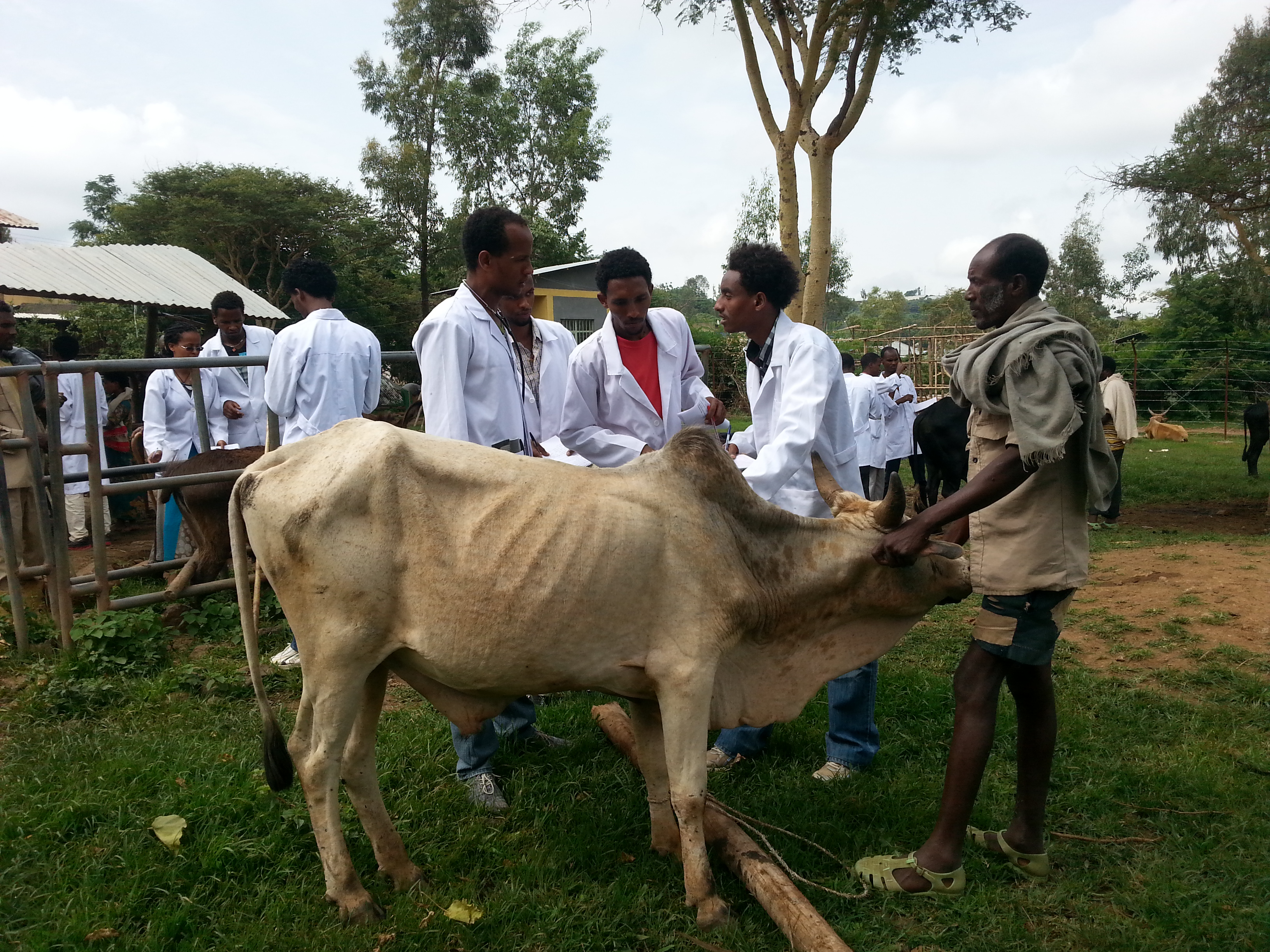
Sintayehu: Well, I can say we have all sorts of diseases. For instance, in the place we are now working are Infectious (Pasteurellosis, Black leg, Anthrax, Lumpy Skin Disease, Sheep pox, Rabies, Newcastle Disease), Parasitic (helminthes, arthropods: ticks, lice, mange mites; protozoans: Trypanosomes, Coccidia), Metabolic and nutritional, and reproductive disorders in cattle, sheep, goats, donkeys and chicken. I was surprised to see dogs as well in the clinic.

white-ox-and-students

Sintayehu: However, to be honest with you, there are no laboratory facilities for confirmation of cases, so the diagnosis is almost always relied on history and clinical findings. No single laboratory diagnostic aid and there are only few drugs available.

Sintayehu: I saw a new building for the clinic and I was told that it has been built from the World Bank fund. Mr Nigussie, the vet technician working here, told me that it is now completed and will be furnished with basic clinic facilities from the same fund. Then it can have better veterinary service.

Christine: Why were you surprised to see dogs?

Sintayehu: I mean not to see them, but the awareness of the community, most of which are poor farmers, to get medical care for their dogs.

Christine: That seems like a good thing.

Sintayehu: Definitely! I was told by Mr Nigussie that the community has good awareness about the importance of bringing their animals to clinics whenever there is ill-health to their animals. That shows there is a big demand for vet service.
students-and-cattle-in-pen

Christine: Also a good thing for the rabies project, perhaps? Showing awareness of needing to take care of their dogs?

Sintayehu: Yes. You know, I also asked about the status of rabies in the area. It is terrible to hear that there is high prevalence of rabies in the countryside. This is worsening by strongly rooted perception of the community that traditional healers can cure the disease. It is challenging human/animal health care.  There is no rabies vaccination at the clinics. The only thing the vets in such districts doing are advise farmers to be careful of suspected dogs.

Christine O’Malley: Yikes! What areas will you visit next?

Sintayehu: This is the last field work for this academic year.  Koladdiba, the place we are now working in, is not that much far from Gondar, about 35kms, but the road is rugged and may take you about an hour or so. I love having seen the countryside. I wish I could visit such places more often.

student-group

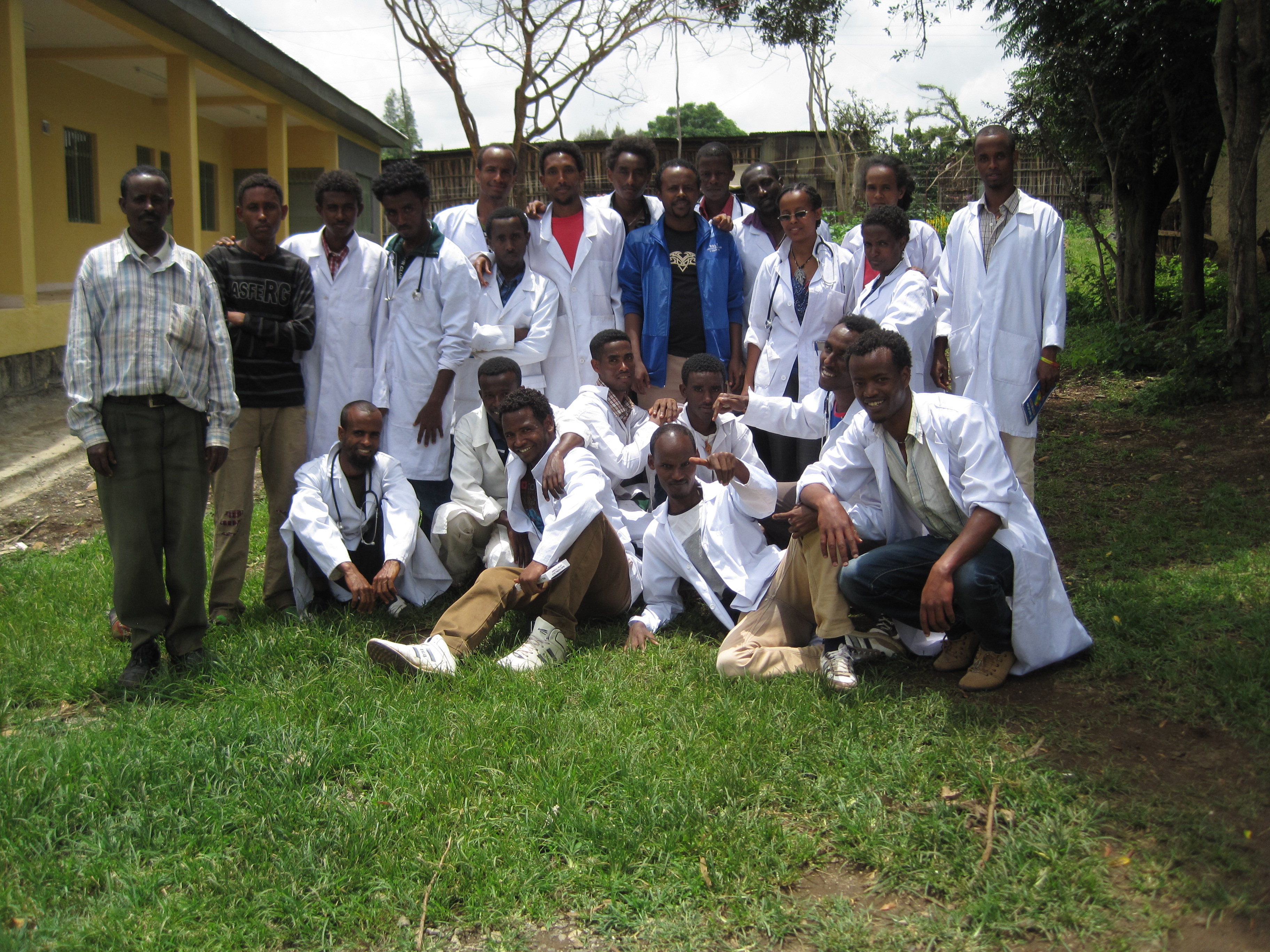
Group of students with my friend, Dr. Sintayehu, in the middle wearing the blue jacket.

Thought bubble: Water, women and girls

Until becoming involved in our One Health work, I had not thought of access to safe water as a gender issue. In rural Ethiopia, women and girls usually have the responsibility of carrying water from source to home.

One friend told me the story of a girl who dropped the full, heavy clay jar on her way home. It shattered, and the water spilled. She ran away rather than reveal her loss of the water and the jar.

When I was in Ethiopia, I bought this painting of a woman carrying the traditional clay water jar.

water-jar-painting

Many others use plastic jerry cans that are difficult to carry and not always sanitary. Here’s a photo I took during my Fulbright Specialist project in Ethiopia showing women walking with jerry cans:

IMG_0839  IMG_1152


We’ve had discussions with Pack H20, a nonprofit that produces a water backpack of the same name, about a pilot project in Ethiopia.

Pack H20’s water backpack has made a real difference in rural communities in other countries, and we believe it could improve lives in Ethiopia as well. Here’s a link showing an organization using the backpacks in Kenya: https://www.partnersforcare.org/what-we-do/outreach-programs/.

The next step is to find funding for a pilot project.