Posts

Week 15 Contextual Presentation

The author Susan Sontag created a large number of critical works, involving criticism of photography, art, literature during her lifetime. Her work Regarding the Pain of Others focuses on war photography and explores the relationship between the suffering of the people reflected in the image and the viewer. Although the tragic images can arouse the audience’s compassion, if we believe in images without thinking about them, our moral judgment will only weaken. Sontag wrote her images in pure words, providing the viewer with a space to think about “the pain of others”. For most of us who live in a comfortable life, whether it is people who are suffering from the epidemic nearby or refugees who are displaced in the war in the distance, we are just spectators from beginning to end regarding their suffering.

We usually think that photos reflect the real situation. However, Sontag tells us that the authenticity of photojournalism should be questioned. Photographers do not always show us things as they really are. Even many times, photographers deliberately arrange the elements in a photograph to show what they want to show. At the same time, war photography may also be manipulated by government or commercial interests. The famous photo of the American flag being raised on Iwo Jima on Feb. 23, 1945, for example, turned out to be Associated Press reporter Joe Rosenthal’s “reconstruction” of the morning flag-raising ceremony with a larger flag later that day, after the capture of Mount Suribachi. Clearly, this photo is not true, but it satisfies the people’s thirst for victory, boosts morale, and becomes one of the most influential photos of the 20th century. Hence, sometimes authenticity of photograph will be ignored to achieve certain purpose.

When tragic images are arousing people’s compassion, Sontag pointed out that if compassion is not translated into action, it will become exhausted. What we do is to use photos to create sympathy, while at the same time more sympathy becomes withered, and people become numb. Imagine that when you saw the tragic experience of these people for the first time, you might be angry about the cruelty of war, but when you always see this kind of photos, can you still have such a strong feeling like the first time?


Citation:

https://www.supersummary.com/regarding-the-pain-of-others/summary/

https://muse.jhu.edu/article/48970

https://www.theguardian.com/theobserver/2003/aug/03/society


Text Review Assignment- “Just Mercy” by Bryan Stevenson

Bryan Stevenson is a lawyer that also owns his own firm called Equal Justice Initiative. Just Mercy by Bryan Stevenson is a personal narrative of some of the cases he has witnessed during his time as a lawyer. The stories he tells are all of his firsthand accounts of individuals he’s encountered on death row. Stevenson travels to death row to meet with individuals who he believes did not get the representation that they deserved. He chose clients that he believed were wrongly convicted or given wrong sentences. The majority of the clients he targeted were Black individuals who did not receive a significant amount of representation during their trial. The story of Walter McMillian is told throughout the entire story, but is interrupted with other stories that are relevant to his message. Walter McMillian was a Black male that was wrongly convicted for a murder and sentenced to death. The fight for his freedom was long, but ended up ending in success.

We see these unfortunate cases in our justice system too often. Although every individual is provided with a lawyer during trial, the best lawyers come at a price. One of Bryan Stevenson’s most famous quotes says “… the opposite of poverty is not wealth but justice.”. I constantly think about this quote when I think about the systemic injustices we see today. Many Black individuals are not given fair treatment. We see cases of police brutality too often. Black people fear their lives when being pulled over by police. For White people, it is a completely different story. Bryan Stevenson turned his career as a lawyer into so much more.

Walter McMillian was nowhere near the scene where the crime he was accused of occured. He was convicted solely for the color of his skin. He was completely innocent, but did not have the money to pay for a lawyer that cared enough to fight for his innocence. He was seen as an “Other”. The police did not mind convicting someone who they knew was innocent upon the arrest because they needed to convict someone to put the town at rest. Bryan Stevenson has devoted his entire life to helping those who were oppressed by our government system. If you have not read this book, I really recommend spending some time learning about the inequalities that our justice system holds. The photo below is Walter McMillian and Bryan Stevenson celebrating their victory of getting Walter McMillian his life back!

Text Review: The Help (Book Review)

Rating: 5 stars ⭐⭐⭐⭐

Recommended for 13+ who want to learn about history while enjoying an entertaining plot

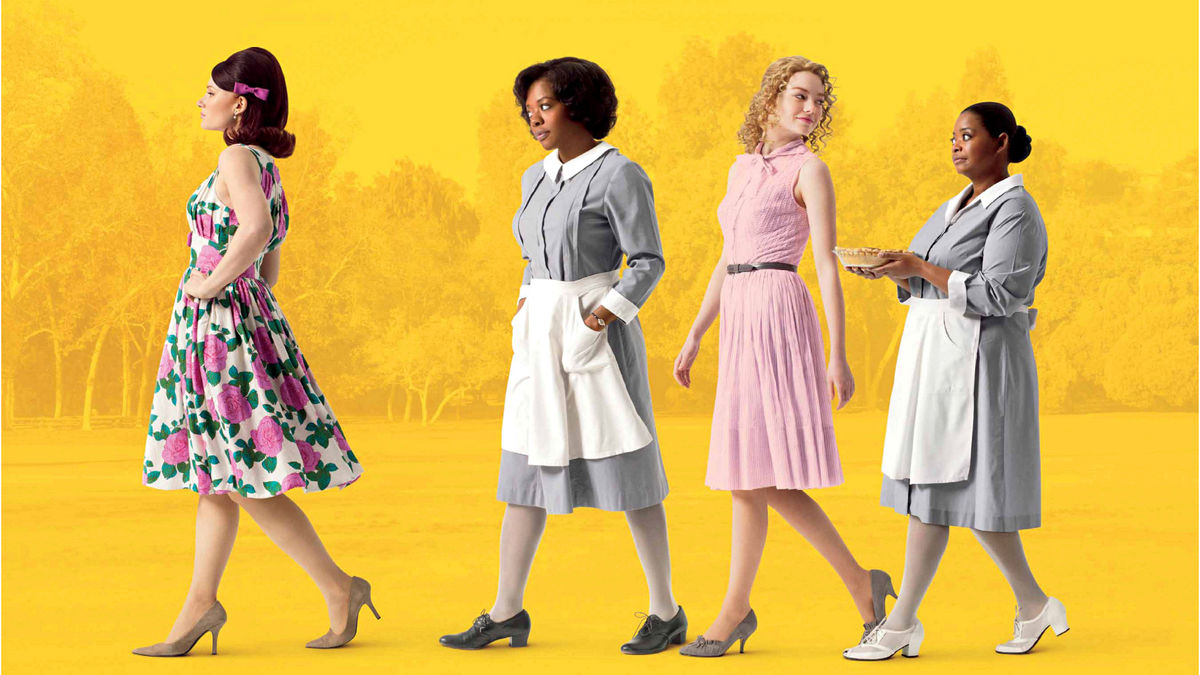
To begin, The Help is about three women in 1960s Jackson, Mississippi: Aibileen, a nanny and maid for the Leefolt family; Minny, an outspoken maid; and Skeeter, a college graduate who wants to pursue writing. Skeeter breaks the barriers of her discriminatory, southern society by writing a book that shares the voices of the black maids. Skeeter interviews the maids about what it is like to work as a black maid for a white family. Hilly Holbrook, Skeeter’s friend at the time, wants to pass a bill that would require every white household to have a separate bathroom for their black maids. Hilly’s initiative was the breaking point that encouraged the maids to tell their stories. The book is a surprise hit, which encourages discussion between black and white women. At the end, Skeeter moves to New York to work in publishing, Aibileen starts a writing career, and Minny finally leaves her abusive husband.

Identity, power, and injustice can all be seen in The Help. The white households hold power over the black housemaids. Additionally, Minny’s husband holds power over her in their physically abusive relationship. Injustice can be seen when Minny loses her job as a maid for Hilly’s mother. Hilly spread rumors about Minny being a thief so no neighbors will hire her simply because Hilly thinks she’s superior. This is very unfair to Minny. Lastly, Aibileen and Minny solely identify as black housemaids in society; this identity makes them feel belittled.

This semester, we discussed ideas including “Othering”, the subaltern, intersectionality, and the single story concept. The black maids are seen as the Other while the white families are seen as the One. Black maids are seen as the subaltern because they have no voice or power; if they speak up for themselves, they will face punishments (ex. being fired). The black maids also suffer from intersectionality as their gender and race overlap to make them very underprivileged in society. Lastly, Hilly places a single story on all black individuals as she believes that black people carry diseases that can harm white people.

Lastly, I think the main idea the author wanted the readers to take away was how racism persisted in every aspect of society in 1960s Jackson, Mississippi. This meant from Jim Crow laws that maintained segregation to casual chats amongst middle-class white women. One question the author might want you to ask yourself is if this social hierarchy still exists today in southern society. The Help inspires a conversation around identity, power, and injustice because it depicts that it’s okay to be unique and that you have to fight against the barriers to reach your big dreams.                                                                     The Help by Kathryn Stockett                  The Help (2011) directed by Tate Taylor • Reviews, film + cast • Letterboxd


Text Review Assignment · Gladiator

The 2000 historical drama Gladiator features interactions between people of different identities and social classes. The movie illustrates many topics we have discussed in class related to power dynamics explained by Hegel and Spivak. Gladiator’s plot demonstrates how easily injustice can be brought about by figures who inherit power but do not possess a strong, respectable character as seen in Hegel’s idea of the “Master”, where the master’s fundamental nature thwarts their capability to realize and transcend their own reality.

Within Gladiator, the current emperor, Marcus Aurelius, tries to restore Rome’s prior glory and republic by selecting General Maximus Meridius to succeed him in place of his biological son, Commodus. When Commodus discovers his father’s plan, he kills Marcus, orders the arrest of Maximus, and orders the killing of Maximus’ wife and son. Commodus is not a legatus, he carries a very weak disposition, and does not display much care for Rome. The control Commodus demands to have over situations highlights his unbridled fears and insecurities, where Maximus is one of Commodus’ central fears and eventually becomes his primary fear. Maximus escapes captivity, traverses a desert, is captured again, and is trained to be a gladiator as a slave. Maximus also reflects Hegel’s characterization of the “Slave” by gaining popularity, glory, and wisdom through his work over time.

In the background, the deterioration of the fictional Roman Empire portrayed under Commodus’ rule is an important part of understanding how Maximus ends up gaining power over Commodus through the relationship he establishes with the people. Maximus remains earnestly remembered in contrast to how people react to Commodus once they realize his true personality and motivations. Spivak’s hierarchy and illustration of how the “Subject group” silences the lower ranking groups directly relates to the lack of communication, secrets, and lack of mobility Maximus has throughout most of the movie. The movie would have been no longer than a few minutes if Maximus had the resources to prove he was falsely accused.

I think the writers—David Franzoni, John Logan, and William Nicholson—intended to demonstrate how character is ultimately more powerful than agency. How Maximus treated the army he managed, the friends he made as a slave, and how he catered to his fans as a gladiator outweighs the jealousy and acts of violence committed by Commodus. How one treats people is more noticeable than what they own or what can be controlled in their favor. I would recommend Gladiator to anyone in class who wants to view an example of societal injustices connected to the ideas expressed by Hegel, Spivak, Ahmad, and additional figures we have studied throughout the semester who examine the relationship between power and identity.

Text Review: Olivia Congrove “Queen of The South”

A Netflix series I became hooked on last year that is called “Queen of The South” is about the Mexican drug cartel. At the beginning Teresa was just a money changer, cleaning dirty money on the street. She gets a drug dealer boyfriend that is pretty successful in this cartel. After his betrayal and supposed death, Teresa makes a run for it to escape the cartel and death. She is captured and then put to work as a drug mule. She faces many hardships and her boss takes a chance on her in order to test her loyalty. Time and time again, Teresa is given trust and never lets down her boss. She makes her boss a lot of money and they decide to go into business together. Eventually she holds more and more power because of her knowledge and willingness to survive. They are both powerful women and unlike many cartels that would be led by men, this cartel is one of the most ruthless and successful in the country.

Many people doubt Teresa but eventually she owns the entire cartel after killing off her competition. This series is very interesting because although the characters are primarily from Mexico, there is still a major disconnection between everyone. The rich and the poor, the cartel and non cartel, the workers and the bosses, nobody is considered equal. Teresa struggles even more because not only is she a woman but she worked her way from the very bottom. People expect her to show mercy but she shows none, in fact she is very harsh to people.

There is an instance of the Self and Other theory when Teresa is captured by the cartel and she is treated like a caged animal. She is the “Other” and the Cartel boss seeking revenge for her boyfriend’s betrayal is the “Self.” At the end of season 4 she becomes the “Self” and the old bosses are either dead or broke making them the “Other” now.

These two pictures show the difference of person growth and power Teresa shown from the beginning of the series to the end. When she finally became the cartel boss instead of the drug mule fearing for her life. She truly beat all the odds and worked hard to get her spot in the cartel.

.

Week #15 (Susan Sontag’s Regarding the Pain of Others)

This week we read Susan Sontag’s “Regarding the Pain of Others”. This was her last writing before her death in 2004, it is a connection to her essays published 26 years prior on Photography. War photography started in 1855 to promote a positive setting. Sontag reviews military photographic documentation around the world and how the difference in technology has affected photos overtime. She explores depictions of war and violence in todays culture. She examines images from Yugoslavia, Rwanda, Israel, and Palestine and examines how this media affects us and the purpose for them. The relationship between photography and ideology can be closely related.

Normally photography should be something that is not manipulated and translated in other other way than what it directly is. Now that concept is easily manipulated and has an agenda. For example a picture of suffering or deceased children could be used for either sides of the war to show how it is affecting their children. Now it is common for photography and pictures to be overly dramatic or manipulated to get the best reaction out of others or to promote their media source. With technology it has been easier to manipulate photos and has drifted from the original concept of pictures, a documentation of an event just how it is with no room for interpretation other than what it truly is.

I think this can relate to a lot martial we have covered in this class, we often see how the media portrays countries or wars in certain ways and cause us to view it in a certain way. This can cause us to think that country is poor, dysfunctional, damaging or hurting children when in reality it could be a completely different scenario. We see this in big news channels trying to promote an agenda or a certain stance, specific pictures will be used to suggest whatever they are trying to put out.


“Regarding the Pain of Others, by Susan Sontag.” Garage, https://garagemca.org/en/programs/publishing/susan-sontag-regarding-the-pain-of-others.


Text Review Assignment-Adriana Giordano

In the fiction novel, Girl, Woman, Other  by Bernadine Evaristo, the audience learns about racial injustice through the stories of multiple women and their experiences fighting for racial equality. This novel discusses many different characters throughout the chapters, and tells a different story in each. This idea in Girl, Woman, Other, supports Chimamanda Adichie’s point that a single story is dangerous to history and justice. Evaristo instead decides to use multiple stories to emphasize the magnitude of racial injustice and enable the audience to truly understand how long the fight for racial injustice has been going on. The ages of the characters span between 19-83, demonstrating the lack of improvement for black people through modern history.  

93-year old Hattie is one of the characters who demonstrates the long fight for justice. She uses her voice to fight for equality and protests with a “walking stick with a Black Power fist on the knob” (Evaristo 364). This demonstrates that the fight for racial equality is prevalent in everyday life and at all times, even with things as simple as walking down the street. Her old age allows the reader to understand how far back this issue of racial injustice stretches.

Another character, LaTisha, is a middle aged woman who hopes to preach “the word of common sense” to “children” and a “generation of teenagers” (Evaristo 192). LaTisha feels the protest for racial equality should be common knowledge, but only the open mindedness and younger generations of all races will understand. She feels that those who are older have been taught differently, and have been taught to uphold racial stereotypes. The idea that LaTisha has to promote racial equality to younger children and generations proves even further that the fight for racial injustice will continue for many years to come. 

This long timeline between Hattie, LaTisha, and the teenagers, parallels the long timeline that black people have been fighting for racial equality. GIRL, WOMAN, OTHER (BOOKER PRIZE 2019) (201 POCHE): EVARISTO BERNARDINE: 9780241984994: Amazon.com: Books

Text Review: All American Season 1

All American is a very popular TV show based on the true story of Spencer Paysinger (Spencer James in the show), a star African American football player from Crenshaw who gets recruited to go play at Beverly Hills because of his talent. He moves in with Billy Baker, the coach at Beverly, and the rest of his family. He goes through many different changes throughout the show and faces a number of injustices, as do some of the other characters. For example, there is a scene in episode 3 where Jordan (Billy’s son) and Spencer are in Crenshaw, and get pulled over. Jordan immediately began questioning the cops and saying that he didn’t do anything wrong. The cop forced him to get out of the car, then he handcuffed him and threw him on the ground. Spencer kept telling Jordan to do what the cop said, but Jordan was not listening. Eventually, they made Spencer get out of the car too. Jordan looked very scared and didn’t seem to understand what was going on, but Spencer tells him, “just keep looking at me.” This is because he is from a rich family in Beverly Hills, so he has never had to experience the injustice that Spencer has had to go through while living in Crenshaw. These cops were obviously “othering” Jordan and Spencer for their skin color, and this scene just goes to show how different Jordan and Spencer’s childhoods were, even though they are both African American.

Just Sha

After moving to Beverly Hills, many people from Crenshaw were not too pleased, and thought that he was trying to get out of their corrupt community. However, Spencer was always attempting to make a difference in Crenshaw’s community, which just adds more to his character. He always saw Crenshaw as his home and never strayed from that. He even returns to Crenshaw in season 3 for his senior year. Overall, this show does an amazing job at depicting a number of injustices throughout the show, and this scene was just one of the many.

Text Review Assignment: Good Kid m.A.A.d. City

Kendrick Lamar - good kid, m.A.A.d city [2 CD Deluxe Edition][Explicit][New  Vers - Amazon.com Music


Kendrick Lamar’s album Good Kid, m.A.A.d City (GKMC) Perfectly toes the line of social awareness and classic rap album. On one side it is a biography of Kendricks’s young life in Compton CA and all the violence, fears, and pain that comes with living in this area. On the other side there are “straightforward rap thrills — dazzling lyrical virtuosity, slick quotables, pulverizing beats, star turns from guest rappers — directly to its narrative” (Greene, “Kendrick Lamar good kid, m.A.A.d city,”). Due to this mixture of awareness and pop culture, there are many people willing to call GKMC a classic album even though it was released just 11 years ago.

In the fourth song on the album, Lamar sings about gangbanging with his friends. However, the line that stands out the most is… “really, I’m a peacemaker, but I’m with the homies right now,” (Lamar “The Art of Peer Pressure”). In these two bars Kendrick Lamar show how he does not feel as though he fits in with his community but when he is with his friends, he ends up succumbing to his surroundings and committing crimes for fun. Lamar is blaming peer pressure for his actions, by doing this he does not need to blame his environment which was created from years of racist housing practices such as redlining.

Before Famous: Kendrick Lamar in Compton as K.Dot [ pic ] : r/KendrickLamar

“The Art of Peer Pressure” is the first song to show the struggles that Kendrick Lamar went through as a kid in Compton. The next song that reflects the idea of peer pressure and choices is titled “good Kid”. In “good Kid” Lamar talks about how he was getting pressured to join the Bloods or Crips. This is shown in the lyrics “But what am I ‘posed to do when the topic is red or blue and you understand that I ain’t” (Lamar “good Kid”). While he remains steadfast and refuses to join a gang he is still viewed as a gang member by the police. Lamar talks about this discrimination at the end of the second verse where he says

“And you ask: “Lift up your shirt,” because you wonder if a tattoo

Of affiliation can make it a pleasure to put me through

Gang files, but that don’t matter because the matter is racial profile

I heard ‘em chatter: “he’s prob’ly young, but I know that he’s down step on his neck as hard as your bullet-proof vest

He don’t mind, he know we’ll never respect

The good Kid m.A.A.d. City.””

Despite not having any gang affiliation Kendrick Lamar is still targeted by the police for the simple fact that he is a black kid in Compton.

Even though only two songs could be reflected upon in this essay every song on the album has similar tones of injustice and social awareness. Due to his environment, Kendrick Lamar was forced to realize the injustices in the world. This realization has shaped his music and can be seen and heard across his entire discography.


Greene, Jason. “Kendrick Lamar good kid, m.A.A.d city.” Pitchfork, 23 October 2012, https://pitchfork.com/reviews/albums/17253-good-kid-maad-city.

Lamar, Kendrick. “good Kid.” Genius, https://genius.com/search?q=good%20kid

Lamar, Kendrick. “The Art of Peer Pressure.” Genius, http://rapgenius.com/Kendrick-lamar-the-art-of-peer-pressure-lyrics.

Voorhees, Andrew. “Kendrick Lamar’s ‘Good Kid, M.A.A.D City’-an Academic Analysis.” Medium, Medium, 12 Jan. 2018, https://medium.com/@andrew.voorhees92/kendrick-lamars-good-kid-m-a-a-d-city-an-academic-analysis-71bfe86ffdb9.


Text Review Assignment: “The Namesake”

For this assignment I chose to review the book, “The Namesake” by Jhumpa Lahiri. The novel is about an Indian couple, a man named Ashoke and a woman named Ashima. The novel follows them throughout their life in America having moved from Calcutta, as well as that of their children Gogol and Sonia. Lahiri has readers observe the family through their lives and the difficulties they each faced with life in America. Gogol’s fight with his name and identity, Ashima with her homesickness, and other battles characters fought. Every person’s journey in this story is different, but they are all intertwined with one another to create a deep and meaningful experience to readers.

In this book there are numerous concepts to be seen, and one is the One/Other dynamic from de Beauvoir. For example, Gogol and Sonia would constantly receive looks and stares at the mostly white school they attended. Gogol would often get teased for his name and other things, all because of the fact that he was “different”. We see how whites in this case have established themselves as the “One”, giving them the power to treat Gogol however they want to. Whether this means teasing, bullying, or anything else, they feel as if Gogol is an “Other”, below and inferior to themselves. This relationship between Gogol and his peers also highlights the act of “Othering”, where one group of people subjects another to be below them through their actions. Overall, de Beauvoir’s theory is prevalent in Lahiri’s novel and can be better used to understand why Gogol and other characters acted as they did.

This novel is similar to “March” in a way, as both books show the difficulties of being a minority in America in addition to giving examples of the One/Other relationship. Although John Lewis’ writing is about his life and the fight against segregation, it showed examples of him being seen as an “Other”. This came in forms of second hand books, harassment from white men, and other things that was done to Lewis to make him feel inferior to whites. Similarly, Gogol and members of his family were treated as Other through teasing and bullying in school and racial bias outside of the home. Both works of writing depict the effects of seeing a class of people as lower than yourself. It creates an unhealthy dynamic that can affect not only how the groups see one another, but how they see themselves.

All in all, Lahiri’s book really questions what identity is. Where does it come from and can it be changed? Gogol thought his name was what dictated who he was so he decided to change it, but did his identity really change along with it? How do each of us see ourselves? Does our name play the biggest part in defining who we are? Through her characters, Lahiri gets us as readers to explore what identity truly means and how we go about changing it.


Source: https://www.nytimes.com/2007/03/09/movies/09name.html