Posts

Gary Martin: NOPE Task Force Brings Anti-Drug Message To Colleges

Not long after Narcotic Overdose Prevention and Education (NOPE) Task Force was created in 2002, we decided to bring our anti-drug messages to college campuses.

The reason was simple.

Both the national data (ACHA Surveys) and our anecdotal experience in partnering with law enforcement and other agencies indicated that college students were at high risk for overdose death.

We were aware that college students were misusing prescription drugs, but most concerning was the number of students who were hospitalized for combining these drugs with alcohol— which created particularly dangerous situations.

Often, as a result of students’ privacy concerns, the students’ parents were not made aware of these near-death experiences. As a result, NOPE decided to tackle the problem by raising awareness within the college population directly.  We set out to present at colleges across Florida and beyond. We needed to bring our messages to the students on their campuses and on their terms.

Our first presentation was in 2007 at Lynn University in Boca Raton during National Collegiate Alcohol Awareness Week (NCAAW). To date, we have done presentations at nearly 15 colleges, including Florida Atlantic University, Barry University, Florida Gulf Coast University, and University of North Florida.

We also have presented at American College Health Association’s (ACHA) Annual National Conference in Philadelphia, the Generation Rx University Conference at The Ohio State University, and National Association of Behavioral Intervention Team (NABITA) National Conference in Naples.

The life-threatening overdose incidents at colleges were the impetus for nationwide College Amnesty policies and eventually the 911 Good Samaritan law in Florida and other states.

Over the years, our presentations at colleges have been mostly well-received. We work hard to steer away scare tactics in favor of providing straight-forward, data-driven messages and real life cases/circumstances without judgment.  We strive to provide answers to tough questions such as the following (see the answers here):

  • How quickly can I become addicted to a drug?
  • How do I talk to my parents about getting help? What should I say?
  • Isn’t becoming addicted to a drug just a character flaw?
  • Shouldn’t treatment for drug addiction be a one-shot deal?
  • If drug addiction is a disease, is there a cure?

At our presentations, students often open up deeply about their friends’, their family members’, or their own experiences with drugs. When that happens, we offer them information and support to get the help they need.

Still, getting students to attend our presentations is challenging. As a result, at schools like Lynn University, trained students have delivered similar messages to their peers.

While prescription drug misuse and overdose deaths remain a national health and safety issue, we’ve made tremendous in-roads at educating thousands of college students about the dangers of drugs. NOPE will continue delivering our messages to college students for as long as the disease of addiction remains a problem in the communities we serve.

image_thumb_2xGary Martin is Vice President of NOPE Task Force and Dean of Students at Lynn University. 

Amelia Arria: Staying active and engaged in classroom vital to success in college

Photo courtesy of studyinthestates.dhs.gov

Photo courtesy of studyinthestates.dhs.gov

As students arrive back on campus, students are busy organizing their schedules, managing any changes to their housing situations, and having meetings with advisers. Winter break is, for most, a great time to relax with family and friends. Some students might have traveled; others might have worked to make some extra money. But one thing is for sure – starting a new year is the best time to make a fresh start – a time to reflect on how you did things last semester, and think about how you could do it differently this semester. Think about it as a “re-boot” to work better and more efficiently.

Our research during the last decade has taught us a lot about college students. Based on our findings in the College Life Study, here are a few tips to consider. We find that the percentage of classes skipped is highly predictive of grade point average in college. Perhaps even more important than the number of hours you study outside of class. I hear a lot of students say that they go to class to make sure they know what they need to study later when they are by themselves or in their study group. What they fail to recognize is that the most important learning is going on right there in the classroom. In order for the material in class to seep into your brain, you’ll not only need to just show up, but you’ll have to be engaged in class. And that requires that you get enough sleep, and that you keep up with the assigned readings little by little.

There’s a message here for faculty too – as a new member of the teaching faculty, I’m very interested in learning how I can make classes more engaging and more interactive to make sure that learning during class is maximized. Reaching out to students who chronically miss class might be a good strategy too, rather than waiting until the end of the semester to discuss the possibility of a failing grade.

And while a lot of things affect your academic performance, there is no doubt that being hung over from a night of heavy drinking or using other drugs can undermine your ability to learn and remember things. In their fourth year of college, when students are asked about significant barriers to their success, excessive partying ranks high on their list. And although some students might try to compensate by taking someone else’s prescription stimulants to help them study for an exam or complete an assignment, our research shows that this is a not an effective shortcut. In fact, those students tend to earn significantly lower grades compared to students who choose not to take drugs unless they are prescribed for them. And if you think you are the only one choosing not to partake, we’re happy to set you straight: most students are not using other people’s prescription drugs.

So here’s to a new year – and a new and improved outlook on managing all the responsibilities and challenges of life as a college student, and reaping the rewards!

Arria,Amelia
Amelia Arria, Ph.D. is Director of the Center of Young Adult Health and Development at the University of Maryland School of Public Health and an associate professor with the Department of Behavioral and Community Health. She is principal investigator of the College Life Study, a study of college students’ health-risk behaviors.

Lane Wallace: History and regulation have shaped evolution of non-medical drug use

Photo courtesy of moritzlaw.osu.edu

Photo courtesy of moritzlaw.osu.edu

I am very favorably impressed by the work that the Generation Rx groups are doing. Through my study of the neurobiology of addiction, I am convinced that education and life skills are crucial activities for optimizing use of medications to enhance wellness and to minimize addiction.

In this opinion piece, I will share some thoughts relative to the history of regulation of non-medical drug use.

By many measures, the most restrictive regulation in the United States was the 18th amendment to the US Constitution, enacted in January 1919. Manufacture, sale, and distribution of alcohol were prohibited. While the law initially decreased use of alcohol somewhat, the overall effect of Prohibition was a black market for manufacture and distribution of alcohol and a substantial expenditure of dollars and manpower to attempt to enforce the law. This law was repealed in 1933 by the 21st amendment to the constitution. An important lesson from this social experiment is that enterprising individuals will find a way (legal or illegal) to make money by meeting demand for a product.

The current law regulating non-medical use of drugs sets up regulatory schedules for drugs with abuse potential. Drugs that do not have a Food and Drug Administration-approved therapeutic use and that have high addiction potential are assigned to Schedule I. It is illegal to possess these drugs without special permission from the Drug Enforcement Administration. A strategy to skirt the law is to make designer drugs. These are pharmacologically active analogs that are chemically similar but not identical to the illegal drug. The “bath salt” drugs are designer drugs that are chemically similar, but not identical, to amphetamine and ecstasy. The major known “bath salt” drugs were assigned as Schedule I drugs in 2011. The number of seizures/arrests associated with these drugs has been declining since that time. However, this is offset by an increase in seizures of new designer drugs. The pharmacology of these drugs is currently under study. Results to date suggest a high probability that these drugs have similar addiction potential to those they are replacing. These events reinforce the concept that enterprising individuals will find a way (legal or illegal) to make money by meeting demand for a product. Thus, lessons from history inform us that regulations have their place but do not eliminate demand for drugs.

The question then arises as to what activities might decrease demand for non-medical use of drugs. This is a difficult question. Despite increased regulation over the last 44 years, the percent of the US population identified as having an addiction to an illicit drug has remained constant. What has changed is the particular drug(s) in highest demand. For example, 35 years ago, methaqualude (Sopors) was the most commonly used illicit drug on campuses. Few students in my recent classes have ever heard of this drug. This suggests that desire to use drugs for non-medical purposes has more to do with human behavior than the “captivating” power of a particular drug or class of drugs. This brings us back to the activities of Generation Rx groups. High quality, accurate information presented in ways that capture the attention of recipients has the potential to decrease demand for non-medical use of drugs. Furthermore, these same activities have the potential to help people be smarter in their medical use of drugs.

wallace_lane_web_150Lane Wallace is a professor and chair of pharmacology at The Ohio State University College of Pharmacy. He specializes in neuropharmacology and mechanism of action of addicting drugs.

Nicole Whalen: The Rx Factor Unites Students to Raise Awareness

The Rx Factor was started in 2011 by a group of students at The University of Tampa (UT) in order to address the growing concern of prescription drug abuse among college aged students. Spurred by personal experiences and a passion for educating their peers, this organization was started by students for students.

The goals of the organization are quite simple: The Rx Factor seeks to educate the UT student body on the multidimensional consequences of prescription drug misuse. Through community collaboration and peer-to-peer interactions, we aim to empower students at UT to change the course of this epidemic. By raising awareness, in addition to altering attitudes and behaviors, we hope to reduce the negative consequences that students may experience if currently engaging in prescription drug misuse.  What makes the organization so special is the fact that it is students helping to educate other students at the same level. There is no superiority or judgment; rather, there is an open dialogue about a real issue affecting our generation.

Over the semesters since the Rx Factor’s beginning, we had the opportunity to run quite a few successful campaigns and wellness initiatives on campus. We were able to reach students through social media and events on campus and by creating initiatives that were culturally relevant to the college student demographic. For example, one of our initiatives involved taking hip hop lyrics that glorified the usage of Molly and flipping them around so they then introduced students to the side effects of taking that drug. Some of our initiatives were more successful than others, but all were able to provide invaluable information to students.

I think the most extensive project we undertook, and the one we are probably most proud of to this day, is the documentary we made over the course of the 2012-2013 academic year. The idea of creating a documentary was one that we had pondered for quite some time, but we were unsure if we had the resources and time to pull it off. After a year of hard work and immense support from peers, faculty, and community members, we were able to make it happen, ultimately debuting it in April of 2013. The documentary was filmed, produced, and edited by two film majors; the interviews were conducted by the Rx Factor founder; and I was able to draw an animation we used in the film. All of the interviews came from faculty members at UT, community members, such as our county commissioner, Kevin Beckner, and a student in recovery. The soundtrack was even done by a local band called Dropin’ Pickup’, which is composed of a few University of South Florida students. [This documentary can be viewed below.]

One key element of our organization is the diversity of our members. Our successes came not from being the same, yet rather from being different. Some members were public health students, but we also had students majoring in marketing, photography, psychology, film, and art. These differences broadened our scope and outreach, allowing us to get in touch with our peers in a wide variety of ways. It also helped to open ourselves up to new ideas, discussions, and brainstorming that otherwise may have never happened or may have fallen flat had we all come to the table with the same backgrounds, interests, and passions.

As an alumni of UT, I am proud of all the work Rx Factor members and supporters have done to raise awareness about the prescription drug misuse epidemic affecting our generation. I am confident that current and future students will carry on this work and continue to make a change in their community and their nation.

Below is the documentary, which can be viewed in its entirety.

Kyle Simon: Collegiate Recovery Communities – Bringing Substance Use Disorders Out of the Shadows and Into the Sunlight

Prescription drug-related overdose deaths claimed more than 16,000 lives in 2011,1 prompting the U.S. Centers for Disease Control and Prevention (CDC) to deem prescription drug abuse an epidemic.2 This epidemic does not discriminate – it has affected Americans of all ages, education, income level, gender, and ethnic background.

The epidemic has been particularly widespread on college campuses. Between 1993 and 2005, the number of college students abusing opioid pain medications like oxycodone and hydrocodone increased by 343 percent, while stimulant abuse (e.g., Adderall) increased by 93 percent.3 A recent news report found that about 2 in 3 college students are offered prescription drugs by their senior year, with approximately one-third of them abusing prescription drugs during their college career.4 Furthermore, nearly one out of five college-aged (18-25) Americans has a past-year substance use disorder.5

Policy makers in Washington and state capitals across America are addressing prescription drug diversion and abuse through legislation and regulations, but this alone will not be the panacea. Local, peer-to-peer support organizations focused on prevention, treatment, and recovery play a critical part of a unified effort to reducing prescription drug abuse. Collegiate recovery communities are taking a leading role in doing just that. Collegiate recovery communities are campus-based, student-run organizations that focus on prevention as a public health initiative.

Although cultural norms view drinking and drug use in college as a “rite of passage,” many young adults do not age out of their substance use disorder. Collegiate recovery communities’ peer and professional support and other services such as counseling, substance-free housing, and social activities have helped to prevent enormous personal, social, and economic harm one person at a time. According to the not-for-profit Association of Recovery in Higher Education, the average national relapse rate of collegiate recovery program participants is 5 percent, which means that approximately 95 percent of the students who participate in these programs maintain their recovery through complete abstinence from drugs and alcohol.6 This data is a credit to collegiate recovery programs as relapse rates among the general population range between 40 and 60 percent.7

In society at large, dozens of collegiate recovery communities nationwide are promoting prevention and treatment through raising awareness of substance use risks and the harmful stigma and stereotypes around the disease of addiction, treatment, and recovery. Beyond promoting prevention, treatment, and recovery on campuses, it is incumbent upon collegiate recovery community members to mobilize and gain influence to break stereotypes and stigma.

Not unlike the AARP, arguably the most powerful senior citizens interest group totaling 37 million members, collegiate recovery communities have the enormous potential to expand beyond campuses and effectively change our culture to value prevention and health-focused norms. The expansion of the collegiate recovery community model into a larger scale organization that mirrors the AARP’s capacity and represents people in recovery and their allies has the potential to upend cultural norms and save lives.

So how do you do it? Start by sharing your story, whether it is among peers on campus or with policy makers. Personal testimonials are an effective way to compel action from others, and real stories increase your credibility as you seek to make a difference in the lives of others. By using your voice, you have the potential to build a grassroots movement that will grow the footprint of your collegiate recovery community and inspire others to step up to the plate and be leaders on substance use and addiction beyond graduation.

Collegiate recovery communities are fostering a healthier and more prosperous future for America one person at a time. It is time to expand collegiate recovery communities into a national recovery community organized to promote programs and policies advancing prevention, treatment, and recovery so that no more lives are lost due to substance use disorders.

Kyle Simon is Director of Policy and Advocacy for the Center for Lawful Access and Abuse Deterrence (CLAAD).

——————————————————————————————————————————————————-

1. Press Release, CDC, Opioids Drive Continued Increase in Drug Overdose Deaths (Feb. 20, 2013), http://www.cdc.gov/media/releases/2013/p0220_drug_overdose_deaths.html.
2. CDC Grand Rounds: Prescription Drug Overdoses – a U.S. Epidemic, CDC (Jan. 13, 2012), http://www.cdc.gov/mmwr/preview/mmwrhtml/mm6101a3.htm.
3. A Rising Epidemic on College Campuses: Prescription Drug Abuse, Clinton Found. (Jan. 12, 2014), http://www.clintonfoundation.org/blog/2014/01/12/rising-epidemic-college-campuses-prescription-drug-abuse#sthash.bxyCN6x6.dpuf.
4. Zadrozny, Brandy. “7 Things You Need to Know About Adderall.” The Daily Beast/Newsweek. Accessed April 22, 2014
5. Results from the 2012 National Survey on Drug Use and Health: Summary of National Findings, Substance Abuse & Mental Health Servs. Admin. (2013), http://www.samhsa.gov/data/NSDUH/2012SummNatFindDetTables/NationalFindings/NSDUHresults2012.pdf.
6. Frequently Asked Questions, Collegiate Recovery, http://collegiaterecovery.org/resources-2/frequently-asked-questions/ (last visited Oct. 3, 2014).
7. The Science of Drug Abuse and Addiction: The Basics, Nat’l Inst. on Drug Abuse, http://www.drugabuse.gov/publications/media-guide/science-drug-abuse-addiction-basics (last updated Sept. 2014).

NOPE Candle Light Vigils raise awareness, decrease stigmas

On a cold fall evening in October, I and several of my classmates gathered to spend an hour or so outside – away from our studies and our own goings-on. We had gathered not to celebrate the latest win in football but to remember the lives of those lost and those suffering from substance misuse. That cold night in October, we set aside other things we had going on to attend a NOPE Candle Light Vigil.

vigil 3

The Narcotics Overdose Prevention & Education (NOPE) Task Force was started as a result of a growing number of drug overdose deaths in Florida. Thanks to the help of Richard and Karen Perry and Maryann Carey, the non-profit organization was created to provide educational and treatment resources to students and community members relating to the misuse of prescription drugs, opiates, and other substances, according to the NOPE Task Force web site (www.nopetaskforce.org). The Perry family was driven to do something to make a difference by the loss of their son, Richard, to a drug overdose.

For the past eight years, communities across the country have been hosting NOPE Candle Light Vigils to remember those who have died from substance misuse and raise awareness about the consequences of misusing prescription and illicit drugs. In addition to raising awareness, the Vigil also seeks to reduce the stigma associated with addiction. The Vigils coincide with the start of Red Ribbon Week, a national campaign started in 1988 to raise awareness about illegal drug use (redribbon.org).

Kelsey Kresser, a second-year student pharmacist at The Ohio State University College of Pharmacy, was inspired to host  the first NOPE Candle Light Vigil at Ohio State in 2012 after hearing NOPE Task Force founder Karen Perry speak at the Generation Rx University Conference earlier that year.

Members of The Generation Rx Collaborative (l-r) Julianne Mazzola, Kelsey Kresser, and Bethany Hipp, which hosted the NOPE Candle Light Vigil at Ohio State on October 21, 2014

Members of The Generation Rx Collaborative, including (l-r) Julianne Mazzola, Kelsey Kresser, and Bethany Hipp, hosted the NOPE Candle Light Vigil at Ohio State on October 21, 2014.

“Her story of how she lost her son, Rich, to an overdose really touched me and inspired me to bring more awareness about this issue to our campus,” Kresser said. “I hope that by continuing this event, we are bringing down some of the barriers to recovery and eliminating the stigmas surrounding addiction.”

At Ohio State, we had the opportunity to hear from Melissa O’Harra Brown and Wayne Campbell. Both are parents who lost college-aged children to drug overdose. In an attempt to raise awareness about the prevention and dangers of drug misuse, Brown and Campbell created organizations in their children’s honor, Hope Blooms and Tyler’s Light, respectively. These organizations are dedicated to educating the public about this serious public health issue.

vigil 4

Melissa O’Harra Brown and Wayne Campbell, of Hope Blooms and Tyler’s Light, respectively, shared their stories at the October 21st event.

“It was very empowering seeing [parents] face the tragedy of losing their child and try to make good from it,” said Amy Olander, a third-year student pharmacist and Vigil attendee. “This really opens my eyes to how important awareness and sharing stories is.”

vigil 5

NOPE Candle Light Vigil attendees had the opportunity to hear from speakers whose lives were directly affected by the misuse of drugs.

After they spoke, my classmates and I gathered in a circle with lit candles in one hand and stories of lives lost in another. We stood together as a “living wall” to honor parents, children, friends – people who are no longer with us. In that moment of silence, it was their lives we remembered.

vigil 2

This may have been one event on one night, but it instilled a powerful impetus to spread awareness about the issue of substance misuse, according to Divya Verma, a third-year student pharmacist who has helped run the event since its inception in 2012.

“…Putting a face to drug abuse inspires and drives us to educate and protect our community,” she said. “Hearing Tyler’s Light and Hope Blooms share their powerful stories resonates with me that anyone can be affected by drug abuse and addiction, and it’s essential that… we help treat addiction as any major other disease state to save lives in the long run.”

With the misuse of drugs being a leading cause of death in this country, it is imperative that both health care providers and the general public are aware of the issue and its consequences. We must use available resources to arm ourselves with information to assist those who need help and to prevent the progression of addiction so we don’t have more stories like Richard Perry’s, Hannah Brown’s and Tyler Campbell’s. The Candle Light Vigil helped remind us of the task at hand.

Photos courtesy of Emily Keeler.

Ray Bullman: October is ‘Talk About Your Medicines Month’

October is Talk about Your Medicines Month, giving us the opportunity to recognize the importance of addressing prescription drug abuse. The National Council on Patient Information and Education (NCPIE) has long been about addressing prescription drug abuse and the role of treatment and a recovery-oriented system of care – as well as developing educational resources to support engagement at the community level.  We’ve learned that it’s not enough to say, “Don’t abuse these medicines,” which marginalizes consumers, not giving them the credit they deserve. 

HBCU Campus Dialogue on Prescription Drug Abuse Prevention, Treatment & Recovery

In March 2014, NCPIE convened the Historically Black College and University (HBCU) Campus Dialogue on Prescription Drug Abuse Prevention, Treatment & Recovery, an opportunity to gain a better understanding of this issue from faculty, staff and students. With support from the Substance Abuse and Mental Health Services Administration, we convened over 40 participants for this two-day meeting. Attendees affirmed that the abuse of certain prescription medications has been normalized on some college campuses.

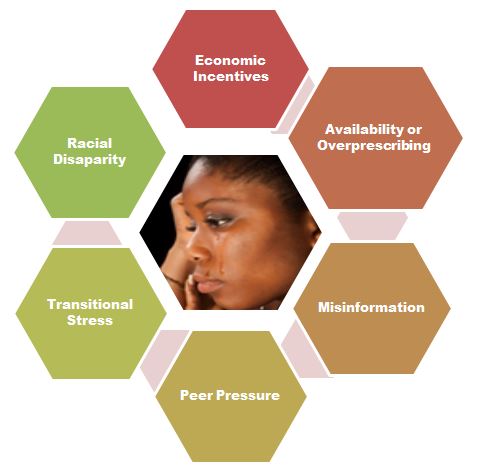
While the Campus Dialogue represented a microcosm of colleges and universities, we suspect that you may likely find similar findings on your campus. See if you observe yourself nodding, “yes” to the following cycles of influence that participants attributed to prescription drug abuse and addiction.

cycles-pic-1hch8kw

  • Misaligned Economic Incentives: When young adults enter college they are keenly aware of our country’s challenging financial conditions. There is a perception of a financial gain to selling medications. “A pill can sell for $30-$40, and a bottle of Promethazine with codeine can go for $400-500.00. Money now trumps problems later.”
  • Availability or Overprescribing: “There’s a pill for every ill. We’ll give you something to fix you, and we’ll fix you from the inside out.”
  • Misinformation: The integration of images and words, portraying drug abuse as “big fun,” can give students the mistaken impression that, “Everyone is doing it; why not try it; how could these medicines be so bad?”
  • Peer pressure: “When students find themselves at parties, and everyone is getting high, some may think that they are outside of the loop if they are not using.”
  • Transitional stress: Parental and personal pressure of making good grades, being independent, fear of the unknown, being in a fast-paced environment and absence of treatment and recovery services can make medication abuse a “go-to solution.”
  • Racial disparity: Drug abuse and addiction are taboo. “Families are closed about drug abuse and addiction, and there are perceptions of denial.”

Bring Prescription Drug Abuse and Addiction Out of the Shadows

ray bullman ray bullman 2

What began as a discussion about prescription drug abuse on HBCU campuses provided a platform for students, staff and faculty to address much bigger challenges including transitional stress, cultural disparity, poor economy, the role of social media and institutional bias. These academic and social pressures are reinforced by the perception that prescription medications can help some students get through the day, from studying and sleeping to socializing. The two days of discussion generated strategies for creating on-campus change – recommendations that could be implemented today and in the future, including the following:

  • Monthly seminars
  • Comprehensive RA training and integration of mentors
  • Instituting the practice of forming smaller classes
  • Launching an “unplugged day” twice a year
  • Investing more research dollars into alternative medicines

Raise the Level of Awareness on Your Campus 

Dialogue participants concluded that we should begin by picking one provocative possibility and then exploit conditions to “viralize” change. So this October, make a commitment to raise the level of awareness about prescription drug abuse, treatment and recovery among students, faculty, staff and parents. Check out the following resources as you build and enhance your prevention and intervention efforts:

To learn more about the HBCU Dialogue and safe medicine use, contact Ray Bullman at NCPIE, 301.340.3940, bullman@ncpie.info, or check out www.talkaboutrx.org.

Photos courtesy of Ray Bullman.

October is “Talk About Your Medicines” Month!

The National Council on Patient Information and Education (NCPIE) has been working toward advancing the safe and appropriate use of medicines since 1992. This October marks NCPIE’s 29th annual “Talk About Your Medicines” month (originally called “Talk About Prescriptions” Month). This year’s theme is “Let’s Get in Sync.” NCPIE will be in partnership with the American Pharmacists Association Foundation to launch a consumer education campaign encouraging more communication between pharmacists and patients and/or caregivers. The campaign will be looking at areas where there can be more interaction – including pharmacists providing medication counseling and medication synchronization services (in which multiple medicine refills would be available at the same time each month). Synchronization works by utilizing the Appointment Based Model (ABM) and is designed to improve patient adherence. Utilizing this tool allows pharmacists and pharmacy staff members to do medication reviews every month to be aware of therapeutic and adherence issues patients may be facing. This model can help patients achieve better health outcomes – particularly those who have multiple health conditions, are taking multiple medications, and are seeing multiple health care providers. Research has shown better patient adherence with this model, and this model allows the patient to be at the center of the healthcare team.​

A post regarding this topic will be coming later this month!

(Adapted from the National Council on Patient Information and Education, talkaboutrx.org)

Chris Stankovich, PhD: Student Athletes at risk for Prescription Pain Pill Abuse

pain_pills

These days it is not uncommon to hear about professional athletes getting caught up abusing pain pills, as these stories have almost become commonplace in sports.  Some athletes will do whatever necessary to stay on the field, and pain pills are becoming more widely used to mitigate sports injury discomfort. Unfortunately, while pain pills might work in the short run by allowing athletes to quickly play again, they are also highly addictive and can lead to future problems much bigger than the original injury.

Pain pills in sports

While it may be understandable why professional athletes turn to pain pills (since their careers depend on being healthy enough to play), it is more troubling to see youth athletes using these drugs.  In fact, in too many cases today young athletes who are originally prescribed pain pills from their physician later turn to the streets to buy black market pain pills when their scripts expire.  If black market pain pills become too difficult to find, or cost-prohibitive, heroin then becomes the drug of choice since it is more widely available and cheaper.  Ironically, young athletes who become addicted to pain pills (or heroin) almost always start out by using simply to get back on the field, only later do they become addicted to the drugs due to lacking medical oversight and/or relatively fast physiological addiction.

Possible reasons for this paradigm shift pertaining to more pain pill usage in sports include new norms in sports when it comes to pain management, group dynamics (pressures from teammates to quickly play again), fear of loss of starting position, or fears associated with missing future college athletic opportunities because of injuries that otherwise could be controlled for by using pain pills.  These new pressures, group dynamics, and future sport goals sometimes converge to create a “perfect storm” where otherwise healthy, level-headed kids uncharacteristically consider using dangerous pain pill drugs.

The race for athletic scholarships

Many young athletes (and their parents) begin the journey very early on when it comes to the pursuit of a full-ride DI athletic scholarship.  Though only about 3-4% of all high school student athletes will ever earn a full-ride, hundreds of thousands more will try their best with the hope of being one of the lucky few.  Along the way, it is almost inevitable that injuries will occur, and in some cases the injuries will be so severe that they jeopardize the chances of earning a full-ride.  It is in these instances where some kids (sometimes with parental influence) elect to do whatever is necessary so that the injury is quickly addressed — even if this means abusing pain pills.

Coincidentally, even young athletes with little to no hope of ever earning a full-ride scholarship are also at-risk for unforeseen drug abuse and dependence, mostly because prescription pain pills have almost become commonplace for rehabilitation recovery protocols.    Ironically, this new wave of drug addicts are very different than the traditional recreational drug addict who voluntarily chose to use street drugs to get high — in the case of the addicted athlete, the addiction occurs not because the athlete wants to get high, but instead because of the perceived value in these drugs as they apply to quickly getting back on the field again. 

West Catholic Allendale Football

Train healthy & allow time to heal

Healthy training and injury recovery methodologies in sports need to be closely examined and scrutinized, especially at the youth sport level.  Please check with your physician about the many ways to control for pain aside from prescription pain pills, including relaxation techniques, imagery, physical therapy, and proper rest.  Coming back from sports injuries too soon may cause bigger problems with pain pills and addiction, and might also send an athlete back on to the field too soon (which, ironically, may lead to more permanent long-term damage).

For more information about healthy training in youth sports please visit www.drstankovich.com or follow me on Twitter @Drstankovich.

Photos courtesy of Chris Stankovich.

Gen Rx U Spotlight: University of North Carolina

The Generation Rx chapter at the University of North Carolina at Chapel Hill were in the top three chapters recognized for the 2013 AphA Generation Rx National award, and were named the the Runners-Up that year. To find out what makes their program so successful, we interviewed Rachael Carpenito, Marti Guidotti, Meghan Maples, and Beth Tevepaugh from the University of North Carolina at Chapel Hill’s Generation Rx chapter.


UNC GRx Pic 6

UNC successfully established a medication take-back day with the Chapel Hill Police Department


The students at the University of North Carolina have been recognized nationally for their work in prescription drug abuse prevention. What has made your school so successful in its Generation Rx projects? What advice can you offer to other colleges to help prevent the misuse and abuse of prescription medications?

There are numerous components that contributed to UNC’s success in its Generation Rx projects. Passionate leadership with a drive to achieve goals, develop lasting relationships in the community, instill excitement amongst the student body, and create resources for future projects have ensured that Generation Rx projects are extremely impactful.

The creation of the “Natural High Series” served to both educate students and provide them with tools to be the best advocates in the community for preventing the misuse and abuse of prescription medications. This Series has continued consistently since its launch and is now one of Generation Rx’s most anticipated events. With the Series, involvement and excitement for other Generation Rx programming increased greatly.

New community relationships, such as UNC Horizons and Interactive Theater Carolina (ITC) expanded the project’s reach to populations never impacted before. With UNC Horizons, we were able to present to new mothers hoping to sustain a drug-free lifestyle, and we worked with ITC to create interactive scripts about difficult situations faced in regards to prescription drug abuse. These are just some examples of community collaboration that allows us to expand our reach alongside organizations with the same missions.

We encourage other colleges to start the year with a set of measurable goals and develop a foundation of passion and interest in Generation Rx among the student body. Once students have a true understanding of the purpose of Generation Rx, they will be able to work together to create innovative and impactful events that serve to accomplish your goals and prevent the misuse and abuse of prescription medications.

If you were starting Generation Rx activities at another school, what is the first thing you would do?

It is important to first make strong efforts to understand the mission of Generation Rx and then perform an environmental scan of the needs of your community. Once these steps have been taken you can develop goals that aim to fulfill the needs of Generation Rx as it applies to your surroundings along with the interests of your student body. Just as essential to performing background research is to educate your student body in order for them to join in efforts to accomplish your goals and have the biggest impact.

What does Generation Rx mean to you?

Generation Rx is an opportunity to give back to the community in areas that have directly affected many of the student pharmacists at our school. This intimate connection with the initiative has provided added perspective that it is our duty to our patients, colleagues, and the community to join the mission to prevent prescription drug misuse and abuse. As an organization of pharmacists and student pharmacists, there is even more credibility to the education we provide as one of the more trusted health care professionals specifically trained to discuss these topics.

What is the most memorable experience you have had while teaching others about prescription drug abuse?

Because our programming had such strong focuses to impact the community while also empowering our own student pharmacists, we have one experience for each perspective:

UNC GRx Pic 5

UNC student pharmacists help collect unwanted medications during a local medication take-back day.

With regard to teaching patients, one of the most memorable experiences was through an organization called UNC Horizons where a student pharmacist had the opportunity to converse with young mothers recovering from drug abuse. In her discussions with the mothers, she was able to educate them about the realities of medication abuse. One mother spoke to her and thought, “If one is good, two must be even better,” – a common misconception with medications. This was a great opportunity to comment on how medication dosing is based off science and years of studies. She spoke about the basic pharmacokinetics of medications and that in some cases, medications can build up in one’s system and lead towards bad side effects and toxicities. She also highlighted the risks of acetaminophen poisoning for pain relief as an OTC product as well as abuse of opioids combined with acetaminophen. The student felt that after their discussion, the mothers viewed medications differently and would be more conscious of how to use them for themselves and their children. It was wonderful to see the mothers learning how to be advocates for themselves, an important life skill they would need when rejoining the community.

Another memorable experience where student pharmacists were greatly impacted was with the North Carolina Pharmacist Recovery Network (NCPRN) Panel. This event was made possible from the relationship between a Generation Rx leader and an NCPRN representative at the Utah School of Alcoholism and Other Drug Dependencies. With the NCPRN Panel, it provided student pharmacists with the opportunity to meet and hear stories from pharmacists who are recovering from addiction. It is not in the forefront of most students’ minds when entering a healthcare profession that they are at risk for medication misuse and abuse. This Panel was eye-opening to those who attended to see that addiction can affect anyone, and students felt it was very helpful to hear stories from their colleagues in order to empower them to be self-vigilant.

Why do college students need to be concerned about medication safety?

Rameses (the Tar Heels mascot) joined our students to raise awareness about the dangers of misusing stimulant medications.

Rameses (the Tar Heels mascot) joined our students to raise awareness about the dangers of misusing stimulant medications.

College students are under a great deal of pressure to perform well and achieve in order to mold their futures. In the face of this, students are willing to turn towards prescription medications in order to cope with the pressure and achieve short-term success. One student may use amphetamines in order to stay awake to study for an exam, and another may turn to benzodiazepines to ease the anxiety about upcoming deadlines or interviews for future careers. For most students, college is the first taste of independence and they may not have yet learned the consequences of their actions. While we advocate appropriate use of medications, their abundant presence and ease of access on campuses have opened the doors for misuse and abuse that is only encouraged by the misconception that because they are prescriptions they are safer than street drugs. Education and empowerment around safe use of medications can help save the lives of many college students and teach them the benefits of positive choices for long-term success.


If you could tell everyone only one thing about prescription drug abuse, what would it be? Why?

It is important for people to be their own advocates in the face of prescription drug abuse. Medications are complex and can be dangerous, but prescription drug abuse is more preventable than some may think. Taking responsibility to learn everything they can about medications they come in contact with will help them to use the medication as intended. Not only will they learn to store medications properly and adhere to prescribed regimens, but they will also know the consequences of misuse and abuse in order to be able to make the right decisions before being faced with addiction.

Many are already struggling with addiction.  It is important for us all to view addiction as a chronic disease, similar to hypertension and diabetes. It is not a choice, it should be talked about openly, it can affect anyone, and it requires ongoing care and support.  Treating it as such will encourage those afflicted by it to reach out for help.

Photos courtesy of Macary Marciniak.