One recent instance of a systematic injustice is the financial markets in the U.S. As most people at this point are aware of the crisis that stocks such as Game stock and AMC caused. These stocks were being bought by many average American traders boosting their price while the institutional hedge funds were betting against them. Not only were the hedge funds, just simply shorting the stock, but they were also shorting the stock options at a significantly higher than normal volume. Basically, this meant that they were betting against the stock at an extraordinarily high level, so when the “regular traders” started buying the stock in boosting its price, the hedge funds began losing billions of dollars. In efforts to stop this loss, Funds such as Citadel, which worked closely with the trading platform Robinhood, influenced the platform to halt the ability of traders to buy certain stocks. If the traders could not buy the stocks and only sell, then the price drop, allowing the funds to cover the money that they had lost. This was the definition of market manipulation as the funds influenced the market to benefit themselves, while the average trader got screwed over. This clearly shows the inequality in the financial system of the U.S as the people with money and power were protected when the markets were not in their favor, yet the everyday person has no ability to influence the market and can easily lose his or her money. At the root of every significant financial crisis in the U.S, it is the hedge funds acting in their favor to cause it. This instance was especially eye-opening because their market manipulation was so blatant. This will continue to happen as long as institutional funds are not further regulated by the government. Not only does the financial system refer to the banking system, but it also perpetuates many other injustices we see. According to Citizensforfinancialjustice.org, examples include the financialization of health provision, which affects people’s ability to access affordable and high-quality (public) health services; the transformation of land into a tradeable asset to be purchased and speculated upon, hindering peoples’ right to food, nutrition and health; the financialization of housing, which turns a social good and a human right into a profit-making machine for those with the most money to invest. The 2008 financial crisis was a good example of how the finacialzation of housing almost ruined the economy and caused many people to lose their homes and jobs. The banks that were responsible got off with no punishment and went about business as if nothing had ever happened. A text that we have looked over in class that relates to this issue of injustice is “Can the Subaltern Speak” where the theme was that the marginalized people, and groups that are not in a position of power often go unheard. With the financial system, the powerful banks have control of everything while the voices of the regular American working class goes unheard.
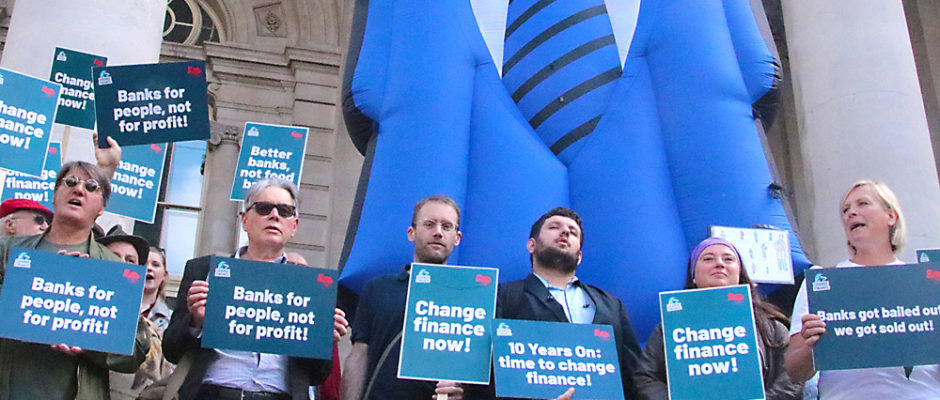
Citizens for Financial Justice- https://citizensforfinancialjustice.org/news/cast-the-spotlight-on-financial-injustice-to-tackle-rising-inequalities-says-new-report/
Explanation of the 2008 Financial Crisis: https://www.investopedia.com/articles/economics/09/financial-crisis-review.asp
I had heard a lot about this incident in the media but I did not really understand what it all meant. Thank you for your thorough description as well as highlighting how this can be a form of systemic injustice. I had never thought of the stock market and financial system as being biased but clearly I was wrong. Thank you for educating me on this.
Thank you for your post! Your post really highlights how money equals power. People with money, like the hedge funds, will use their power in the form of money in order maintain their money/power. I like how you tied in the subaltern to show that the less powerful people aren’t able to make a difference.
Thank you for your deeper insight into the systemic injustice of financial markets here in the United States. Including the subject of “Can the Subaltern Speak” from a previous module helps me to understand what you are trying to communicate to us through your presentation. One thing that I would like to add to a systemic injustice of finances, in general, would be health insurance. It is a common issue for those with lower issues to be unable to get health insurance because they cannot afford it. Though, those that have a higher income have a much higher rate of having insurance because their job provides it or they can afford it themselves.