Comparisons of Germany/Berlin to the United States

Berlin, as well as the rest of Germany, has many similarities to the United States and the places where I grew up.  During my life, I have lived in four states, but I have only lived in two out of those four states for the longest amounts of time.  The two states that I am most familiar with are New York and Pennsylvania, which I have lived for about eight years in each state.  One similarity I have noticed between Berlin and the cities that I grew up in, Buffalo, New York and Pittsburgh, Pennsylvania, is that these cities are every changing and expanding with new stores, restaurants, and housing.  Additionally, all three cities have several different types of restaurants to choose from.  For example, in Berlin, there are many more options besides traditional German food like Turkish, Thai, and Italian food.  In the United States, you also have several different restaurant options.  Moreover, since Berlin is just like any other big city in the United States, a lot of people smoke, but there are several non-smoking places in the city.  Also, even with all of the public transportation available in Berlin, people still drive cars.  There is public transportation in most United States cities, but I do not think the system in the United States cities is as efficient or as widely used as in Berlin.  However, people in both Germany and the United States use public transportation every day.  Lastly, I noticed that a lot of Germans wear similar clothing as people do in the United States, and Germans as well as Americans wear jeans on a daily basis.

Even though Berlin and Germany have many similarities to the United States and the towns I grew up in, there are also many differences.  One difference I first noticed when I arrived in Berlin is how Berliners dress.  In Berlin, people like to wear a lot of layers, dark and neutral colors, scarfs, as well as tennis shoes.  On the other hand, in the United States, people wear a large variety of different types of clothing and all kinds of colors.  Another thing I noticed was that the public transportation system seems to be more effective and easier to use in Berlin then in the United States.  The one thing I like better about Berlin transportation is the S-bahn and the U-bahn.  I have never used the subway system in the United States, but I have heard that the subways are always crowded and dirty.  Here in Berlin, however, the S-bahn and U-bahn are relatively clean, not always crowded, and are pretty easy to use.  Additionally, I believe that Germany is overall more ecological than the United States for several different reasons.  For example, the water in Berlin is cleaner and you can drink it straight from the faucet.  Also, even in a big city like Berlin, there is a lot of greenery, which is not usually typical for a big city in the United States like New York or Pittsburgh.  In Berlin, it is sometimes hard to remember you are in such a big city because the trees and openness of it makes Berlin feel less like a major metropolitan area.  Furthermore, at the restaurants in Berlin there is not a host or hostess and you sit yourself at restaurants.  Finally, at any supermarket or any store you visit, you are expected to be ready to pay as soon as you get to the cashier.  In other words, you have to be faster while checking out or the people behind you will get annoyed.

Additionally, there are interconnections between the two countries.  Some of these connections include German manufactured cars and even German communities in the United States.  There is even a Germantown historic district in the North Side of Pittsburgh and there is also German Village right outside of Columbus.  Furthermore, Germany imports and exports many items to and from the United States daily, so both the German and United States economies are interconnect with each other through trading.

German Village in Columbus

German Village

Road to Fame

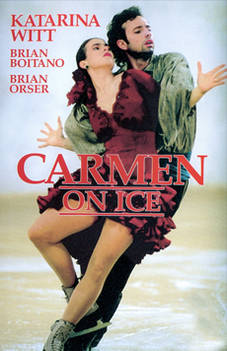
Katarina played herself in the film Carmen on Ice

Katarina played herself in the film Carmen on Ice

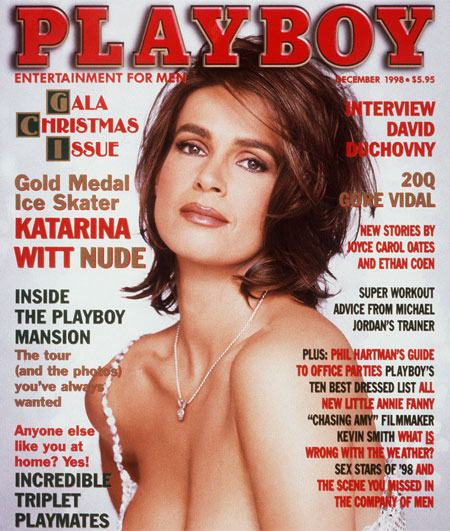
Katarina Witt reportedly posed for $1 million

Katarina Witt reportedly posed in Playboy for $1 million

Katarina Witt had a hugely successful career as a figure skater. At the age of 19, Katarina won her first Gold Medal at the 1984 Sarajevo Olympics.  Also in the same year, Katarina was the “Female Athlete of the Year” and also won the “Golden Order of Merit for the Fatherland” of the German Democratic Republic.  She later won her second Gold Medal at the 1988 Calgary Olympics.  Katarina also won four World Championship titles, six European titles, and eight National Champion titles.  After the 1988 Olympics, Katarina took a break from skating professionally to tour and to participate in figure skating shows, but she later returned for the 1994 Olympic Games in Lillehammer, Norway.  Furthermore, Katarina toured America and Canada for 10 years on “Stars on Ice” and “Champions on Ice.”  Later in 1990, Katarina starred in and won an Emmy for her role in the film Carmen on Ice.  Also in 1990, Katarina was among the “50 Most Beautiful People in the World” chosen by People Magazine in the United States.  Since 1991, Katarina worked as a figure skating expert during the Olympic Games and World Championships for German and American television channels.  Additionally, Katarina was inducted into the International Women’s Sports Foundation Hall of Fame in 2005.  She was also the subject of the 2013 documentary The Diplomat, which chronicled her rise to glory and her uneasy relationship with the East German authorities, who gave her favorable treatment while keeping her under close surveillance.

Katarina’s rivalry with U.S. figure skater Debi Thomas is one of the reasons for the incredible amount of attention she received. Not only were they two of the best figure skaters of their time, but their rivalry also displayed the tension between the eastern and western blocs. Between 1984 and 1988 Debi and Katarina only skated against each other four times. Debi only won one of those times in 1986 at the world figure skating championships. She was the only skater in the world to beat Katarina between ’84 and ’88. Their rivalry culminated in what is famously known as the Battle of the Carmens. At the 1988 Olympics in Calgary the two were competing against each other in the women’s long performance, but little did they know they had chosen the same song for their routines, Carmen by Georges Bizet. While sixty million viewers watched, both skaters performed underwhelming routines. It ultimately came down to performance. Katarina took the ice first, and while she didn’t deliver an amazing skating routine, she did deliver quite the emotional and dramatic performance. Katarina took home the gold and Debi won the bronze. This was a huge feat for the German Democratic Republic. East Germany saw their athletes as “diplomats in track suits.” They saw sports as an important part of politics and viewed sports as an instrument of power. Athletes were used to popularize the GDR in countries that didn’t recognize the nation. Through their success in sports, the GDR hoped to win international recognition, demonstrate the superiority of socialism, and increase the self confidence of east Germans. Katarina’s defeat over Debi at the ’88 Olympics seemed to do all three of those things. This event was so popular that in 1990 they made a movie about the ordeal called Carmen on Ice, in which Katarina played herself.

Another reason Katarina was internationally recognized was for her daring costumes and her wild life outside of the skating rink, both of which earned her the nickname “Sex on Skates.” Katarina was known for the risky nature of her costumes. During her rigorous routines, she would also flirt with the audience and capture their attention with her revealing outfits. At the ’88 Olympics, Debi Thomas’ coach was worried that the judges would be biased since six of them were male. This eventually led to what is known as the “Katarina Rule.” The International Skating Union declared that skating costumes could not be “excessively theatrical.” Since Katarina often wore very dramatic outfits that pushed the limits of what the rules allowed, many believed this rule was put in place because of her. Furthermore, Katarina is very well known for her feature in Playboy Magazine. After 10 years of being asked to pose for the magazine, Katarina finally took to the beaches of Hawaii to pose nude. The December 1998 issue is only the second in the magazine’s history to sell out, the first being the 1953 edition featuring Marilyn Monroe. Moreover, she was supposedly offered one million dollars for posing for Playboy. Lastly, while her sexuality played a big role in her fame, she was also known for her beauty and is famously known as the “most beautiful face of socialism.”

Nowadays, Katarina writes, creates, performs, and co-produces.  After Katarina’s figure skating career ended, she still continued to influence Germany with her other artistic endeavors and her company.  She founded the production agency WITH WITT Sports & Entertainment GmbH.  This company produces ice shows such as “Divas on Ice”, “Enjoy the Stars”, and “Winter Magic” as live events for Germany and American television.  Katarina also regulates various programs on ARD, Pro7, and RTL.  Furthermore, Katarina is involved with many charitable activities and even formed the Katarina Witt Foundation in 2005.  The Katarina Witt Foundation provides aid for children and teens with disabilities and Katarina was awarded the Blue Heart for her support for children.  Later in 2009 in Berlin, Katarina had her acting debut on stage in the play “Everyman” with her role as Amour.  Lastly in 2010, Katarina was inducted into the Hall of Fame of German Sports.

Sources:

http://www.thedailybeast.com/witw/articles/2013/08/06/the-diplomat-on-espn-katarina-witt-the-most-beautiful-face-of-east-german-socialism.html

http://sports.jrank.org/pages/5386/Witt-Katarina-With-Gold-Came-Celebrity.html

http://www.biography.com/people/katarina-witt-9535264#professional-pursuits

Rivals: Legendary Matchups That Made Sports History By David Kenneth Wiggins, R. Pierre Rodgers

Biography

Katharina at the 1988 Olympics in Calgary

Katarina at the 1988 Olympics in Calgary

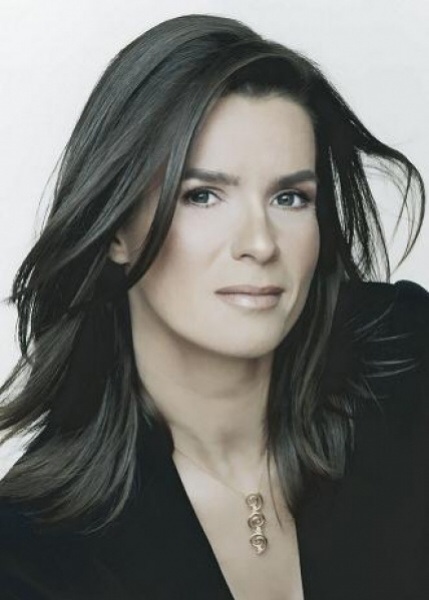
Today Katharina is a producer, actress, and founder of a charity

Today Katarina is a producer, actress, and founder of a charity

Katarina Witt was born on December 3, 1965 in East Germany and is still alive today.  She was a figure skater who dominated figure skating for almost a decade.  Katarina began skating at the age of 5 and she quickly gained the attention of sports officials.  Though her parents were too poor to pay for her training, one of the world most successful coaches recognized her talent and started working with her at age 9.  In addition to training, she went to a special school for athletes where she was weighed twice a day and starved if her weight was not acceptable.  In other words, skating controlled her life.  In 1981, she won her first major competition, the East German national championship, and she held that title for the next seven years.  In 1982, Katarina finished second at the world championships in Copenhagen.  At 18 years old, she won her first gold medal tasking it from the reigning American champion at the time by a tenth of a point at the 1984 Sarajevo Olympic Winter Games.  Also in 1984, Katarina won her first world championship title, and the biggest selling newspaper in East Germany declared her East Germany’s athlete of the year.  Moreover, other people outside of figure skating began to notice Katarina because she was one of the first to push the boundaries with figure skating outfits by making them more revealing.  When she was starting to get noticed, she started dating a member of a rock band and the Stasi, the ministry for state security in East Germany, tried to break them up because they thought that this relationship would intervene with her important skating career.  In 1985, she wins the world championship again, but the next year Katarina loses the title to an American.  Because she came in second, the East German sports federation wrote her a letter stating how important it was that she won first place.  Furthermore, the Stasi asked her to attend meetings so that they could keep an eye on her and so she could continue to succeed in her public figure skating career.  In 1987, Katarina regained her world championship title by performing the strongest and longest performance of her career.  In 1988, she held on to that title and also won her sixth consecutive European championship. This was very impressive as this feat had not been achieved for over half a century.  Also in that same year, she won her second gold medal at the 1988 Calgary Winter Olympics.  Later on in 1990, she started acting and won an Emmy for her starring role in the movie Carmen on Ice.  After her career in figure skating ended, she founded a production agency, worked as a figure skating expert during world championships and Olympic Games, has written various books, and started her own charity to provide aid for children and teens with disabilities.

Sources:

http://www.olympic.org/katarina-witt

http://www.thebiographychannel.co.uk/biographies/katarina-witt.html

http://www.thebiographychannel.co.uk/biographies/katarina-witt.html

http://en.katarina-witt.de/